What is step-over height, and why does everyone talk about it here?+
It is how high you have to lift your foot to clear the frame and get onto a machine. If that height is more than your hip will manage, nothing else about the bike matters — you will not use it. It is also the one measurement no manufacturer we checked publishes, which is why this site keeps raising it. You can measure it yourself on any machine already in the house with a tape measure in about a minute.
Why does this site say 'not published by the manufacturer' so often?+
Because it is true. We looked for 429 accessibility measurements across the equipment on this site and 170 of them are not published by anyone. We print that rather than filling the gap with an estimate. A guessed step-over height that is two inches out is worse than an honest blank, because you would act on it.
Have you actually used any of this equipment?+
No, and we say so on every page. There is no test lab behind this site and we own none of these machines. What we do instead is read the manufacturer's own documentation and publish the nine measurements that decide whether you can physically use the thing, with a source and a date on every figure. We cannot tell you how a seat feels after forty minutes — nobody can, without having sat on it.
Is a recumbent bike better than an upright bike for an older rider?+
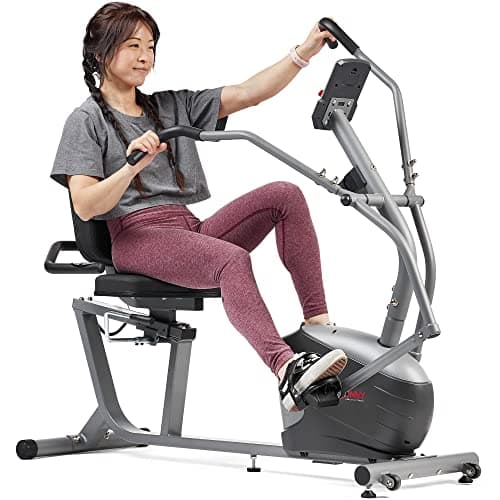
Usually, for two reasons that have nothing to do with the pedaling. You step through the frame instead of over it, and the seat has a back rest so your spine is supported and your wrists and shoulders carry no weight. An upright bike puts a proportion of your body weight through the hands and lower back. If either of those is a problem, the recumbent wins before you have turned a pedal.
What weight capacity do I need?+
Choose a machine rated comfortably above your actual weight, not just above it — a frame at its stated limit is a frame that flexes. Published capacities on this site run from 245 lb to 450 lb. Two products publish no capacity at all, which we treat as a reason to buy something else, because it is the most-searched specification in the category and a manufacturer that will not state it is telling you something.
How much exercise should I actually be aiming for?+
The CDC's guidance for adults 65 and over is at least 150 minutes a week of moderate-intensity activity, plus two days of muscle strengthening and some balance work. That is the target, not the starting point. Twenty-two minutes a day, or thirty minutes five days a week, is the same number arranged more manageably — and starting at ten minutes and building is how people actually get there.
Do I need a treadmill, or is a walking pad enough?+
The deciding question is whether you need something to hold. A walking pad steps up in around four inches rather than a foot, stores under a sofa and costs less — but most have no handrail at all. If balance is the reason you are shopping, buy the machine with rails, and preferably rails that run the length of the deck rather than a single bar at the front.
Is balance equipment safe past 65?+
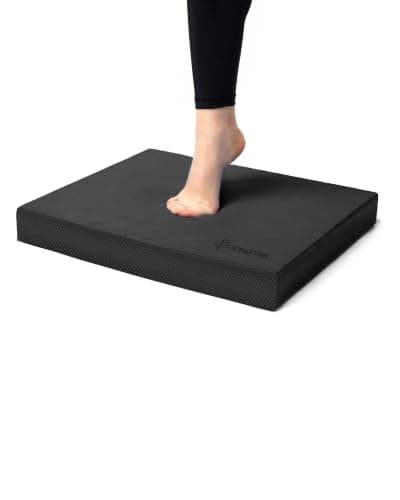
The equipment is safe; the height is what varies. A two-inch foam pad used beside a kitchen counter is about as low-risk as exercise gets. A six-inch spring-mounted board is a fall from roughly a stair riser's height and is the wrong first purchase for anyone with a fall history. Start on foam, always within reach of something solid, and progress only when the easy version is genuinely boring.
What is the cheapest thing that is actually worth buying?+
A foam balance pad, at around $25. The CDC puts falls at more than one in four adults over 65 every year, and balance work is what addresses that directly. It costs a fiftieth of a bike, needs no assembly, no power and no floor space, and it is the item on this site with the best ratio of benefit to cost. Cardio equipment is the more enjoyable purchase; balance is the more useful one.
How do you make money, and does it change your rankings?+
Amazon commission, at no extra cost to you. It does not change the order, and here is the checkable proof rather than the promise: the top pick on several of these pages is among the cheapest machines on it, and there are 9 products we explicitly tell you not to buy that are still sitting in the comparison tables, earning the same rate as everything else.
Why is there no score out of ten on your reviews?+
Because a score implies an evaluation and an evaluation implies use. We have not used these machines, so a number would be spec-reading dressed up as testing. Instead the comparison tables carry a column you can verify yourself: how many of the nine accessibility measurements the manufacturer withheld. For the same reason there are no star ratings in this site's structured data.
Are the prices on this site current?+
They are pulled live from Amazon and stamped with the date they were read — currently 55 products, last verified October 22, 2026. They also expire: after 48 hours a number disappears and the button falls back to "Check price on Amazon" rather than showing you something stale. No price is written into the text of any page here.
Do I need the app and the Bluetooth and the subscription?+
No. Almost every machine on this site advertises app connectivity, and for the buyer this site is written for it is close to irrelevant — and on one bike several of the interesting display features sit behind a paid subscription. A mechanical resistance knob that works forever beats a touchscreen that needs a phone. Spend the money on the seat, the step-over and the handrails instead.
How much room do I need for a recumbent bike?+
Published footprints on this site run from about 50 by 20 inches to 66 by 33 inches — but the footprint is not the answer. You need that space plus clearance on at least one side to get on and off, which is the part people forget when they measure an alcove. Add roughly two feet on your mounting side and check the doorway the box has to come through as well.
Is assembly going to be a problem?+
Sometimes, and it is worth checking before you buy. Machines on this site range from genuinely no assembly at all — walking pads that work out of the box — to a 123 lb bike that arrives in a 66-inch carton and is a two-person job. Several publish a pre-assembly percentage; almost none publishes box weight, which is the number that actually determines whether you can get it indoors.
Do fall-detection watches need a monthly subscription?+
Most do, and the price tag rarely says so. Two devices on this site require $25 a month, which turns an $89 watch into roughly $389 in the first year. One includes a year of service in the purchase price. That ongoing cost is the single biggest difference between these devices, and only one manufacturer publishes it plainly — so check for it before you buy anything in this category.
Can I trust the health information here?+
Only as far as its sources, which is why they are all named inline with live links. Every physiological claim on this site points to the CDC, the National Institute on Aging, or the Arthritis Foundation. Nobody here is a doctor, a physical therapist or a trainer, and nothing has been medically reviewed. Talk to your doctor or physical therapist before starting something new — especially after surgery, a fall, or a medication change.
What should I buy first if I am starting from nothing?+
A foam balance pad and a pair of walking shoes, then use them for a month. If you then find you want cardio equipment indoors, the recumbent bike shortlist is where most people should look, and the seated pedal units are the honest answer if a full machine is too much money or too much room. Buying the biggest machine first is the most common expensive mistake in this category.
How often do you update these pages?+
Prices refresh daily and expire on their own. Availability is swept monthly, because a dead buy button is worse than no button. Specification panels are re-checked against current manufacturer documentation quarterly, since makers revise models without renaming them. Every page gets a full review every six months, and the date shown reflects genuine review rather than a cosmetic edit.
I found a mistake. What happens?+
Email us and we fix it within seven days, and change the last-updated date on the page. If the correction changes a recommendation we say so on the page rather than editing quietly. Corrections are the emails we answer first — a wrong measurement on a site whose whole purpose is publishing measurements is the worst thing we could leave standing.