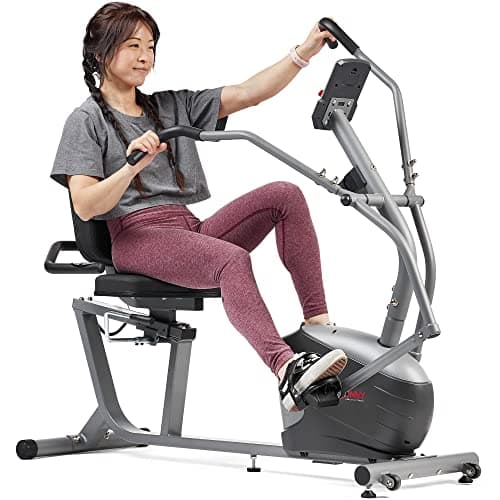
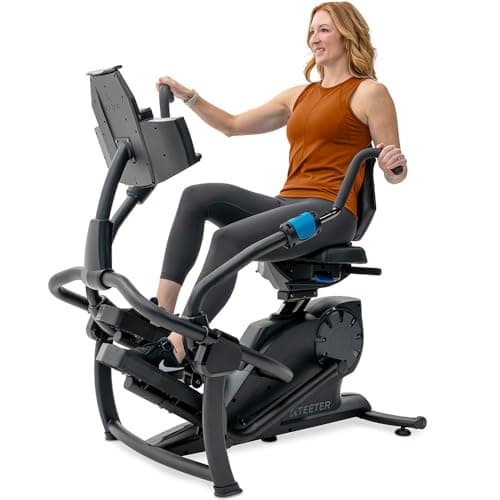
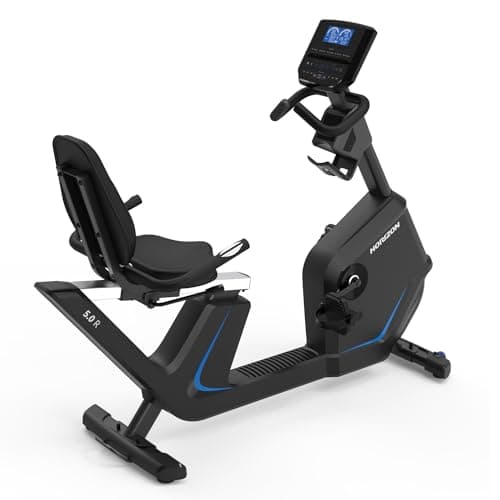
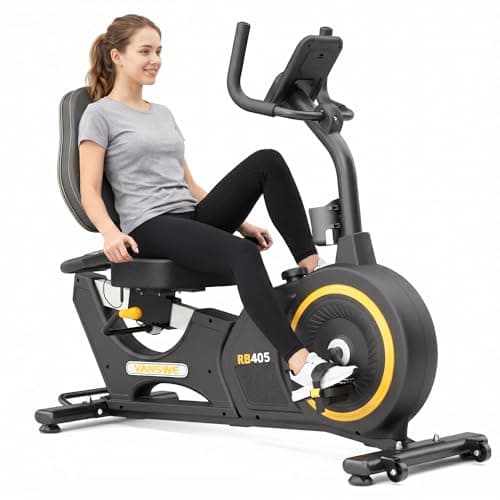
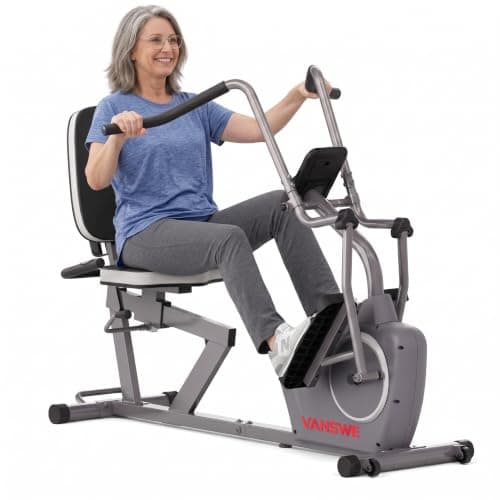
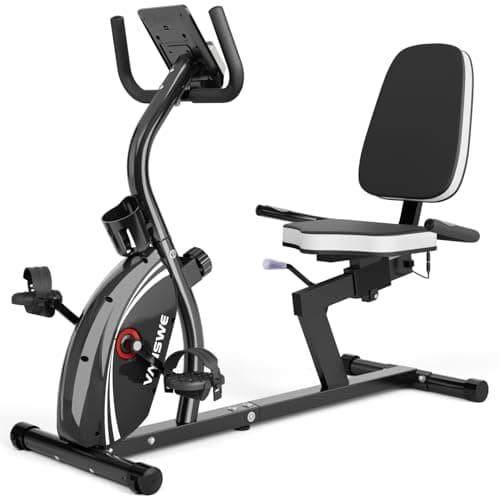
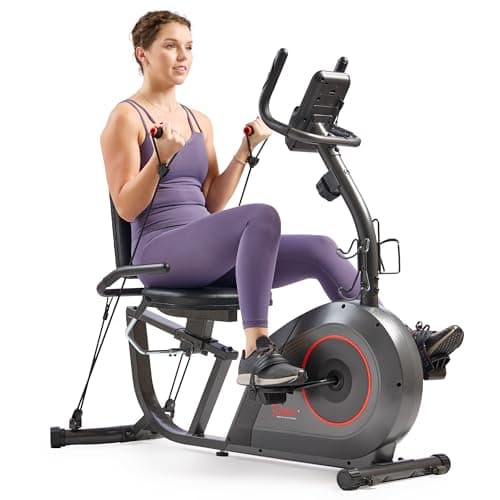
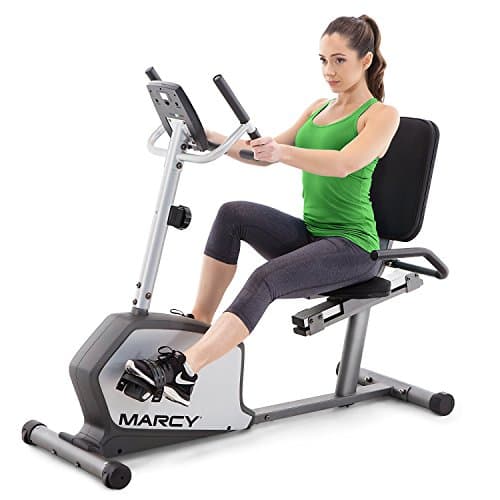
Ignore the marketing tiers. For this buyer there are four meaningful groups, and price is only loosely related to which one you need.
Budget step-through bikes, roughly $150–$250
A steel step-through frame, eight resistance levels on a mechanical knob, an LCD showing time and distance. The Marcy NS-1201R is the archetype, and our best budget bikes shortlist ranks it against the others on value. These do the actual job — seated pedaling with your back supported — and what you give up is fine resistance control at the bottom of the range and any published measurement of the frame you have to step through.
Mid-range and high-capacity, roughly $300–$500
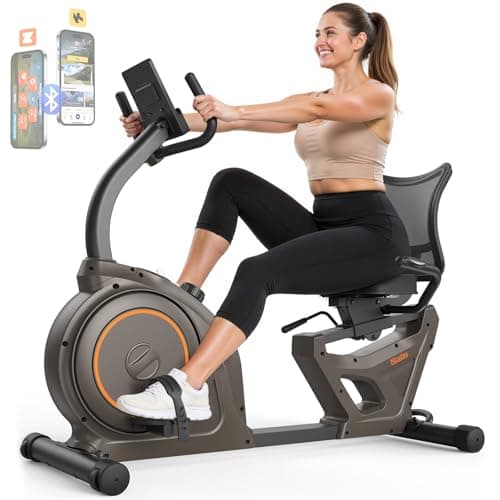
This is where the useful accessibility features appear: continuously sliding seat rails instead of pre-drilled holes, 400 to 450 lb capacities, one-handed seat adjustment, 16 resistance levels. It is also the band where the machines we rank highest live, which is not a coincidence — it is where manufacturers start publishing numbers. It is where the published inseam minimums drop far enough to matter, too, which is why our shortlist for short riders is drawn mostly from this band rather than the cheapest one — and where the published maximums reach furthest, which is why our shortlist for tall riders is too.
Brand-name machines, roughly $650–$900
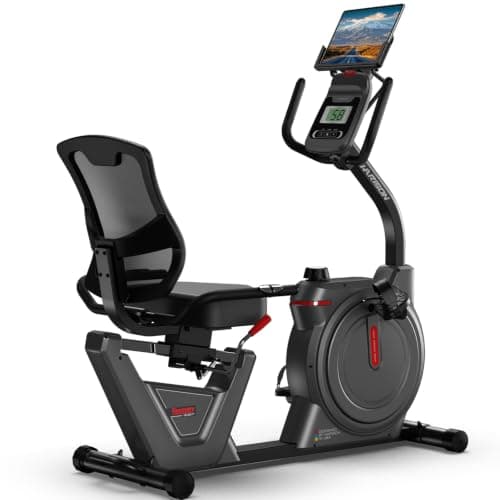
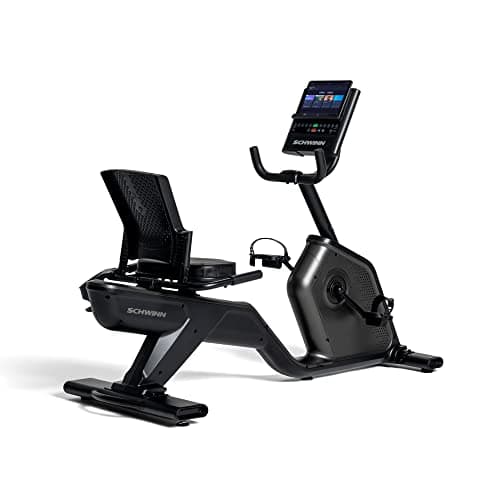
Schwinn and Horizon. You are buying a parts channel, a support line, a bigger display and finer resistance control. The Horizon 5.0R has 0–100 electronically controlled resistance, which genuinely matters if your knee needs the gap between the two lowest settings to be small. What you are not buying is better accessibility documentation: both still decline to publish a step-over height. Horizon is, however, the only maker on this site that states its seat has lumbar support, which is why it leads our shortlist for back pain.
Not-quite-bikes, $1,000 and up
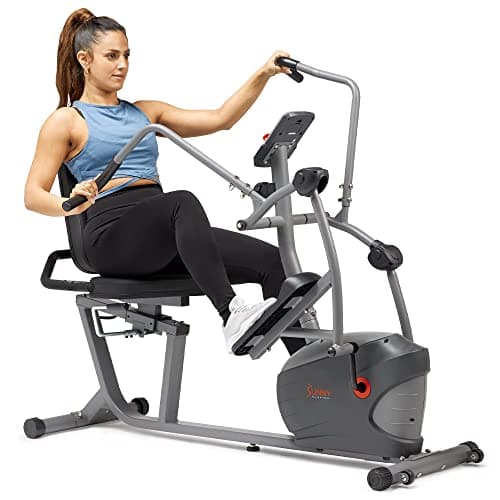
The Teeter FreeStep moves its pedals in a straight line rather than a circle. That is a different joint path, not a marketing distinction, and for some arthritic knees the circular stroke is the problem. It also costs more than everything else here put together in some cases, and it is 32.7 inches wide.