Tread & Tone

VANSWE Recumbent Elliptical Cross Trainer Review

A seated, arm-and-leg cross-trainer that does the one thing this whole category tends to avoid: it tells you what it holds and who it fits. That is why it leads our shortlist, and it is most of what this review is about.

By Stephen V.Last updated How we choose

How this is funded: we earn a commission if you buy through our links, at no extra cost to you. It never changes what we recommend, and every page here names at least one thing we would not buy. Full disclosure.

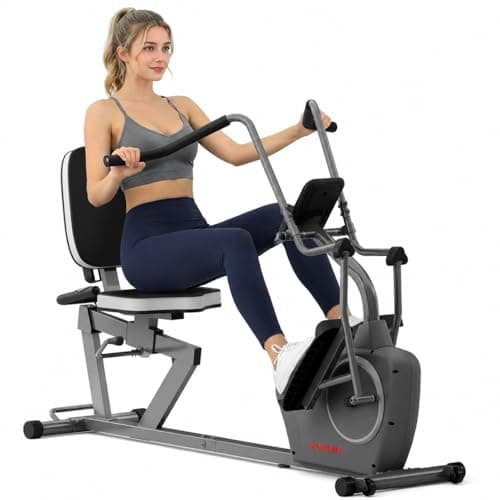
VANSWE Recumbent Elliptical Cross Trainer

The best-documented cross-trainer here

The one recumbent cross-trainer in this shortlist whose listing states both a weight capacity and a rider-height range — 450 lb, and 5 ft 2 in to 6 ft 5 in. That is two more answered questions than most machines in this aisle give you, and it is why it leads. It still won't tell you the step-over height or the assembled footprint.

VANSWE does not publish 6 of the 10 measurements we look for. The panel below names which.

$339.99 · Check price on Amazon

$359.996% off

Price as of August 4, 2026. #ad How we’re funded

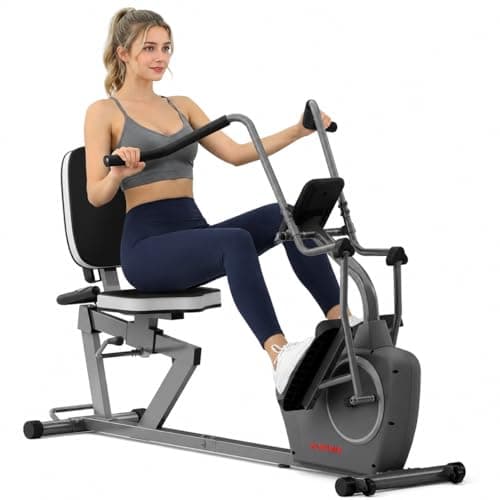
The VANSWE Recumbent Elliptical Cross Trainer is a seated machine that sits between two things you already understand. Like a recumbent bike it seats you with your back supported and your feet out in front. Like an elliptical it moves those feet through a long stride rather than a tight circle, and it adds moving handles so your arms work alongside your legs. It is a full-body, low-impact machine you use sitting down.

We rank it first among the recumbent cross-trainers for a reason that has nothing to do with ride feel, which we can’t judge, and everything to do with disclosure. Its listing states a 450 lb weight capacity and a rider-height range of 5 ft 2 in to 6 ft 5 in— two answered questions in an aisle where most machines answer neither. On a site whose entire premise is that accessibility numbers should be published, a machine that publishes two of the hardest ones starts ahead.

That said, this is a budget-to-mid machine and it withholds plenty. There is no step-over height, no seat height, and no assembled footprint in the listing. So this review is really two things: an honest account of what those published numbers get you, and a clear list of what you are still buying blind.

Fit-to-You: the nine measurements

VANSWE does not publish 6 of 10 of these. Where that is the case, this panel says so rather than guessing. How we compile these

Step-over heightThe single number that decides whether you can get on at all. Almost nobody publishes it.
Not published by the manufacturer
Seat height from floorDecides whether you sit down onto the seat or lower yourself into it, and whether you can stand back up unaided.
Not published by the manufacturer
Weight capacitySearched directly, and two of the senior-focused competitors omit it entirely.
450 lb

Source: Amazon product listing data (Creators API) · read 2026-08-03

Inseam rangeWhether the seat travels far enough for your leg length without over-extending the knee.
Not given as an inseam; stated rider height range 5 ft 2 in to 6 ft 5 in

Source: Amazon product listing data (Creators API) · read 2026-08-03

Pedal spacing (Q-factor)How far apart the pedals sit. A narrow pedal spacing reduces the sideways load on arthritic knees.
Not published by the manufacturer
Display character heightCharacter height and contrast. Presbyopia is close to universal past 60.
Back-lit LED display; character height not published

Source: Amazon product listing data (Creators API) · read 2026-08-03

Controls and reachCan it be operated one-handed, by feel, while seated? This is where low-strength and low-vision buyers get stranded.
Quiet magnetic resistance (level count not published); moving arm handles; Bluetooth app

Source: Amazon product listing data (Creators API) · read 2026-08-03

Assembly and box weightBox weight and how many people it needs. A 130 lb box is a real barrier, not a footnote.
Not published by the manufacturer
Noise (dB)Apartments, shared walls, and a sleeping partner in the next room.
Not published by the manufacturer
FootprintWhether it actually fits the room you have in mind, with clearance to get on and off.
Not published by the manufacturer

We have not used this machine. Everything above comes from the manufacturer’s published documentation and the dated retailer listing, with the source given for each figure. Where they don’t publish a number, we say so. We can’t tell you how it feels to ride, how quiet it really is, or how it holds up after two years — and anyone who tells you otherwise without owning one is guessing.

What the two published numbers actually buy

A 450 lb capacityis the highest published figure on our cross-trainer shortlist, and it is worth more than it looks. Capacity on a seated machine is not only about the rider’s weight — it is a proxy for the frame. A cross-trainer takes your seated weight plus the force of a longer, arm-assisted stride, on a frame that is usually lighter than a bike’s. A maker willing to rate it at 450 lb is a maker willing to stand behind the structure. Treat the number as a floor to sit comfortably under, not a target to approach.

The rider-height range of 5 ft 2 in to 6 ft 5 inanswers the second question the category dodges: will it fit me. It is not a true inseam figure — nobody in this aisle publishes one — but a stated height range is a usable proxy, and it is stated here. If you fall outside that range, this is not your machine, and knowing that before it ships is exactly the point.

The rest of the published set is ordinary but real: quiet magnetic resistance, a back-lit display (which matters more past 60 than the marketing implies, because a lit screen is a legible one), moving arm handles, and Bluetooth app connectivity. What the listing does notstate is how many resistance levels there are — only that the resistance is magnetic — and on a machine you will use at the gentle end, the number of steps at the bottom of the range is what you actually care about.
The question this machine is an answer to

A cross-trainer is not a better recumbent bike; it is a different tool, and buying it for the wrong reason wastes money. It earns its place in one situation above all: when the circular pedal stroke of a bike is what bothers the knee, rather than the load.

The distinction is mechanical. A bike closes the knee to a tighter angle at the top of each revolution; some arthritic knees object to that flexion arc, and no resistance setting changes it. A longer elliptical stride keeps the joint in a shallower, more open range. The Arthritis Foundation is clear that low-impact, continuous motion is good for arthritic joints because moving a joint through its range produces the fluid that lubricates it — the question is only which range your knee tolerates.

If the load rather than the arc is your problem, save the money: a recumbent bike at its lowest resistance does the same job. And if the knee is post-surgical, recently injured, or newly changed, the right first step is a physical therapist, not a purchase — nobody here is a clinician, and a spec sheet is not a range-of-motion assessment.

The second honest reason to want this machine is the arms. The moving handles work an upper body a plain bike leaves idle, which the Arthritis Foundation’s list of low-impact options would count as useful whole-body movement.

What it won't tell you

Seven of the ten measurements we look for are unpublished on this machine, and two of the gaps matter more than the rest.

No step-over height and no seat height.These are the two numbers that decide whether you can get on and stand back up, and the listing leans on the word “easy on and off” instead of stating either. That is the same gap we find on machines costing five times as much, so it is not a budget failing so much as a category one — but it means the central accessibility question is unanswered. If you can reach one in a shop, the step-over takes about a minute to measure yourself.

No assembled dimensions. Plan the space from the shipping box and leave clearance on the side you mount from. A seated cross-trainer is a large object, and where it lives should be decided before it arrives, not after.

No resistance-level count, no pedal spacing, no box weight and no noise figure round out the blanks. None of that makes it a bad machine. It makes it a machine you are buying partly on trust, and the two numbers it does publish are the reason that trust is better-placed here than on most of its rivals.

Buy the right listing

One practical warning that applies specifically to this machine. There is a second VANSWE cross-trainer listingwhose published specification reads, line for line, like this one — the same 450 lb capacity, the same magnetic resistance, the same back-lit display and Bluetooth app — and it usually sells at a higher price for no difference we could find.

Before you buy, compare the live price in the button above against the other listing on our cross-trainer shortlist, where we flag the pricier twin as a skip. When two listings describe the same machine, the only rational move is to buy the cheaper one.

Who this suits

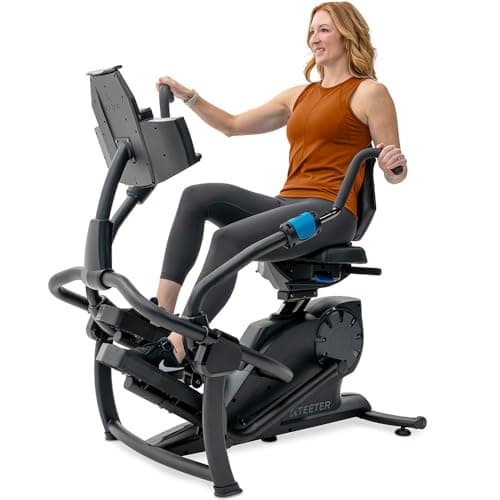
Someone whose knees dislike the circular pedal motion of a bike rather than the load. The elliptical stride keeps the joint in a shallower range, and this is the best-documented machine that offers it short of the much pricier Teeter.

A heavier rider, or one who wants the frame reassurance.The published 450 lb capacity is the highest on the shortlist and the reason to prefer it over the senior-branded Sunny that won’t state one.

Someone between 5 ft 2 in and 6 ft 5 inwho wants to confirm the fit before buying — this listing lets you, and most don’t.

Anyone who wants the arms worked too. The moving handles make this a whole-body session rather than a legs-only one.

Who should skip it

Anyone whose knees object to the load, not the arc. A recumbent bike at low resistance does the same job for less. Buy the cross-trainer for the stride, not for the seat.

Anyone who needs to know the step-over or seat height before buyingand can’t measure one in person. The listing publishes neither.

Anyone shopping to keep their balance or their walking ability.A seated machine removes both demands entirely — a treadmill or balance work is the right aisle.

Anyone shown the pricier twin listing first. Same machine, higher price. Buy the cheaper one.

$339.99 · Check price on Amazon

$359.996% off

Price as of August 4, 2026. #ad How we’re funded

General information, not medical advice. Tread & Tone is written by an enthusiast, not a clinician. Nobody here is a doctor, a physical therapist or a trainer, and nothing on this site has been medically reviewed. Talk to your doctor or physical therapist before starting something new, particularly after surgery, a fall, or a change in medication.

Questions people ask

What weight can the VANSWE recumbent cross-trainer hold?

The listing states a 450 lb capacity — the highest published figure on our cross-trainer shortlist, and one of the few in the category stated plainly. Treat it as a floor to sit comfortably under rather than a target to approach; being well within the rating is what keeps a lighter seated frame feeling solid.

What height range does it fit?

5 ft 2 in to 6 ft 5 in, per the listing. That's a stated rider-height range rather than a true inseam measurement — nobody in this aisle publishes an inseam — but it's a usable way to confirm the fit before it ships. If you fall outside that range, it isn't your machine.

How many resistance levels does it have?

The listing states that the resistance is quiet and magnetic but does not publish the number of levels, so we mark that as unpublished. For a machine you'll use at the gentle end, the count that matters is how many small steps there are near the bottom of the range, and this listing won't give you that number.

Is it good for arthritis?

It can be, for the specific reason that its elliptical stride avoids the tight knee-flexion arc of a bike's circular pedal stroke, which is what bothers some arthritic knees. The Arthritis Foundation supports low-impact continuous motion for arthritic joints generally. But equipment is not treatment, joint-friendly claims here are about the motion path rather than any therapeutic promise, and anything post-surgical or newly painful is a conversation for your doctor or physical therapist first.

Why do you rank it above the Sunny cross-trainer that's made for seniors?

Because it publishes more of what a senior buyer needs to know. The Sunny step-through machine is a reasonable machine, but its listing does not state a weight capacity — the most-searched spec in the category — while the VANSWE states both a 450 lb capacity and a rider-height range. When a machine sold 'for seniors' withholds the number and a cheaper rival prints it, the cheaper rival earns the higher spot.

Do you have to assemble it?

The listing doesn't publish an assembly time, a pre-assembled percentage or a box weight, so we can't tell you how hard the build is — we haven't done it. Budget for the possibility of a heavy box and a two-person lift, decide where the machine will live before it arrives, and if assembly is a genuine barrier, factor in a retailer's assembly service.

Sources

Product measurements are cited individually inside each Fit-to-You panel, against the manufacturer page or dated retailer listing they were read from.

Read next