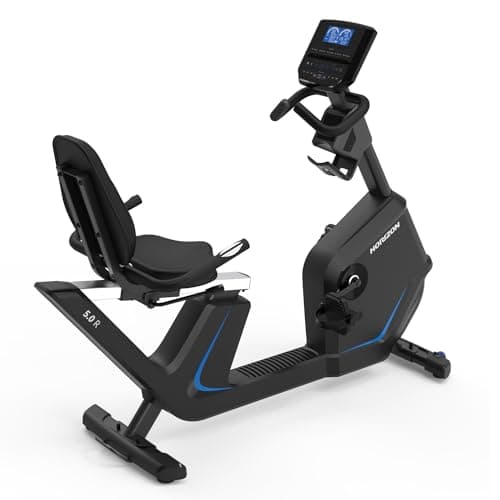
Usually yes, and for a mechanical reason worth understanding. But the seat setting matters more than the machine, and a badly set expensive bike will hurt more than a well-set cheap one.
Usually yes. Because you are seated, the bike carries your body weight and your knee moves a load rather than also stabilizing you — and the Arthritis Foundation notes that the continuous motion of cycling takes a joint through its range, which is what produces the fluid that lubricates it. The setting matters more than the machine: a seat positioned too far back over-extends the knee on every single revolution.
The mechanism, stated properly
Two separate things are going on, and it is worth keeping them apart because they are often blurred into one vague claim about “low impact”.
First, the load. When you walk, your knee carries your body weight and absorbs the impact of each step while also stabilizing you. On a recumbent bike the seat carries your weight, and the knee only has to move the pedal against whatever resistance you have set. You control that resistance directly, which means you control the load on the joint in a way you cannot when walking.
Second, the movement itself. The Arthritis Foundation explains that the continuous motion of cycling is helpful for arthritic joints because the more a joint moves through its full range, the more synovial fluid it produces — and synovial fluid is what lubricates the joint. It also notes that cycling regularly supports weight management, which reduces pressure on weight-bearing joints.
So the argument for a recumbent bike is not that it is gentle in some general sense. It is that it separates “move the joint” from “carry the body”, and lets you do the first without the second.
The setting that decides whether it helps or hurts
This is the part that gets skipped, and it matters more than which machine you buy. We would rather you bought the cheapest bike on this site and set it correctly than the most expensive one and set it wrong.
Seat distance from the pedals.At the furthest point of the pedal stroke your knee should retain a slight bend. If the seat is too far back, you straighten and over-extend on every revolution — hundreds of times a session — and a knee that felt fine at minute two will not at minute fifteen. Too close, and you close the joint angle up tight and load the front of the knee instead.
How to set it:
Sit on the bike normally.
Put your heel on the pedal and turn it to the furthest point from you.
Slide the seat until your leg is almost straight in that position, with the knee still slightly bent. Never locked.
Now move your foot to its normal position, with the ball of the foot on the pedal. You will have a comfortable bend throughout the stroke.
Ride two minutes and check again. Nearly everyone is too far back on the first attempt.
This is why the published inseam range matters more than the resistance count when you are shopping, and why a continuously sliding seat rail beats fixed positions. Machines with eight pre-drilled seat positions require your correct distance to fall near one of eight holes; if it falls between two, you choose which way to be slightly wrong.
Resistance: the bottom of the range is the whole question
With a sore knee, the top of the resistance range is irrelevant. You will be riding somewhere between the two lowest settings, which means what matters is whether the machine can express anything between them.
An eight-level bike cannot. Sixteen levels is better. Twenty-five is better again. And an electronically controlled 0–100 system — which one bike on this site has — makes the increment almost imperceptible, which is exactly what a narrow comfort window needs.
A heavier flywheel helps too, for a reason people do not expect: it carries momentum through the dead spots at the top and bottom of each revolution, so the pedal stroke is even rather than lurching. Lurching is what a sensitive knee notices, and it is worst at low resistance where there is little load to smooth things out. Published flywheel weights on this site run from 11 lb to 15.4 lb, and only three machines publish one at all.
How much, and how to build up
The CDC’s guidance for adults 65 and over is at least 150 minutes a week of moderate-intensity activity, plus two days of muscle strengthening and some balance work. With a sore knee that is a destination measured in months, and the quickest route to it is a start slower than seems worthwhile.
A workable first month:
Week 1: ten minutes at the lowest resistance, three times. Nothing more, even if it feels easy.
Week 2: if the knee is no worse the next morning, fifteen minutes, three times.
Week 3: fifteen minutes, four times, or twenty minutes three times. One change, not both.
Week 4:continue increasing one variable at a time — duration or frequency or resistance, never two together.
The test is the next morning, not during the ride.Stiffness that eases as you warm up is normal and usually fine. Pain that builds as you ride, or a knee that is worse the following day, means back off. The Arthritis Foundation’s guidance on how much exercise is enough is worth reading alongside this.
When the answer is not a bike
Three situations, stated plainly, because a site that sells bikes should be willing to say when a bike is wrong.
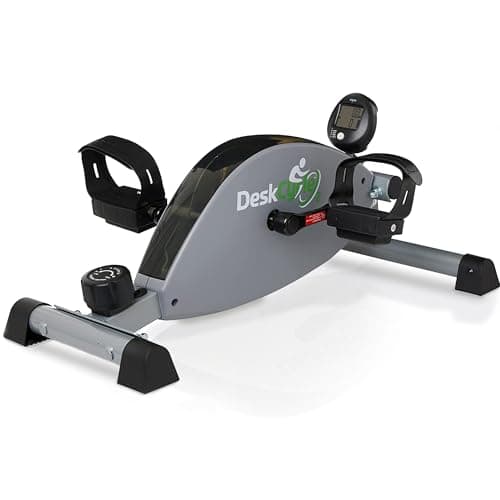
If the lowest setting still hurts. More machine will not fix that. A pedal exerciserunder your own armchair can be set considerably lower — one on this site has stepless resistance, meaning a continuous dial rather than fixed levels — and it costs a tenth as much.
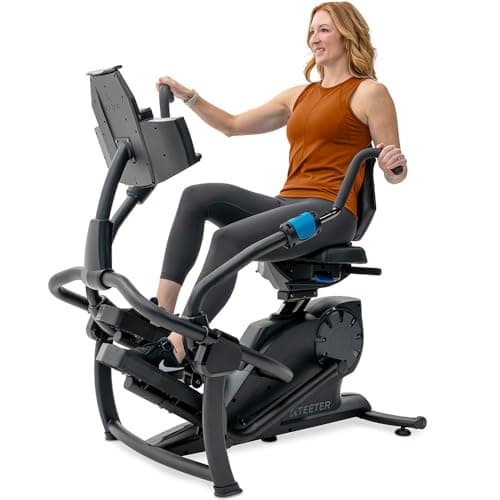
If the circular pedal motion itself is the problem.Some arthritic knees object to the flexion arc rather than the load, and no resistance setting changes the arc. The Teeter FreeStep moves its pedals in a straight line instead, which is a genuinely different joint path — and it is the most expensive machine on this site.
If the knee is post-surgical, recently injured, or has changed suddenly. Then the right first step is a physical therapist, not a purchase. They can tell you what range and load your knee should be working in, which is information no specification sheet contains and no website can supply. Nobody here is a clinician, and we are not going to pretend that a published spec table substitutes for someone watching you move.
General information, not medical advice. Tread & Tone is written by an enthusiast, not a clinician. Nobody here is a doctor, a physical therapist or a trainer, and nothing on this site has been medically reviewed. Talk to your doctor or physical therapist before starting something new, particularly after surgery, a fall, or a change in medication.
Questions people ask
Is a recumbent bike good for bad knees?+
Usually yes. Seated, your body weight is carried by the seat rather than the joint, so the knee moves a load instead of also stabilizing you — and the Arthritis Foundation notes that cycling's continuous motion takes a joint through its range, which produces the synovial fluid that lubricates it. But how you set the seat matters more than which machine you buy, and too far back over-extends the knee on every revolution.
Recumbent or upright bike for knee pain?+
Recumbent, in most cases, though the difference is less about the knee than people assume — the pedaling mechanics are similar. What the recumbent removes is the weight going through your hands, wrists and lower back, and the need to swing a leg over a crossbar to get on. Knee problems rarely arrive alone, and the recumbent unloads the other joints too.
How long should I ride with a bad knee?+
Ten minutes at the lowest resistance, three times in the first week, and judge by how the knee feels the next morning rather than during the ride. If it is no worse, add five minutes. The CDC's target of 150 minutes a week for adults 65 and over is a destination measured in months with a sore knee, and the fastest route to it is a slower start than feels reasonable.
Should I ride through knee pain?+
No, and nobody on this site is qualified to tell you otherwise. Mild stiffness that eases as you warm up is different from pain that builds as you ride. The test that matters is the next morning, not during. If it is worse, stop and talk to your doctor or physical therapist — exercise equipment is not a treatment plan and we are not clinicians.
How do I set the seat for a bad knee?+
Sit down, put your heel on the pedal at the furthest point of its travel, and slide the seat until your leg is almost straight with the knee still slightly bent — never locked. Then put your foot in its normal position and you will have a comfortable bend throughout. Ride two minutes and check again; almost everyone sets it too far back the first time.
What if even the lowest resistance hurts?+
Then a bike is not the answer and more bike will not help. A pedal exerciser under your own armchair can be set far lower — one on this site has stepless resistance, meaning a continuous dial rather than fixed levels. A motorized seated elliptical will move your legs for you, which is passive movement rather than exercise but keeps a joint moving. And if the knee is post-surgical or recently changed, see a physical therapist before buying anything.
CDC — Older Adult Activity: An Overview — At least 150 minutes a week of moderate-intensity activity, 2 days of muscle strengthening, plus balance activities for adults 65 and over (read July 24, 2026)
Product measurements are cited individually inside each Fit-to-You panel, against the manufacturer page or dated retailer listing they were read from.
Resistance granularity is the whole question here. The machines that can be set genuinely light, and the ones whose lowest setting is already too much.
Which low-impact machines people commonly return to after knee surgery, why the seated ones come first, and the rule that outranks anything on this page: follow your surgeon.