This is general information about the kinds of machines people commonly return to, not a rehab plan and not medical advice. The timeline, the clearance, and the exercises are your surgeon’s and physical therapist’s call — their protocol outranks every word below.
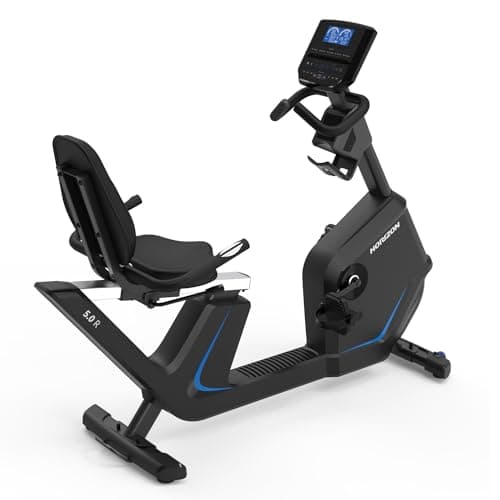
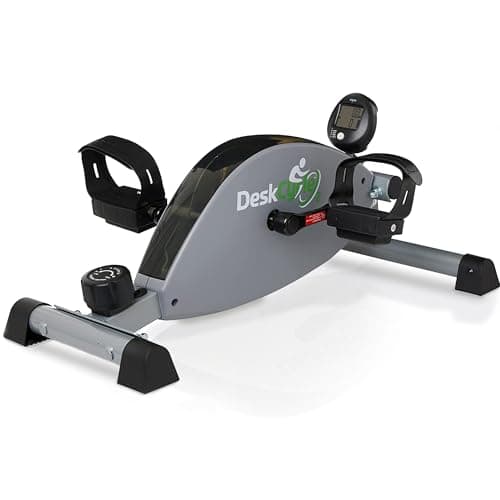
First, the rule that outranks everything else here: this is general equipment information, not medical advice and not a rehab protocol.Your surgeon and physical therapist set your timeline and clear you for each step — follow their plan, not this page. With that said, the machines people commonly return to first are the seated, low-impact ones— recumbent bikes, seated cross-trainers, and pedal exercisers — because they support your weight, spare the joint any impact, and let resistance start at almost nothing. Weight-bearing and high-stepping machines come later, if at all, and only once you are cleared.
We need to be plain about what this page is before it says anything else. It is a guide to kinds of equipment— the categories of machine that come up when people talk about getting moving again after a knee replacement, and the mechanical reasons some are gentler than others. It is not a recovery plan, it is not a schedule, and it is not medical advice. Nobody who wrote it is a surgeon, a physical therapist, or any kind of clinician, and none of it has been medically reviewed.
A knee replacement is major surgery, and recovery from it is directed by people who can examine your actual joint: your surgeon and your physical therapist. They decide when you start, what you start with, how much resistance is safe, how far to bend, and when — or whether — to move on to something harder. If anything on this page ever seems to conflict with what they told you, they are right and this page is wrong. Their protocol outranks everything below. Read the rest as background for a conversation with them, not as instructions to act on alone.
Why seated, low-impact machines tend to come first
When seated machines come up early in these conversations, it is not fashion — it is mechanics. Four features tend to travel together on this kind of equipment, and each one removes a specific stress from the joint.
You are supported. On a recumbent bike or a seated cross-trainer, you sit in a seat with a backrest. The seat carries your body weight, so your legs are moving a load, not holding one up.
There is no weight-bearing impact.Walking and running send a jolt up through the joint on every footfall. Seated pedaling has none of that — the foot stays on the pedal and the motion is a smooth circle, so there is no landing to absorb.
The resistance is controllable. These machines let you dial the effort from almost nothing upward. That means the very first sessions, if and when your care team clears them, can be little more than moving the joint through its range against no meaningful load at all.
The motion is smooth and repeatable.A pedal stroke is the same shape every time, which makes it predictable — there is no sudden twist, no uneven ground, no step to misjudge.
That is the whole reason this family of equipment gets mentioned first. A recumbent bike, a seated cross-trainer, or a small pedal exerciseryou can use from an ordinary chair all share those traits. They make it possible to move the joint gently, under a load you control, without asking it to bear your weight or absorb any pounding — and that is a genuinely different proposition from walking. Our guide to recumbent bikes and your kneesgoes deeper on the seated-cycling mechanics specifically. None of that, to be clear, is us telling you to start — it is us explaining why, when a therapist does reach for a machine, it is usually one of these.
Why weight-bearing and high-step machines come later, if at all
The flip side follows from the same logic. Machines that put your body weight on the joint or ask it to lift you repeatedly — treadmills, standing ellipticals, steppers, stair climbers — ask more of the knee, and they ask it in exactly the ways the seated machines were chosen to avoid. A treadmill is weight-bearing and involves repeated stepping. A stepper drives the knee through a loaded bend over and over. A standing elliptical keeps you upright and balancing while the legs work.
That is why these tend to belong to a later stage of a recovery — if they belong to yours at all. Some people are cleared to build toward them; some are guided toward other things entirely; and that decision is not one an article can make, because it depends on how your specific joint is healing and how it responds when a professional watches it move. Please do not read the order of machines on this page as a staircase you are meant to climb on your own. The only thing that moves you from one stage to the next is clearance from the people managing your care.
What the health authorities do and don’t tell you here
General guidance on movement is useful background, as long as you hold it at the right altitude. It is about movement in general, not about your surgical knee in particular.
On the encouraging side, movement is broadly good for joints. The Arthritis Foundation makes the point that appropriate movement tends to help arthritic joints rather than aggravate them, and it lists low-impact options — cycling among them — as gentle ways to keep a joint moving. On cycling specifically, the Arthritis Foundation notes that the continuous, low-impact motion moves the joint through its range rather than pounding it. That is the mechanical reason the seated bike keeps coming up — but a joint recovering from surgery is a special case, and none of this is a green light for yours.
On the cautious side, the ground rule for anyone is to check first. The National Institute on Aging advises talking to your doctor before you start something new — advice that is simply non-negotiable when there is a fresh surgical joint in the picture. And where it is all headed, in the long run, is a normal active life: the CDC’s guideline for adults 65 and over is at least 150 minutes a week of moderate activity, plus muscle strengthening and balance work. That is a destination to reach when your care team says you are ready for it, on the equipment they approve — not a target to chase on week one.
How to use this page without getting ahead of your care team
There is a right way to use everything above, and it is a slow one. Take the categories — seated and low-impact first, weight-bearing later or not at all — and the reasons behind them, and bring them to your surgeon or physical therapist as questions, not as decisions you have already made. “Is a recumbent bike something I could work toward?” is a good question. “I bought a stepper and started using it” is not a plan; it is a way to get hurt.
A few honest reminders as you go:
Let the clearance come first, then choose the machine. Deciding what to buy is the easy part and comes last. What your knee is ready for comes first, and only your care team can tell you that.
Pain is information, not an obstacle to push through. If something a therapist has cleared starts to hurt in a new way, that is a call to them, not a signal to tough it out.
Start lower and slower than feels worthwhile. The controllable resistance on a seated machine exists so you can begin at almost nothing. Beginning there is the point, not a waste of a session.
Follow the plan you were given, even where it differs from this. If your protocol says something other than what you read here, your protocol wins. Every time.
We can help with exactly one part of this: once you are cleared and know the kind of machine you are looking for, we can point you at gentle, well-documented, seated options and tell you honestly what each maker does and does not publish. The judgment about your knee stays with the people who can examine it. If a knee keeps objecting, or anything about your recovery feels off, that is a conversation for your surgeon or physical therapist — not a setting or a machine to experiment your way through.
General information, not medical advice. Tread & Tone is written by an enthusiast, not a clinician. Nobody here is a doctor, a physical therapist or a trainer, and nothing on this site has been medically reviewed. Talk to your doctor or physical therapist before starting something new, particularly after surgery, a fall, or a change in medication.
Questions people ask
What exercise equipment is used after a knee replacement?+
The machines people most often return to are the seated, low-impact ones — recumbent bikes, seated cross-trainers, and small pedal exercisers — because they support your weight and spare the new joint the pounding of walking or running. But which machine, at what point, and at what resistance is not a decision to make from an article. Your surgeon and physical therapist set the plan and clear you for each step, and their protocol outranks anything here.
When can I start using an exercise bike after knee surgery?+
We can't tell you, and we won't guess — that timing belongs entirely to your surgeon and physical therapist, and it varies from person to person for reasons only your care team can see. This page deliberately gives no timelines. What we can say is that a seated bike is a common part of many people's recovery once they are cleared for it, which is a very different statement from telling you it is time.
Why are seated machines recommended first after a knee replacement?+
Generally because they take impact out of the equation. A recumbent bike, a seated cross-trainer, or a pedal exerciser keeps you sitting, so the seat carries your body weight instead of the joint absorbing it with every footfall. The resistance is controllable and can start at almost nothing, and the motion is smooth and repeatable. That combination is why seated, low-impact equipment tends to come up early, while weight-bearing machines come later, if at all — and only when your care team says so.
Can I use a treadmill after a knee replacement?+
That is a question for your surgeon and physical therapist, not for us. A treadmill is weight-bearing and involves repeated stepping, so it typically belongs to a later stage than the seated machines, if it belongs in your plan at all — and only once you have been specifically cleared for it. Do not read the order of machines on this page as permission to progress. The clearance has to come from someone who can examine your knee.
Is cycling good for a new knee joint?+
Gentle movement through a comfortable range is generally good for joints — the Arthritis Foundation notes that cycling's continuous, low-impact motion moves a joint through its range rather than pounding it. But a joint recovering from surgery is a special case, and general points about movement are not a green light for your specific knee. Use them as background, and let your physical therapist decide what your knee should actually be doing.
CDC — Older Adult Activity: An Overview — At least 150 minutes a week of moderate-intensity activity, 2 days of muscle strengthening, plus balance activities for adults 65 and over (read July 24, 2026)
Product measurements are cited individually inside each Fit-to-You panel, against the manufacturer page or dated retailer listing they were read from.
Resistance granularity is the whole question here. The machines that can be set genuinely light, and the ones whose lowest setting is already too much.