Tread & Tone

Balance Training Equipment for Seniors

The CDC says more than one in four adults over 65 falls each year, and that falling once doubles your chance of falling again. This is the cheapest equipment on the site and probably the most useful.

By Stephen V.Last updated How we choose

How this is funded: we earn a commission if you buy through our links, at no extra cost to you. It never changes what we recommend, and every page here names at least one thing we would not buy. Full disclosure.

If you have had a fall, or a near-fall, or you have started putting a hand on the wall going down stairs, this is the section that matters most — more than any bike, and for about a fiftieth of the money.

The CDC reports that more than one in four adults aged 65 and over falls each year, that falling once doubles the chance of falling again, and that fewer than half of people who fall mention it to their doctor. The National Institute on Aging lists balance work — standing on one foot, heel-to-toe walking, tai chi — as one of four exercise types older adults need, alongside endurance, strength and flexibility.

The equipment for it costs between about $19 and $37. The most expensive item in this section is a set of parallel bars at around $250, and that is for a genuinely unsteady walker rather than a general buyer. Which makes this the one category on the site where we would tell almost everybody to buy something.

Every page in this section

The four kinds of balance equipment, in order of difficulty

Difficulty here is mostly a function of two things: how high off the floor you are, and how unpredictably the surface moves. Start at the bottom of this list and stay there until it is boring.

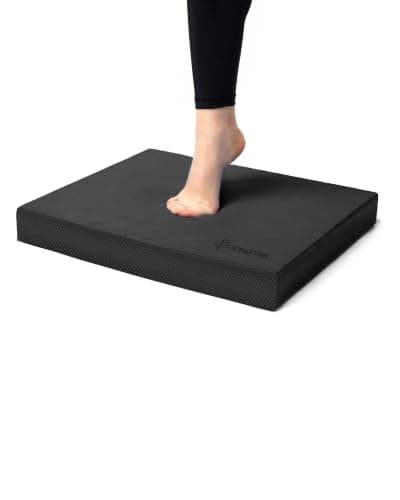
1. Foam balance pad — about 2 to 2.4 inches

A dense foam slab. The surface compresses unevenly under your foot, so the muscles in your ankle and hip do constant small corrections. This is where essentially everyone should start. Falling off a 2-inch pad is a step, not a fall. Our shortlist favors the 19 by 15.8 inch one because it has room for two feet side by side with margin, and that margin is the difference between an exercise and a stumble.

2. Inflatable wobble cushion — 2 to 3 inches

An air-filled disc. Its difficulty is adjustable: let air out and it is nearly a firm pad, pump it up and it is genuinely unstable. That is a real advantage — it grows with you instead of needing replacing — and it doubles as a chair cushion, which is how most people end up using one daily.

3. Rigid wobble board — about 3.15 inches

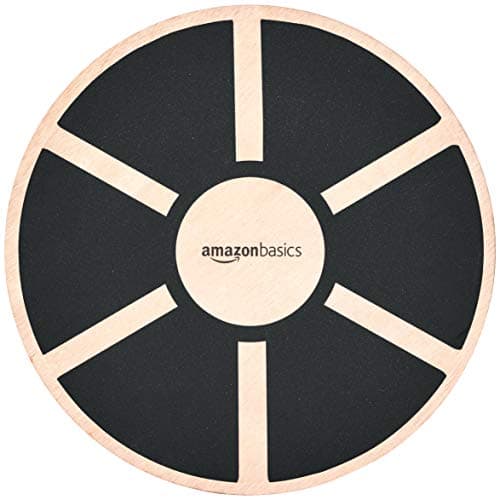
A wooden platform on a fixed dome. It tilts, predictably, in whichever direction you lean. A clear step up from foam, and the one balance product on this site that publishes a weight capacity. Its own listing warns against use on a wet or smooth floor, which rules out a lot of kitchens.

4. Spring-mounted board — 6 inches

Well made, 350 lb capacity, birch construction — and we tell you to skip itif you are a senior beginner. Six inches is about a stair riser, and springs make the platform move unpredictably rather than in the direction you lean. That combination is the opposite of what someone with a fall history needs. It is in our shortlist anyway, marked as a skip, because “why not this one?” deserves an answer.

And separately: parallel bars

Not a balance challenge but a balance aid— six feet of rail on both sides, so a genuinely unsteady walker can practice steps with a hand on each. The honest caveat that most listings bury: it anchors into your floor with eight expansion screws, which in a rental or over a finished floor is often a deal-breaker.
The rule that matters more than the equipment

Never do balance work without something solid within arm’s reach. A kitchen counter, a heavy table, a doorframe, the back of a weighted armchair. Not a dining chair that slides, and not a wall you would have to fall against to reach.

This is not a liability line, it is the whole method. The point of balance training is to work at the edge of your stability, and working at that edge is only safe if the recovery is already arranged. Every product page in this section carries a “needs support nearby” row for exactly that reason.

The corollary: put the pad where the support already is. A pad in the spare room next to nothing gets used once. A pad by the kitchen counter gets stood on while the kettle boils, which is how anybody actually accumulates practice. All of these weigh under 7 lb, and one weighs 12 ounces.

And tell your doctor or physical therapist that you have started. The NIA is explicit about talking to a doctor before beginning a new exercise program, and if you have had a fall, that conversation should happen anyway — the CDC notes that fewer than half of people who fall mention it.

What the equipment can't do

Balance is not only a muscular question, and a foam pad addresses only part of it. The National Institute on Aging lists inner-ear problems, vision changes, blood-pressure drops on standing, nerve damage in the feet, and medication side effects among the causes of balance problems in older adults. None of those is fixed by standing on foam.

So if your balance has changed noticeably or recently, that is a conversation with a doctor rather than a purchase. Dizziness on standing, in particular, is a different problem from weak ankles and is often addressable.

Equipment also does nothing about the environment, which is where falls actually happen. Loose rugs, dark stairs, no grab bar in the bathroom, reading glasses worn on the stairs. Our fall-prevention checklist covers the room-by-room version, ordered by how much difference each change makes relative to what it costs — and several of the highest-value items on it cost nothing at all.

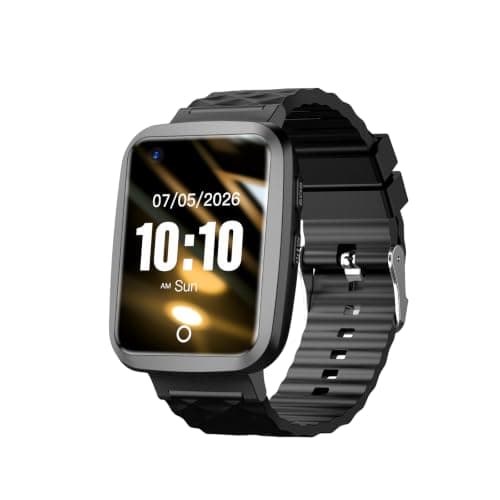
Finally, if the worry is a fall happening when nobody is home, fall-detection wearables are a separate category with a separate trap: the monthly subscription that turns an $89 device into roughly $389 in the first year, which only one manufacturer publishes plainly.

Where to start if you buy one thing

A foam balance pad, at around $25, placed by whichever kitchen counter you stand at most. Then six exercises from the National Institute on Aging, in order of difficulty, with a printable version to keep beside it.

Two weeks of that, twice a day, takes about four minutes a session. If it becomes easy, a wobble cushion at the same price gives you somewhere to go next. If it does not become easy, that is useful information to take to a physical therapist.

General information, not medical advice. Tread & Tone is written by an enthusiast, not a clinician. Nobody here is a doctor, a physical therapist or a trainer, and nothing on this site has been medically reviewed. Talk to your doctor or physical therapist before starting something new, particularly after surgery, a fall, or a change in medication.

Questions people ask

Is balance equipment safe if I have already had a fall?

A 2-inch foam pad used beside a kitchen counter is about as low-risk as exercise gets, and balance work is one of the four exercise types the National Institute on Aging says older adults need. But if you have had a fall, tell your doctor first — the CDC notes that fewer than half of people who fall do, and a fall can point to causes that no pad addresses, such as a blood-pressure drop on standing or a medication side effect.

Balance pad or wobble cushion — which first?

Either works, and the honest answer is that the pad is simpler and the cushion is more adjustable. A foam pad has one fixed difficulty; an inflatable cushion lets you start almost firm and add air as you improve, which means one purchase instead of two. If you want the cheapest possible start, the cushion is a few dollars less. Both are on our comparison page.

How high is too high for a balance board?

Height is the main risk multiplier. A 2-inch pad, a 3-inch cushion and a 3.15-inch rigid board are all reasonable progressions for a steady older adult. A 6-inch spring-mounted board is roughly a stair riser off the floor and moves unpredictably — we mark that one as a skip for senior beginners for exactly that reason, and it is the only product on this page we recommend against.

How often should I do balance work?

The CDC's guidance for adults 65 and over asks for balance activities as part of the weekly routine, alongside 150 minutes of moderate aerobic activity and two days of muscle strengthening. It does not set a session count for balance specifically. In practice, short and frequent beats long and occasional — two minutes twice a day next to the counter accumulates faster than a weekly session you have to plan.

Do I need parallel bars?

Only if you are genuinely unsteady walking and want to practice steps with support on both sides — the situation a physical therapist would set up in a clinic. They are around $250 and they anchor into your floor with eight expansion screws, which is a real constraint in a rental. For most buyers, a foam pad by a counter is the right first purchase and the bars are unnecessary.

Can I just hold onto a chair instead of buying anything?

Yes, and you should be doing that anyway. Standing on one foot beside a counter costs nothing and is on the NIA's own list of balance exercises. What a pad adds is an unstable surface, which makes the same exercise harder without making it higher — that is the whole value, and it is why it costs $25 rather than nothing.

Sources

Product measurements are cited individually inside each Fit-to-You panel, against the manufacturer page or dated retailer listing they were read from.