Balance Exercises for Seniors: A Printable Routine
Six exercises from the National Institute on Aging, in order of difficulty, with a printable one-page version to keep by the counter.
Read the guideOrdered by value rather than by room, because the two highest-value items on this list are free and the third costs about eight dollars.
The short answer
The highest-value actions are not purchases. Talk to your doctor about medications and about any fall you have had; the CDC notes fewer than half of people who fall do. Then take up loose rugs, put a nightlight on the route to the bathroom, and start eight minutes a day of balance work. Grab bars in the bathroom are the best fixed change. A fall-detection watch comes last — it tells someone afterwards, which is not prevention.
The CDC reports that more than one in four adults 65 and over falls each year, that falling once doubles the chance of falling again, and that fewer than half of people who fall mention it to their doctor. Around 3 million emergency department visits a year follow older-adult falls.
This list is ordered by value relative to cost rather than by room, because room-by-room lists tend to put the cheap high-impact items in the middle. Items 1 to 3 here cost nothing or almost nothing, and they are the ones that matter most.
Two conversations, and both are more valuable than anything you can buy.
Any fall you have had, including the ones that did not hurt. Fewer than half of people report them, usually out of embarrassment or a fear of losing independence. A fall is diagnostic information: the National Institute on Aging lists inner-ear problems, vision changes, blood-pressure drops on standing, nerve damage in the feet and medication side effects among the causes of balance problems in older adults. Several are treatable.
Your full medication list, including anything over the counter.Sedatives, blood-pressure medications, some antidepressants and anything that causes drowsiness or lightheadedness all raise fall risk, and the interaction between four medications is not something you can assess yourself. The CDC’s STEADI initiative is built around exactly this kind of screening.
Also get your eyes tested if it has been more than a year, and ask about bifocals or varifocals on stairs specifically — they distort the depth of the step you are about to take.
Loose rugs and mats are among the most consistently cited home hazards. The problem is the edge: it curls, a toe catches it, and the rug then moves under the recovering foot.
Either remove them, or secure them properly with double-sided carpet tape or a full non-slip underlay — not a corner of tape. If a rug is purely decorative, taking it up costs nothing and takes a minute.
While you are on the floor: trailing cables, the pile of magazines beside the armchair, the pet bed in the hallway, and the bathmat with a curled corner.
This specific route deserves its own item, because it combines every risk factor at once: poor light, bare or socked feet, a hard floor at the destination, and a person who is half asleep and possibly lightheaded from standing up quickly.
A plug-in motion-sensing nightlight in the hallway and one in the bathroom costs a few dollars. A torch on the bedside table is not the same thing — it needs finding, and it occupies a hand.
Also: sit on the edge of the bed for a count of five before standing. Blood-pressure drops on standing are on the NIA’s list of causes, and five seconds costs nothing.
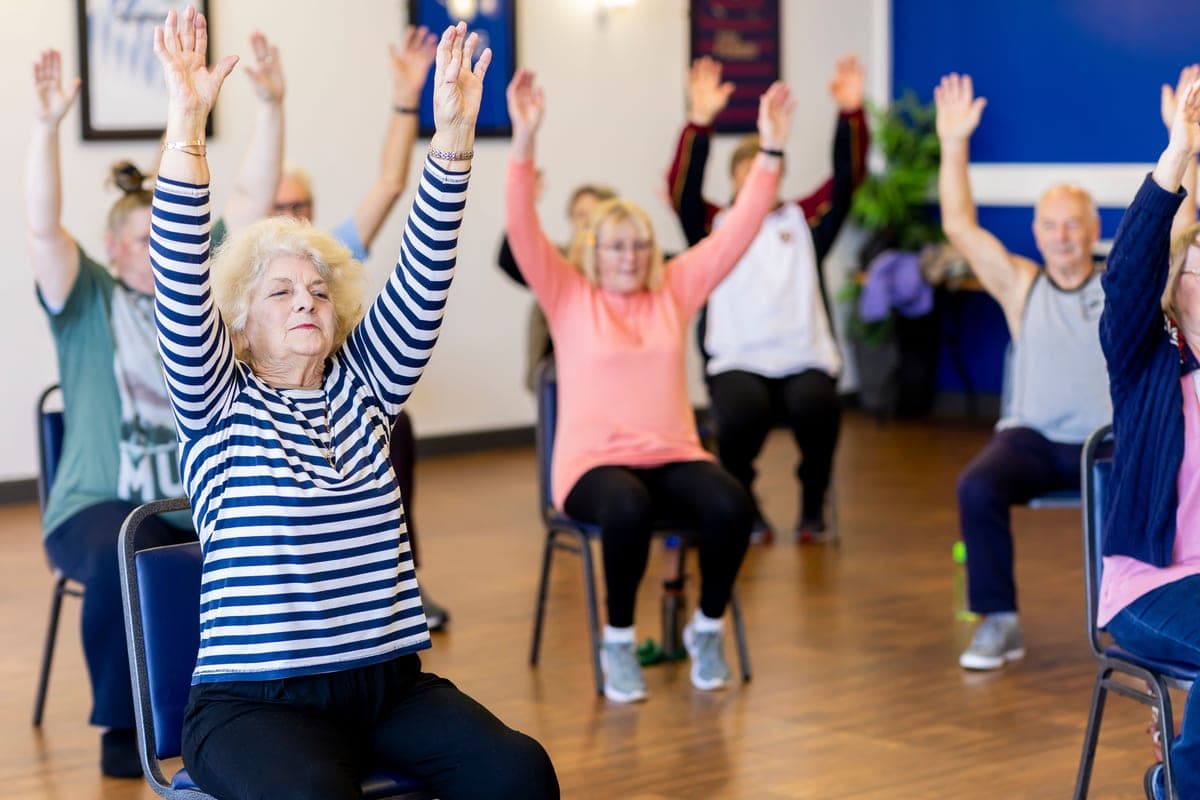
The CDC’s guidance for adults 65 and over specifically asks for activities to improve balance, alongside 150 weekly minutes of moderate activity and two days of muscle strengthening. The NIA notes that improved physical function reduces both the risk of falling and the likelihood of serious injury from a fall.
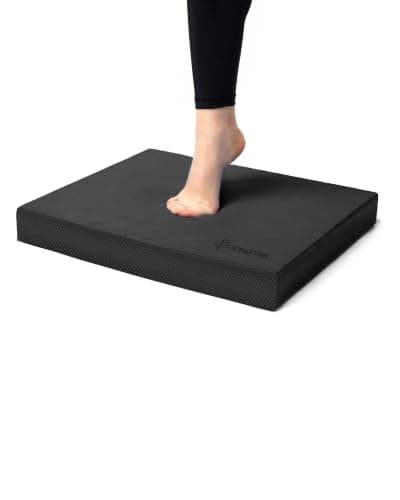
Four of the six exercises in our printable routine need nothing but a counter to hold. It takes about eight minutes. A foam pad at around $37 adds an unstable surface to two of them.
This is the only item on this list that makes you more resilient rather than making your house less hazardous. Both matter, and this is the one people skip.
The best fixed change you can make to a house. A bathroom combines a wet floor, a change of posture, and often a step over the edge of a bath — and it does so several times a day.
One bar beside the toilet and one in the shower or beside the bath. Fitted into studs or with proper wall fixings, not suction cups, which can release under load and are the single most dangerous false economy in this whole list.
Add a non-slip mat inside the shower or bath, and a shower stool if standing for the duration is tiring. If you rent, ask before drilling; many landlords will agree to accessibility fixtures.
A handrail on both sides if the staircase allows it, running the full length including the top and bottom steps — those are where people misjudge. Good light at both ends with a switch at both ends.
Nothing stored on the stairs, ever, including the thing you are going to take up next time. And if you wear bifocals or varifocals, be deliberate on stairs — the lower part of the lens distorts where the next step actually is.
Indoors: closed, flat, non-slip, with a back. Not socks on hard floors, not backless slippers, not slippers that have gone soft and loose. The heel that comes off mid-step is a real mechanism.
This one is free if you already own suitable shoes and are simply not wearing them in the house, which is a common situation.
Move everything you use daily to between hip and shoulder height. Anything requiring a step stool, a chair or a stretch on tiptoe should be relocated or should belong to somebody else’s job.
If you have a step stool, it should have a handrail and it should not be a dining chair. Reaching while standing on something is a common and entirely avoidable mechanism.
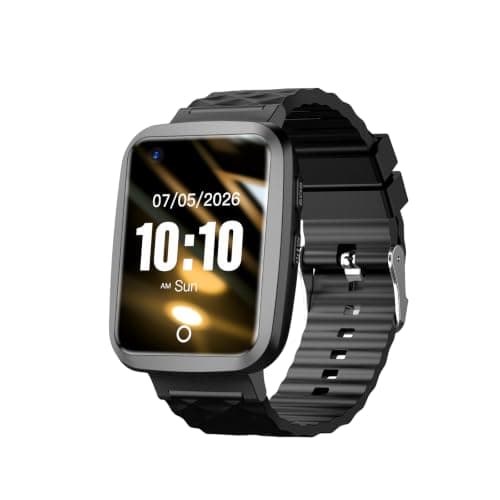
Last, deliberately, because it does not prevent anything.It tells someone after you have fallen, which matters — particularly for someone living alone, where the time spent on the floor is a large part of the harm — but it is a backstop rather than a plan.
Do items 1 to 4 first. The$37 balance pad costs about a third of one month’s subscription on the devices that require one, and unlike the watch it changes the odds.
If you do buy one, the specification to check is the subscription. Two devices we cover require $25 a month, turning an $89 watch into roughly $389 in the first year. Our fall-detection page lays out all three, including the fact that all of them are IP67 and therefore not for the shower — where a meaningful share of falls happen.
Talk to your doctor about medications and about any fall you have had. Take up the loose rugs. Put a nightlight on the route to the bathroom. Start eight minutes a day of balance work beside the kitchen counter. Fit grab bars in the bathroom. Sort out the stairs and your indoor shoes. Move the things you reach for. Then, if falling alone is a specific worry, consider a fall-detection device — and read the subscription terms before you buy one.
None of the above is a device, and that is deliberate — a fall-detection device changes what happens after a fall rather than whether one happens. But the question comes up constantly, and the most common version of it has a well-documented answer: Apple publishes exactly what its watch does on a hard fall, including the admission that it “cannot detect all falls”. Our page on Apple Watch fall detection quotes the mechanism and the limits, and sets out the three questions that decide whether a dedicated device is the better buy.
General information, not medical advice. Tread & Tone is written by an enthusiast, not a clinician. Nobody here is a doctor, a physical therapist or a trainer, and nothing on this site has been medically reviewed. Talk to your doctor or physical therapist before starting something new, particularly after surgery, a fall, or a change in medication.
Talk to your doctor about your medications and about any fall you have already had. The CDC reports that fewer than half of people who fall tell their doctor, and its STEADI initiative is built around screening for risk factors and assessing modifiable ones — several of which, including medication side effects and blood-pressure drops on standing, are treatable and are not addressed by any change to your house.
Bathrooms and stairs are the two rooms that come up most often, and the route from bed to bathroom at night combines both risks — poor light and bare feet. That is why a nightlight on that specific route appears near the top of this list despite costing almost nothing.
Loose rugs and mats are among the most cited home hazards, and the fix is either to remove them or to secure them properly with double-sided carpet tape or a non-slip underlay. The edge that curls is the part that catches a toe. If a rug is only there for looks, taking it up is free and immediate.
In a bathroom, yes, and they are among the more worthwhile fixed changes you can make — they give you something solid at exactly the moments when a wet floor and a change of posture combine. Fit them into studs or use proper fixings rather than suction cups, which can release. If you rent, ask before drilling; many landlords agree to accessibility fixtures.
Yes. The CDC's guidance for adults 65 and over specifically asks for activities to improve balance alongside aerobic activity and muscle strengthening, and the National Institute on Aging notes that improved physical function reduces both the risk of falling and the likelihood of serious injury. Eight minutes a day beside a kitchen counter is the practical version.
No — it tells someone afterwards, which is a different and lesser thing. If you are considering one, do the free items on this list first and buy a balance pad, which costs about a third of one month's subscription on the devices that require one. The watch is worth having as a backstop, not as your fall-prevention plan.
Product measurements are cited individually inside each Fit-to-You panel, against the manufacturer page or dated retailer listing they were read from.
Six exercises from the National Institute on Aging, in order of difficulty, with a printable one-page version to keep by the counter.
Read the guideBest Balance Gear
Pads, cushions, boards and rails ranked by how safely you can start — including the one we tell you not to start on.
Top pick: StrongTek Extra Wide TPE Balance Pad
Price as of October 22, 2026. #ad How we’re funded
Best Fall Alert
The monthly subscription is the real price, and only one of these publishes it. What each device actually does when someone falls.
Top pick: Fajocru Fall Detection Watch for Seniors