The short answer
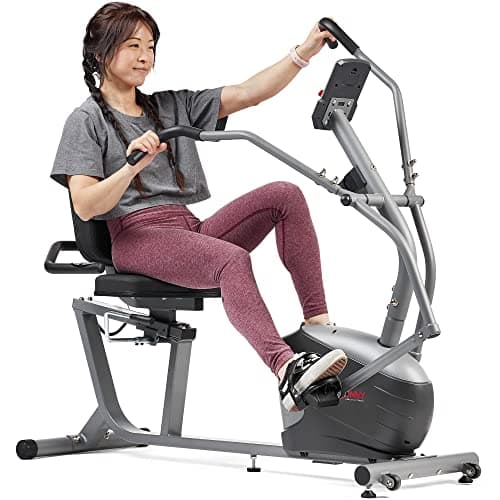
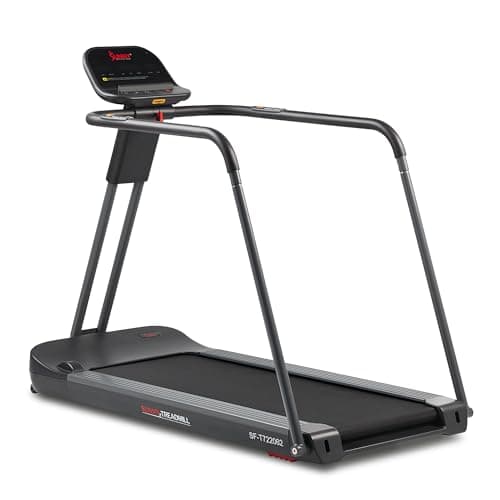
Walking is weight-bearing: it loads your skeleton, challenges your balance, and is the more functional movement. Cycling removes all three, which is exactly the point if knees, hips or balance are the reason you are shopping. Choose the bike if any joint or your balance is the constraint. Choose the treadmill if you want to keep or rebuild walking ability and can do it safely.
The fork, laid out on the things that actually differ.| What you care about | Recumbent bike | Treadmill |
|---|
| Weight through your joints | None. The seat carries you | All of it, every step |
|---|
| Bone loading | Minimal — it is not weight-bearing | Yes. Walking is weight-bearing activity |
|---|
| Balance demand | None. You are seated and supported | Continuous, on a moving surface |
|---|
| Risk of a fall | Essentially nil | Real. Handrails and a safety key matter |
|---|
| Functional carry-over | Limited. Cycling is not a daily-life movement | High. Walking is what you do all day |
|---|
| Usable on a bad-knee day | Usually yes, at the lowest resistance | Often not |
|---|
| Getting on | Step through a frame and sit down | Step up 4 to 8 inches onto a deck |
|---|
| Footprint | 50 to 66 in long, plus mounting clearance | 47 to 63 in long, plus 3 ft of clear floor behind |
|---|
| Price for something decent | $160 to $900 | $240 to $800 |
|---|
The one difference that matters: weight-bearing or not
Everything else follows from this. On a treadmill your skeleton carries your body weight and your balance system works continuously to keep you upright over a moving surface. On a recumbent bike, the seat carries your weight and your balance system does nothing at all.
Which of those you want depends entirely on why you are shopping, and it splits cleanly:
If you have not settled on buying a machine at all, the prior question is recumbent bike versus plain walking— the same weight-bearing trade without a treadmill in the middle of it.
The load is the problem— arthritic knees or hips, a joint replacement, a recent injury, or significant body weight making impact uncomfortable. Then removing the load is the whole point, and the bike is right. The Arthritis Foundation notes that cycling is low-impact and that its continuous motion moves a joint through its range, producing the fluid that lubricates it.
The load is the point— you want to keep walking, or get back to walking, and you are worried about losing the ability. Then a machine that removes weight bearing is training something you did not come for. Walking is the more functional movement because it is what you do all day, and the CDC names brisk walking as moderate-intensity activity in its own right.
Safety, stated plainly
The bike is safer and it is not close. You are seated, nothing moves beneath you, and there is nothing to fall off. In the worst case you stop pedaling.
A treadmill has a moving belt, and the CDC’s figures are that more than one in four adults 65 and over falls each year and that falling once doubles the chance of falling again. That does not disqualify treadmills. It means that if you buy one, three things are non-negotiable: rails running the length of the deck, the safety key clipped to your clothing every session, and three feet of clear floor behind the machine because that is where you go if you stumble.
Our handrail page ranks machines on exactly that, and the pre-walk checklist is here.
Getting on: closer than you would think
People assume the bike wins this easily. It usually does, but the margin is smaller than expected.
A treadmill deck sits some inches off the floor, and you lift a foot onto it twice a session. The one machine on this site that publishes the figure states 4 inches, and the flat walking pads work out at about 4.3 to 5.2 inches. That is a modest step.
A recumbent asks you to step through a frame — lower than an upright’s crossbar, but not zero, and not one manufacturer publishes the number. So the honest comparison is: a published 4-inch step-up on the treadmill against an unpublished step-through on the bike.
What the bike does win decisively is what happens after you are on it. You sit down and stay seated. On a treadmill you are standing and walking for the whole session.
What neither machine does
The CDC’s guidance for adults 65 and over asks for three things: 150 minutes a week of moderate aerobic activity, two days of muscle strengthening, and activities to improve balance.
A recumbent bike delivers one of the three. A treadmill delivers the aerobic minutes and some incidental balance work, though walking a flat moving belt is much less of a balance challenge than uneven ground. Neither delivers muscle strengthening.
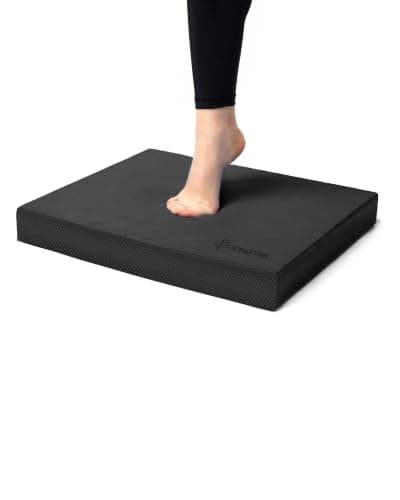
So whichever you buy, add a balance pad at about $37. It is the cheapest thing on this site, it costs a tenth of the price difference between these two machines, and it addresses the requirement that both of them miss.
Two situations where the answer is neither
If your budget is under about $150 or you have no floor space, a pedal exerciser under the armchair you already own does the seated motion for a fraction of the cost, with no mounting and no room needed. Less exercise, far more likely to be used daily.
If you can walk outdoors safely, do that first. It is free, the CDC counts it identically, and uneven ground gives you a balance challenge no treadmill does. Buy the indoor machine for the weeks when the pavement is icy, not instead of the walking.