A mini stepper is cheap, tiny, and gives a genuine leg workout — but it asks you to balance while you step, and that’s the honest catch for an older user. Here’s who it suits and who should skip it.
A mini stepper is small, cheap, and gives a real leg and cardio workout — but you have to balance while stepping, which is the catch past 60. It suits steady-on-their-feet users with a wall or counter to hold. If balance is any concern at all, a seated pedal machine is the safer choice.
What it is, and the real benefit
A mini stepper is about the smallest cardio machine you can buy. It is two pedals on a hydraulic or spring mechanism, no larger than a bathroom scale, that you press down one at a time as though climbing a low stair that never ends. There is no console to speak of, no seat, and often no frame taller than your ankle. It slides under a bed or into a cupboard between uses, and it costs a fraction of anything else on this site — it is genuinely one of the cheapest ways to get a cardio machine into a small home.
And here is the part people underestimate: the workout is real. Every step lifts your own body weight, which is far more resistance than turning a pedal against a dial, and that lift works the calves, the fronts and backs of the thighs, and the glutes. Do it steadily for a few minutes and your heart rate and breathing climb. Push a little harder and, depending on the effort you put in, it can reach the moderate intensity that the CDC counts toward the weekly activity target for older adults. The talk test is the simple gauge: if you are working hard enough to be a little breathless but can still speak, you are in that moderate range.
So the appeal is honest. A small footprint, a low price, and a genuine training effect in a machine you can leave next to the sofa. If the only question were “does it work your legs and lungs”, the answer would be a clean yes. But that is not the only question, and the rest of this page is about the part the product listings leave out.
The balance catch, stated plainly
Here is the thing a mini stepper asks of you that a bike or a pedal exerciser does not: you do it standing up, on your own two feet, while the surface under those feet is moving. Stepping is not just a leg exercise. It is a balance task. Each time one pedal sinks, your weight shifts, your standing leg has to steady you, and for a moment you are supported by less than both feet flat on the floor. For a fit adult that is nothing. For an older user whose balance is not what it was, it is the whole risk.
This is worth taking seriously rather than waving away. The CDC reports that more than one in four adults aged 65 and over falls each year, and that falling once roughly doubles the chance of falling again. A machine that deliberately introduces a small, repeated instability is not something to hand to a person for whom a fall is already the main thing standing between them and their independence. The cheapness of the machine can hide how much it is actually asking of the user.
Who should be cautious, then? Anyone who feels unsteady standing still, who holds furniture to cross a room, who has had a fall in the past year, who gets dizzy when they stand up, or who takes medication that affects balance or blood pressure. If any of that describes you, the question of whether a moving step is sensible is one for your doctor or physical therapist, not for a product page and not for us — nobody at Tread & Tone is a clinician. A moving step is the wrong place to find out whether your balance is up to it.
Who a mini stepper actually suits
None of that means the machine is a bad buy. It means it has a specific owner, and being honest about who that is serves you better than pretending it suits everyone.
A mini stepper is a good fit if you are steady on your feet— you stand and walk without holding on, you have not been falling, and standing balance is simply not something you worry about. It suits someone who wants to build leg strength and get the heart working but has almost no room and a small budget, and who likes the idea of a quick few minutes beside the television rather than a trip to a gym. If that is you, the stepper does more work per minute than most seated options precisely because you are lifting your own weight.
With one firm condition attached: use it beside something you can hold.A bare mini stepper gives you nothing to steady yourself on, so it should live next to a kitchen counter, a sturdy handrail, a heavy table or a wall — something fixed that will not tip if you lean on it. That way a hand is always within reach, you can put it down whenever the step wobbles, and you can concentrate on the leg work instead of on staying upright. Set up like that, for a steady user, it earns its small place in the room.
The safer seated alternatives
If reading the balance section made you hesitate, that hesitation is useful information, and there is a straightforward answer to it. The reason a mini stepper carries any risk at all is that you stand on it. Take the standing away and the risk goes with it.
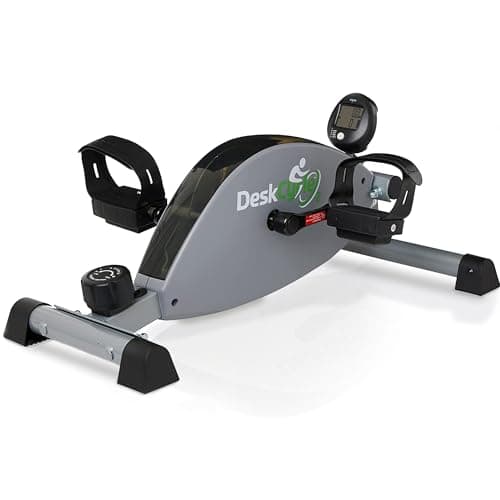
A pedal exerciseris the closest swap. It is a small set of pedals you place on the floor in front of your own armchair and turn while seated, so the chair carries your weight and your balance is never in the equation. You give up some of the intensity — you are no longer lifting your body — but you keep the leg movement, the resistance, and the tidy footprint, and you remove the fall risk entirely. For many older users that is the better trade, and it is the machine we would point a balance-conscious reader toward first.
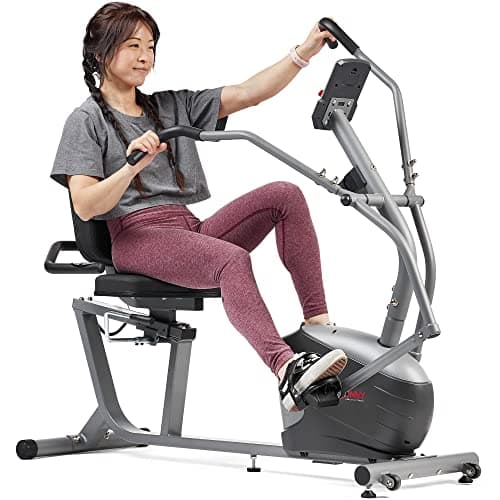
A recumbent bike goes further in the same direction. You sit back into a supported seat with a backrest, your feet out in front of you, and pedal against a resistance you control precisely. It is a larger, pricier machine than a stepper, but it is about the most stable way to get a real cardio and leg workout that exists, with nothing asked of your balance and your lower back supported throughout.
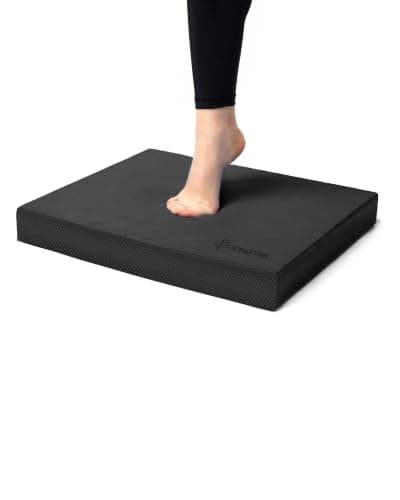
And if it is balance itself you want to improve rather than avoid, that is a different job with different tools. A balance pad or dedicated balance trainer is built to train standing stability in a controlled, low-height way — the goal there is the balance, done deliberately, not balance as an accidental side-effect of a cardio machine. Pairing seated cardio with proper balance work is a sounder plan than using a moving step to do both at once.
How it fits the guidelines, and building up gently
Whichever machine you land on, it is worth knowing what you are aiming at. The CDC’s guidance for adults 65 and over is at least 150 minutes a week of moderate-intensity activity, two days of muscle strengthening, and some balance work. A mini stepper can contribute to the first two of those — the cardio minutes and, because you are lifting your weight, a share of the strengthening. What it should not be counted on for is the balance component; that is better trained deliberately and safely, not as a hazard bolted onto your cardio.
The 150 minutes is a destination, not a starting line, and the fastest route to it is a start slower than feels worthwhile. A few minutes at a time is a perfectly good beginning. The Arthritis Foundation’s advice on how much exercise is enough is to build volume gradually and judge intensity by how you feel, adding time only once the current amount sits comfortably. With a mini stepper the same rule applies twice over, because you are also asking your balance and your knees to adapt, not only your lungs.
A sensible first few weeks looks like short sessions — a handful of minutes, a few times a week, always with a hand near your support — and then adding a minute or two at a time once that feels easy and leaves no soreness the next morning. Judge the knees by how they feel the following day rather than during the step. Change one thing at a time: a little longer, or a little more often, or a little harder, never all three together.
And the standing caveat runs underneath all of it. If you feel unsteady, dizzy, or unusually breathless on the step, stop — that is not ordinary exercise discomfort, and a moving surface is not the place to push through it. If pain, a fall, surgery, or a change in medication is part of your picture, talk to your doctor or physical therapist before you start. A mini stepper is a genuinely good little machine for the right person; the whole point of this page is to help you tell honestly whether that person is you.
General information, not medical advice. Tread & Tone is written by an enthusiast, not a clinician. Nobody here is a doctor, a physical therapist or a trainer, and nothing on this site has been medically reviewed. Talk to your doctor or physical therapist before starting something new, particularly after surgery, a fall, or a change in medication.
Questions people ask
Are mini steppers good for seniors?+
For the right senior, yes. A mini stepper is small, inexpensive, and gives a real leg and cardio workout you can do beside the television. The catch is that you balance on your own two feet while the steps move under you, so it suits people who are already steady standing and have a counter or rail to hand. If balance is any concern, a seated machine is the safer choice.
Are mini steppers safe if my balance isn't great?+
This is the honest limit of the machine, and it is a question for your doctor or physical therapist rather than a website. Standing and stepping is itself a balance task, and the CDC reports that more than one in four adults over 65 falls each year. If your balance is unreliable, a moving step is not where you want to test it. A seated pedal exerciser removes the balance demand entirely.
Do mini steppers give a real workout?+
They do. Lifting your own body weight step after step works the calves, thighs and glutes and raises your heart and breathing rate, and depending on how hard you push it can reach the moderate intensity the CDC counts toward the weekly target. It is a genuine training effect in a machine the size of a bathroom scale — the limit is balance and joint comfort, not whether the effort is real.
Mini stepper or pedal exerciser — which is better?+
It depends on your balance. A mini stepper works you harder because you lift your own weight, but you do it standing. A pedal exerciser is used sitting in your own armchair, so it removes the balance demand and the fall risk while still moving your legs against resistance. If you are steady on your feet, the stepper does more; if balance is any worry, the pedal exerciser is the safer machine.
Can I hold onto something while using a mini stepper?+
Yes, and you should. A bare mini stepper gives you nothing to hold, so place it beside a kitchen counter, a sturdy rail or a wall where a hand is always within reach. Holding on steadies you and lets you concentrate on the leg work rather than on staying upright. Some models add a resistance-band handle, but a fixed surface you cannot pull over is better support.
What if I have knee problems?+
Stepping bends the knee under your full body weight on every rep, so it loads the joint more than seated pedaling does. Some knees tolerate that and some do not, and a small step height is gentler than a deep one. If your knee is painful, post-surgical or recently changed, talk to your doctor or physical therapist before buying, and consider a seated machine that carries your weight for you instead.
Sources
CDC — Older Adult Activity: An Overview — At least 150 minutes a week of moderate-intensity activity, 2 days of muscle strengthening, plus balance activities for adults 65 and over (read July 24, 2026)
CDC — Facts About Falls — More than one in four adults 65 and over falls each year; falling once doubles the chance of falling again (read July 24, 2026)