A 3-inch rigid board used at a counter is reasonable for someone already steady on foam. A 6-inch spring board is not. Height and predictability are the two variables, and both are in your control.
Sometimes. A rigid board about 3 inches off the floor, used in a doorway or at a counter, is a reasonable progression for someone already steady on a foam pad. A 6-inch spring-mounted board is not — that is a fall from roughly a stair riser’s height on a platform that moves unpredictably. Height and predictability decide it, and you choose both when you buy.
Why the question has no single answer
“Wobble board” covers three quite different objects sold under the same phrase, and the confusion between them is most of why people buy the wrong one.
An inflatable disc— 2 to 3 inches, air-filled, and the difficulty is adjustable by how much air you put in. Closest to a foam pad in feel.
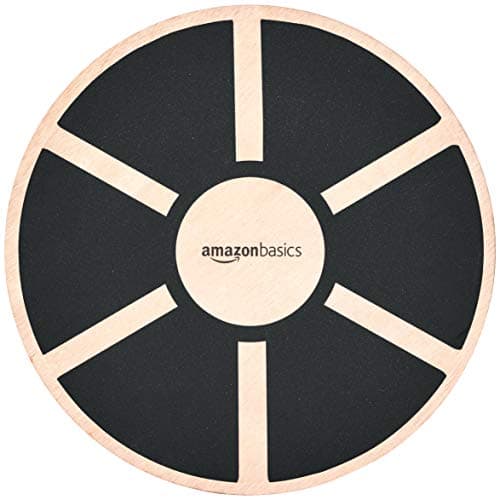
A rigid board on a fixed dome— usually wood, about 3 inches, tilts predictably in whichever direction you lean.
A spring-mounted board— a platform on actual springs, typically taller, that oscillates under you rather than simply tilting.
Those three have very different risk profiles, and a page answering “are wobble boards safe” with a single yes or no is not being useful.
The two variables that decide it
Height off the floor
This is the risk multiplier, and it is the number to compare when shopping.
A 2-inch foam pad: stepping off it is a step. A 3-inch board: still a step, and a predictable one. A 6-inch spring board: roughly a stair riser. That is not a gradual scale — it is a change in what happens when it goes wrong.
The published heights on the products we cover are 2 inches, 3 inches, 3.15 inches and 6 inches. Every one of them publishes it, which makes this the easiest comparison in the whole balance category.
Predictability
A rigid board on a fixed dome tilts in the direction you lean. Your correction matches your intention, and the board stops moving when you stop leaning. That is learnable within a session or two.
A spring platform oscillates. It keeps moving after you have corrected, and it can move in a direction you did not initiate. That unpredictability is precisely the training effect it is sold for — and precisely the wrong thing for someone whose balance is why they are shopping.
Height plus unpredictability is the combination to avoid, which is why we mark the 6-inch spring board as a skip on our board shortlist despite it being the best-built object on that page.
The specification nobody publishes
Tilt angle.On a rigid board it is what actually sets the difficulty, and not one manufacturer publishes it. A board that tilts 10 degrees and one that tilts 20 degrees are radically different exercises, and both are sold as “wobble boards”.
It is the same pattern as step-over height on exercise bikes: the measurement that decides usability is the one left off the sheet. Which is why the published height has to do the work, and why we default to caution above about 3 inches.
How to use one so that it is safe
Stand in a doorway, or at a counter, with a hand on something solid. For a rigid board this is not optional the first several times. A doorframe is the best place in most houses because it gives you support on both sides.
Check the floor.The rigid board on our shortlist carries its own listing warning against wet or smooth surfaces, which rules out a lot of tiled and laminate kitchens — awkward, because the kitchen counter is often what you want to hold. Carpet, a rug, or a rubber mat.
Bare feet or flat shoes. Not socks on a hard floor. Not cushioned trainers, which mask the feedback from your feet that the whole exercise depends on.
Thirty seconds, then rest. The small stabilizing muscles fatigue quickly, and a fatigued ankle is how a session ends badly. Six short goes beat one long one.
Progress by reducing support, not by increasing height. Two hands, one hand, fingertips, hands hovering. That is the route. A taller board is not a progression, it is a different risk.
Who should not use one at all
Start on foam instead, and talk to a physical therapist first, if:
You have had a fall in the past year.
You feel dizzy or lightheaded when standing up.
You cannot yet stand on a foam pad with your hands off, comfortably, for 30 seconds.
You have numbness or reduced sensation in your feet.
You have a diagnosed inner-ear, neurological or vision condition affecting balance.
That last group matters more than it sounds. The National Institute on Aging lists inner-ear problems, vision changes, blood-pressure drops on standing, nerve damage in the feet and medication side effects among the causes of balance problems in older adults. A wobble board trains none of those, and standing on an unstable platform with reduced foot sensation removes the feedback the exercise relies on.
The CDC also notes that falling once doubles the chance of falling again, and that fewer than half of people who fall mention it to a doctor. If you are in that group, that conversation comes before any purchase.
The short version
Rigid, about 3 inches, in a doorway, on carpet, for thirty seconds at a time, after you are already comfortable on foam: safe enough, and a genuine progression that the CDC and NIA both support in principle by including balance work in their guidance for older adults.
Six inches, on springs, as a first purchase, because it looked the most serious in the listing: no. And that is the one most likely to be at the top of a search result, which is why this page exists.
General information, not medical advice. Tread & Tone is written by an enthusiast, not a clinician. Nobody here is a doctor, a physical therapist or a trainer, and nothing on this site has been medically reviewed. Talk to your doctor or physical therapist before starting something new, particularly after surgery, a fall, or a change in medication.
Questions people ask
Are wobble boards safe for seniors?+
A rigid board about 3 inches off the floor, used in a doorway or at a counter, is reasonable for someone who is already comfortable standing on a foam pad with their hands off. A 6-inch spring-mounted board is not, for a beginner — that is a fall from roughly a stair riser's height on a platform that moves unpredictably. The two variables that matter are height and predictability, and you choose both at the point of purchase.
Should I start on a wobble board or a foam pad?+
A foam pad, essentially always. It is 2 to 2.4 inches rather than 3-plus, it compresses rather than tilts, and a misstep off it is a step rather than a fall. Move to a rigid board when standing on the pad with hands off and eyes closed has become genuinely boring, which for most people is several weeks of practice away.
What height of wobble board is safe?+
Around 3 inches is a sensible ceiling for a senior beginner progressing from foam. The rigid board on our shortlist publishes 3.15 inches. Six inches — the spring-mounted board we recommend against — is roughly a stair riser, which changes a misstep from a step down into a fall from height. Height is the risk multiplier in balance training and it is the number to compare.
Why are spring-loaded balance boards worse?+
Two reasons that compound. They are taller — the one we cover is 6 inches — and springs oscillate rather than tilt, so the platform keeps moving after you have corrected and can move in a direction you did not initiate. A rigid board on a dome tilts the way you lean, so your correction matches your intention. Unpredictability is the training effect they are sold for and it is exactly wrong for someone with a fall history.
Where should I use a wobble board?+
In a doorway, which gives you something solid on both sides, or at a kitchen counter. Check the floor first — the rigid board on our shortlist carries its own warning against use on wet or smooth surfaces, which rules out a lot of tiled and laminate kitchens. Carpet, a rug, or a rubber mat underneath.
How long should I stand on one?+
Thirty seconds at a time, several times, rather than one long attempt. Balance work fatigues the small stabilizing muscles in the ankle and hip quickly, and a fatigued ankle is how a session ends badly. Six short goes with rests between them gives more quality practice than three minutes of deteriorating wobble.
Sources
CDC — Facts About Falls — More than one in four adults 65 and over falls each year; falling once doubles the chance of falling again (read July 24, 2026)