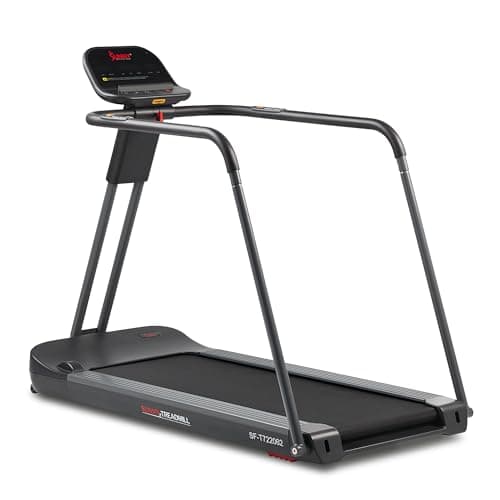
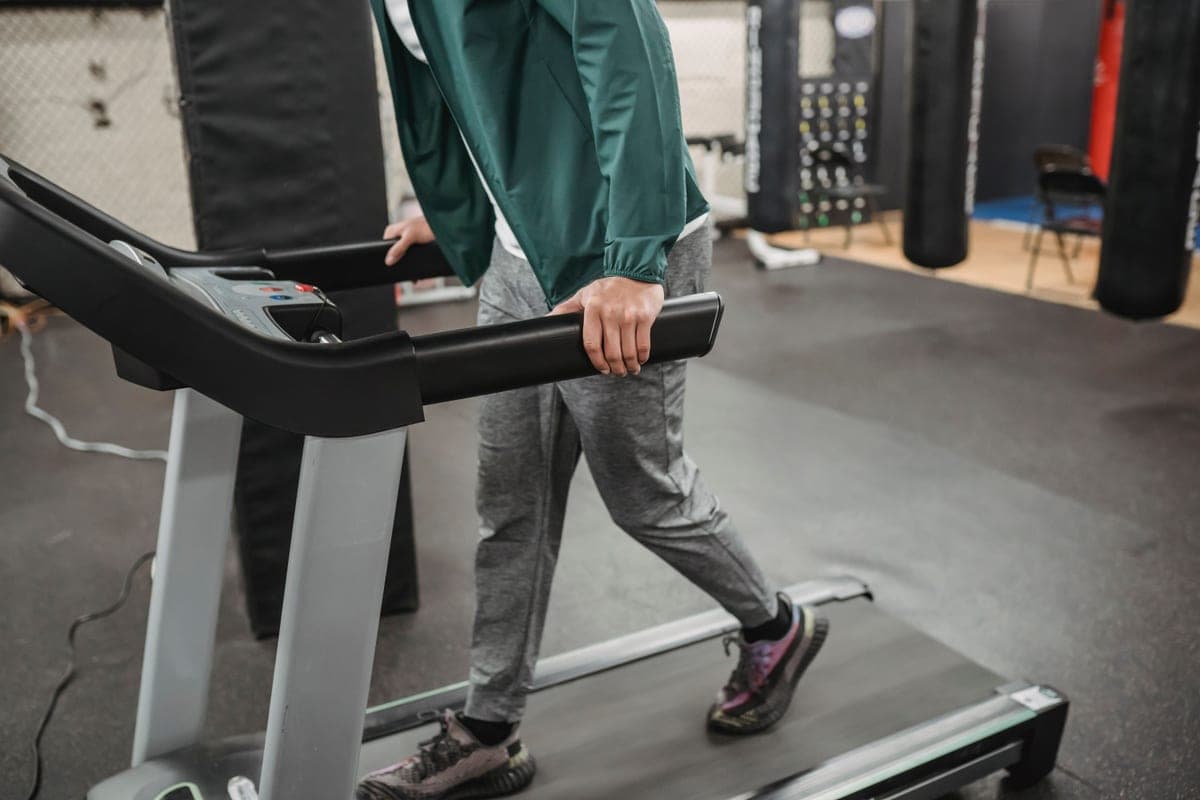
About 22 minutes a day, which is the CDC's target expressed the way it is actually written. Distance follows from your pace — and chasing a step count usually means chasing someone else's stride.
How this is funded: we earn a commission if you buy through our links, at no extra cost to you. It never changes what we recommend, and every page here names at least one thing we would not buy. Full disclosure.
The short answer
The CDC recommends adults 65 and over get at least 150 minutes a week of moderate-intensity activity, and it names brisk walking as exactly that. That is about 22 minutes a day, or 30 minutes on five days. At a comfortable 2.5 mph it works out to roughly a mile a day — but the minutes are the target and the distance is just what falls out of your own pace.
Why minutes rather than steps or miles
The CDC’s guidance is written in minutes, and that is a deliberate choice rather than an oversight. Three reasons it is the better frame:
Stride length varies. Ten thousand steps for someone 5 ft 2 in is a meaningfully shorter distance than ten thousand steps for someone 6 ft 1 in. A step target silently asks different amounts of work from different people.
Pace varies more. A mile at 3 mph takes twenty minutes of moderate work. The same mile at 1.5 mph takes forty minutes of gentle work, which may not reach moderate-intensity at all. Distance does not distinguish between those.
Minutes are what you can control. You can decide to walk for twenty minutes. You cannot decide to have walked a mile without knowing your own pace first.
On the 10,000-step figure specifically: it originated as a marketing number for a Japanese pedometer in the 1960s, not as a clinical recommendation, and it does not appear in the CDC’s guidance for older adults. If a step counter motivates you, use it — but use it to track your own trend rather than to hit somebody else’s target.
What the target looks like in practice
150 minutes a week divides however suits you. Some arrangements that reach it:
22 minutes every day. The most even distribution.
30 minutes, five days. The most common way people organize it.
Three 10-minute walks, seven days. 210 minutes, comfortably over, and often the easiest to fit around a day.
50 minutes, three days. Reaches the total, and is harder on the joints in single doses.
The CDC is explicit that the weekly total is what counts and it can be accumulated across shorter bouts. There is no minimum session length below which walking stops counting.
For rough distance conversion, at a moderate 2.5 mph: 22 minutes is about 0.9 miles, 30 minutes about 1.25 miles. At a gentler 2 mph those become 0.7 and 1 mile. Use it for planning a route rather than as a goal.
How hard: the talk test
The CDC names brisk walking as moderate-intensity activity, and briskness is relative to you rather than to a speed. The test that works without any equipment:
You should be able to talk, but not sing. Breathing noticeably harder than at rest. Warm within five minutes. Able to hold a conversation in full sentences but not comfortably belt out a verse.
If you can sing, walk a little faster or find a gentle slope. If you cannot speak in sentences, slow down. That is the whole calibration, and it self-adjusts as your fitness changes, which no fixed speed target does.
A gentle stroll below that threshold is still worth doing — it is better than sitting, and it keeps joints moving. It is simply not the activity the 150-minute guidance is describing, and we would rather you knew that than believed you had met a target you hadn’t.
Building up from nothing
If you are not currently walking much, the same one-variable-at-a-time rule applies as anywhere else.
Week 1:ten minutes, most days, at whatever pace is comfortable. Do not worry about briskness yet — you are establishing that it happens.
Week 2: fifteen minutes, most days.
Week 3: twenty minutes, or two tens.
Week 4: keep the duration and bring the pace up to the talk-test threshold.
That reaches the CDC target somewhere around week five or six, from a standing start, and it does so without the week-two soreness that ends most attempts. Judge each increase by how you feel the following morning rather than during the walk.
What walking does that a bike doesn’t
Two things worth knowing if you are choosing between them.
It is weight-bearing.Your skeleton carries your body weight, which is the kind of loading associated with bone health. Cycling is seated and does not do this. If bone density is a specific concern for you, that is a real reason to prefer walking — and a specific reason to raise it with your doctor rather than deciding from a website.
It is functional. Walking is what you do all day. Training it maintains the thing itself, whereas cycling trains a movement you only perform on the bike. The National Institute on Aging notes that improved physical function reduces both the risk of falling and the likelihood of serious injury if you do fall.
What walking does notcover: the two days of muscle strengthening and the balance work the CDC asks for alongside the aerobic minutes. And walking on a flat treadmill belt is much less of a balance challenge than uneven ground — so if you have moved indoors, add balance work rather than assuming the walking covers it.
Outdoors versus indoors
Walk outside if you can do it safely. It is free, the CDC counts it identically, and uneven ground gives you a balance challenge no treadmill provides.
Buy the indoor machine for the weeks when outdoors is not sensible — ice, early darkness, heat, a route with curbs you do not trust. Not instead of walking outdoors, and not as a substitute for a route you enjoy.
And if the reason you stopped walking outdoors is a fall or a near-fall rather than the weather, that is worth mentioning to your doctor. The CDC notes that fewer than half of people who fall tell theirs, and a fall can point to causes — vision, blood pressure, medication — that no amount of walking will address.
General information, not medical advice. Tread & Tone is written by an enthusiast, not a clinician. Nobody here is a doctor, a physical therapist or a trainer, and nothing on this site has been medically reviewed. Talk to your doctor or physical therapist before starting something new, particularly after surgery, a fall, or a change in medication.
Questions people ask
How far should a senior walk each day?+
The CDC frames it in minutes rather than distance: at least 150 minutes a week of moderate-intensity activity for adults 65 and over, which is about 22 minutes a day. At a typical comfortable pace of 2.5 mph that works out to roughly a mile a day, but the distance is a consequence of your own pace rather than a target in itself.
Is 10,000 steps a day necessary?+
No, and it was never a clinical recommendation — it originated as a marketing figure for a Japanese pedometer in the 1960s. The CDC's guidance for older adults is written in minutes of moderate-intensity activity, and it asks for the equivalent of about 22 minutes a day. A step target also depends on your stride length, so the same number means different amounts of work for different people.
Does walking count as moderate-intensity activity?+
Brisk walking does — the CDC names it explicitly as an example of moderate-intensity aerobic activity. The practical test is conversational: you should be able to talk but not sing. A gentle stroll may not reach that threshold, which does not make it worthless, but it is not the same as the activity the guidance is describing.
Can I split the walking into shorter sessions?+
Yes. The CDC's weekly total is what matters and it can be accumulated in whatever blocks suit you — three ten-minute walks count the same as one thirty-minute walk. For many people three short walks is easier to fit around the day and easier on the joints than one long one.
How fast should I be walking?+
Fast enough to talk but not sing, which for most people past 65 is somewhere between 2 and 3 mph. Do not chase a number — pace is individual and depends on leg length, joints and fitness. If you are using a treadmill or walking pad, find the speed that produces that breathing and then note it, so you can set it directly next time.
Is walking enough exercise on its own?+
It covers the aerobic part well, and it is weight-bearing, which cycling is not. What it does not cover is the two days of muscle strengthening and the balance work the same CDC guidance asks for — and walking on a flat treadmill belt is much less of a balance challenge than uneven ground. A $37 balance pad addresses the gap for a fraction of the cost of any machine.
Sources
CDC — Older Adult Activity: An Overview — At least 150 minutes a week of moderate-intensity activity, 2 days of muscle strengthening, plus balance activities for adults 65 and over (read July 24, 2026)
CDC — Facts About Falls — More than one in four adults 65 and over falls each year; falling once doubles the chance of falling again (read July 24, 2026)
Product measurements are cited individually inside each Fit-to-You panel, against the manufacturer page or dated retailer listing they were read from.
Published minimum speeds range from 0.5 to 0.6 mph. Here is how to find yours, and why buying a machine that can't go slow enough is the common mistake.
The CDC's weekly numbers turned into a realistic week, how many days of cardio, strength and balance to aim for, and why little-and-often beats one long push.