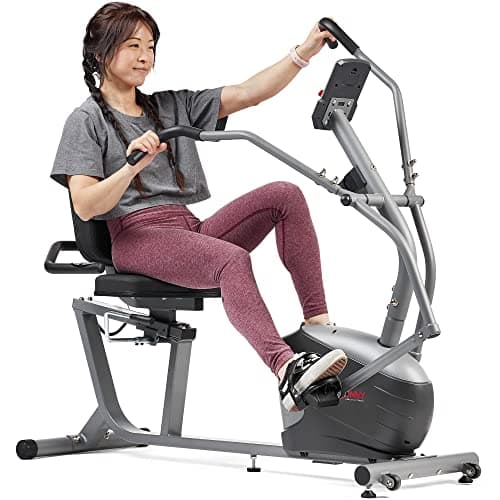
The target is 150 minutes a week, which is about 22 minutes a day. The starting point should be ten minutes, three times — and the gap between those two numbers is where most people go wrong.
The CDC recommends adults 65 and over get at least 150 minutes a week of moderate-intensity activity — about 22 minutes a day, or 30 minutes on five days. That is the target. Start at ten minutes at the lowest resistance, three times in the first week, and build one variable at a time. The people who get to 150 are almost always the ones who started below it.
At least 150 minutes a week of moderate-intensity aerobic activity.
At least two days of muscle-strengthening activity.
Activities to improve balance, such as standing on one foot.
A stationary bike addresses the first of those three and neither of the others. Worth knowing before you assume a bike covers your exercise requirements — it covers a third of them, and the balance part costs about $37 and takes two minutes a day.
The 150 minutes divides in whatever way suits you. Thirty minutes on five days. Twenty-two minutes daily. Two rides of eleven minutes, twice a day, seven days a week. The CDC also notes the alternative of 75 minutes of vigorous activity, which is not what this audience is generally aiming at.
What “moderate intensity” means on a bike
This is where the number quietly stops meaning what people think it means. 150 minutes of gentle spinning while reading a magazine is not 150 minutes of moderate-intensity activity, and the guidance is specifically about the latter.
The practical test is conversational: you should be able to talk but not sing. Breathing noticeably harder than at rest, warm within a few minutes, but not gasping.
On a recumbent bike that usually means adding resistance rather than pedaling faster. Spinning quickly against no resistance raises your heart rate without doing much work; a little resistance at a steady cadence is a better shape for the same effort, and it is easier on the knee than fast unloaded pedaling.
If you cannot speak in full sentences, take resistance off. If you could sing an entire verse, add some. That is the whole calibration and it needs no monitor.
The first month, specifically
Almost everyone starts too hard, feels sore or bored, and stops within three weeks. The following is deliberately conservative and it is the version that survives.
Week 1 — 10 minutes, three times, lowest resistance. Yes, even if it feels trivially easy. You are finding out whether the seat position is right and whether anything complains the next morning. Ten minutes is also short enough that you will actually do the third session.
Week 2 — 15 minutes, three times. Same resistance. If anything was sore the morning after a week-1 session, stay at ten minutes for another week instead. There is no prize for the schedule.
Week 3 — 15 minutes, four times, or 20 minutes three times. Change one variable, not both.
Week 4 — 20 minutes, four times. That is 80 minutes a week, about half the CDC target, in a month. Now add resistance until you reach the talk test, and keep the duration where it is.
From there, adding five minutes or one session per week gets you to 150 minutes somewhere around week eight to ten. The Arthritis Foundation’s guidance on how much is enough describes the same pattern of gradual progression, and if you have a joint problem it should be slower still.
The rule that matters most: one variable at a time
There are three dials — how long, how often, how hard — and the most common mistake is turning two of them in the same week. Then something aches and you have no idea which change caused it.
Change one. Hold it for a week. If the next mornings are fine, change one again. It feels slow and it is the fastest route, because it is the route that does not involve a two-week setback.
And a note on the resistance dial specifically: it is the one to leave alone longest. Duration and frequency are usually well tolerated; resistance is where knees notice. If you have a sensitive joint, the fineness of your machine’s resistance steps matters — an eight-level bike may not have anything between “too little” and “too much”.
Signs to reduce, and signs to see someone
Reduce if:a joint is more sore the following morning; your sleep is disturbed on ride days; you are tired all day rather than pleasantly tired for an hour; or you have started dreading it. That last one is not weakness, it is information — a session you dread is a session you will eventually skip permanently.
Stop and speak to your doctor if: you get chest pain or pressure, unusual shortness of breath, dizziness or lightheadedness, an irregular heartbeat, or pain anywhere that is sharp rather than achy. None of that is normal exercise discomfort.
The National Institute on Aging recommends talking with your doctor before beginning a new exercise program, and that is particularly worth doing after surgery, after a fall, with a heart or lung condition, or following a change in medication. Nobody producing this site is a clinician, and a five-minute conversation with one will tell you more about your own situation than any page here.
The honest answer about consistency
Ten minutes a day, every day, beats an hour on Sunday — not because the physiology is different but because the first one keeps happening.
The bikes that get used are the ones in the room people already sit in, at a resistance that does not require willpower, for a duration short enough that starting is not a decision. If you are choosing between the specification-heavy machine in the spare room and the simpler one by the television, buy the second.
General information, not medical advice. Tread & Tone is written by an enthusiast, not a clinician. Nobody here is a doctor, a physical therapist or a trainer, and nothing on this site has been medically reviewed. Talk to your doctor or physical therapist before starting something new, particularly after surgery, a fall, or a change in medication.
Questions people ask
How long should a senior ride a stationary bike?+
The CDC's target for adults 65 and over is at least 150 minutes a week of moderate-intensity activity, which works out to about 22 minutes a day or 30 minutes on five days. That is where you are heading, not where you start. Ten minutes at the lowest resistance, three times in the first week, is a sensible beginning — and it is far more likely to still be happening in month three.
Is 20 minutes a day on an exercise bike enough?+
It is close to the CDC's target: 20 minutes every day is 140 minutes a week against a recommended 150. If the intensity is genuinely moderate — you can talk but not sing — that is essentially the aerobic guidance met. What it does not cover is the two days of muscle strengthening and the balance work the same guidance asks for, and a bike provides neither.
Can I split the ride into shorter sessions?+
Yes, and the CDC's own framing supports it — the weekly total is what matters, and it can be accumulated in whatever blocks suit you. Two eleven-minute rides count the same as one 22-minute ride. For anyone whose back or seat comfort limits a single session, shorter blocks are usually the difference between a habit and an abandoned machine.
How hard should I be working?+
Moderate intensity, which the talk test describes better than any number: you should be able to hold a conversation but not sing. If you can sing, add resistance. If you cannot speak in full sentences, take some off. This matters because 150 minutes of gentle spinning while reading is not 150 minutes of moderate-intensity activity, and the guidance is specifically about the latter.
How often should I ride?+
Most days is better than a few long sessions, for two reasons: the aerobic benefit accumulates the same way, and frequent short rides are far more likely to become habitual. Five days of 30 minutes and seven days of 22 minutes both reach the CDC's target. Two days of 75 minutes technically does too, and almost nobody sustains it.
How do I know if I'm doing too much?+
Judge the next morning rather than the ride. Ordinary tiredness that clears overnight is fine. A joint that is more sore the following day, sleep that is disturbed, or a session you start dreading are all signs to reduce. Increase one thing at a time — duration or frequency or resistance, never two together — and hold each increase for a week before the next.
Sources
CDC — Older Adult Activity: An Overview — At least 150 minutes a week of moderate-intensity activity, 2 days of muscle strengthening, plus balance activities for adults 65 and over (read July 24, 2026)
The CDC's weekly numbers turned into a realistic week, how many days of cardio, strength and balance to aim for, and why little-and-often beats one long push.