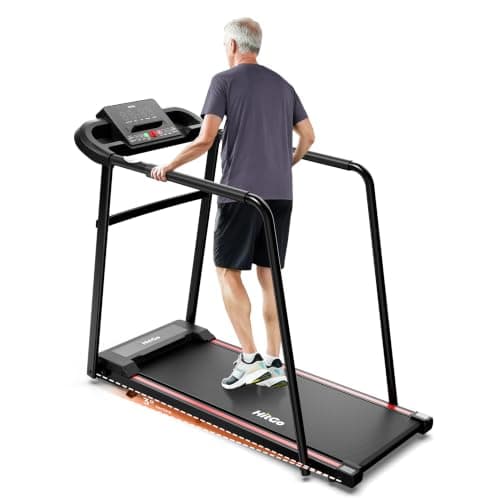
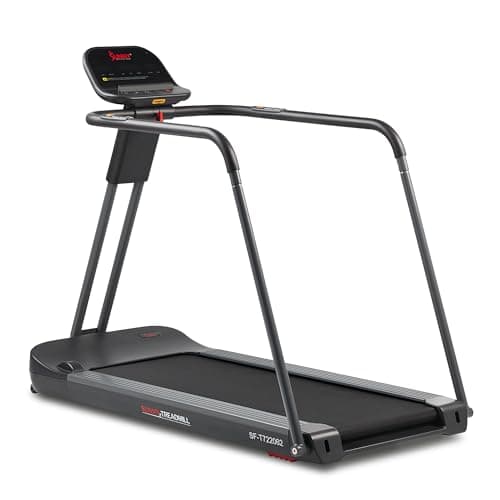
No maker publishes a real decibel number, so ‘quiet’ has to be reasoned from how the machine is built. Here’s what actually keeps a treadmill or walking pad from carrying through a shared wall or floor.
How this is funded: we earn a commission if you buy through our links, at no extra cost to you. It never changes what we recommend, and every page here names at least one thing we would not buy. Full disclosure.
The short answer
No maker publishes a real noise figure, so “quiet” has to be reasoned from the build: a magnetic or well-isolated motor, a cushioned deck, low walking speeds, and how much impact you send into the floor matter more than any marketing claim. A walking pad at walking pace is usually the quietest option you can buy.
The honesty problem: nobody publishes decibels
This is the finding that comes up again and again on this site, and it is worth stating plainly before anything else: no manufacturer publishes a measured noise figure for a treadmill.Not one gives you a decibel reading taken at a stated speed, a stated distance, on a stated floor. What you get instead is a word on the box — “whisper quiet”, “ultra silent”, “near-silent operation” — and a word is not a measurement.
So treat “ultra quiet” as a claim, not a spec. It is doing the same job as “fast” on a car with no top speed listed: it tells you what the marketing department wants you to feel, and nothing you can check. Two machines can both say “quiet” and differ enormously in the room, and there is no printed number that lets you tell them apart before it arrives.
That leaves us with the only honest approach, which is the one this whole site is built on: reason from the mechanism. If you understand whatmakes noise and where it goes, you can look at how a machine is built — the motor type, the deck, the height off the floor — and make a sensible guess, while knowing it is a guess. Anyone who hands you a confident decibel number is either quoting a lab test you cannot see the conditions of, or making it up.
What actually makes noise — and where it goes
Treadmill noise is not one thing. It is three, and they travel differently, which matters a great deal when the person you are trying not to disturb is on the other side of a wall or a floor.
The motor.This is the hum. A brushed motor under load makes more of it; a magnetic-resistance or well-isolated motor makes less. Motor noise is mostly airborne — it fills your own room but does not pass through building structure especially well. It is the part you notice, and, ironically, the part your neighbors notice least.
The belt and rollers.A worn belt, a dry deck, or misaligned rollers produce a rhythmic rub or squeak. This is usually a maintenance problem rather than a design flaw — a machine that squeaks was often quiet when it was new and has been neglected since. A little care here removes a surprising amount of the sound a machine makes over its life.
Your feet, into the floor.This is the big one, and it is the one buyers think about least. Every footfall is an impact, and that impact travels down through the deck, through the frame, into the floor, and into the structure of the building as low-frequency thud. Low-frequency vibration passes through floors and walls far better than airborne hum does — it is why you feel a neighbor’s bass through a ceiling but not their conversation. On a treadmill this is the sound most likely to reach the flat below you, and it is almost entirely about how hard you land, which is to say how fast you are going.
Hold that last point, because it is the lever you actually control. The motor and the rollers are fixed by what you bought. The impact going into the floor is set by how you use the machine — and it is the part your downstairs neighbor hears.
Walking pad or full treadmill for noise
For a shared building, a walking pad tends to be the quieter buy, and the reasons are mechanical rather than magical.
A walking pad has a smaller motor doing less work, so there is less hum to begin with. It sits low to the floor, so there is less frame to ring. And, most important, it is built for walking — it is not designed to be run on, so it never tempts you up to the speeds where footfall becomes a thud. A full treadmill can be every bit as quiet as a walking pad, but only if you walk on it. The difference between the two categories, for noise, is less about the hardware than about what each machine invites you to do with it.
That is really the whole comparison in a sentence: a walking pad keeps you at walking pace by design, and walking pace is quiet. A treadmill lets you run, and running is what gets felt downstairs. We lay out the full trade-off — deck size, stability, storage, price bracket — on the walking pad versus treadmill page, but for the specific question of not annoying your neighbors, the pad has the structural edge.
One caveat worth stating: quieter is not the same as better for everyone. A walking pad usually has no handrail, a shorter deck, and less stability, and if balance or support is your priority those matter more than a few decibels. Quiet is one variable, not the only one.
How to make any machine quieter
Whatever you already own, three moves cover most of the gap — and they cost far less than replacing the machine.
Put a dense mat underneath.This is the single most effective thing you can do for the neighbor below you, because it targets the vibration the deck passes into the floor. A thin foam mat does very little. A thick, dense rubber mat, sized to sit under the whole footprint, absorbs a meaningful share of that vibration before it reaches the structure — and it protects your floor while it does it. It will not silence the motor and it will not mute your footfall, but it takes the edge off the part that travels furthest.
Walk, don’t run.This is free and it is the biggest lever of all. Running multiplies the impact going into the floor; walking keeps it low. If your goal is steady indoor movement rather than training for speed — and for most readers of this site it is — then walking pace is both quieter and entirely adequate. A brisk walk is not a compromise. It is the point.
Time your sessions considerately.The same footfall is more disruptive at 6am or 11pm, when a neighbor is asleep and the building is otherwise silent, than it is at 3pm. Aim for the middle of the day. And if you share a wall or a ceiling, a thirty-second conversation with the neighbor — asking whether they can hear it, and when it bothers them — settles more than any amount of guessing. Most people are reasonable when they are asked first rather than complained at later.
Keeping the belt clean and lubricated belongs on this list too: a dry, neglected deck develops the rub and squeak described above, so the maintenance you would do anyway is also noise control.
How to shop for a quiet one
Since there is no decibel number to compare, you shop the way you would for anything else on this site — you reason from the mechanism and you accept honest uncertainty where it exists.
Look for a magnetic or well-isolated motor over a basic brushed one. Look for a genuinely cushioned deck rather than a rigid board, because cushioning absorbs impact at the source before it can travel. Favor a lower machine that sits closer to the floor. And read past the adjectives: if the listing’s only evidence of quietness is the word “quiet” repeated three times, you have learned nothing. Our treadmill shortlist for seniorsranks machines on the things makers actually publish — deck, rails, step-up height, cushioning — rather than on a noise claim nobody can stand behind. If a seated machine is an option at all, a recumbent bike has no footfall to send through the floor, and our shortlist of quiet recumbent bikes for apartments applies the same read-past-the-adjectives rule to that category.
And keep the goal in view while you fuss over the sound. The point of a quiet machine is that you will actually use it — that you can walk indoors without dreading the neighbors, which means you walk more often. Walking counts. The CDC notes that brisk walking is moderate-intensity activity that counts toward the weekly total, and that the guideline for adults 65 and over is at least 150 minutes a week — minutes you can split however suits you, including a few quiet ones at a time on a machine your building can live with. A treadmill you keep unplugged because it embarrasses you does nothing for that total. A quiet one you use every day does.
General information, not medical advice. Tread & Tone is written by an enthusiast, not a clinician. Nobody here is a doctor, a physical therapist or a trainer, and nothing on this site has been medically reviewed. Talk to your doctor or physical therapist before starting something new, particularly after surgery, a fall, or a change in medication.
Questions people ask
What is the quietest treadmill for an apartment?+
We can’t hand you a model name and a decibel figure, because nobody publishes one. Reasoning from the build, the quietest option is usually a walking pad used at walking pace: a small magnetic or well-isolated motor, no running, and a low deck close to the floor. A cushioned deck and a dense mat underneath matter more than any ‘ultra quiet’ label on the box.
Are walking pads quieter than treadmills?+
At walking speed, usually yes. A walking pad has a smaller motor doing less work, sits lower to the floor, and is built for walking rather than running, so it is rarely pushed to the speeds that make a treadmill loud. A full treadmill can be just as quiet if you only ever walk on it — the difference is what each machine tempts you to do.
Will my treadmill disturb the neighbors below me?+
It can, and the culprit is usually not the motor — it is the impact of your feet transmitted through the deck into the floor as low-frequency thud, which travels through a building better than airborne motor hum. Walking rather than running, a cushioned deck, and a dense mat underneath all reduce what reaches the flat below. Running upstairs is the version most likely to be felt downstairs.
Does a mat under a treadmill reduce noise?+
A dense mat helps, mostly with the part your downstairs neighbor notices: it absorbs some of the vibration the deck passes into the floor rather than letting it ring through the structure. A thin foam mat does little. A thick, dense rubber mat under the whole footprint does more, and it protects the floor as well. It will not silence the motor or your footfall, but it takes the edge off what travels.
How loud is a treadmill really?+
Honestly, we can’t give you a number, and neither can the manufacturers — not one of them publishes a measured decibel figure taken under stated conditions. ‘Whisper quiet’ and ‘ultra silent’ are marketing, not measurements. What we can tell you is where the sound comes from: the motor, the belt and rollers, and above all your own footfall going into the floor.
What is the best time of day to use a treadmill in an apartment?+
Whenever your neighbors are least likely to be bothered — which in most buildings means not early morning and not late at night, when a downstairs neighbor is asleep and low-frequency thud carries furthest. Mid-morning to early evening is the safe window. If you share a wall or floor, a quick conversation with the neighbor beats guessing, and walking rather than running keeps you well inside the courtesy line.
CDC — Older Adult Activity: An Overview — At least 150 minutes a week of moderate-intensity activity, 2 days of muscle strengthening, plus balance activities for adults 65 and over (read July 24, 2026)
Product measurements are cited individually inside each Fit-to-You panel, against the manufacturer page or dated retailer listing they were read from.
A dry belt is the single most common cause of a treadmill that jerks, squeals or trips its motor. What to check, how often, and the mistake that ruins a deck.