Seated Exercises for Limited Mobility
Eight movements you can do from a dining chair, and where equipment genuinely adds something rather than just costing money.
Read the guideAlmost every guide to this starts with the movements. The chair is the part that decides whether they work — and the wrong chair makes the same routine both harder and less safe.
The short answer
Use a firm dining chair with a flat seat, no wheels, ideally arms, at a height where your feet rest flat with knees at roughly a right angle — and put it against a wall. Then a twelve-minute routine: ankles, knees, seated marching, shoulders, arms, trunk, and sit-to-stand last. Most days rather than occasionally.
Almost every guide to chair exercise starts with the movements and treats the chair as a given. It is not a given, and the wrong one makes the same routine both harder and less safe.
Feet do not reach the floor comfortably? Put a large book or two under them. You need a stable base for everything else to work from.
Chair too low to stand up from easily?Add a firm cushion — not a soft one, which reintroduces the sinking problem. Raising the seat by two inches transforms sit-to-stand.
Both take a minute, cost nothing, and change the routine more than any equipment purchase would.
Working upward, so that everything below has moved before you stand.
Breathe throughout — holding your breath during the effort is the most common error in seated work. And slower beats more: ten controlled repetitions with a hold do more than twenty rushed ones.
It is last on the list and first in importance, because it is the movement you use most in a day and the one whose loss changes a life most: out of a chair, off a toilet, out of a car, out of bed.
The National Institute on Aging includes standing up from a seated position among its balance exercises, which is notable — it is one of very few movements that is simultaneously strength work and balance work.
The progression is not more repetitions. It is less support: two hands on the arms, then one, then a light touch, then arms crossed on your chest. And the slow three-second sit is where most of the useful work happens, so do not drop into the chair.
Three honest limits.
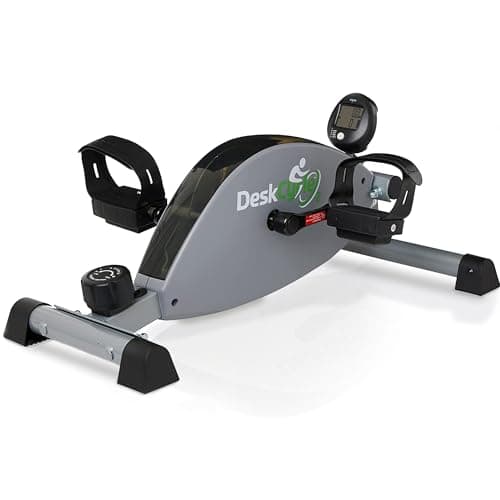
It is not aerobic exercise. The CDC’s 150 weekly minutes describes sustained moderate-intensity activity, and a repetition-based routine is stop-start by nature. If you want continuous seated aerobic work, a pedal exerciser under the same chair does that for $50 to $170.
It is not balance training, except for the sit-to-stand. Balance work requires being on your feet, and our printable balance routinecovers that — four of its six exercises need nothing but a counter to hold.
It is not a program designed for you. Nobody producing this site is a physical therapist. If your mobility is limited by a diagnosed condition, a therapist can give you a routine matched to it, and that is a better use of an hour than anything on this page.
Stop and speak to your doctor for chest pain or pressure, unusual breathlessness, dizziness, an irregular heartbeat, or pain that is sharp rather than achy. None of that is normal exercise discomfort.
The National Institute on Aging recommends talking with your doctor before starting a new exercise program, and that is particularly worth doing after surgery, after a fall, or following a change in medication. A five-minute conversation with someone qualified will tell you more about your own situation than any page here.
Everything above is about repetitions — a count of movements done to build strength or raise your heart rate. There is a second thing you can do in the same chair, and it has different evidence behind it: NCCIH notes studies supporting a beneficial effect of yoga on balance in older adults living in the community. Our chair yoga guide covers how it differs from the routine on this page, and why the standing half deserves more care than the seated half.
General information, not medical advice. Tread & Tone is written by an enthusiast, not a clinician. Nobody here is a doctor, a physical therapist or a trainer, and nothing on this site has been medically reviewed. Talk to your doctor or physical therapist before starting something new, particularly after surgery, a fall, or a change in medication.
A firm dining chair: flat seat, no wheels, ideally with arms, at a height where your feet rest flat with knees at roughly a right angle. Not an armchair — a soft deep seat changes every movement and makes standing up much harder. Never an office chair with castors, which will roll at the worst moment. Against a wall is better than free-standing.
For maintaining range of motion and working muscle, yes, and they are effective precisely because they are achievable — the routine that gets done beats the one that does not. What they are less good at is continuous aerobic work, because they are repetition-based rather than sustained. If you want the CDC's 150 moderate-intensity minutes, a pedal unit under the same chair does that better.
Most days, and short beats long. Twelve minutes daily is more useful than forty minutes twice a week, both because range-of-motion work benefits from frequency and because a short routine is one you keep doing. Doing half of it seven times a week beats all of it twice.
One of them can, directly: standing up from a seated position is on the National Institute on Aging's own list of balance exercises, and it is simultaneously strength and balance work. The rest are seated, so they train strength and range of motion rather than balance. For balance specifically you need to be standing, which is what our printable balance routine covers.
Not to begin with — your own limbs provide enough resistance for range-of-motion work, and adding load before the movement is smooth is how people hurt shoulders. If the movements become genuinely easy, a $12 resistance band or a pair of two-pound hand weights adds load far more cheaply and safely than any machine.
Against a wall, with clear floor in front of it and nothing to trip on. A chair against a wall cannot slide backwards during a sit-to-stand, which is the one genuine hazard in a seated routine. Put it where you can see something at eye level across the room, so you are not looking down.
Product measurements are cited individually inside each Fit-to-You panel, against the manufacturer page or dated retailer listing they were read from.
Eight movements you can do from a dining chair, and where equipment genuinely adds something rather than just costing money.
Read the guideSix exercises from the National Institute on Aging, in order of difficulty, with a printable one-page version to keep by the counter.
Read the guideBest Pedal Exerciser
Pedal height is the spec that decides whether your knees hit the desk, and exactly one manufacturer publishes it as a range.
Top pick: DeskCycle DeskCycle 2 Under Desk Bike
Price as of October 22, 2026. #ad How we’re funded