How Far Should a Senior Walk Each Day?
Minutes beat steps, and the CDC's guidance is written in minutes for a reason. What the target is and how to build to it.
Read the guideNot couch-to-5K — couch-to-walking. A gentle eight-week build from a few minutes to the weekly target, written for a body returning after a long time away, with the next-morning rule that keeps you honest.
How this is funded: we earn a commission if you buy through our links, at no extra cost to you. It never changes what we recommend, and every page here names at least one thing we would not buy. Full disclosure.
The short answer
Start far below what feels worthwhile — a few gentle minutes most days — and add a little each week, changing only one thing at a time, until you reach the weekly target over about two months. Judge progress by how you feel the next morning, and clear it with your doctor first if you have been inactive.
You have probably seen a couch-to-5K plan. This is not that. A 5K plan assumes a body that can already run for thirty seconds and wants to run for longer. This one assumes a body that has not done much of anything in a while — after an illness, a surgery, a long stretch of sitting, or simply years of meaning to and not — and wants to walk regularly again without paying for it the next day.
The whole plan is built on one idea: the hard part is not the walking, it is not stopping. Almost everyone who quits does so because they started too big, felt wrecked, and decided this was not for them. So the plan starts smaller than seems reasonable and grows slower than you will want it to. That is the feature, not a limitation.
The target is not a distance and not a speed. It is a weekly amount. The CDC’s guidance for adults 65 and over is at least 150 minutes a week of moderate-intensity activity, along with two days of muscle-strengthening work and some balance activity. This plan is aimed at the first of those: getting you to 150 minutes a week of walking, comfortably and repeatably.
The good news is that ordinary walking counts. You do not need a gym, a class, or a special kind of exercise. The CDC’s explanation of what counts makes clear that brisk walking is moderate-intensity activity, and that you can split the weekly minutes however works for you — a little each day, or longer walks a few times a week. Five walks of thirty minutes, or ten of fifteen, or something in between all reach the same place.
Moderate intensity has a simple, no-gadget test: you should be able to talk but not sing. If you can belt out a song, walk a little quicker. If you cannot get a sentence out, ease off. That talk test is the only intensity gauge you need for the first two months, and it travels with you whether you are on a pavement or a treadmill belt.
Hold that 150-minute figure loosely for now. It is where the plan finishes, not where it starts, and treating it as a starting line is exactly the mistake that ends most attempts in the first fortnight.
Here is the part people resist. Your first walk should feel almost too easy — five minutes, at a pace where holding a conversation is effortless, and then you stop while you still feel you could carry on. Not because five minutes is the goal, but because five minutes you actually do, most days, beats thirty minutes you do once and then avoid for a week because your hips ache.
Before any of this, though, one step is not optional. The National Institute on Aging advises talking to your doctor before starting something new, and that matters most for exactly the person this plan is written for: someone who has been inactive, perhaps for years. A short conversation — are there movements to avoid, is there a symptom to watch for, is walking the right first thing at all — costs one appointment and can change the whole plan. Nobody at Tread & Tone is a clinician, and a website cannot know what your doctor knows about you.
With that cleared, the mindset for week one is restraint. You are not testing your limits. You are teaching your body that walking is a thing it now does, and teaching yourself that it does not have to hurt. The ambition comes later, and there will be plenty of room for it. The first job is simply to build a habit your joints agree with.
Below is a full progression from five minutes a day to the weekly target, over eight weeks. Two rules make it work, and they matter more than the exact numbers:
“Most days” below means five days a week, with the other two as rest. Walks can be split — two shorter outings in a day add up the same as one longer one.
If five days a week is itself too much at the start, that is fine: begin with three days at five minutes, and spend your first “increase” adding days rather than minutes until you reach most-days — still one variable at a time. The Arthritis Foundation’s guidance on building volume gradually applies here whether or not you have arthritis. The shape of the plan matters more than its exact rungs.
A question that comes up early: does it matter whether you walk outside or on a treadmill? For your body, no. Brisk walking is brisk walking, and the same minutes count toward the same weekly total on a belt as on a pavement. Neither is the “real” version.
Outdoors has real advantages, and most of them are free. There is nothing to buy, you get daylight and fresh air, and the varied ground — slight slopes, uneven paths, curbs — quietly works your balance in a way a flat belt does not. For a lot of people, a route around the block is the entire answer, and no equipment is needed at all.
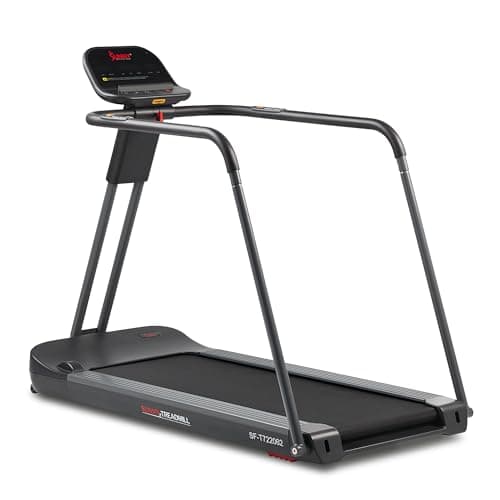
A treadmill earns its place when the outdoors would otherwise cost you the walk. Ice, heavy rain, summer heat, early darkness, no pavement, traffic, or a route that does not feel safe — any of these can turn “most days” into “some days,” and the plan depends on most days. A machine in the spare room means the weather never gets a vote. It also lets you stop instantly if something feels wrong, with a handrail already under your hand. If that is your situation, our roundup of the best treadmills for seniorscovers what to look for — a slow starting speed, long handrails, and a low step-up matter far more than motor power.
Many people do best with both, and there is no rule against it: outside when the day allows, indoors when it does not. The point is never to let the surface become the reason you skipped a walk.
You need one honest gauge of whether you are going too fast, and it is not how you feel during the walk. It is how you feel the next morning. Mild stiffness that eases once you are up and moving is normal and usually a good sign. Soreness that is still there by mid-morning, or a joint that is worse than the day before, means the last increase was too much — drop back a week and rebuild from there.
This is the same principle the Arthritis Foundation uses for building activity: increase gradually, and let how you recover, not how ambitious you feel, decide the pace. Progress that your next morning approves of is progress you will keep. Progress it protests against is progress you will abandon.
Some signals mean stop and ask, not just ease off. Chest pain or pressure, breathlessness out of all proportion to the effort, dizziness, an irregular heartbeat, or new pain in a joint that does not settle — none of these are ordinary exercise discomfort, and all of them are a reason to stop and contact your doctor. Getting a bit puffed at a brisk pace is expected; feeling genuinely short of breath is a medical question, and we are not the ones to answer it.
Two guides carry this further. If you want to think in distance rather than minutes, or wonder how far a walk should actually take you, how far seniors should walk works through it honestly. And once brisk pace starts to feel natural and you are curious whether you are working at the right intensity, heart-rate zones for walking explains what the numbers mean and why the talk test is usually enough anyway.
Eight weeks from now, the goal is not a personal best. It is that walking has become something you simply do, most days, without dreading it — and that the target the CDC sets for older adults is a total you now reach without thinking about it. Start smaller than feels worthwhile, add slowly, listen to the next morning, and keep your doctor in the loop. That is the whole plan.
General information, not medical advice. Tread & Tone is written by an enthusiast, not a clinician. Nobody here is a doctor, a physical therapist or a trainer, and nothing on this site has been medically reviewed. Talk to your doctor or physical therapist before starting something new, particularly after surgery, a fall, or a change in medication.
Less than feels worthwhile. Five minutes, most days of the first week, at a pace where you can still talk easily. If that leaves you no worse the next morning, you have found your starting point. The instinct is to begin at twenty or thirty minutes because that sounds like real exercise, but the people who stick with walking are almost always the ones who started too small on purpose.
On this plan, about eight weeks — roughly two months from five minutes a day to the CDC's target of 150 minutes a week of moderate activity for adults 65 and over. That is deliberately unhurried. If a week feels hard, you repeat it rather than pushing on, so some people take ten or twelve weeks, and that is a success, not a delay.
Most days is the aim, and short daily walks are gentler on a returning body than a few long ones. But rest is part of the plan, not a failure of it. If a joint is sore or you slept badly, take the day. The next-morning rule decides: if yesterday's walk left you stiff in a way that has not eased by mid-morning, that is the day to rest rather than repeat.
Neither is better for your body — brisk walking counts the same on a belt or a pavement. Outdoors is free, gives you daylight, and needs no purchase. A treadmill earns its place only when weather, ice, traffic or an unsafe route would otherwise cost you the walk. Many people do best with both: outside when they can, indoors when they cannot.
Mild breathlessness that lets you still speak in short sentences is ordinary at a brisk pace. Breathlessness out of proportion to the effort, or that comes with chest pain or pressure, dizziness, or an irregular heartbeat, is not — stop and contact your doctor. Nobody at Tread & Tone is a clinician, and shortness of breath that worries you is a medical question, not a training one.
No. The National Institute on Aging is clear that regular activity benefits older adults and that it is rarely too late to begin. Starting later means starting more gently and clearing it with your doctor first, especially if you have been inactive for a long time, but age itself is not the barrier people fear. The barrier is starting too big and stopping.
Product measurements are cited individually inside each Fit-to-You panel, against the manufacturer page or dated retailer listing they were read from.
Minutes beat steps, and the CDC's guidance is written in minutes for a reason. What the target is and how to build to it.
Read the guideBest Treadmill
Step-up height, minimum speed and handrail length — the three numbers that decide it, and which machines publish them.
Top pick: Sunny Health & Fitness Treadmill with Extended Safety Handrails, Low Deck
What 'moderate intensity' actually means as a number, how to estimate your own range, and why the talk test beats a watch for most people.
Read the guideWhy the equipment that gets used is rarely the fanciest, and the handful of habits that turn a good week into a routine that lasts past February.
Read the guide