After a new hip, the movements you are allowed decide which machines make sense — and those limits are set by your surgeon and physical therapist, not by a website. Here is how the equipment question generally shapes up, and why the seat matters so much.
After a hip replacement, the movements you are allowed decide the equipment — and only your surgeon and physical therapist set those limits and clear you. Seat height is the big one: a low, deep seat can bend the hip too far early on, so a bike often comes later than it would for a knee. Flat, slow walking with rails is often reintroduced under guidance, and seated options are chosen for support. Ask before you use anything.
Read this as general equipment information, not a rehab protocol. We are an enthusiast site that writes about low-impact machines; nobody here is a surgeon, a physical therapist or a trainer, and we have never met your hip. After a hip replacement the single most important fact is that the movements you may make, and when, are set by the people who did the operation and are guiding your recovery. Their instructions outrank anything on this page. What follows is only how the equipment question generally takes shape, so you can have a more useful conversation with the people who actually get to answer it.
What “hip precautions” are, and why they change the machine question
In the early weeks after a hip replacement, most people are given a set of movement limits — commonly called hip precautions. Depending on the surgery and the surgeon, these often restrict how far you may bend the hip, whether you may cross your legs, and whether you may turn the leg in or out. The exact list varies enormously from person to person and from one surgical approach to another, which is precisely why we will not print a universal rule here: the version that keeps one person safe would be wrong for the next.
What matters for equipment is that these limits are mostly about bending and rotation at the hip— and a surprising amount of exercise gear asks you to do exactly that just to get on it. Sitting down onto a low seat, swinging a leg over a frame, twisting to reach a control: each of those is a hip movement, before you have exercised at all. That is the whole reason a machine that is gentle and obvious for a knee patient can be off-limits for a hip patient in the same week. The joint is different, and so is the list of things it must not do yet.
Recumbent bikes: the seat is the entire question
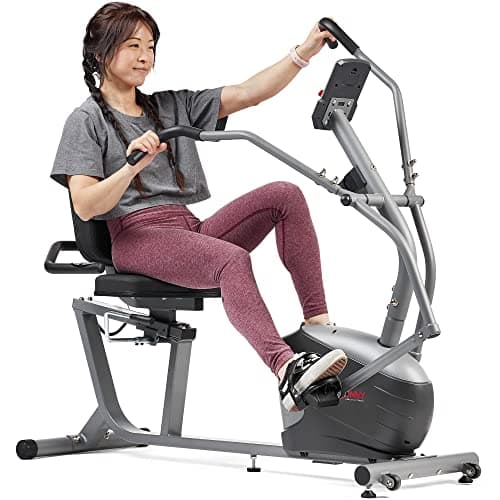
A recumbent bike is one of the calmer ways to turn the legs over — you sit back in a supported seat, there is nothing to balance, and the motion is smooth. The Arthritis Foundation notes that movement generally helps a joint rather than aggravating it, which is a large part of why gentle cycling appeals to people rebuilding a lower body. But after a hip replacement, the appeal runs straight into the seat.
Sitting low is itself a deep bend of the hip. Reaching forward to the pedals from a low, reclined seat can flex the hip further still. If your precautions cap how far the hip may bend in the early weeks — as many do — a very low or deep seat can push past that limit before you have turned the pedals once. That is why seat height is not a comfort detail here; it is the safety question. A higher seat that keeps the hip more open is generally easier on an early hip than a low one, but “generally” is not a green light for you specifically.
The practical consequence is that a bike often enters the picture later for a hip than it would for a knee.A knee patient is mostly worried about how far the knee bends; a hip patient has to clear the sitting-down part first. None of that means a recumbent bike is a bad idea — for many people it becomes an excellent long-term machine — only that whether it is right yet, and at what seat position, is a question to put to your physical therapist, who can watch you get on and off and check it against your actual limits. If and when you are cleared, our shortlist of recumbent bikes for seniors flags which models sit higher and step through more easily.
Walking again: flat, slow, and with something to hold
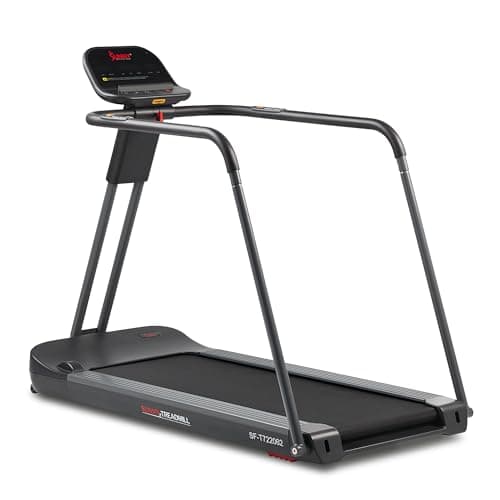
Walking is the movement most people are quietly aiming to get back, and steady, flat walking is one of the more natural things to return to — often reintroduced under a therapist’s guidance as the hip allows. On a treadmill, though, two things change. The belt moves under you, which asks a little more of your balance and timing than walking across a room, and you have to step on and off cleanly at the start and end. Both are worth respecting after a hip.
This is where handrails stop being optional. Full-length rails give you something to steady against while you find your rhythm and, just as importantly, a controlled way to get on and off without a sudden twist or lunge at the hip. Keep the speed genuinely slow — slower than feels worth it — and the sessions short at first, and judge the hip by how it feels the next day, not while you are warm. If any of that sounds like it is skipping steps, it is: the real first step is your physical therapist confirming that treadmill walking is appropriate for you at all. Our senior treadmill shortlistis written around exactly these features — low starting speeds, cushioned decks and proper rails — for whenever you reach that point.
Why seated options get chosen for support
For the earliest, gentlest movement, a lot of people are pointed toward seated gear: a pedal exerciser you use from a sturdy chair, or a bike with a supportive back. The reason is support. A seated machine removes the balance task entirely, so the effort goes into turning your legs over rather than into staying upright, and there is no risk of an off-balance stumble catching a healing hip wrong. For someone still finding their feet, that stability can matter more than how hard the workout is.
The catch is the same one as everywhere on this page: sitting is a hip position too. A seat that is too low or a pedal reach that folds you up can breach a flexion limit even while you feel perfectly stable. So “seated” is not automatically “safe” after a hip — it is safer for balance, but the seat depth and pedal position still have to respect your precautions. That is a detail to set up with your physical therapist rather than by feel, and it is worth doing properly, because the whole point of a seated start is not to trade a balance risk for a bending one.
A machine cannot clear you — your care team can
Everything above is deliberately general, because the specifics are not ours to give. The National Institute on Aging’s advice is to talk to your doctor before starting something new, and after major joint surgery that is not a formality — it is the step that decides whether any of this applies to you yet. Your surgeon and physical therapist know your approach, your precautions and how your recovery is going; a web page knows none of it.
The direction of travel, once you are cleared, is encouraging. The CDC’s guidance for adults 65 and over is at least 150 minutes a week of moderate-intensity activity, plus muscle-strengthening on two days and some balance work — and low-impact machines are a comfortable way to get there over time. But that is a destination you build toward from wherever rehab leaves you, one small increase at a time, with your care team deciding the pace. Add the machine when they say the hip is ready for it, set the seat where they tell you, and let the next morning — not your enthusiasm — confirm you got it right.
General information, not medical advice. Tread & Tone is written by an enthusiast, not a clinician. Nobody here is a doctor, a physical therapist or a trainer, and nothing on this site has been medically reviewed. Talk to your doctor or physical therapist before starting something new, particularly after surgery, a fall, or a change in medication.
Questions people ask
Can I use a recumbent bike after a hip replacement?+
Often yes, eventually — but the seat is the sticking point, and the timing is your care team’s call, not ours. Sitting down low and reaching the pedals can bend the hip further than early precautions allow, so a recumbent bike frequently comes into the picture later for a hip than it would for a knee. Whether it is right for you, at what seat height, and when, is a question for your surgeon and physical therapist, who know which movements your particular hip can safely make.
When can I start exercising after a hip replacement?+
There is no honest single answer, and anyone who gives you one from a web page is guessing. It depends on the type of surgery, how it went, your precautions and your overall health, which is exactly why your surgeon and physical therapist set the schedule and clear each new activity. This page is general equipment information, not a rehab timeline. Follow the protocol your care team gave you — it outranks anything here.
Is a treadmill safe after a hip replacement?+
Steady, flat, slow walking is one of the more natural movements to come back to, and it is often reintroduced under guidance — but ‘often’ is not ‘you, today.’ A treadmill adds a belt moving under you and a need to step on and off cleanly, so full-length handrails and your therapist’s go-ahead matter more here than usual. Ask before you use one, and start slower and shorter than feels worth it.
Why does the seat height matter so much after a hip?+
Because sitting low is itself a deep bend of the hip. Many people are given a limit on how far the hip may flex in the early weeks, and a very low or deep seat can quietly push past it before you have pedaled once. That is why seat height is not a comfort detail after a hip replacement — it is the whole safety question, and it is one to settle with your physical therapist rather than by feel.
Why are seated machines often suggested first?+
Support. A seated pedal exerciser or a bike with a back keeps you stable and takes the balance challenge out of the movement, so the effort goes into the legs rather than into staying upright. That can make seated options a sensible early choice for some people — but the seat depth still has to respect your hip limits, so it is not automatically safe just because you are sitting. Confirm the specifics with your care team.
How much exercise should I be aiming for once I am cleared?+
Once your surgeon and physical therapist have cleared you, the general target for adults 65 and over is the CDC’s 150 minutes a week of moderate activity, plus muscle-strengthening and balance work — but that is a destination, not a starting line. Build toward it slowly from wherever your rehab leaves you, and let your care team, not a number on a website, decide how fast you add to it.
CDC — Older Adult Activity: An Overview — At least 150 minutes a week of moderate-intensity activity, 2 days of muscle strengthening, plus balance activities for adults 65 and over (read July 24, 2026)
Product measurements are cited individually inside each Fit-to-You panel, against the manufacturer page or dated retailer listing they were read from.