Low-Impact Cardio at Home After 65
Not what low-impact cardio is — how to actually do it indoors: the room you have, the floor you have, the people below, exercising alone safely, and how to tell the effort is counting.
Read the guide“Low-impact” is not a marketing word — it means something specific about how your foot meets the ground. Here is what it actually means, the five families of gear that deliver it, and how to choose the one you will still be using next year.
The short answer
Low-impact cardio is aerobic exercise that keeps a foot supported and removes the jarring of running — kinder on knees, hips and ankles, without being any less real a workout. Five families deliver it for seniors: recumbent bikes, walking treadmills, seated and under-desk cardio, recumbent cross-trainers, and water or chair-based movement. The best one is simply the one that fits your joints, your balance, your room, and your willingness to keep using it.
“Low-impact” gets used as if it just meant “gentle,” but it has a precise mechanical meaning, and that meaning is the whole reason this kind of exercise suits older and joint-conscious bodies. This guide starts with what the phrase actually describes, then walks through the five families of equipment that deliver it — the ones this site covers — so that by the end you can tell which one is worth your money and your habit.
Impact is what happens when your body weight lands on a joint. When you run, there is a moment when both feet are off the ground, and then your full weight comes down through one leg — ankle, knee, hip — over and over. That repeated landing is the “impact,” and it is what makes running hard on older joints. Low-impact activity removes it: you keep at least one foot supported, or you take your weight off your legs entirely, so there is never that jarring return to earth.
Two things follow from that definition, and both matter. First, low-impact does notmean low-effort. A brisk cycle or an incline walk can leave you thoroughly out of breath; you are simply reaching that effort without pounding the joints. Second, “low-impact” is about the landing, not the intensity, so it is entirely possible to work at the moderate level the guidance asks for while staying kind to your knees. That is the trick the whole category is built on: real aerobic work, minus the hammering.
It also happens to be well supported. The Arthritis Foundation’s rundown of ways to work out with arthritis leans heavily on exactly these options — cycling, walking and water among them — because they let a sore joint keep moving without added pounding. And the reason to bother at all is the CDC’s target for adults 65 and over: at least 150 minutes a week of moderate activity, plus muscle-strengthening on two days and some balance work. Low-impact cardio is how most older adults comfortably cover the aerobic half of that.
Cardio is only one of the four types of exercise the National Institute on Aging describes — endurance, strength, balance and flexibility — so treat everything below as the endurance piece, and keep some strength and balance work alongside it. With that framing set, here are the five families.
A recumbent bike sits you back in a supported seat with the pedals out in front, so your body weight rests on the frame rather than your legs, and there is no balance task at all. That makes it the most supported way to get a genuine aerobic workout on this list. The Arthritis Foundation notes that cycling’s continuous motion carries the joint through its range, producing the fluid that lubricates it — part of why so many people with cranky knees find a bike agrees with them when other things do not.
It suits someone who wants to sit down, be fully supported, and not think about balancing; someone with back support needs; or anyone who finds standing cardio tiring in itself. The main things to weigh are the step-through height (how easily you get on) and the seat, and it does need a dedicated spot in the room. Our shortlist of recumbent bikes for seniors works through those trade-offs machine by machine.
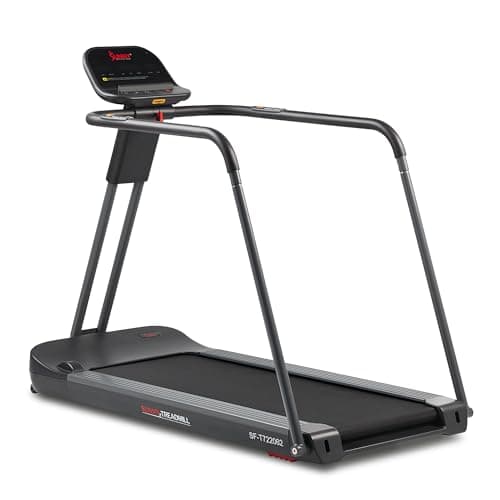
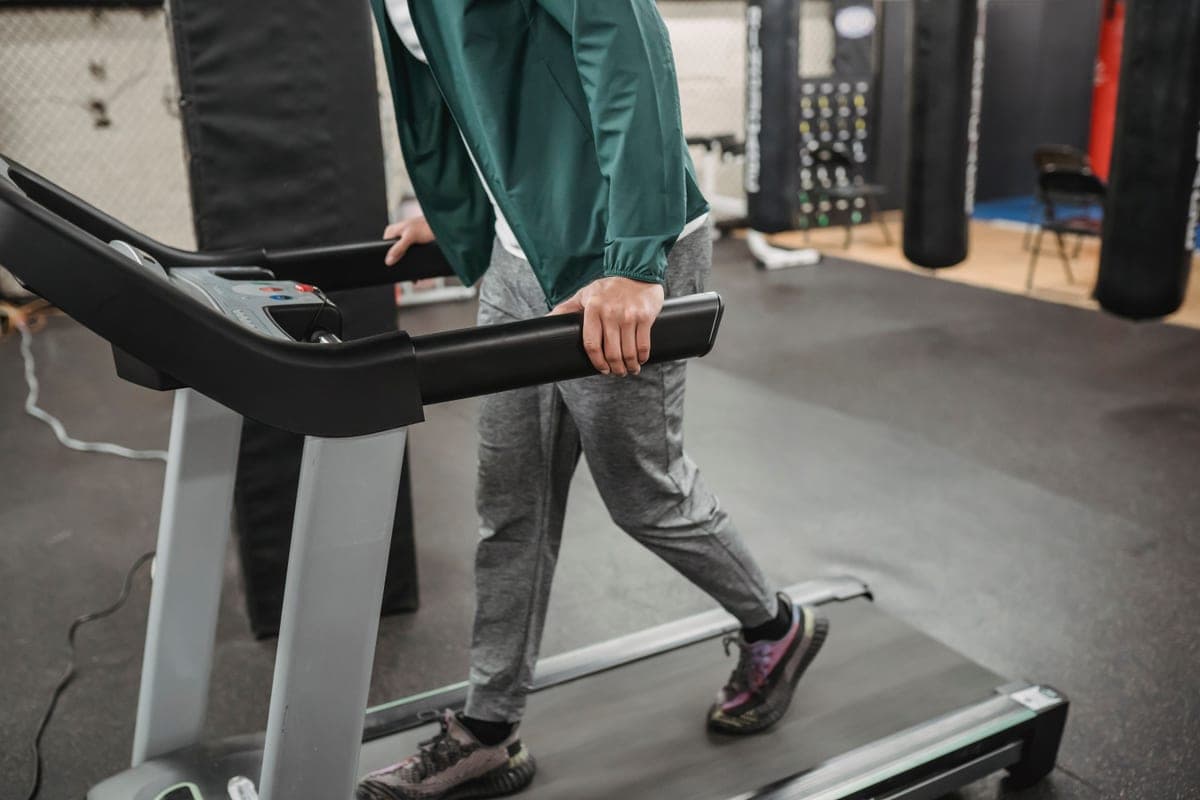
Walking is the low-impact exercise almost everyone already knows how to do, and a treadmill just lets you do it indoors, in any weather, at a controlled pace. It is weight-bearing — you are on your feet, carrying yourself — which has real value for staying strong and steady, and a gentle incline lets you reach a moderate effort at a slow, safe belt speed. The trade-off is that a moving belt asks a little of your balance, so full-length handrails, a low starting speed and a cushioned deck matter more for an older walker than raw top speed does.
It suits a steady walker who wants to keep walking year-round and has a bit of floor space. If you are less sure on your feet, this is the family to approach most carefully. Our best treadmills for seniors shortlist is built around exactly those safety features. For a slimmer, foldaway take on the same movement, walking pads cover the ground comparatively in our walking pads for seniorsguide — smaller, quieter and flat, at the cost of the rails and incline a full treadmill gives you.
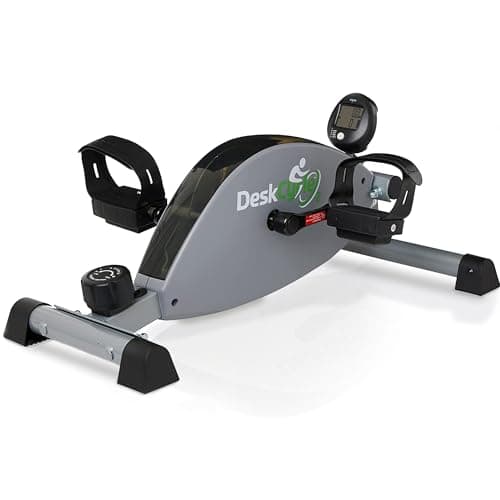
A seated pedal exerciser is a small set of pedals you use from your own sturdy chair; an under-desk elliptical is its cousin with a stepping motion. Both take the balance challenge out of cardio entirely and let you work your legs, heart and lungs while sitting — often while you read, watch television or work at a desk. They are the smallest, cheapest and most approachable entry into the whole category, and they stow in a cupboard when you are done.
This family suits someone with limited mobility, someone unsteady on their feet, anyone in a small home, or anyone who wants to start so gently that it barely feels like exercise. The honest limit is that the effort tops out lower than a full bike or treadmill — but a real, if modest, workout that you actually do every day beats a hard one you avoid. Our best pedal exercisers shortlist sorts the stable, usable ones from the wobbly novelties.
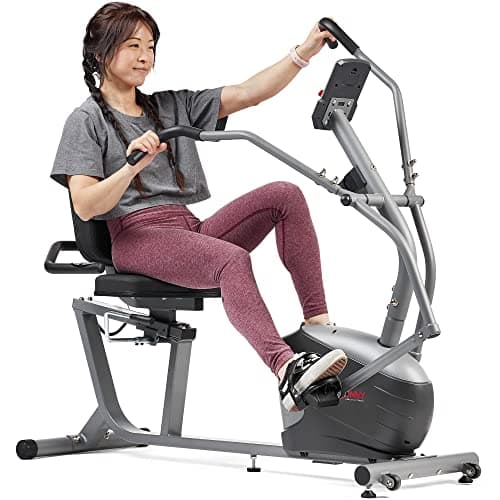
A recumbent cross-trainer — sometimes called a recumbent elliptical or a seated stepper-and-arms machine — keeps the supported, seated position of a recumbent bike but adds a striding leg motion and, usually, moving arm handles. So you get the same no-balance, fully-supported setup, with a movement pattern closer to an elliptical and the option to bring your upper body into it. For someone who wants a fuller-body low-impact workout without ever standing or balancing, it is a neat middle ground.
It suits a person who finds a plain bike a little monotonous, or who wants the arms involved, but still needs the security of a seat. These machines tend to be larger and cost more than a simple bike, which is the trade for what they add. Our roundup of the best recumbent cross-trainers covers who they are worth it for and who is better served by a plain recumbent.
Not all low-impact cardio comes from a machine. Water is about as low-impact as movement gets — it takes almost all the weight off your joints while giving your muscles something to push against — and water aerobics is one of the Arthritis Foundation’s standby recommendations. Chair-based routines, at the other end, need nothing but a sturdy seat and get the heart working while keeping you fully supported. Both are ideal when a machine is not an option, or as a companion to one.
These suit anyone easing in with no gear, anyone who loves the water, and anyone whose balance or mobility makes standing exercise a stretch for now. Our guides on water aerobics at home and chair exercises for seniors lay out simple ways to start with what you already have.
Five families is a lot of choice, so narrow it with the questions that actually decide it, roughly in this order. Start with balance: if standing cardio feels risky, that points you at the seated and recumbent options and away from the treadmill for now. Then space: a small home or a shared room favors a pedal exerciser or a folding walking pad over a full bike or treadmill. Then the joint you are protecting: knees and hips often do well seated and cycling, while a steady walker may prefer to keep walking. And then, honestly, enjoyment— because the machine that gets used every day beats the “better” one gathering dust in the spare room.
That last point is not a throwaway. The whole value of low-impact cardio comes from doing it regularly, so the single most important spec is whether you will come back to it. A gentler machine you use five times a week does far more for you than a more capable one you dread. Match the family to your body and your room first, and then, within it, pick the specific model you will look forward to.
Once you have picked the family, the next question is the practical one: how do you fit it into the house you already live in? That is a separate set of problems — the room, the floor, the neighbors below, exercising alone safely, and how to judge the effort with nothing going past the window to pace yourself against. Our guide to low-impact cardio at home after 65 works through all of it, in the order you actually hit them.
One caution to carry into all of it: this is general information, not medical advice, and nobody here is a clinician. Before you start something new — especially with a heart condition, arthritis, a recent fall or a change in medication — talk to your doctor or physical therapist. They can tell you which of these families fits your situation and how quickly to build, which is the one call a website genuinely cannot make for you.
General information, not medical advice. Tread & Tone is written by an enthusiast, not a clinician. Nobody here is a doctor, a physical therapist or a trainer, and nothing on this site has been medically reviewed. Talk to your doctor or physical therapist before starting something new, particularly after surgery, a fall, or a change in medication.
It means aerobic exercise that keeps at least one foot supported and removes the jarring of running — no moment where both feet leave the ground and your full weight lands back on a joint. Walking, cycling and swimming are low-impact; running and jumping are high-impact. The point is not that it is easy; a hard cycle can leave you breathless. The point is that the effort reaches your heart and lungs without hammering your knees, hips and ankles.
There is no single best — there is a best for you, and it depends on your joints, your balance, your space and, most of all, which one you will actually use. A recumbent bike suits someone who wants full support and no balance demand; a treadmill suits a steady walker who wants to keep walking indoors; a seated pedal exerciser suits someone with limited mobility or a small room. The right machine is the one that fits your body and your habits, not the one with the longest spec sheet.
Both can be kind to knees, and both keep the joint moving, which the Arthritis Foundation says generally helps rather than harms. Cycling has the edge for support and control — you are seated, there is no balance task, and you set exactly how hard the legs work — while walking is more natural and weight-bearing, which has its own value. Which feels better depends on your particular knee, so if one aggravates it, try the other, and raise a persistent sore joint with your doctor.
Yes. Seated and recumbent machines keep the balance challenge out of the movement while still working your heart, lungs and legs, so the effort is real even though you are supported. A seated pedal exerciser or a recumbent bike lets you reach a moderate aerobic effort — the level that counts toward the weekly guidance — without ever standing up. For anyone unsteady on their feet, that can be the difference between doing cardio and not.
The general target for adults 65 and over is the CDC’s 150 minutes a week of moderate activity, plus muscle-strengthening on two days and some balance work — and low-impact cardio is a comfortable way to reach the aerobic part. You do not have to arrive there on day one; the minutes can be split into shorter sessions and built up gradually. Talk to your doctor before starting something new, then add to it slowly.
For the smallest and most flexible footprint, seated cardio wins — a pedal exerciser tucks under a desk or a chair and stows in a cupboard. Walking pads are the slimmest walking option and fold flat, while full treadmills and recumbent bikes need a dedicated spot. If space is the deciding factor, start with the seated and folding options; if you have a room to spare, the larger machines open up.
Product measurements are cited individually inside each Fit-to-You panel, against the manufacturer page or dated retailer listing they were read from.
Not what low-impact cardio is — how to actually do it indoors: the room you have, the floor you have, the people below, exercising alone safely, and how to tell the effort is counting.
Read the guideBest for Seniors
Eleven bikes ranked on the measurements that decide whether you can get on — with the count of specs each manufacturer refuses to publish.
Top pick: Sunny Health & Fitness Smart Recumbent Bike with Dual-Motion Arm Exercisers
Best Treadmill
Step-up height, minimum speed and handrail length — the three numbers that decide it, and which machines publish them.
Top pick: Sunny Health & Fitness Treadmill with Extended Safety Handrails, Low Deck
Best Pedal Exerciser
Pedal height is the spec that decides whether your knees hit the desk, and exactly one manufacturer publishes it as a range.
Top pick: DeskCycle DeskCycle 2 Under Desk Bike
Price as of September 23, 2026. #ad How we’re funded
A tiny, cheap machine with a real training effect and a real catch — it demands standing balance that not everyone should be spending on a moving step.
Read the guideHip precautions change which machines are sensible and which are off-limits at first. What that means for bikes, treadmills and seated cardio, and why your care team decides.
Read the guide