Low-Impact Cardio for Seniors: A Complete Guide
What 'low-impact' actually means, the five kinds of gear that deliver it, and how to pick the one that fits your joints, your balance and your room.
Read the guideNot what low-impact cardio is — how to actually do it, indoors, in a real house. The room, the floor, the people below, exercising alone safely, and how to know the effort is counting.
How this is funded: we earn a commission if you buy through our links, at no extra cost to you. It never changes what we recommend, and every page here names at least one thing we would not buy. Full disclosure.
The short answer
You can hit the full weekly activity target for adults 65 and over without leaving the house. Choose the option your room and your balance allow, count minutes rather than steps, judge the effort by whether you can still talk but not sing, and add minutes slowly. The equipment matters far less than whether the set-up survives an ordinary week.
There is a separate question from “what is low-impact cardio” — we answer that one in the complete guide to low-impact cardio, along with the five families of equipment that deliver it. This page is about the harder, more practical question: how do you actually do it, indoors, in the house you already live in, at 65 or 75 or 85?
Because the house is where most home-exercise plans quietly fail. Not for lack of willingness — because the machine did not fit the room, or it was too loud for the apartment below, or it lived somewhere that meant moving a chair every single time, or it needed a bit of balance the owner did not want to spend on a Tuesday morning. Those are solvable problems, and they are worth solving before any money is spent.
The target is not vague and it is not written in gym visits. The CDC’s guidance for adults 65 and over is at least 150 minutes a week of moderate-intensity activity, muscle-strengthening work on two days, and activities that challenge your balance.
Read that again and notice what is absent. No distance. No steps. No mention of where you do it. Minutes of moderate effort, and the CDC says plainly that those minutes can be accumulated in whatever pieces fit your day. Three ten-minute sessions in your own front room count exactly the same as one thirty-minute session anywhere else.
So the whole question becomes: is the effort moderate? Indoors, with nothing going past the window to pace yourself against, that is genuinely harder to judge. Use the talk test, which the CDC describes alongside the heart-rate method:
It costs nothing, needs no device, and works identically on a bike, a walking pad or a set of pedals under an armchair. If you would rather use a number, the heart-rate zones are here, and what an ordinary week looks like is here.
This is the single most common expensive mistake in home fitness, and it is entirely avoidable with a tape measure and ten minutes.
The footprint on the box is not the space the machine needs. You also need clear floor on the side you get on and off from, and you need a route to get the thing into the room in the first place. Four measurements, written on a piece of paper:
Then compare against what the maker actually publishes. Some publish full assembled dimensions and a shipping carton size; plenty publish two sets of dimensions that contradict each other. That gap is worth knowing about before you buy, not after the delivery driver has left it in the hall. Treadmill space, in detail and a small home gym that fits a spare bedroom both go further on this.
Two things decide whether a home machine is pleasant or infuriating, and neither is on the specification sheet.
What is under it.On laminate, tile or wood, small seated units walk away from you as you pedal — the commonest complaint in that whole category. A few makers publish anti-slip rubber feet; a cheap rubber mat solves it either way, and also protects the floor from a heavy frame. On carpet the sliding matters much less, but a deep pile can make a machine sit unevenly, so check it does not rock before the first session.
What is beneath the ceiling below.If there is an apartment under yours, the noise that travels is not the motor. It is footfall and vibration traveling down through the floor, which is why walking machines are the ones that cause trouble and seated machines almost never are. Almost nobody publishes a decibel figure, so there is nothing honest to compare on — treat “whisper quiet” as marketing, put a mat underneath, and keep the speed modest. The apartment version of this problem is here.
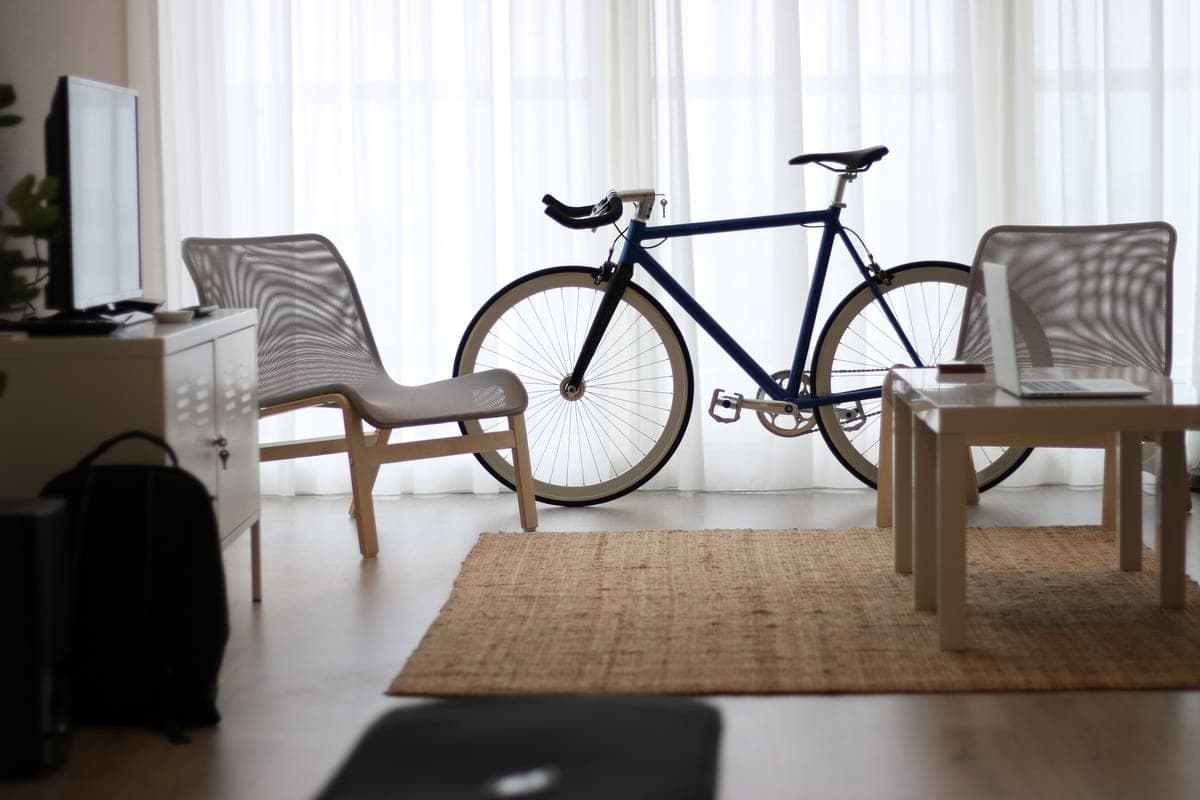
And one small thing that decides more than it should: where the machine lives. If using it means moving a chair and unplugging a lamp, it will be used twice. A pedal unit that stays under the armchair, or a pad that slides under the sofa, gets used because nothing has to be rearranged first.
Most people reading this will be doing their cardio with nobody else in the building. That is not a reason to avoid it — the National Institute on Aging is direct that regular activity improves how well an older body works, and better function lowers both the chance of a fall and the chance of being badly hurt in one. It is a reason to set up sensibly.
Five things, none of which costs anything:
If falling while alone in the house is a specific worry rather than a general one, it is worth addressing head-on. The CDC reports that more than one in four adults over 65 falls each year, and that falling once doubles the chance of falling again. Balance work is what changes those odds, and a fall-detection watchis what tells somebody afterwards — two different jobs, and only one of them is prevention.
Ordered by how much of your home each one asks for, rather than by price. Start at the top if space, money or balance is tight; the first option asks for almost nothing.
1. From the chair you already own.A pedal exerciser or an under-desk elliptical sits on the floor in front of an armchair. No frame, no seat to buy, no floor space surrendered, and it goes in a cupboard afterwards. It is less exercise than a bike and nobody should pretend otherwise — but the useful comparison is against the sitting you would otherwise be doing, and on that comparison it wins easily. Measure your knee clearance first, because pedal height is what decides whether your knees hit the desk. The pedal shortlist is here, and the ellipticals that work sitting down are here.
2. A pad that slides under the sofa.A walking pad is a flat belt with no console tower, so you step up inches rather than the best part of a foot, and it stows away between uses. The trade-off is that most have nothing to hold, which matters if your balance is at all uncertain — a few have handrails, and those are the ones worth looking at. The walking-pad shortlist is here.
3. A seat with a back rest. A recumbent bike is the most comfortable way to do a longer indoor session, because the seat carries your torso and your hands carry nothing. It also asks for a permanent spot in a room and a two-person delivery. If you have the space, this is the machine most people over 65 get the most use out of. The main shortlist is here, and what spending more actually buys is here.
4. No equipment at all. Worth saying plainly, because it is where a lot of people should start: a chair routine or seated movement needs a dining chair and nothing else, and water-based movement is an option if you have access to a pool. Marching on the spot during the commercials is real activity. Buy equipment when you have run out of room to progress, not to start.
The plan that survives is the boring one. A structure that has worked for a great many people returning to activity after a long gap:
Bookend each session properly: a few minutes moving gently before, and the same after, which matters more past 65 than it did at 40. The warm-up and cool-down routine is here. If you want the whole thing written out week by week, the eight-week walking build and the four-week bike plan both do that, and the honest guide to not quitting covers the part nobody puts in a plan.
Do not forget the other two thirds of the guidance. The National Institute on Aging groups exercise into four kinds — endurance, strength, balance and flexibility — and cardio is only the first. Two days of band work or light dumbbells, plus a few minutes of balance practice, sit alongside the minutes rather than competing with them.
One rule keeps a home routine honest when there is no instructor watching: judge yesterday’s session by how you feel the next morning.Mildly tired legs are fine and expected. A joint that is stiffer or more painful than the day before means the last session was too long or too hard — go back a step and hold there for a week rather than pushing through.
On a genuinely bad day, reduce instead of skipping where you sensibly can. Shorter, lighter, or seated instead of standing. Movement through a joint’s range is generally helpful rather than harmful, and a habit survives a light day far better than a missed one.
And the plain limit on all of this: we are enthusiasts who read manuals, not clinicians. Chest pain, dizziness, breathlessness out of proportion to the effort, or a joint that keeps getting worse are all reasons to stop and speak to your doctor. So is starting something new after surgery, a fall, or a change in medication — ask first, then build slowly.
One condition changes how you set all of this up rather than what you buy. Where fatigue and widespread tenderness are the limit, the dose that helps and the dose that costs you two days are close together — and NIAMS names biking among the low-impact activities it calls especially helpful, alongside the instruction to start at a low level. Our page on exercise bikes and fibromyalgia covers the pacing, and the two published specifications that make a genuinely low dose available.
General information, not medical advice. Tread & Tone is written by an enthusiast, not a clinician. Nobody here is a doctor, a physical therapist or a trainer, and nothing on this site has been medically reviewed. Talk to your doctor or physical therapist before starting something new, particularly after surgery, a fall, or a change in medication.
Yes. The CDC's guidance for adults 65 and over is written in minutes of moderate activity, not in miles or in gym visits — 150 minutes a week, plus muscle-strengthening on two days and some balance work. Nothing in that target requires going anywhere. Pedaling in an armchair, walking on a pad in the front room and a supported cycle in a spare bedroom all count, as long as the effort reaches moderate.
Use the talk test, which is the method the CDC itself describes alongside heart-rate zones. At moderate effort you can hold a conversation but not sing. If you can sing comfortably, go a little harder; if you cannot get a sentence out, ease off. It needs no watch, no chest strap and no arithmetic, and it works the same on a bike, a walking pad or a set of pedals under a chair.
Less than most people assume for seated equipment and more than most people assume for a treadmill. A pedal unit needs the floor in front of the chair you already sit in. A walking pad needs its own length plus somewhere to slide it. A recumbent bike or treadmill needs its published footprint plus clear space on the side you get on from, and a route through your doorways to get it in. Measure the doorway and the hallway before you order, not after.
Seated equipment, by a wide margin — a magnetic pedal unit or an under-desk elliptical makes little noise and puts nothing through the floor. The problem in apartments is rarely the motor; it is footfall and vibration traveling down into the apartment below. If you want to walk indoors, a mat under the machine and keeping the speed modest do more than any specification, because almost no maker publishes a decibel figure to compare in the first place.
For seated cardio, generally yes, and it is one of the reasons seated machines suit people who live alone. For anything done standing, set up so that a stumble is survivable: something solid within arm's reach, the floor clear, shoes on rather than socks, and your phone in the room with you rather than in another one. If a fall while alone is a live worry, that is worth addressing directly rather than by avoiding movement.
Short sessions are not a compromise — the CDC is explicit that the weekly minutes can be accumulated in whatever pieces suit you. Three ten-minute sessions are easier to fit around a day and easier on a joint that stiffens up, and they are far more likely to still be happening in three months than one long block you dread. Start below what feels worthwhile and add minutes rather than intensity.
Reduce rather than skip, where you sensibly can: a shorter session, lighter resistance, seated instead of standing. Movement through a joint's range is generally helpful rather than harmful, and a habit survives a light day much better than a missed one. But a joint that is worse the next morning is telling you the last session was too much, and pain that keeps returning is a conversation with your doctor or physical therapist, not something to train through.
Product measurements are cited individually inside each Fit-to-You panel, against the manufacturer page or dated retailer listing they were read from.
What 'low-impact' actually means, the five kinds of gear that deliver it, and how to pick the one that fits your joints, your balance and your room.
Read the guideBest Elliptical for Seniors
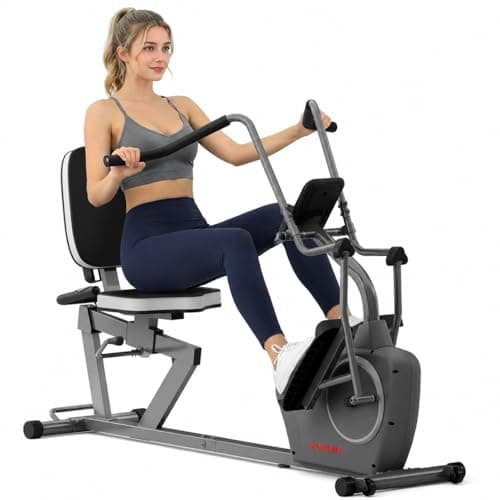
Three kinds of elliptical share one aisle, and only two of them suit an older body. The machines that give you the gliding stride without asking you to balance on it.
Top pick: VANSWE Recumbent Elliptical Cross Trainer
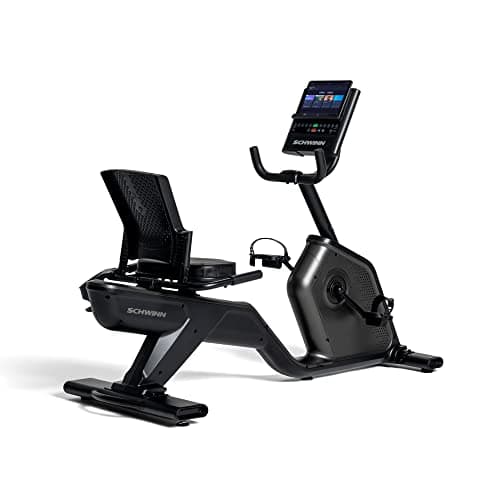
Best Premium Bike
The seated motion is the same at every price, so the only honest question is what the extra money buys — finer resistance, a bigger screen, dimensions you can measure — and the four things it buys nobody at any price.
Top pick: Schwinn Fitness 290 Recumbent Bike
Price as of October 19, 2026. #ad How we’re funded
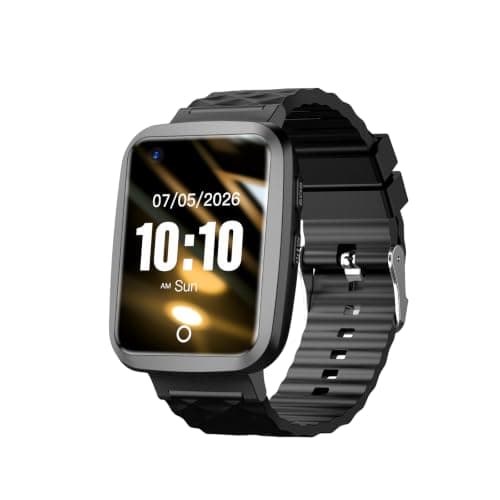
Best Fall Alert
The monthly subscription is the real price, and only one of these publishes it. What each device actually does when someone falls.
Top pick: Fajocru Fall Detection Watch for Seniors
Price as of October 19, 2026. #ad How we’re funded
The CDC's weekly numbers turned into a realistic week, how many days of cardio, strength and balance to aim for, and why little-and-often beats one long push.
Read the guide