Your First Exercise Equipment at 60
Where to start when you're starting over — the one $37 purchase almost everyone should make first, and why the biggest machine is rarely the right one.
Read the guideYou do not need a room, a rack, or a budget with a comma in it. One cardio machine sized to the space, a balance pad, and a set of bands in the corner will cover more than most home gyms ever get used for — if you lay it out so it actually gets used.
The short answer
A small senior home gym needs three things, not thirty: one cardio machine sized to the room, a balance pad, and a set of light resistance bands. The machine is the anchor; the cheap pad and bands deliver the most benefit per dollar and cover strength and balance. Put it where you already spend time, leave clear floor to get on and off safely, and keep something sturdy within reach.
The picture most people have of a home gym — a rack of weights, a mirror, a wall of machines — is exactly the picture that stops a lot of seniors from setting one up at all. It looks expensive, it looks like it needs a room, and it looks like it is for someone else. Almost none of that is necessary. A genuinely useful setup for an older adult is small, cheap, and fits in a corner, and it will get more use than most garage gyms ever do, because the whole point is to build it around getting used rather than around looking the part.
Every setup needs a backbone, and for a senior the backbone is one cardio machine. Not two, not a wishlist — one, chosen to fit both your room and your body. If your knees or hips want you off your feet, that anchor is a seated machine like a recumbent bike, which carries your weight on the seat and moves your legs gently. If you would rather be walking, it is a walking pad or a compact treadmill sized to the space you have. Either way, this is the piece you spend real money on, because it is the piece you will use most.
Size it honestly to the room. A machine that only fits if you move the couch every time is a machine you will stop unfolding. A walking pad slides under a bed; a compact recumbent bike lives in a corner. Measure the patch of floor you actually have, and the clearance around it, before you fall for a machine that needs more room than you can give it. Our guide to your first exercise equipment at 60 walks through choosing that anchor, and our best recumbent bikes for seniors shortlist compares the gentle seated options if that is the direction you lean. Where the corner is the binding constraint rather than the budget, our shortlist for small spaces ranks the same bikes on published footprint instead.
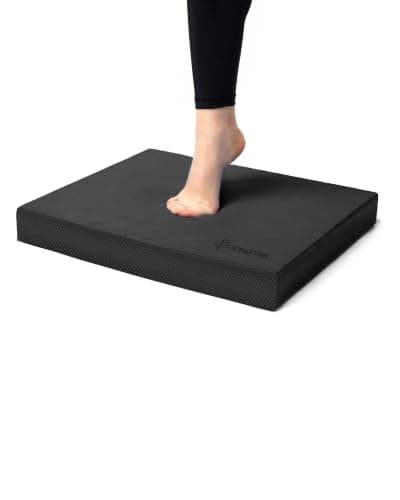
Here is the part that surprises people: the two items that add the most to a senior’s setup are also the two cheapest. A balance pad and a set of light resistance bands together cost a small fraction of the machine, store in a drawer, and cover two of the things a cardio machine cannot. Dollar for dollar, they are the best value in the whole gym, and they are the pieces most people skip because they do not look like much.
A balance pad is a simple foam cushion, and standing on it turns ordinary movements — standing on one foot, shifting your weight, small steps — into balance training, which is one of the four types of exercise the National Institute on Aging singles out for older adults, alongside endurance, strength and flexibility. Our balance equipment shortlist covers the pads and cushions worth owning, none of which cost much.
Resistance bands are the other half. The CDC guidance for adults 65 and over asks for muscle-strengthening on two days a week on top of the cardio, and a set of light bands covers that without a single dumbbell. They work most major muscle groups gently, they are almost free, and they take up no space. Our resistance band exercises for seniors walks through the movements. Between the pad and the bands, you have added strength and balance to your cardio for a fraction of the machine’s price.
The reason this small setup works is that it quietly covers the ground the guidelines actually care about. The National Institute on Aging frames a well-rounded routine around four types: endurance, strength, balance, and flexibility. The mistake is thinking each one needs its own machine. It does not. Your cardio anchor handles endurance. The bands handle strength. The pad handles balance. Flexibility comes from moving gently through your range, which you can do anywhere, including in a chair.
Put next to the CDC’s weekly target — at least 150 minutes of moderate activity, two days of strengthening, and some balance work — three inexpensive items cover all of it. There is no version of that target that requires a rack of weights or a room full of machines. It requires a machine, a set of bands, and a pad, used regularly. That is the whole argument for keeping it small: a small setup you use beats a large one you do not.
Owning the gear is the easy part. The layout is what decides whether it becomes a habit or a pile in the spare room, and a few simple choices make most of the difference.
A small home gym for a senior is not a compromise version of a real one. For most people it is the version that gets used, which makes it the real one. Buy the machine that fits your space, spend almost nothing on the pad and the bands that do so much of the work, and lay it out where your day already takes you. Three items in a corner, used most weeks, will carry you further than any wall of equipment gathering dust down the hall.
General information, not medical advice. Tread & Tone is written by an enthusiast, not a clinician. Nobody here is a doctor, a physical therapist or a trainer, and nothing on this site has been medically reviewed. Talk to your doctor or physical therapist before starting something new, particularly after surgery, a fall, or a change in medication.
Less than you would think. One cardio machine sized to your room — a recumbent bike or a walking machine — plus a balance pad and a set of light resistance bands will let you cover endurance, strength and balance, which is most of what the guidelines ask for. You can add to it later, but that short list is a complete, usable setup on its own, and it fits in a corner.
A corner of a spare room or bedroom is plenty for the setup we recommend. The cardio machine is the only real footprint, and a walking pad or a compact recumbent bike takes only a modest patch of floor. The important space is not for the gear but around it — enough clear floor to get on and off safely and to stand on a balance pad without anything sharp within reach if you wobble. Bands and a pad store in a drawer.
Buy the one cardio machine that fits your space and budget, then spend very little on the rest. A balance pad and a set of resistance bands together cost a small fraction of the machine and deliver an outsized amount of the benefit — they are the highest value-per-dollar items in the whole setup. Skip the accessories that look impressive and add nothing; a coat rack with programs is still a coat rack.
Not to begin with. The CDC advises muscle-strengthening on two days a week, and for most people starting out a set of light resistance bands covers that without a rack of dumbbells or a bulky machine. Bands are cheap, store in a drawer, and let you work most major muscle groups gently. You can add weights later if you want to, but they are not the entry ticket, and they are not where a small budget should go first.
Somewhere you already spend time and will actually see it. A machine tucked in a spare room you never enter becomes furniture; the same machine in a corner of the living room or a bedroom you pass every day gets used. Put it near a wall or a sturdy piece of furniture you can steady yourself on, leave clear floor around it, and keep the bands and pad visible rather than shut away, so using them is the path of least resistance.
For most seniors the first machine is a cardio anchor — a recumbent bike if you want a seated, joint-friendly option, or a walking pad or treadmill if you would rather be on your feet — sized to the room and to your budget. That single machine is the backbone of the whole setup. Our best-for-seniors shortlist is a good place to compare the gentle, well-rated options against each other.
Product measurements are cited individually inside each Fit-to-You panel, against the manufacturer page or dated retailer listing they were read from.
Where to start when you're starting over — the one $37 purchase almost everyone should make first, and why the biggest machine is rarely the right one.
Read the guideBest Balance Gear
Pads, cushions, boards and rails ranked by how safely you can start — including the one we tell you not to start on.
Top pick: StrongTek Extra Wide TPE Balance Pad
Price as of September 23, 2026. #ad How we’re funded
The cheapest way to meet the CDC's two-days-a-week strength guideline, with a seated routine you can do from a dining chair — and the honest limits of a rubber band.
Read the guideHow to buy something a parent will actually use rather than resent — starting with the measurements that decide whether they can get on it at all.
Read the guide