Starting over after years away is mostly about buying something you'll actually use, not something impressive. Here's the honest order to buy in — and the cheap first purchase almost everyone should make.
How this is funded: we earn a commission if you buy through our links, at no extra cost to you. It never changes what we recommend, and every page here names at least one thing we would not buy. Full disclosure.
The short answer
Start small and cheap. A balance pad or a pedal exerciser costs little, needs no floor space, and gets used every day — and a big machine used twice a week is worse value than a small one used daily. Build the habit up before you buy up.
If you are reading this, you have probably decided to start moving again after a long gap, and you are trying to work out what to buy. The honest answer is that the purchase matters far less than the habit, and the most common mistake is spending the most money on the thing you are least likely to use. This page is about avoiding that, and about the order to buy in so your first dollars do the most work.
The mistake: buying the biggest machine first
Enthusiasm is a poor shopper. The week you decide to get fit is the week a treadmill or a big elliptical looks like the answer, because it is large, it is serious, and buying it feels like a decision. Six weeks later it is the most expensive clothes rail in the house. Almost everyone knows someone this happened to, and plenty of people know it happened to them.
The problem is not the machine. A treadmill is a fine thing to own. The problem is the order. A returning beginner has no way of knowing what they will actually reach for, and a large machine makes the wrong bet expensive and hard to reverse. It takes up a room. It is awkward to sell. And every time you walk past it without using it, it quietly confirms that exercise is something you fail at — which is the exact opposite of what a first purchase should do.
A better first purchase does one job: it removes a barrier. It is cheap enough that using it twice justifies it, small enough that it lives in the room you already sit in, and simple enough that there is no setup between you and starting. Start with what removes friction, not with what looks impressive. The impressive machine can come later, once you have proof you will use it.
What the guidelines actually ask for
It helps to know the target before you spend, because the target is more reachable than most people expect. The CDC’s guidance for adults 65 and over is at least 150 minutes a week of moderate-intensity activity, plus two days of muscle strengthening, plus some balance activity. That is the whole prescription. Notice what is not in it: nothing about a specific machine, nothing about a gym, nothing about intensity that leaves you wrecked.
The National Institute on Aging frames the same idea as four types of exercise worth covering: endurance, strength, balance and flexibility. Endurance is anything that keeps you moving and mildly out of breath. Strength is working your muscles against resistance. Balance is standing and shifting your weight in controlled ways — it lists heel-to-toe walking and standing on one foot as examples. Flexibility is gentle stretching.
Here is the part that changes how you shop: every one of those four can be started cheaply and at home. You do not need a different expensive machine for each. A returning beginner can cover endurance with gentle daily movement, strength with a set of bands, and balance with a foam pad — and none of those three is a large purchase. The 150-minute target is a destination you build toward over months, not a bar you clear on day one, and the equipment to start building it is inexpensive.
A sensible buying order
If you are going to spend gradually — and you should — here is the order that gets the most benefit from the least money. Buy the next item only once the previous one is part of your week.
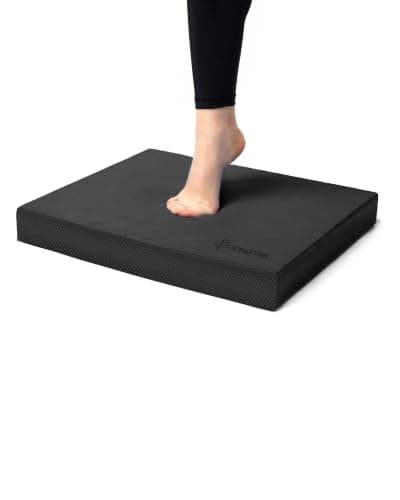
First, balance work. This is the cheapest category on the whole site and arguably the highest-value one, because balance is the thing that keeps you independent and it is the type of exercise people skip most. A balance pad or wobble cushion costs very little, takes up no space, and can be used barefoot next to the kitchen counter while you hold on. It directly addresses the balance activity the CDC asks for, and it is the item you are most likely to still be using in a year.
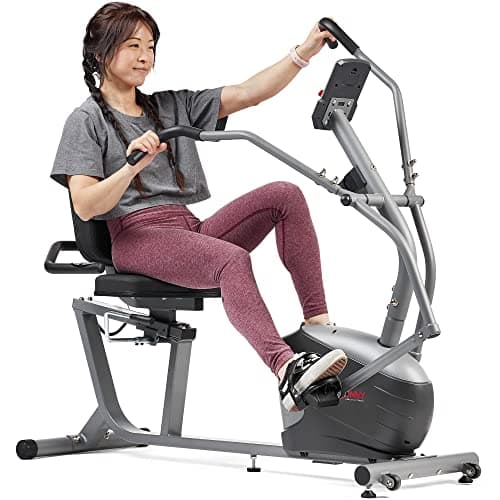
Second, a way to move gently every day. This is your endurance. If space and budget are tight, a pedal exercisersits under a chair, costs a fraction of a bike, and lets you pedal while you read or watch television — which is exactly the kind of low-friction movement a beginner actually repeats. If you have a little more room and budget, and you want something you can settle into for a longer session, a recumbent bike gives you back support, a proper seat, and resistance you can dial down further than you think you need. Either one covers the same job; choose by space and budget, not by which is more impressive.
Third, resistance bands for the strength days. The two days of muscle strengthening in the guidelines do not require a rack of weights. A set of resistance bands is cheap, stores in a drawer, is gentle on the joints because you control the tension continuously, and covers most of the major muscle groups from a seated or standing start. For a returning beginner they are a better first strength tool than dumbbells, because there is nothing to drop and the lightest setting is genuinely light.
That is three purchases, all of them at the budget end, and together they cover balance, endurance and strength — three of the four types — for less than the cost of one large machine. Only after those are habits does it make sense to consider a treadmill, an elliptical, or anything else that fills a room.
Match the machine to your body, not the marketing
When you do move up to a larger machine, the feature list matters far less than one plain question: can you get on and off it easily, every day, without it becoming a reason to skip? More people are stopped by the step-over height of a bike or the deck height of a treadmill than by anything on the spec sheet, and nobody in the marketing photos ever seems to have a stiff hip.
This is why we treat the getting-on question as more important than resistance levels or motor size. A machine you have to clamber onto is a machine you will use less, and a returning beginner cannot afford friction at the very first step. Judge equipment by how it feels to get onto on a bad-hip morning, not by how it looks in a showroom.
The other thing worth saying plainly: if you are carrying pain, a recent injury, surgery, a fall, or a health change, talk to your doctor or physical therapist before you start — nobody at Tread & Tone is a clinician, and this page is about equipment rather than about whether a given exercise is right for your body. The good news, which the National Institute on Aging lays out, is that regular activity does a great deal for older adults — and it still advises checking with a doctor before starting something new. Both of those things are true at once: movement is worth doing, and a professional who can watch you move is worth talking to first.
Start slower than feels worthwhile
The single most common way a good start goes wrong is doing too much in the first fortnight, feeling sore or discouraged, and quietly stopping. The equipment then takes the blame, when the pace was the problem.
The Arthritis Foundation’s guidance on how much exercise is enough is worth reading whether or not you have arthritis, because its core idea applies to everyone returning to fitness: build volume gradually and let your body set the pace. Start with a few minutes at a time, add a little only when the current amount feels easy, and change one thing at a time — a bit more time, or a bit more often, never both in the same week.
Consistency beats intensity by a wide margin at this stage. Five minutes on a pedal exerciser every day teaches your week a new shape and your body a new habit far more reliably than a punishing half-hour that leaves you unwilling to do it again. The whole point of buying small and cheap is that it makes the modest, repeatable start possible — and the modest, repeatable start is the one that is still going a year from now, by which time you will know exactly what your bigger purchase should be.
General information, not medical advice. Tread & Tone is written by an enthusiast, not a clinician. Nobody here is a doctor, a physical therapist or a trainer, and nothing on this site has been medically reviewed. Talk to your doctor or physical therapist before starting something new, particularly after surgery, a fall, or a change in medication.
Questions people ask
What should I buy first at 60?+
The cheapest thing that removes a barrier and gets used daily. For most people returning to fitness that is a balance pad, a pedal exerciser, or both — each costs little, needs no dedicated space, and can be used while you watch television. A small item used every day builds more fitness than a large one used twice a week, so start there and let the habit prove itself before you spend more.
Is a treadmill a good first purchase?+
Rarely. A treadmill is a large, expensive commitment that a returning beginner has no way to know they will use, and the most common outcome is a machine that becomes a place to hang clothes. It can be an excellent second or third purchase once daily movement is already a habit. If walking is your goal, start by walking outdoors or with a small seated option, and buy the treadmill when you have earned it.
How much should I spend to start?+
Less than feels serious. The first purchases in a sensible order — a balance pad, resistance bands, a pedal exerciser — are among the cheapest things you can buy, roughly the price of a nice dinner rather than a car payment. Spending big at the start does not buy commitment, it buys risk, because you cannot yet know what you will stick with. Prove the habit on cheap equipment, then upgrade toward what you actually reach for.
Do I need a gym, or can I do this at home?+
You can do all of it at home. Endurance, strength, balance and flexibility — the four types the National Institute on Aging describes — can each be covered with equipment that fits in a cupboard. Home wins for a returning beginner because the biggest obstacle is not effort, it is friction, and nothing removes friction like the equipment being ten feet from your chair. A gym can come later if you want the company.
What if I have arthritis or bad knees?+
Start seated and low, and talk to your doctor or physical therapist first — nobody here is a clinician. Seated cardio such as a pedal exerciser or a recumbent bike carries your body weight for you, so the joint moves a light load rather than absorbing impact. Movement generally helps stiff joints rather than harming them, but if a joint is post-surgical, recently injured, or newly painful, get advice before buying anything.
How do I actually stay consistent?+
Make the equipment impossible to avoid and the sessions short enough to feel easy. Keep the item in the room you already sit in, attach it to something you do daily, and start with less than you think you can manage. Consistency beats intensity by a wide margin at this stage, and the fastest way to a real habit is a start so modest it barely feels like exercise.
Sources
CDC — Older Adult Activity: An Overview — At least 150 minutes a week of moderate-intensity activity, 2 days of muscle strengthening, plus balance activities for adults 65 and over (read July 24, 2026)