Usually yes — and the reason is not aerobic. It is that a seated bike is the only cardio machine you can stop in the middle of a breath without anything else needing to happen first.
How this is funded: we earn a commission if you buy through our links, at no extra cost to you. It never changes what we recommend, and every page here names at least one thing we would not buy. Full disclosure.
The short answer
Usually yes. A stationary bike is the home machine that fits COPD best, and the reason is control rather than cardiovascular science: you can stop pedalling mid-breath and nothing else happens — no belt still moving, no standing balance to recover, no getting down off anything. Exercise training is one of the three components NHLBI names in pulmonary rehabilitation, so this is equipment that supports a program rather than replaces one. The specification that matters most is a resistance scale fine enough to sit at a genuinely low workload, because the useful session is the one your breathing lets you finish.
Most pages that answer this question talk about aerobic capacity. That is the wrong end of it for somebody actually shopping. With COPD, the thing that ends a session is almost never your legs and almost never your heart — it is breathlessness, arriving suddenly, at a moment you did not choose. So the question is not which machine builds fitness fastest. It is which machine is safest and least demanding to stop on.
On that test, the seated bike wins by a distance, and the comparison is worth spelling out.
Why a bike, specifically
You can stop instantly, with no consequences. A treadmill belt keeps moving. Getting off one while you are fighting for breath means timing a step onto a static side rail, which is a balance task at the worst possible moment. On a bike you stop pedalling. That is the whole procedure.
Your trunk is supported. A recumbent has a back rest, so your postural muscles are not working for twenty minutes alongside everything else. Breathing is work; holding yourself upright is work. Taking one of them off the table leaves more for the other.
Nothing depends on standing balance. This matters more than it sounds for anybody whose breathlessness arrives with light-headedness.
The effort is a dial rather than your body weight. Walking loads you with whatever you weigh, and the only way to make it easier is to go slower until it stops being exercise. A bike separates the two entirely, which is exactly why you can sit at a very low workload for longer.
The NHLBI describes pulmonary rehabilitation as “a supervised program that includes exercise training, health education, and breathing techniques for people who have certain lung conditions or have had a lung transplant”, and notes that a provider may raise it “to help you breathe easier and improve your quality of life.” Three components, one of which is exercise. A bike in your living room is the exercise part continuing between appointments, and — which is the real argument for owning one — continuing after the supervised block ends. NHLBI also notes that some people do a rehabilitation program “using the phone, the web, or a mobile app”, which is worth knowing if getting to a clinic is itself the obstacle.
Nobody here is a clinician and nothing on this site is medically reviewed. Whether to exercise, how much, and whether you need supplemental oxygen while you do it are questions for the people managing your COPD, and the first of those three is the one to ask before you buy anything.
What to look for, and what to ignore
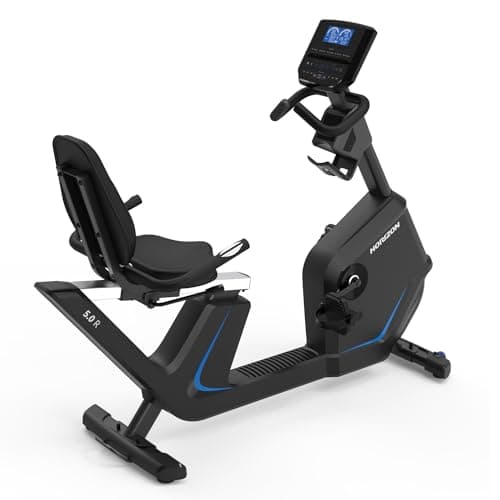
A resistance scale with fine steps at the bottom.This is the one specification that genuinely changes the experience. Most bikes in this category have 8 or 16 knob positions, and at the low end of that range the gap between settings is large. What you want is to sit at a workload light enough to keep breathing comfortably, which often falls between two detents. The Horizon 5.0 R publishes a 0–100 electronically controlled range — the finest increments of any machine on this site — and that is the reason it leads the picks below.
A flywheel heavy enough for an even stroke. At very low resistance a light flywheel gives you a lumpy rotation: a push, then a dead spot, then another push. An even stroke is easier to pace your breathing against. The Niceday RC88 publishes a 15 lb flywheel, the heaviest in the budget-to-mid band here.
A display you can read without leaning in. Leaning forward to read a small console while short of breath is the opposite of what you want. Two machines publish something concrete: Horizon gives the console window size (about 2.4 by 5 inches), and the Schwinn 290 publishes a 7 inch panel.
What to ignore:programs, app subscriptions, course videos and anything that structures a session for you at a pace it chose. With COPD the pace is set by your breathing on the day, which is information no app has. And do not pay extra for pulse grips — with COPD, breathlessness almost always limits the session before heart rate does.
What the makers publish
The three machines below, on the specifications that matter for this reader. Resistance detail sits in the controls row.
Machine
Controls and reach
Display character height
Weight capacity
Horizon Fitness 5.0 R Recumbent Bike
0–100 resistance at the touch of a button; seat adjusts horizontally on an aluminum rail; QuickZip pedals
High-contrast LCD window of roughly 2.4 in × 5.0 in, plus 3 LEDs
300 lb per Horizon's own specification. The Amazon listing claims 350 lb — the two disagree
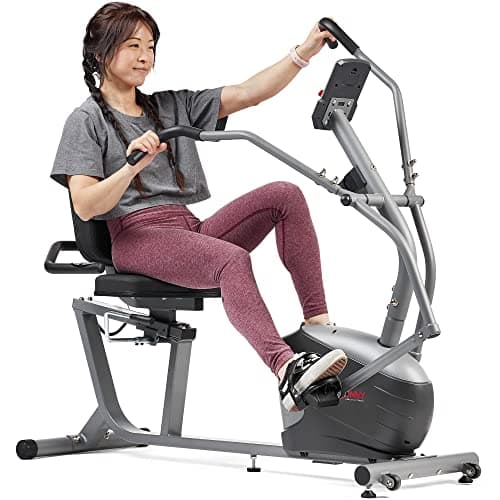
Sunny Health & Fitness Smart Recumbent Bike with Dual-Motion Arm Exercisers
Pulse sensors on the stationary handlebars; seat adjusts forward and back; no one-handed operation claim made
Not published by the manufacturer
265 lb
Niceday Recumbent Exercise Bike RC88
Mechanical resistance knob, 16 levels; LED monitor; tablet holder
Not published by the manufacturer
400 lb
Two things worth noticing in that table. Only one of the three publishes anything about how readable its display is, and it does so in millimeters rather than character height. And the Horizon’s own page says 300 lb maximum user weight while its Amazon listing says 350 lb — we go with the manufacturer’s figure and so should you.
How to actually use it
Three rules, none of which come from a manual.
Pace by breath, not by the screen. Pulmonary rehab programs generally teach pacing against a breathlessness scale, and that is the instrument to bring home. The CDC’s talk test is the same idea in plain language: at a moderate effort you can talk but not sing. If you cannot finish a short sentence, you are above where you should be.
Break the session up on purpose. Three five-minute bouts with a rest between each is not a failed twenty minutes. It is interval work, it is a normal way to build volume when continuous effort is not available, and the minutes still accumulate. The National Institute on Aging makes the general point for chronic conditions: “Almost anyone, at any age, can do some type of physical activity, even with a chronic condition” — built up slowly.
Put the bike where you will use it on a bad day. Not the spare room, not the garage. The room you already sit in. A machine ten feet from the chair gets used in the gaps; a machine that requires a journey gets used in January. Our small-spaces shortlist ranks these machines on published footprint if the room is tight.
General information, not medical advice. Tread & Tone is written by an enthusiast, not a clinician. Nobody here is a doctor, a physical therapist or a trainer, and nothing on this site has been medically reviewed. Talk to your doctor or physical therapist before starting something new, particularly after surgery, a fall, or a change in medication.
Questions people ask
Is an exercise bike good for COPD?+
For most people, yes, and exercise training is one of the components NHLBI lists in pulmonary rehabilitation: 'a supervised program that includes exercise training, health education, and breathing techniques'. What makes a seated bike particularly suitable at home is control. You can stop instantly, you are not supporting your own weight, and nothing depends on your balance — so breathlessness ends the session rather than creating a second problem. Whether to exercise and how much is a question for the team managing your COPD.
Recumbent or upright bike with COPD?+
Recumbent, for most people, with one caveat worth raising with your clinician. The recumbent is easier to get on and off, supports your trunk so you are not holding yourself up, and cannot be fallen off. The caveat is posture: some people with COPD find breathing easier leaning slightly forward with their arms supported, which an upright allows and a reclined seat does not. If that describes you, it is worth asking whether a more upright seated position suits you better — and worth trying a bike before buying one if you can.
How hard should I work on the bike with COPD?+
Breathlessness is the instrument, not the console. Most pulmonary rehab programs teach pacing by a breathlessness scale rather than by speed or resistance, and that is the number to carry home. The practical version: work at an effort where you could say a short sentence but not a long one, and back off before you reach the point where you have to stop entirely. The CDC's plain-language description of moderate intensity — able to talk but not sing — is the same idea from the other direction.
Should I use pursed-lip breathing while I pedal?+
Breathing techniques are one of the three components NHLBI names in pulmonary rehabilitation, which means they are taught — properly, by somebody watching you do it. We are not going to teach you a breathing technique from a product page. If you have been shown one, the bike is a good place to practise it, because you can slow the pedals to whatever pace lets you keep the pattern going. If you have not, that is the thing to ask for at your next appointment.
What if I have to stop every two minutes?+
Then stop every two minutes. Interval work — short bouts with rests between them — is a normal way to build volume when continuous effort is not available, and the total minutes are what accumulate. This is one of the practical advantages of a bike over a treadmill: pausing costs nothing and getting going again costs nothing. If the pattern is new or getting worse rather than staying stable, that is a conversation with your clinician rather than a training problem.
Do I need a bike with a heart-rate monitor?+
Probably not, and it is the wrong thing to pay extra for. With COPD, breathlessness usually limits the session before heart rate does, and only two of the sixteen seated machines we track publish a pulse readout at all. If you have been told to watch a specific number — oxygen saturation, for instance — the device for that comes from your clinic, not from a treadmill console.
Sources
NHLBI — COPD Treatment (pulmonary rehabilitation) — "Pulmonary rehabilitation is a supervised program that includes exercise training, health education, and breathing techniques for people who have certain lung conditions or have had a lung transplant"; "Your provider may talk to you about pulmonary rehabilitation to help you breathe easier and improve your quality of life"; some people do a rehabilitation program "using the phone, the web, or a mobile app" (read October 11, 2026)
CDC — How to Measure Physical Activity Intensity — Moderate-intensity activity is 64–76% of your estimated maximum heart rate, and vigorous is 77–93%; intensity can also be judged with the talk test (read July 24, 2026)
National Institute on Aging — Exercising With Chronic Conditions — "Almost anyone, at any age, can do some type of physical activity, even with a chronic condition"; riding a bike is listed among the moderate-intensity activities that are safe for most people if built up slowly. For arthritis: low-impact activity, and "When done safely, being physically active with arthritis shouldn't make the disease or pain worse." For chronic pain: listen to your body and avoid overexercising on good days. For osteoporosis: weight-bearing exercise, plus muscle-strengthening and balance work (read October 5, 2026)
CDC — Older Adult Activity: An Overview — At least 150 minutes a week of moderate-intensity activity, 2 days of muscle strengthening, plus balance activities for adults 65 and over (read July 24, 2026)
Product measurements are cited individually inside each Fit-to-You panel, against the manufacturer page or dated retailer listing they were read from.
A rehab team prescribes a workload. Not one machine here publishes watts and only two publish a pulse readout — which changes what is worth paying for.
Seated and back-supported does not mean easy. What decides whether a recumbent bike is a real workout or a gentle warm-up is the resistance and the effort you put in — not the fact that you are sitting down.