How this is funded: we earn a commission if you buy through our links, at no extra cost to you. It never changes what we recommend, and every page here names at least one thing we would not buy. Full disclosure.
The short answer
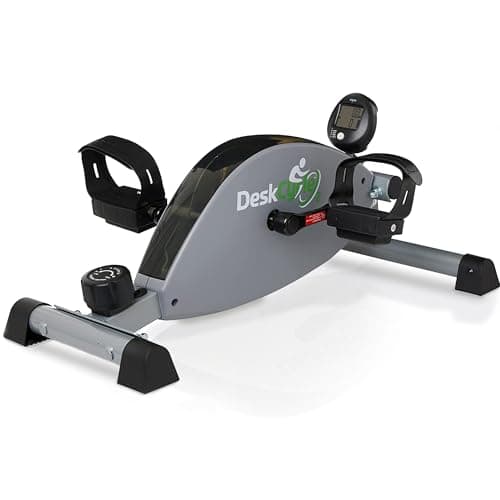
A pedal exerciser adds gentle aerobic movement, keeps knees and hips moving through their range, and breaks up long periods of sitting — for $50 to $170, with no mounting and no floor space. What it does not do is match a bike for resistance range or support. The comparison that matters is against the sitting you would otherwise do, and there it wins easily.
What it does, honestly
1. It keeps joints moving through their range
The Arthritis Foundation explains the mechanism for cycling: continuous motion takes a joint through its full range, and the more it moves through that range, the more synovial fluid it produces — the fluid that lubricates it. A pedal exerciser produces exactly that motion, at whatever resistance you choose.
This is the benefit we are most confident about, because it follows from the movement rather than from an intensity claim.
2. It breaks up sitting
A device that lives under the chair you already sit in, that requires no changing, no mounting and no decision, gets used. That is not a small benefit — it is the entire reason a $50 unit frequently outperforms a $600 machine in practice.
The National Institute on Aging notes that improved physical function reduces the risk of falls and the likelihood of serious injury from one. Function comes from regular movement, and regular is the word doing the work.
3. It can be set genuinely light
More so than most bikes, which is counterintuitive. One unit on our shortlist has stepless resistance— a continuous dial rather than fixed levels — so you can set something between level one and level two, which an eight-level bike cannot express at all. For a sensitive knee that is worth more than a wider range.
4. It works for arms
Put the unit on a table and pedal with your hands. Three units publish this as a stated use, and it is genuinely useful for shoulder range of motion. It is also one of the few things a pedal unit does that a recumbent bike cannot. Set the resistance lower than for legs; arms tire much faster.
5. No mounting at all
For anyone who cannot reliably get onto a bike — which, given that no manufacturer publishes a step-over height, is a real and hard-to-plan-for group — this is the whole point. You use the chair you already trust.
The limits, stated plainly
It probably does not reach moderate intensity while you read
This is the one that gets overstated everywhere. The CDC’s 150 weekly minutes is specifically about moderate-intensity activity, and the test is conversational: you should be able to talk but not sing.
Gentle pedaling while reading a magazine almost certainly does not reach that. Deliberate pedaling with the resistance set high enough that you notice your breathing can. Both are worth doing. Only one of them meets the guidance, and we would rather you knew which you were doing than believed you had hit a target you hadn’t.
Your back is not supported
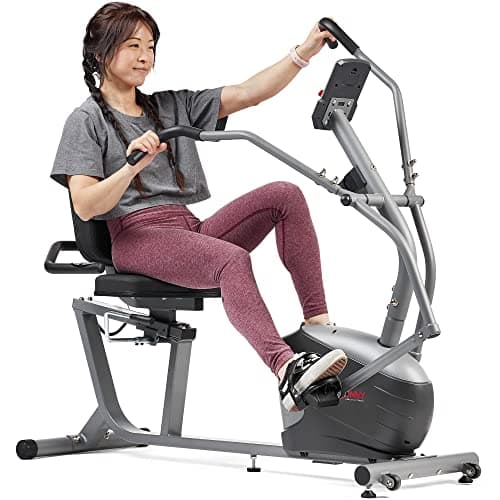
A recumbent bike has a back rest doing real work. A dining chair does not, and an armchair supports you in a position that is not ideal for pedaling. For a long session that matters, and it is a genuine argument for a bike if you have the room.
The resistance ceiling is low
Two units publish a maximum of 39 lb of resistance, which is fine for gentle work and nowhere near what a bike offers. If you get fit enough to want a real aerobic challenge, you will outgrow this equipment — which is a good problem and worth knowing about in advance.
Nobody publishes a weight capacity
Not one of the five units on our shortlist publishes a user weight capacity. It matters less than on a bike, because you are sitting in your own chair and the unit takes pedaling force rather than your body weight — but it is still a gap, particularly on the plastic-bodied units.
And it slides on hard floors, unless it doesn’t
The commonest real-world complaint in this category. Two units publish four anti-slip rubber pads, and those are the ones to prefer on laminate, tile or wood. A rubber mat underneath solves it on any unit for a few dollars.
How to get the most out of one
Measure your clearance before buying. Floor to the underside of the desk, or to the front edge of the armchair seat, with room for the knee to travel above the pedal at its highest point. Published heights vary by a factor of two and a half.
Put it where you already sit. Under the chair you watch television from, not in the spare room. This determines whether it gets used more than any specification does.
Do one deliberate session a day rather than only ambient pedaling. Fifteen minutes with the resistance set so you notice your breathing, plus whatever incidental pedaling happens, is a much better arrangement than gentle spinning all afternoon.
Use the detachable display if it has one. Put it on the desk where you can read it rather than leaving it on the floor at your feet. Looking down to read a display is a small indignity that quietly ends habits.
Put a mat underneath if you are on a hard floor and the unit does not publish anti-slip feet.
When to buy a bike instead
If you have the floor space, the budget, and can get on and off comfortably, a recumbent bike gives you more: a supported back, a comfortable longer session, and considerably more resistance range.
The pedal unit is the right buy when the budget is under about $100, when there is genuinely no floor space, when the machine must be invisible between uses, or when mounting a bike is the problem. All four are common, and none of them is a compromise to apologize for.
General information, not medical advice. Tread & Tone is written by an enthusiast, not a clinician. Nobody here is a doctor, a physical therapist or a trainer, and nothing on this site has been medically reviewed. Talk to your doctor or physical therapist before starting something new, particularly after surgery, a fall, or a change in medication.
Questions people ask
Do pedal exercisers actually work?+
For adding gentle aerobic movement, keeping joints moving, and breaking up long periods of sitting, yes. As a replacement for a bike, no — the resistance range is lower and the position is less supported. The honest framing is that the comparison is against the sitting you would otherwise be doing, and on that comparison a $50 set of pedals wins easily.
Does pedaling under a desk count toward the 150 minutes?+
Only if it reaches moderate intensity, which the CDC's target is specifically about. The test is conversational — you should be able to talk but not sing. Gentle pedaling while reading almost certainly does not reach that; deliberate pedaling with resistance set high enough to make you breathe harder can. Both are worth doing; only one meets the guidance.
Can a pedal exerciser help with circulation?+
Moving your legs regularly is generally better for circulation than sitting still, and one clear benefit of these units is simply that they break up long periods of immobility. We are not going to make a specific clinical claim about it — nobody producing this site is qualified to, and if you have a circulation problem, a diagnosed condition or swelling in your legs, ask your doctor what movement is appropriate.
Are pedal exercisers good for arthritic knees?+
They can be, and the mechanism is the same one the Arthritis Foundation describes for cycling: continuous motion moves the joint through its range, which produces the fluid that lubricates it. What matters is being able to set the resistance very low — one unit on our shortlist has stepless resistance, a continuous dial rather than fixed levels, which for a sensitive joint is worth more than a wider range.
Can I use one for my arms?+
Three units on our shortlist publish that as a stated use — you put the unit on a table and pedal with your hands. It is genuinely useful for shoulder range of motion, and it is one of the few things a pedal unit does that a recumbent bike cannot. Set the resistance lower than you would for legs; arms tire much faster.
Is a pedal exerciser better than nothing?+
Substantially, which sounds like a low bar and is actually the whole argument. The National Institute on Aging notes that improved physical function reduces the risk of falls and the likelihood of serious injury from one, and a machine that gets used daily contributes more than a bike that gets used twice. Where a pedal unit wins is that it lives under a chair you already sit in.
Sources
CDC — Older Adult Activity: An Overview — At least 150 minutes a week of moderate-intensity activity, 2 days of muscle strengthening, plus balance activities for adults 65 and over (read July 24, 2026)
A tiny, cheap machine with a real training effect and a real catch — it demands standing balance that not everyone should be spending on a moving step.