Tread & Tone

MERACH MR-E32 Under Desk Elliptical Review

This one has a motor, and that changes what it is. A 60 W motor moves your legs through the stride, so you do not need the strength to start the motion yourself. That makes it a different product from a self-powered pedal unit — genuinely useful for the right person, and easy to misunderstand.

By Stephen V.Last updated How we choose

How this is funded: we earn a commission if you buy through our links, at no extra cost to you. It never changes what we recommend, and every page here names at least one thing we would not buy. Full disclosure.

MERACH Under Desk Elliptical MR-E32

When starting the motion yourself is the problem

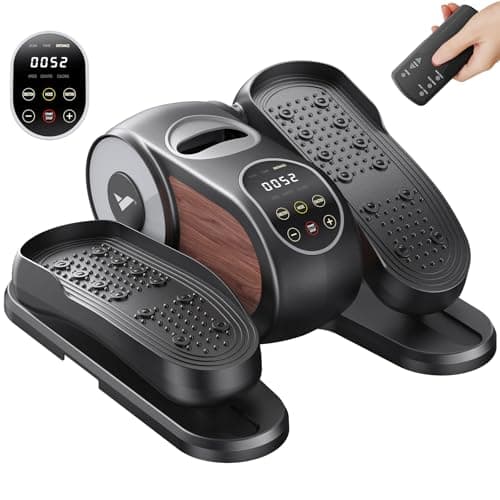
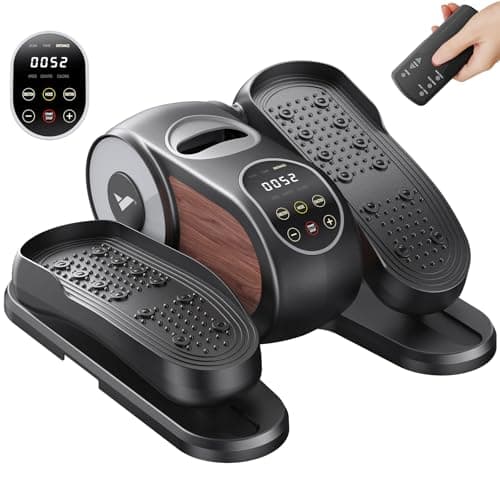
Motorized, and that is the whole point: a 60 W motor moves your legs through the stride so you do not need the strength to start the motion yourself. For someone recovering strength or sitting for long stretches, that is a different product category from a pedal exerciser, not a fancier version of one.

MERACH does not publish 2 of the 7 measurements we look for. The panel below names which.

Nearly everything else in this aisle is self-powered: you turn the pedals, and the machine does nothing until you do. The MERACH MR-E32 is built the other way around. It has a 60 W motor that moves your legs through the stride for you, with 12 automatic programs and a choice of forward or reverse. That one fact changes what the machine is for, and it is the reason to read this page carefully rather than lump it in with the pedal exercisers.

The right way to think about it is this: a self-powered unit asks you to supply the motion, and a motorized one supplies the motion for you. So the MR-E32 is the answer to a specific problem — when starting the motion yourself is the barrier. If you are rebuilding strength, or you sit for long stretches and want your legs moving without having to drive every stroke, a motor is exactly the tool. If you can already pedal unaided, it is solving a problem you do not have.

That distinction cuts both ways, and we will not soften it. A motor moving your legs is passive movement, which is not the same thing as exercise you perform yourself. It is genuinely valuable for some people and genuinely oversold for others, and most of this review is about telling those two cases apart.
Fit-to-You: the nine measurements

MERACH does not publish 2 of 7 of these. Where that is the case, this panel says so rather than guessing. How we compile these

Pedal heightThe clearance under your desk or chair. Get this wrong and the pedals hit your knees.
7.4 in overall height, not adjustable

Source: Amazon product listing data (Creators API) · read 2026-07-24

Resistance rangeHow gently it can be set. The lowest setting matters far more than the highest.
12 manual speed levels plus 12 automatic programs (P1–P12)

Source: Amazon product listing data (Creators API) · read 2026-07-24

Weight capacitySearched directly, and two of the senior-focused competitors omit it entirely.
Not published by the manufacturer
Motorized or self-poweredWhether the machine moves your legs or you move it. For very low leg strength that is the whole decision.
Motorized, 60 W, with forward and reverse

Source: Amazon product listing data (Creators API) · read 2026-07-24

Display and controlsCharacter height and contrast. Presbyopia is close to universal past 60.
Touch screen plus remote control; LED shows time, distance, speed and calories

Source: Amazon product listing data (Creators API) · read 2026-07-24

FootprintWhether it actually fits the room you have in mind, with clearance to get on and off.
15.6 in × 14.9 in × 7.4 in

Source: Amazon product listing data (Creators API) · read 2026-07-24

Noise (dB)Apartments, shared walls, and a sleeping partner in the next room.
Not published by the manufacturer

We have not used this machine. Everything above comes from the manufacturer’s published documentation and the dated retailer listing, with the source given for each figure. Where they don’t publish a number, we say so. We can’t tell you how it feels to ride, how quiet it really is, or how it holds up after two years — and anyone who tells you otherwise without owning one is guessing.

What being motorized actually means here

MERACH publishes a 60 W motor with forward and reverse motion, 12 manual speed levels, and 12 automatic programs labeled P1 to P12. In practice that means you can sit down, choose a program, and let the machine carry your feet through the elliptical path at a set pace without you having to initiate each stroke.

For the person this is built for, that is the whole value. If the first push is what stops you — low leg strength, stiffness first thing in the morning, a long sedentary day when your legs have gone still — a motor removes that barrier entirely. The forward-and-reverse option is more useful than it looks, because it lets the machine work the legs through the movement in both directions rather than one. This is squarely the territory of seated exercise for limited mobility, where getting the legs moving at all is the goal and the machine helping you do it is the point.

The passive-movement caveat, stated plainly

Here is the part a motor makes tempting to skip, so we will put it first: a machine that moves your legs for you is passive movement, and passive movement is not the same as exercise you perform yourself. When the motor is doing the work, your muscles are not driving the motion, which means you are not getting the strengthening effect you would from pedaling under your own power.

That matters against the yardstick most people are measuring toward. The CDC’s guidance for older adults is at least 150 minutes a week of moderate-intensity activity plus muscle strengthening, and that guidance is about activity you do, not motion done to you. So the MR-E32 should be understood as a way to keep the legs moving and to bridge toward being able to do more — not as a substitute for activity you perform once you are able.

And because the buyers this machine attracts are often working back from an injury, a surgery, or a long spell of very low activity, the honest advice is to check first. The National Institute on Aging recommends you talk to your doctor before starting something new. If you are recovering, ask your physical therapist specifically whether passive assisted motion fits the protocol they gave you — that protocol outranks anything on this page.

Controls without bending: remote and touch screen

One of the MR-E32’s quietly good decisions is how you operate it. It comes with both a touch screen on the unit and a remote control, and the LED display reports time, distance, speed and calories. The remote is the part that earns its place: it means you can change the speed or switch programs without bending down to the floor to reach a dial.

For anyone with a stiff back, limited reach, or the balance concerns that make bending toward the floor a genuine hazard, that is not a luxury — it is the difference between a machine you can adjust mid-session and one you cannot. Paired with the 12 manual speed levels, it lets you sit upright, pick a pace, and change it by thumb. It is the sort of small accessibility thought that this category too often leaves out.

The 7.4-inch height, the footprint, and what is missing

The MR-E32 stands 7.4 inches tall with a published footprint of 15.6 by 14.9 by 7.4 inches — the smallest footprint of any seated unit we cover. In a small room, or slid under a low desk, that compactness is a real advantage.

The height is fixed, though. At 7.4 inches there is no adjustment, so your desk clearance is set: measure the gap from the floor to the underside of your desk before ordering and confirm your knees clear, because you cannot lower the pedals if they do not. It is lower than most of the alternatives, which works in its favor, but a fixed number is still a number you have to check against your own furniture. Where it sits against the self-powered units is covered on the pedal-exerciser-versus-under-desk-elliptical comparison.

Two gaps are worth stating outright. MERACH publishes no weight capacity or maximum user weight, which is a real omission on any machine and worth weighing if a firm number matters to you. And the “whisper-quiet” description carries no decibel figure behind it — a motorized unit does make some noise, and without a measurement we cannot tell you how much. Treat the quiet claim as a claim, not a specification.

Who this suits

Someone for whom starting the motion is the barrier.This is the case the motor is built for — rebuilding strength, or long sedentary stretches when your legs have gone still. It moves them for you.

Anyone who cannot bend to reach a dial. The remote and touch screen let you change speed and program without leaning toward the floor.

A tight space. The 15.6 by 14.9 inch footprint is the smallest seated unit here, and the 7.4 inch height is low.

Who should skip it

Anyone who can already pedal unaided and wants a workout. A motor doing the work is passive movement, not the strengthening you get from self-powered pedaling. If you can drive the stroke yourself, a self-powered unit gives you more.

Anyone recovering, until they have asked. Whether passive assisted motion fits your recovery is a question for your physical therapist, and their protocol comes first.

Anyone who needs a stated weight limit. No capacity or maximum user weight is published, so there is no firm figure to check against.

Anyone with a very tight desk gap. The 7.4 inch height does not adjust, so measure before you rely on it fitting.

General information, not medical advice. Tread & Tone is written by an enthusiast, not a clinician. Nobody here is a doctor, a physical therapist or a trainer, and nothing on this site has been medically reviewed. Talk to your doctor or physical therapist before starting something new, particularly after surgery, a fall, or a change in medication.

Questions people ask

Is the MERACH MR-E32 motorized?

Yes. It has a published 60 W motor with forward and reverse motion, 12 manual speed levels, and 12 automatic programs. The motor moves your legs through the stride, so you do not need to supply the motion yourself — which is exactly what separates it from the self-powered pedal units in this category.

Does a motorized under-desk elliptical count as exercise?

Partly, and it is important to be honest about this. When the motor moves your legs, that is passive movement, not the same as exercise you perform under your own power, so it does not deliver the muscle strengthening that pedaling yourself does. It is genuinely useful for keeping the legs moving and bridging toward doing more — but the CDC's 150-minutes-a-week guidance is about activity you do, not motion done to you.

Is it a good choice while recovering from an injury or surgery?

It can be, but that is not a decision to make from a product page. A motorized machine that moves your legs for you is used in some recovery settings and not others. Ask your physical therapist specifically whether passive assisted motion fits the protocol they gave you — that protocol outranks anything here.

How much space does it need and will it fit under my desk?

The footprint is a published 15.6 by 14.9 by 7.4 inches — the smallest seated unit we cover. The 7.4 inch height is fixed, so measure the gap from the floor to the underside of your desk and confirm your knees clear before ordering, because the pedals cannot be lowered if they do not.

How quiet is it?

MERACH describes it as whisper-quiet but publishes no decibel figure, so we cannot put a number on it. A motorized unit does make some running noise; treat the quiet claim as a claim rather than a measurement.

Sources

Product measurements are cited individually inside each Fit-to-You panel, against the manufacturer page or dated retailer listing they were read from.

Read next