Tread & Tone

The Best Balance Pads for Seniors

A balance pad is the cheapest piece of equipment on this entire site and the one with the clearest evidence behind using it. Two published numbers decide which one to buy: how much floor you get to stand on, and how thick it is.

By Stephen V.Last updated How we choose

How this is funded: we earn a commission if you buy through our links, at no extra cost to you. It never changes what we recommend, and every page here names at least one thing we would not buy. Full disclosure.

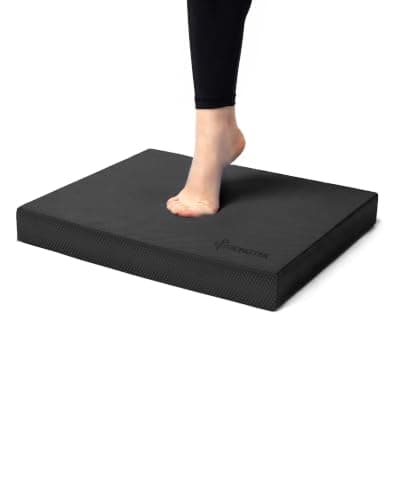
The balance pad to buy is the StrongTek Extra Wide, because it is the only soft surface here with published room for two feet side by side and margin left over — 19 by 15.8 inches, against 15.5 by 12.75 on the standard size. That margin is the entire product. A balance exercise done with your heels hanging over the back edge of a pad is not a harder balance exercise, it is a different and worse one. Our budget pick is the Trideer wobble cushion, which is the cheapest thing on this page and, deflated, also the gentlest surface on it — a reasonable place to start if standing on foam already feels like a lot.

This page is for an older adult who has been told, by a doctor, a physical therapist or their own near-miss in the kitchen, to work on balance at home. It is not for athletes. Everything below is a soft, unstable surface you stand on while holding a counter, which is the form of balance training with the broadest and plainest evidence behind it for this age group. Rigid boards that tilt on a dome are a separate aisle and a much harder one; we rank those elsewhere and the last pick on this page is the bridge between the two.

Three things decide the order here, in this sequence. First, the standing surface.It is published by every product below and it varies by more than you would guess — from a 13.4 inch round disc to a 19 by 15.8 inch rectangle, which is roughly twice the usable area. A stance you can actually adopt is the prerequisite for everything else. Second, the thickness, which is the difficulty dial: 2 inches, 2.25, 2.4 and 3 at full inflation, in that order, each one harder than the last. Third, what else the maker will commit to in writing, which in this category is almost nothing.

And that last point is the finding worth carrying away. Not one of the four soft surfaces on this page publishes a user weight capacity. Four separate makers, four listings, and the field is blank on every one. The only product here that states a figure at all is the rigid wooden board at the bottom, at 265 lb — and it is also the only one whose own listing carries a floor warning. One cushion's listing once claimed a 1,000 lb limit; that claim has since been removed, and it was never a number to plan around. We print what each maker states and leave the rest blank rather than filling it in.

Why bother at all: the CDC puts falls at more than one in four adults 65 and over every year, and records that falling once roughly doubles the chance of falling again. The National Institute on Aging lists balance as one of four types of exercise older adults need, separately from endurance and strength, and names the exercises — standing on one foot, heel-to-toe walking — that a pad makes harder in a controlled way. The CDC asks for balance work for adults 65 and over on top of the weekly 150 minutes, not instead of it.

Live prices sit inside the buttons with the date of our last check — our most recent read was November 22, 2026. We have not stood on any of these pads. What we did instead is written down.

Quick picks

Ranked on the published accessibility measurements and on who each machine actually suits. Select a row to jump to the full write-up. The last column is the number of the nine measurements the manufacturer will not publish — we have not used any of these machines, and here is exactly what we did instead.

#MachineBest forSpecs withheldPrice
1
StrongTek Extra Wide TPE Balance Pad
StrongTek Extra Wide TPE Balance Pad

Room for two feet

Best overall1of 6
$30.59 · Check price on Amazon

$35.9915% off

Price as of November 22, 2026. #ad How we’re funded

2
ProsourceFit Exercise Balance Pad

ProsourceFit Exercise Balance Pad

The cheapest sensible starting point

Best standard-size pad2of 6
$26.99 · Check price on Amazon

Price as of November 22, 2026. #ad How we’re funded

3
ProSource Core Balance Disc Trainer, 14 in

ProSource Core Balance Disc Trainer, 14 in

Adjustable difficulty

Difficulty you set yourself1of 6
$20.94 · Check price on Amazon

$25.9919% off

Price as of November 22, 2026. #ad How we’re funded

4
Trideer Wobble Cushion Balance Disc

Trideer Wobble Cushion Balance Disc

The lowest price

Budget pick2of 6
$22.99 · Check price on Amazon

$24.998% off

Price as of November 22, 2026. #ad How we’re funded

5
Amazon Basics Wood Wobble Balance Trainer Board

Amazon Basics Wood Wobble Balance Trainer Board

Progressing past a foam pad

Only once a pad is easy0of 6
$18.72 · Check price on Amazon

$23.9922% off

Price as of November 22, 2026. #ad How we’re funded

1.Best overall

StrongTek Extra Wide TPE Balance Pad

StrongTek Extra Wide TPE Balance Pad
$30.59 · Check price on Amazon

$35.9915% off

Price as of November 22, 2026. #ad How we’re funded

At 19 by 15.8 inches it is the only pad here with room for two feet side by side and still some margin. That margin is the difference between a balance exercise and a stumble off the edge, and it is the reason to pay a few dollars more than the standard size.

What it gets right

  • 19 in × 15.8 in — genuinely wide enough for a two-foot stance with margin
  • 2.4 in thick, so it gives a real balance challenge without being tall enough to roll an ankle
  • High-density TPE that is described as holding its shape rather than compressing flat
  • Textured non-slip top and a water-resistant foam body

What to know first

  • No published weight capacity
  • No firmness figure of any kind — 'high-density' is a description, not a specification
  • Costs roughly half again as much as a standard-size pad

Fit-to-You: the nine measurements

StrongTek does not publish 1 of 6 of these. Where that is the case, this panel says so rather than guessing. How we compile these

ThicknessPad height sets the difficulty. Too tall is not 'more effective', it is a fall.
2.4 in

Source: Amazon product listing data (Creators API) · read 2026-08-13

Standing surfaceWhether there is room for two feet, or only one.
19 in × 15.8 in

Source: Amazon product listing data (Creators API) · read 2026-08-13

Weight capacitySearched directly, and two of the senior-focused competitors omit it entirely.
Not published by the manufacturer
FirmnessA pad that bottoms out gives no training effect; one that is too soft is unstable.
Described as high-density TPE foam; no density figure published

Source: Amazon product listing data (Creators API) · read 2026-08-13

Non-slip baseWhether you need something solid to hold while you use it — and most people do.
Textured non-slip surface, water-resistant foam

Source: Amazon product listing data (Creators API) · read 2026-08-13

Needs support nearbyWhether you need something solid to hold while you use it — and most people do.
Yes — use it within reach of a wall, counter or sturdy chair. Every balance product on this page needs that

Source: Amazon product listing data (Creators API) · read 2026-08-13

We have not used this machine. Everything above comes from the manufacturer’s published documentation and the dated retailer listing, with the source given for each figure. Where they don’t publish a number, we say so. We can’t tell you how it feels to ride, how quiet it really is, or how it holds up after two years — and anyone who tells you otherwise without owning one is guessing.
2.Best standard-size pad

ProsourceFit Exercise Balance Pad(ps-1037-bp-r-blue)

ProsourceFit Exercise Balance Pad
$26.99 · Check price on Amazon

Price as of November 22, 2026. #ad How we’re funded

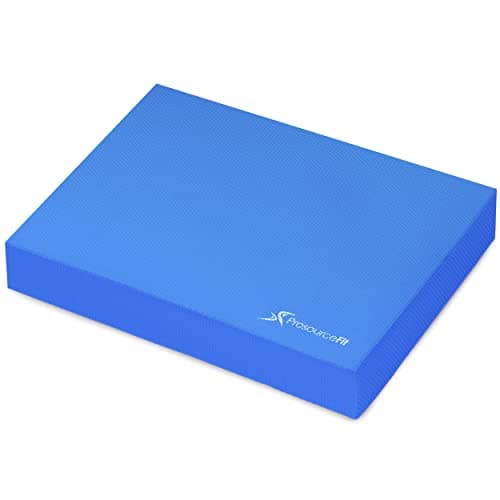
The standard-size foam pad, published at 15.5 by 12.75 by 2.25 inches and 12 ounces. Light enough to carry to a class and cheap enough to keep one by the kitchen counter, which is where most people should actually be doing this.

What it gets right

  • Published dimensions to the quarter-inch, and a published weight of 12 oz
  • 2.25 in thick — a real challenge without being unstable
  • Non-slip, sweat-proof TPE that wipes clean
  • Light enough to move to wherever there is something to hold

What to know first

  • 12.75 in deep is tight for a two-foot stance
  • No published weight capacity
  • Nothing published about firmness

Fit-to-You: the nine measurements

ProsourceFit does not publish 2 of 6 of these. Where that is the case, this panel says so rather than guessing. How we compile these

ThicknessPad height sets the difficulty. Too tall is not 'more effective', it is a fall.
2.25 in

Source: Amazon product listing data (Creators API) · read 2026-07-24

Standing surfaceWhether there is room for two feet, or only one.
15.5 in × 12.75 in

Source: Amazon product listing data (Creators API) · read 2026-07-24

Weight capacitySearched directly, and two of the senior-focused competitors omit it entirely.
Not published by the manufacturer
FirmnessA pad that bottoms out gives no training effect; one that is too soft is unstable.
Not published by the manufacturer
Non-slip baseWhether you need something solid to hold while you use it — and most people do.
Slip-resistant, sweat-proof TPE

Source: Amazon product listing data (Creators API) · read 2026-07-24

Needs support nearbyWhether you need something solid to hold while you use it — and most people do.
Yes. Its 12 oz weight is the point — put it where there is a counter to hold

Source: Amazon product listing data (Creators API) · read 2026-07-24

We have not used this machine. Everything above comes from the manufacturer’s published documentation and the dated retailer listing, with the source given for each figure. Where they don’t publish a number, we say so. We can’t tell you how it feels to ride, how quiet it really is, or how it holds up after two years — and anyone who tells you otherwise without owning one is guessing.
3.Difficulty you set yourself

ProSource Core Balance Disc Trainer, 14 in(ps-2143-bd-red)

ProSource Core Balance Disc Trainer, 14 in
$20.94 · Check price on Amazon

$25.9919% off

Price as of November 22, 2026. #ad How we’re funded

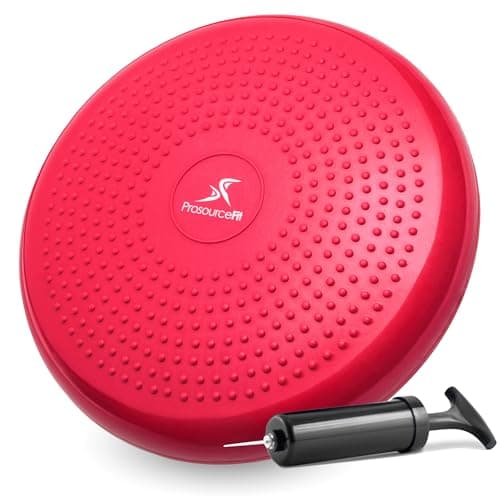
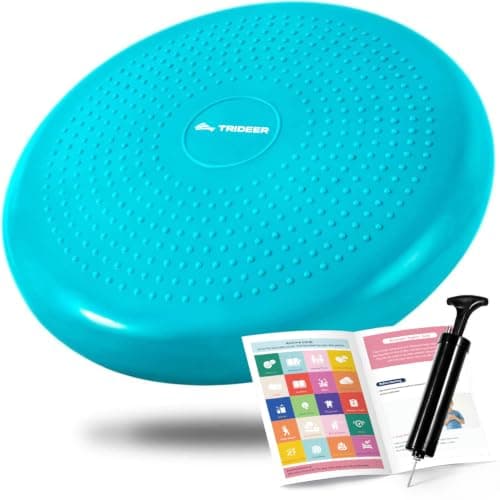
An inflatable disc whose difficulty you set yourself: let air out and it is nearly a firm pad, pump it up and it is genuinely unstable. That adjustability is the reason to choose a cushion over a foam pad — you can start easy and progress without buying twice.

What it gets right

  • You control the challenge by inflation level, so it grows with you
  • Published 14 in diameter, 3 in height, 2.2 lb — all three numbers stated
  • Hand pump included, so no separate purchase
  • Works as a seat cushion too, which is how most people get regular use out of one

What to know first

  • PVC, not foam, so it will feel like a beach ball at high inflation
  • No published weight capacity
  • A round 14 in disc is a one-foot or narrow two-foot stance, not a wide one
  • Inflatables lose air slowly and need topping up

Fit-to-You: the nine measurements

ProSource does not publish 1 of 6 of these. Where that is the case, this panel says so rather than guessing. How we compile these

ThicknessPad height sets the difficulty. Too tall is not 'more effective', it is a fall.
3 in at full inflation, and lower as you let air out

Source: Amazon product listing data (Creators API) · read 2026-08-13

Standing surfaceWhether there is room for two feet, or only one.
14 in diameter

Source: Amazon product listing data (Creators API) · read 2026-08-13

Weight capacitySearched directly, and two of the senior-focused competitors omit it entirely.
Not published by the manufacturer
FirmnessA pad that bottoms out gives no training effect; one that is too soft is unstable.
Set by the user via the included hand pump; no firmness scale published

Source: Amazon product listing data (Creators API) · read 2026-08-13

Non-slip baseWhether you need something solid to hold while you use it — and most people do.
Dual-textured PVC — raised massaging bumps one side, smoother bumps the other

Source: Amazon product listing data (Creators API) · read 2026-08-13

Needs support nearbyWhether you need something solid to hold while you use it — and most people do.
Yes, and more so than a foam pad at high inflation

Source: Amazon product listing data (Creators API) · read 2026-08-13

We have not used this machine. Everything above comes from the manufacturer’s published documentation and the dated retailer listing, with the source given for each figure. Where they don’t publish a number, we say so. We can’t tell you how it feels to ride, how quiet it really is, or how it holds up after two years — and anyone who tells you otherwise without owning one is guessing.
4.Budget pick

Trideer Wobble Cushion Balance Disc

Trideer Wobble Cushion Balance Disc
$22.99 · Check price on Amazon

$24.998% off

Price as of November 22, 2026. #ad How we’re funded

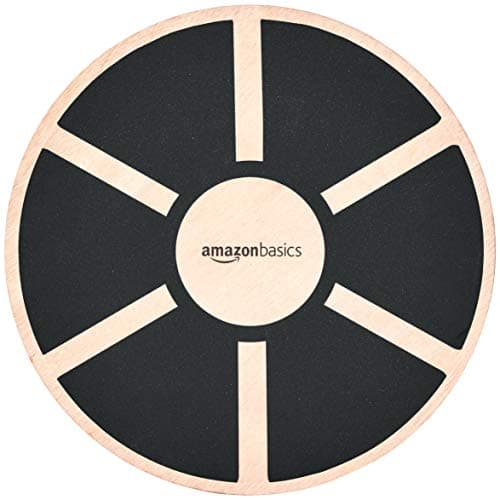
A 13.4 inch inflatable disc at the cheapest price on this page, with the pump included. Its listing once claimed a 1,000 lb weight limit, which we never treated as a meaningful figure; the current listing states no capacity at all.

What it gets right

  • The cheapest balance product on the site, with a pump included
  • 13.4 in (34 cm) diameter published in both units
  • Inflation-adjustable, so difficulty can start very low
  • Doubles as a chair cushion, which is how it earns its keep

What to know first

  • No weight capacity is published — the listing's earlier 1,000 lb claim has been removed, and it was never a figure to rely on
  • 2 in tall, the thinnest here, so the top of its difficulty range is limited
  • Marketed mostly at classroom seating rather than balance training
  • No published firmness scale

Fit-to-You: the nine measurements

Trideer does not publish 2 of 6 of these. Where that is the case, this panel says so rather than guessing. How we compile these

ThicknessPad height sets the difficulty. Too tall is not 'more effective', it is a fall.
2 in

Source: Amazon product listing data (Creators API) · read 2026-07-24

Standing surfaceWhether there is room for two feet, or only one.
13.4 in (34 cm) diameter

Source: Amazon product listing data (Creators API) · read 2026-07-24

Weight capacitySearched directly, and two of the senior-focused competitors omit it entirely.
Not published by the manufacturer
FirmnessA pad that bottoms out gives no training effect; one that is too soft is unstable.
Not published by the manufacturer
Non-slip baseWhether you need something solid to hold while you use it — and most people do.
Non-slip surface

Source: Amazon product listing data (Creators API) · read 2026-07-24

Needs support nearbyWhether you need something solid to hold while you use it — and most people do.
Yes

Source: Amazon product listing data (Creators API) · read 2026-07-24

We have not used this machine. Everything above comes from the manufacturer’s published documentation and the dated retailer listing, with the source given for each figure. Where they don’t publish a number, we say so. We can’t tell you how it feels to ride, how quiet it really is, or how it holds up after two years — and anyone who tells you otherwise without owning one is guessing.
5.Only once a pad is easy

Amazon Basics Wood Wobble Balance Trainer Board(IR97339-BK)

Amazon Basics Wood Wobble Balance Trainer Board
$18.72 · Check price on Amazon

$23.9922% off

Price as of November 22, 2026. #ad How we’re funded

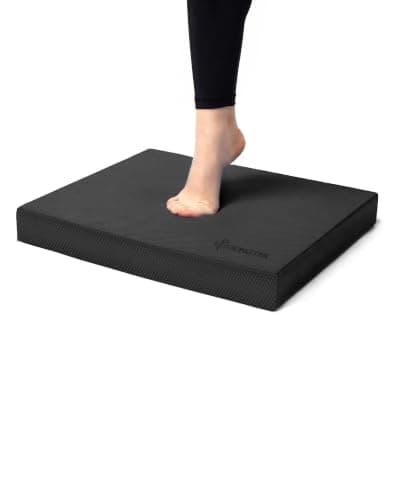
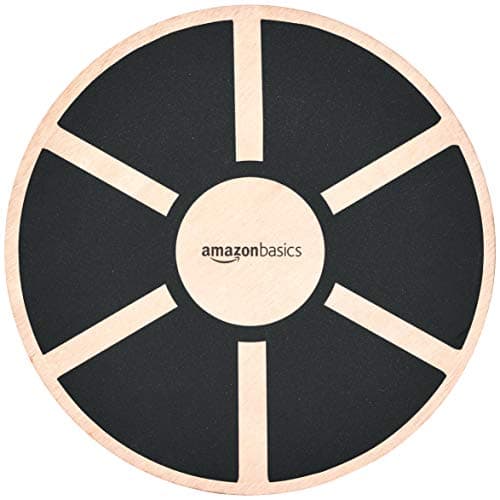
A rigid wooden board that tilts on a fixed dome — a real step up in difficulty from any foam pad, and the only balance product here that publishes a weight capacity (265 lb). Its own listing warns it must not be used on a smooth or wet floor, which rules out a lot of kitchens.

What it gets right

  • Publishes a weight capacity — 265 lb — which no pad or cushion here does
  • Solid wood top with a non-slip surface, published at 15.75 in square
  • Rigid platform gives a clear, predictable tilt rather than a squishy one
  • One-year limited warranty

What to know first

  • 3.15 in tall and tilting — a significant step up in difficulty. This is not a first purchase for someone with a fall history
  • The listing explicitly warns against use on wet or smooth surfaces
  • 265 lb capacity is the lowest published figure on the site
  • No published tilt angle, which is what actually sets the difficulty

Fit-to-You: the nine measurements

Amazon Basics publishes every measurement on this list. That is unusual enough to be worth saying. How we compile these

ThicknessPad height sets the difficulty. Too tall is not 'more effective', it is a fall.
3.15 in

Source: Amazon product listing data (Creators API) · read 2026-07-24

Standing surfaceWhether there is room for two feet, or only one.
15.75 in × 15.75 in

Source: Amazon product listing data (Creators API) · read 2026-07-24

Weight capacitySearched directly, and two of the senior-focused competitors omit it entirely.
265 lb

Source: Amazon product listing data (Creators API) · read 2026-07-24

FirmnessA pad that bottoms out gives no training effect; one that is too soft is unstable.
Rigid solid wood on a fixed dome; tilt angle not published

Source: Amazon product listing data (Creators API) · read 2026-07-24

Non-slip baseWhether you need something solid to hold while you use it — and most people do.
Non-slip surface, but the listing warns it must not be used on a wet or smooth floor

Source: Amazon product listing data (Creators API) · read 2026-07-24

Needs support nearbyWhether you need something solid to hold while you use it — and most people do.
Yes, and for this one it is not optional. Use it inside a doorway or at a rail

Source: Amazon product listing data (Creators API) · read 2026-07-24

We have not used this machine. Everything above comes from the manufacturer’s published documentation and the dated retailer listing, with the source given for each figure. Where they don’t publish a number, we say so. We can’t tell you how it feels to ride, how quiet it really is, or how it holds up after two years — and anyone who tells you otherwise without owning one is guessing.
What we found looking for these numbers

We went looking for 30 measurements across the 5machines on this page — the nine that decide whether an older adult can get on, reach the controls, read the screen and hear themselves think. 6 of those 30 are not published by anybody. 1 of these machines publishes the full set.

Step-over height is the worst of them. It is the single measurement that decides whether you can get onto a machine at all, and across everything we checked, not one manufacturer states it. That is not an oversight in a category explicitly marketed to seniors, and the count in each panel above is there so you can see who is doing it.

Where a figure exists, we cite it and date it. Where it doesn’t, the panel says Not published by the manufacturer rather than an estimate dressed up as a fact. You can measure step-over height yourself in about a minute — and if a machine is already in your house, that is the fastest way to settle it.

Standing surface is the spec, and it varies by about double

Start with the measurement, because it is the one that rules products in and out before anything else matters. The StrongTek publishes 19 by 15.8 inches. The standard ProsourceFit pad publishes 15.5 by 12.75. The ProSource disc is 14 inches across and the Trideer 13.4. In usable area that is roughly a factor of two between the ends of this page, and it decides which exercises you can do.

A normal standing stance puts your feet somewhere around hip width, heels roughly level. On a 12.75 inch depth that is possible but tight — there is very little room for your foot to be slightly wrong, and no room at all for the small corrective steps that are the entire point of the exercise. On the StrongTek there is margin in both directions. That is why it leads despite publishing no more about itself than the ProsourceFit does: on the only spec where the two differ meaningfully, it is the larger by a clear distance.

Round discs are a different proposition again. A 13.4 or 14 inch circle is a one-foot surface, or a narrow two-foot one with your feet close together, and both of those are harder than a hip-width stance on a rectangle. If someone has been told to practice a narrow stance or single-leg stands, that shape is the point rather than a limitation. If they have been told to practice standing steadily, buy the rectangle.

One more thing the shape decides: what else the thing is good for. Both discs here publish doubling as a seat cushion, and the Trideer's listing leans on that harder than on balance training at all. That is not a knock. A cushion that lives on a dining chair gets used daily, and a pad that lives in a cupboard does not.

Thickness is the difficulty dial, and inflation is the one you can turn

The second number is height, and on a soft surface height is difficulty. Trideer 2 inches, ProsourceFit 2.25, StrongTek 2.4, ProSource disc 3 inches at full inflation. Every inch of give under your foot is an inch your ankle has to work through before anything stable pushes back, and the taller the surface the longer that takes.

This is where the inflatable discs earn their place on a page about older adults, and it is the reason the ProSource sits third rather than fourth. An inflatable is the only product here whose difficulty you can change after buying it. Let air out and it approaches a firm pad; pump it up with the included hand pump and it becomes genuinely unstable. For somebody progressing over weeks — which is how balance training is supposed to work — that is one purchase instead of two. The cost is honest and also published: PVC is not foam, and at high inflation it feels like standing on a beach ball rather than on a firm cushion, which some people dislike enough to stop.

Firmness, as opposed to thickness, is where every listing on this page stops talking. StrongTek says “high-density TPE” and publishes no density. ProsourceFit publishes nothing on firmness at all. Both discs set firmness by how hard you pump them and publish no scale. So there is no way to compare the squashiness of two of these pads from the published data, and we are not going to pretend otherwise by assigning them numbers. What you can compare is thickness, and thickness is the bigger lever anyway.

If the pad-versus-cushion decision is the one you are actually stuck on, we take it apart properly in balance pad vs wobble cushion, which compares the two surfaces on feel, progression and what each does to the exercises the NIA actually names.

The capacity blank, the floor warning, and what to buy first

Here is the finding, stated plainly: four of the five products on this page publish no user weight capacity, and those four are every soft surface here. The one that does publish a figure is the Amazon Basics wooden wobble board, at 265 lb. It is not a coincidence that the rigid product is the one with a number: a sheet of plywood on a dome has a load path somebody had to think about, while a block of foam quietly deforms and nobody has to commit to anything.

Practically, the risk a missing capacity creates on a foam pad is small — a pad that bottoms out gives you a worse exercise rather than a failure — and we would not let it stop anyone buying one. We flag it because it is the kind of blank this site exists to point at, and because the same blank on a set of parallel bars or a grab bar would be disqualifying rather than merely annoying. Load ratings matter in direct proportion to how much of your weight the thing is holding when you are in trouble.

The wobble board carries the other warning worth repeating, and it is in its own listing: do not use it on a smooth or wet floor.That rules out a great many kitchens and most bathrooms, which are exactly the rooms where somebody minded to practice standing steadily tends to practice. It is also a real step up in difficulty from anything soft — a rigid plane that tips rather than a surface that gives — so it belongs at the bottom of this page as the thing you move to, not the thing you start with.

So: buy the StrongTek if you want the best surface and the margin to use it properly, the ProsourceFit if a standard-size pad is enough and you want the lightest thing to carry to a class, the ProSource disc if you want one purchase that gets harder as you do, and the Trideer if the budget is the constraint. Then do the thing that matters more than any of them: put it somewhere with a counter, a sturdy chair back or a wall within arm's reach, every single time. Our printable balance routine lays out six exercises built around that rule, and the full balance-equipment shortlist puts these pads next to the bars, boards and rails they sit alongside.

One last piece of plain advice. If you are reading this because of a fall rather than before one, equipment is the second conversation. The NIA is explicit that balance problems have causes worth investigating — inner ear, blood pressure, medication, vision — and a foam pad does not address any of them. Have that conversation, then buy the pad.

A pad trains balance indoors; a pair of walking poles is what lets you use it outdoors. They are the natural companion purchase, and only one pole maker in our registry publishes how much weight its poles will take.

General information, not medical advice. Tread & Tone is written by an enthusiast, not a clinician. Nobody here is a doctor, a physical therapist or a trainer, and nothing on this site has been medically reviewed. Talk to your doctor or physical therapist before starting something new, particularly after surgery, a fall, or a change in medication.

Questions people ask

What is the best balance pad for seniors?

The StrongTek Extra Wide TPE Balance Pad, because it publishes the largest standing surface of any soft balance product in our registry at 19 by 15.8 inches — enough for a hip-width stance with margin, where the standard size at 15.5 by 12.75 inches is tight. It publishes 2.4 inches of thickness, a textured non-slip top and a water-resistant foam body. Its honest gaps are the same as everything else on the page: no published weight capacity and no firmness figure, only the description 'high-density TPE'.

How thick should a balance pad be for an older adult?

Thicker is harder, so start at the thin end and move up. The soft surfaces in our registry run 2 inches (Trideer cushion), 2.25 (ProsourceFit pad), 2.4 (StrongTek pad) and 3 inches at full inflation (ProSource disc). For a first pad, anything in the 2 to 2.4 inch band is a real challenge without being tall enough to roll an ankle on. An inflatable disc is the one product that lets you change the answer later: let air out for an easier surface, pump it up as your balance improves.

What is the difference between a balance pad and a wobble cushion?

Material and adjustability. A balance pad is a solid block of dense foam, so its difficulty is fixed at manufacture by its thickness. A wobble cushion is an inflatable PVC disc whose difficulty you set yourself with the included pump — nearly firm when deflated, genuinely unstable at full inflation. Pads are usually rectangular and wide enough for two feet; cushions are round, 13 to 14 inches across, which is a narrower stance. Cushions also double as a chair seat, which is how most people end up using one daily.

Do balance pads have a weight limit?

Not one that any of the four soft surfaces in our registry will publish. Four separate makers, four listings, and the weight-capacity field is blank on every single one. The only balance product here that states a figure is the Amazon Basics wooden wobble board, at 265 lb. One cushion's listing previously claimed a 1,000 lb limit; that claim has been removed, and it was never a number to rely on. In practice a foam pad that bottoms out gives a worse exercise rather than failing, but we are not going to invent a number nobody published.

Are balance pads safe for seniors?

They are, with one condition that is not optional: use the pad within arm's reach of a counter, a sturdy chair back or a wall, every time. The pad's entire job is to make standing harder, which means it makes a wobble likelier by design. That is the training effect and also the risk, and the published non-slip bases on these products address the pad sliding, not you. The Amazon Basics wobble board carries an extra warning in its own listing — it must not be used on a smooth or wet floor, which rules out most kitchens and bathrooms.

How often should an older adult use a balance pad?

The CDC asks adults 65 and over for balance activity on top of the weekly 150 minutes of moderate-intensity activity and the two days of muscle strengthening — it is listed as its own requirement rather than folded into the others. The National Institute on Aging groups balance with endurance, strength and flexibility as four separate types of exercise and names the moves a pad makes harder, including standing on one foot and heel-to-toe walking. Short and frequent beats long and occasional here; a cushion left on a dining chair gets used, a pad in a cupboard does not.

Should I buy a balance pad or a balance board?

A pad first, in almost every case. A foam pad or inflatable cushion gives underfoot and asks your ankle to work through it; a rigid board tilts on a dome, so the surface itself moves and there is no give at all. The board is a genuine step up rather than a different flavour — ours publishes a 265 lb capacity and a warning against smooth or wet floors. Buy the board when standing on the pad with your eyes closed has stopped being interesting, not before.

Sources

Product measurements are cited individually inside each Fit-to-You panel, against the manufacturer page or dated retailer listing they were read from.

Read next