Tread & Tone

The Best Walking Poles for Seniors

There are two completely different products sold under the word “pole”: one you swing for propulsion, and one you lean on for support. Only one maker here will tell you which theirs is.

By Stephen V.Last updated How we choose

How this is funded: we earn a commission if you buy through our links, at no extra cost to you. It never changes what we recommend, and every page here names at least one thing we would not buy. Full disclosure.

The walking pole to buy is the Urban Poling ACTIVATOR, and it wins on one number nobody else here will state: a published 200 lb weight-bearing capacity per pole, with a 250 lb maximum user weight. If your reason for wanting poles is to take load off a sore hip or knee, or to have something solid under your hand when a foot catches, then every other pole on this page is simply undocumented for that job. The ACTIVATOR also fits published heights from 4 ft 2 in — the lowest minimum we found anywhere — comes with bell-shaped stability tips as standard, and was designed by an occupational therapist and gerontologist. Our budget pick is the Cascade Mountain Tech cork-grip pair, which publishes the widest adjustment range here, 26 to 54 inches, at a fraction of the price — just treat it as a balance pole rather than a crutch, because it publishes no load figure either.

Here is the distinction this entire category hides, and it is the reason this page exists. A trekking pole is designed for propulsion and for occasional balance on a trail. A rehabilitation pole is designed to be loaded. They look almost identical in a photograph, they are sold in the same search results, and the price difference looks like branding. It is not branding. It is whether the maker has decided how much weight the shaft, the joint and the lock are built to carry — and then printed the number.

So the ranking here is on four published things, in this order. First, the weight-bearing figure, where exactly one of four poles gives you one. Second, the height range, and whether it is published as a fitted user height or just a length in centimeters— because a pole that does not go short enough is not a pole you can use, and one of these publishes a minimum user height of 5 ft 2 in, which excludes a very large share of the women reading this. Third, what meets the ground, since a bare carbide tip skates on a wet pavement and a rubber tip does not. Fourth, the lock and the grip, which are what fail and what hurts respectively.

Why poles at all. Walking is the activity the CDC’s own guidance for adults 65 and over names first among moderate-intensity examples, and it is weight-bearing, which seated cardio is not — NIAMS is explicit that bone responds to exercise that puts a force on it. Poles are the cheapest thing that keeps an unsteady walker walking outdoors instead of indoors, and two of the four here cost less than a month of most gym memberships. What we will not tell you is that poles prevent falls: we have no evidence for that and no maker publishes any.

One claim on this page needs flagging before you read it in a panel. The ACTIVATOR listing states that its grip “helps burn up to 20% to 46% more calories than walking without poles”. That is the maker’s claim and the listing cites no study for it, so we report it as a claim and rank the pole on the figures we can check instead.

Live prices sit inside the buttons with the date of our last check — our most recent read was November 22, 2026. We have not walked with any of these poles. What we did instead is written down.

Quick picks

Ranked on the published accessibility measurements and on who each machine actually suits. Select a row to jump to the full write-up. The last column is the number of the nine measurements the manufacturer will not publish — we have not used any of these machines, and here is exactly what we did instead.

#MachineBest forSpecs withheldPrice
1
Urban Poling ACTIVATOR Walking Poles for Balance and Rehabilitation

Urban Poling ACTIVATOR Walking Poles for Balance and Rehabilitation

Taking real weight through the pole

Best overall0of 6
$129.99 · Check price on Amazon

Price as of November 22, 2026. #ad How we’re funded

2
LEKI Nordic Walking Walker Unlimited Adjustable Pole

LEKI Nordic Walking Walker Unlimited Adjustable Pole

Walking on pavement, not trails

Best for pavement2of 6
$59.99 · Check price on Amazon

Price as of November 22, 2026. #ad How we’re funded

3
TREKOLOGY Trek-Z Cork Grip Collapsible Trekking Poles

TREKOLOGY Trek-Z Cork Grip Collapsible Trekking Poles

Folding small enough to carry

Folds smallest1of 6
$33.65 · Check price on Amazon

$41.9920% off

Price as of November 22, 2026. #ad How we’re funded

4
Cascade Mountain Tech Aluminum Trekking Poles with Cork Grip

Cascade Mountain Tech Aluminum Trekking Poles with Cork Grip

Budget pick, and the widest adjustment

Budget pick1of 6
$29.99 · Check price on Amazon

Price as of November 22, 2026. #ad How we’re funded

1.Best overall

Urban Poling ACTIVATOR Walking Poles for Balance and Rehabilitation(Activator Poles)
Urban Poling ACTIVATOR Walking Poles for Balance and Rehabilitation
$129.99 · Check price on Amazon

Price as of November 22, 2026. #ad How we’re funded

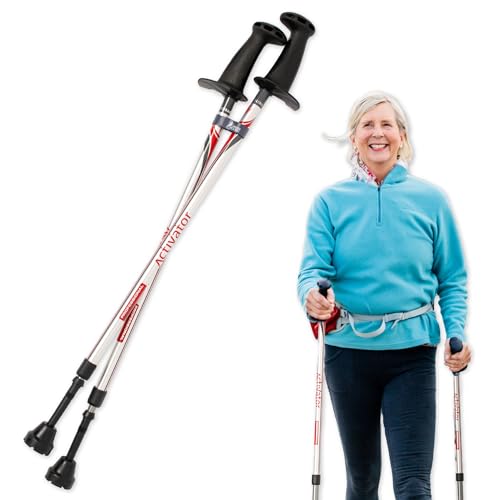
The only pole in this shortlist whose maker publishes a weight-bearing figure — 200 lb per pole, with a 250 lb maximum user weight — and that single number is the whole reason it leads. If you intend to lean on a pole rather than swing it, every other pole here is undocumented for the job. It also reaches the shortest users of anything we found, fitting heights from 4 ft 2 in.

What it gets right

  • Publishes a 200 lb per-pole weight-bearing capacity and a 250 lb maximum user weight — no other pole here publishes either
  • Fits published heights from 4 ft 2 in to 6 ft (127-182 cm), the lowest minimum of any pole we found
  • Bell-shaped tips for stability are published as standard, alongside a carbide tip and removable boot tips
  • Strapless ergonomic grip with a wide ledge, published as supporting the wrist in a neutral position
  • Published at 1.44 lb (0.655 kg) per pair, and designed by an occupational therapist and gerontologist

What to know first

  • Several times the price of a hiking pole with a similar height range
  • Two-section collapsible, so it folds to a published 29 in — longer than the tri-fold poles here
  • The "20% to 46% more calories" figure is the maker's claim with no study cited on the listing
  • No published tip-replacement interval, and the boot tips are a wear part
  • Strapless is deliberate, but it means there is no strap to stop a dropped pole hitting the floor

Fit-to-You: the nine measurements

Urban Poling publishes every measurement on this list. That is unusual enough to be worth saying. How we compile these

Published weight-bearing capacityWhether the maker will say how much weight the pole is built to take. A pole you lean on and a pole you swing are different products.
200 lb (90 kg) per pole, with a stated maximum user weight of 250 lb (114 kg) — the only pole here publishing either figure

Source: Amazon product listing data (Creators API) · read 2026-11-22

Height range it fitsThe adjustment range, and whether it is published as a user height or as a length. A pole that does not go short enough is unusable.
Adjustable for users 4 ft 2 in to 6 ft (127-182 cm); 29 in (74 cm) collapsed

Source: Amazon product listing data (Creators API) · read 2026-11-22

Locking mechanismWhat stops the pole collapsing under load, and how much grip strength the adjustment needs.
A button locking system that secures an internal twist system — two mechanisms in series

Source: Amazon product listing data (Creators API) · read 2026-11-22

Tip suppliedWhat meets the ground. A bare carbide tip skates on a pavement; a rubber tip is what this reader needs.
Bell-shaped tips "for stability" as the default, plus a carbide metal tip for trails, beach and snow, plus removable boot tips

Source: Amazon product listing data (Creators API) · read 2026-11-22

Grip and strapWhere your hand and wrist sit, and whether a strap holds you to the pole or lets you drop it.
Strapless ergonomic rubber CoreGrip with a wide ledge, published as supporting the wrist in a neutral position to reduce strain

Source: Amazon product listing data (Creators API) · read 2026-11-22

WeightA pole you carry all the way round the block, in your hand, the whole time.
1.44 lb (0.655 kg) per pair, high-grade aluminum

Source: Amazon product listing data (Creators API) · read 2026-11-22

We have not used this machine. Everything above comes from the manufacturer’s published documentation and the dated retailer listing, with the source given for each figure. Where they don’t publish a number, we say so. We can’t tell you how it feels to ride, how quiet it really is, or how it holds up after two years — and anyone who tells you otherwise without owning one is guessing.
2.Best for pavement

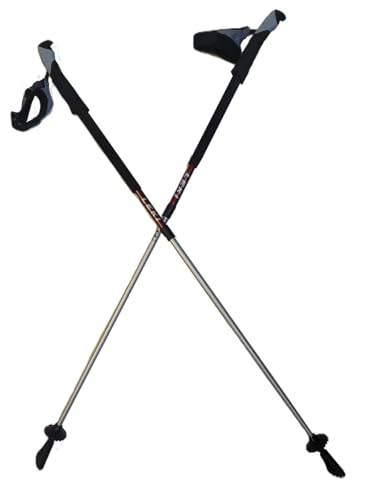
LEKI Nordic Walking Walker Unlimited Adjustable Pole(TMNW2688)

LEKI Nordic Walking Walker Unlimited Adjustable Pole
$59.99 · Check price on Amazon

Price as of November 22, 2026. #ad How we’re funded

The pole built for pavement rather than trails, from the maker the Nordic walking world actually uses. Its rubber Fitness Lite tips are published as designed for traction on pavement and smooth surfaces — which is where this reader walks — and its Super Lock System is the one locking mechanism here described in terms of how little torque it needs to hold.

What it gets right

  • Rubber Fitness Lite tips published as designed for the traction Nordic walking needs on pavement and smooth surfaces
  • Super Lock System published as holding a secure adjustment with the least amount of torque — the relevant spec for a weak grip
  • Fully adjustable 100-130 cm, published as fitting walkers of all sizes and ages
  • Releasable Trigger Energy strap, so the hand is supported but can let go of the pole
  • Replaceable Flextip ferrule published, so the wear part is a part rather than the pole

What to know first

  • Publishes no weight-bearing capacity and no maximum user weight
  • Sold as a single pole at this listing — Nordic walking technique uses two
  • No pole weight published; the listing's compactness claim is about swing weight rather than a figure
  • No collapsed length published, so packing it is an unknown
  • Adjustment is a length range in centimeters, not a fitted user height, so you have to convert

Fit-to-You: the nine measurements

LEKI does not publish 2 of 6 of these. Where that is the case, this panel says so rather than guessing. How we compile these

Published weight-bearing capacityWhether the maker will say how much weight the pole is built to take. A pole you lean on and a pole you swing are different products.
Not published by the manufacturer
Height range it fitsThe adjustment range, and whether it is published as a user height or as a length. A pole that does not go short enough is unusable.
Fully adjustable 100-130 cm, published as fitting "walkers of all sizes and ages". No fitted user height is given

Source: Amazon product listing data (Creators API) · read 2026-11-22

Locking mechanismWhat stops the pole collapsing under load, and how much grip strength the adjustment needs.
Super Lock System (SLS), published as "the strong pole locking system available, secure adjustment hold with the least amount of torque"

Source: Amazon product listing data (Creators API) · read 2026-11-22

Tip suppliedWhat meets the ground. A bare carbide tip skates on a pavement; a rubber tip is what this reader needs.
Rubber Fitness Lite tips "specifically designed to provide traction needed for Nordic Walking technique on pavement and smooth surfaces"; carbide Flextip ferrule, replaceable

Source: Amazon product listing data (Creators API) · read 2026-11-22

Grip and strapWhere your hand and wrist sit, and whether a strap holds you to the pole or lets you drop it.
Nordic Trigger grip with an adjustable, releasable Trigger Energy strap

Source: Amazon product listing data (Creators API) · read 2026-11-22

WeightA pole you carry all the way round the block, in your hand, the whole time.
Not published by the manufacturer

We have not used this machine. Everything above comes from the manufacturer’s published documentation and the dated retailer listing, with the source given for each figure. Where they don’t publish a number, we say so. We can’t tell you how it feels to ride, how quiet it really is, or how it holds up after two years — and anyone who tells you otherwise without owning one is guessing.
3.Folds smallest

TREKOLOGY Trek-Z Cork Grip Collapsible Trekking Poles(UK-TREKZCOREK-UPC)

TREKOLOGY Trek-Z Cork Grip Collapsible Trekking Poles
$33.65 · Check price on Amazon

$41.9920% off

Price as of November 22, 2026. #ad How we’re funded

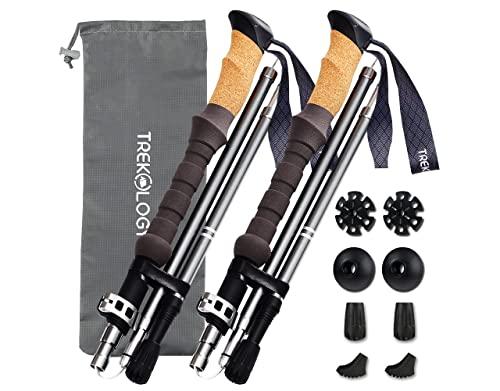
The pair that folds smallest — a published 15 inches, from a tri-fold design — which is what makes a pole that lives in a handbag or a car door pocket rather than a cupboard. The cork grip handles sweat better than foam. Read its own sizing line carefully though: it is published as fitting 5 ft 2 in and up, so it is the wrong pole for a shorter walker.

What it gets right

  • Folds to a published 15 in (38 cm) on a tri-fold system — the smallest packed size here
  • Natural cork grip published as absorbing hand moisture, with EVA foam lower grips as a second hand position
  • Published 11.5 oz (330 g) per pole, aircraft-grade aluminum
  • A pair plus a carry bag in the box, with a metal flip-lock adjustment of 110-130 cm
  • The listing is unusually candid about its own quirks, naming the cork's rotational flex and the lock re-seating as features rather than defects

What to know first

  • Published as designed to fit 5 ft 2 in to 6 ft 5 in — it does not reach a shorter walker
  • Publishes no weight-bearing capacity and no maximum user weight
  • Its own listing says that if the pole feels loose you must re-seat the lock button — a loose-feeling pole is exactly what an unsteady walker should not have to diagnose
  • A 20 cm adjustment range is the narrowest here
  • Tips are specified for trails; no rubber pavement tip is published as included

Fit-to-You: the nine measurements

TREKOLOGY does not publish 1 of 6 of these. Where that is the case, this panel says so rather than guessing. How we compile these

Published weight-bearing capacityWhether the maker will say how much weight the pole is built to take. A pole you lean on and a pole you swing are different products.
Not published by the manufacturer
Height range it fitsThe adjustment range, and whether it is published as a user height or as a length. A pole that does not go short enough is unusable.
Adjustable 110-130 cm, published as "designed to fit men, women, and teens 5'2" to 6'5" (159-195 cm)"; folds to 15 in (38 cm)

Source: Amazon product listing data (Creators API) · read 2026-11-22

Locking mechanismWhat stops the pole collapsing under load, and how much grip strength the adjustment needs.
A metal flip-lock, plus a lock button that must be pulled until it pops out; the listing states that a loose feel means re-seating it and "is not a defect"

Source: Amazon product listing data (Creators API) · read 2026-11-22

Tip suppliedWhat meets the ground. A bare carbide tip skates on a pavement; a rubber tip is what this reader needs.
Specified for rugged terrain. No rubber pavement tip is listed in the box, unlike the two poles above

Source: Amazon product listing data (Creators API) · read 2026-11-22

Grip and strapWhere your hand and wrist sit, and whether a strap holds you to the pole or lets you drop it.
Natural cork grip, published as having "a slight rotational flex" the maker calls an anti-torque ergonomic feature, with an EVA foam lower grip

Source: Amazon product listing data (Creators API) · read 2026-11-22

WeightA pole you carry all the way round the block, in your hand, the whole time.
11.5 oz (330 g) per pole; aircraft-grade aluminum alloy

Source: Amazon product listing data (Creators API) · read 2026-11-22

We have not used this machine. Everything above comes from the manufacturer’s published documentation and the dated retailer listing, with the source given for each figure. Where they don’t publish a number, we say so. We can’t tell you how it feels to ride, how quiet it really is, or how it holds up after two years — and anyone who tells you otherwise without owning one is guessing.
4.Budget pick

Cascade Mountain Tech Aluminum Trekking Poles with Cork Grip(TP-AL-QL-CORK-3)

Cascade Mountain Tech Aluminum Trekking Poles with Cork Grip
$29.99 · Check price on Amazon

Price as of November 22, 2026. #ad How we’re funded

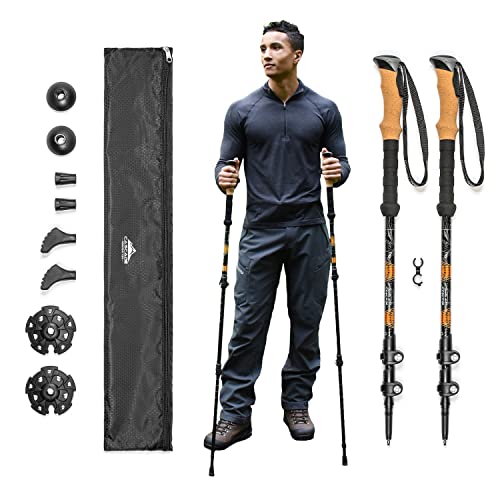
The budget pick, and the widest adjustment range of anything here: a published 26 to 54 inches, which covers a short walker and a tall one from the same box. At 10 ounces a pole it is also the lightest. It publishes no weight-bearing figure, so treat it as a balance pole rather than something to lean on.

What it gets right

  • Published 26 in to 54 in adjustment — by far the widest range here, and the only one reaching short settings
  • 10 oz per pole published, the lightest in this shortlist, in aircraft-grade 6061 aluminum
  • Quick Lock lever mechanism, published as adjustable without breaking stride
  • Cork grip with an extended EVA down grip published as a second hand position
  • Tungsten carbide tips plus rubber snow and mud baskets, boots and tip covers all published as included

What to know first

  • Publishes no weight-bearing capacity and no maximum user weight
  • Published as a trekking pole: the included accessories are trail accessories, and no pavement-specific tip is named
  • The adjustment is published in inches of pole length, not as a fitted user height
  • No published collapsed length, only that it collapses
  • The lightest pole here is also the one with the least metal in it, and the listing publishes nothing about shaft diameter or wall thickness

Fit-to-You: the nine measurements

Cascade Mountain Tech does not publish 1 of 6 of these. Where that is the case, this panel says so rather than guessing. How we compile these

Published weight-bearing capacityWhether the maker will say how much weight the pole is built to take. A pole you lean on and a pole you swing are different products.
Not published by the manufacturer
Height range it fitsThe adjustment range, and whether it is published as a user height or as a length. A pole that does not go short enough is unusable.
Adjustable 26 in to 54 in of pole length — the widest range here. No fitted user height is published

Source: Amazon product listing data (Creators API) · read 2026-11-22

Locking mechanismWhat stops the pole collapsing under load, and how much grip strength the adjustment needs.
Quick Lock lever mechanism, published as adjustable "without breaking your stride"

Source: Amazon product listing data (Creators API) · read 2026-11-22

Tip suppliedWhat meets the ground. A bare carbide tip skates on a pavement; a rubber tip is what this reader needs.
Tungsten carbide tips for year-round use, plus rubber snow and mud baskets, boots and tip covers. No pavement tip named

Source: Amazon product listing data (Creators API) · read 2026-11-22

Grip and strapWhere your hand and wrist sit, and whether a strap holds you to the pole or lets you drop it.
Ergonomic cork grip published as reducing vibration, with an extended EVA down grip for a second hand placement

Source: Amazon product listing data (Creators API) · read 2026-11-22

WeightA pole you carry all the way round the block, in your hand, the whole time.
10 oz per pole; aircraft-grade 6061 aluminum

Source: Amazon product listing data (Creators API) · read 2026-11-22

We have not used this machine. Everything above comes from the manufacturer’s published documentation and the dated retailer listing, with the source given for each figure. Where they don’t publish a number, we say so. We can’t tell you how it feels to ride, how quiet it really is, or how it holds up after two years — and anyone who tells you otherwise without owning one is guessing.

What we found looking for these numbers

We went looking for 24 measurements across the 4machines on this page — the nine that decide whether an older adult can get on, reach the controls, read the screen and hear themselves think. 4 of those 24 are not published by anybody. 1 of these machines publishes the full set.

Step-over height is the worst of them. It is the single measurement that decides whether you can get onto a machine at all, and across everything we checked, not one manufacturer states it. That is not an oversight in a category explicitly marketed to seniors, and the count in each panel above is there so you can see who is doing it.

Where a figure exists, we cite it and date it. Where it doesn’t, the panel says Not published by the manufacturer rather than an estimate dressed up as a fact. You can measure step-over height yourself in about a minute — and if a machine is already in your house, that is the fastest way to settle it.

The one number three of these four will not publish

Start with the finding, because it decides the page. The Urban Poling ACTIVATOR publishes 200 lb (90 kg) of weight-bearing capacity per pole and a 250 lb (114 kg) maximum user weight. The LEKI, the Trekology and the Cascade publish neither figure. Three makers, three blanks, on the specification that separates a mobility aid from a piece of hiking kit.

That is not an accusation. The LEKI, Trekology and Cascade poles are not sold as mobility aids, and a hiking pole is not supposed to be a crutch — it is supposed to help you push off and catch an occasional stumble. The problem is that a shopper searching “best walking poles for seniors” is very often looking for the first thing and is shown the second, with nothing on the listing to tell them apart. If you intend to put real weight through a pole — standing up from a bench, going down a kerb, off-loading an arthritic hip for a mile — buy the pole whose maker has committed to a number.

The ACTIVATOR earns its place on more than that one figure. It publishes a fitted user-height range of 4 ft 2 in to 6 ft (127–182 cm), which is the lowest minimum of anything we found and the only one that comfortably fits a shorter older woman. It publishes bell-shaped tips for stability as the default, with a carbide tip and removable boot tips also in the box — so the pavement tip is the one you get first rather than an upgrade. Its grip is strapless, with a wide ledge, published as supporting the wrist in a neutral position; and the whole pair weighs a published 1.44 lb.

Its honest costs are published too, and two of them are real. It is two-section collapsible, folding to 29 inches, which is long — the Trekology folds to 15 — so it is a pole that lives by the door rather than in a handbag. And strapless is a deliberate design choice with a trade-off: nothing holds the pole to your hand if you let go, which is good if you fall and want to be rid of it, and bad if you need to open a gate.

Height, tips and locks: the three specs that rule poles in or out

Height first, because it is the one that disqualifies. Read these four published ranges carefully, because they are not expressed in the same units and that is doing a lot of work. The ACTIVATOR publishes a user heightof 4 ft 2 in to 6 ft. The Trekology publishes a pole length of 110–130 cm and, critically, states it is “designed to fit men, women, and teens 5’2” to 6’5””— so its own maker rules out anybody shorter than 5 ft 2 in. The LEKI publishes 100–130 cm and says it fits walkers of all sizes without giving a user height. The Cascade publishes 26 to 54 inches of pole length, the widest range on the page by a distance, and also declines to convert it into a user height.

The rough conversion, if you want to do it yourself: a pole set for level-ground walking wants your elbow at about a right angle with the tip on the floor, which for most people lands near 68 percent of standing height. We give that as a rule of thumb rather than as a specification, because no maker here publishes a fitting formula and we are not going to invent one.

Then the tip, which is where the senior-specific answer diverges hardest from the hiking answer. The LEKI is second on this page almost entirely because of its tip: it publishes rubber Fitness Lite tips “specifically designed to provide traction needed for Nordic Walking technique on pavement and smooth surfaces”. Pavement is where this reader walks. A tungsten carbide spike is superb in dirt and skates on wet concrete, and the Trekology and Cascade both publish trail tips as standard — the Cascade at least includes rubber boots and baskets in the box, while the Trekology lists no rubber pavement tip among its contents at all. LEKI also publishes its carbide Flextip ferrule as replaceable, which turns the wear part into a part rather than into a new pair of poles.

Then the lock, which is what actually fails under load.The four mechanisms are published and they are genuinely different. LEKI’s Super Lock System is described in the one term that matters for a weak grip — it holds a secure adjustment “with the least amount of torque”. The ACTIVATOR uses a button lock securing an internal twist system, two mechanisms in series. The Cascade uses an external Quick Lock lever, adjustable “without breaking your stride”, which is the easiest kind to operate with cold or arthritic hands. The Trekology publishes a metal flip-lock plus a push button, and then publishes something we think you should read before buying it: “If the pole feels loose, re-seat the button until fully engaged — it is not a defect.” We take the maker at its word that this is normal. We also think a pole that feels loose is the last thing an unsteady walker should have to diagnose mid-walk, and it is why the Trekology sits third despite being the most packable pole here.

What a pole does not do, and what we would buy

Two honest limits before the recommendation.

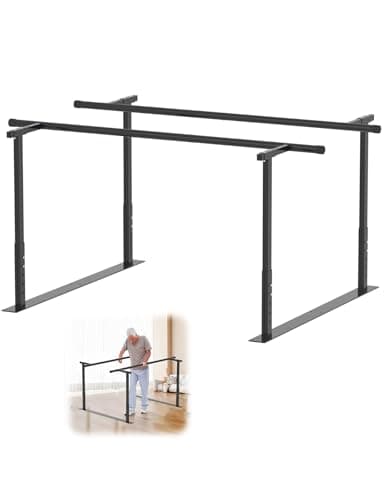
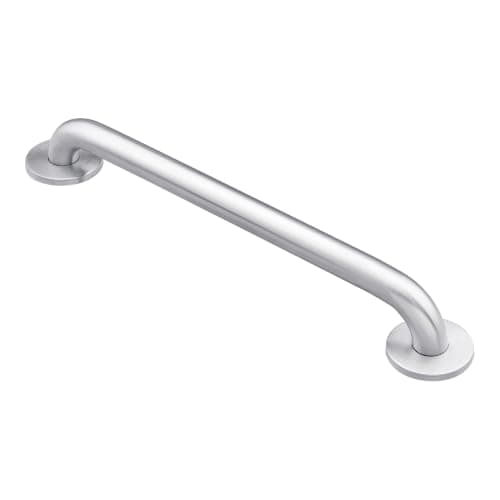
A pole is not a cane, and it is certainly not a walker. A cane is engineered and rated to be loaded one-handed; a walker surrounds you. Poles work in pairs, need both hands, and need enough coordination to place them. If a hand is needed for a shopping bag, a dog lead or a stair rail, poles stop being the answer. For indoor practice with support on both sides, the right equipment is parallel bars, and for the bathroom and the stairs it is grab bars. Nothing on this page substitutes for either.

And no maker here publishes anything about falls. Not a study, not a rate, not a claim we could check. The National Institute on Aging puts strength and balance work alongside home modification as what reduces fall risk, and is explicit that balance problems have causes worth investigating — inner ear, blood pressure, medication, vision. Poles help you keep walking. They do not treat the reason you became unsteady, and if you have had a fall, that conversation comes before this purchase.

So, what we would buy. If you plan to lean on the pole, buy the Urban Poling ACTIVATORand do not agonize over the price — it is the only pole here documented for the job, it reaches the shortest users, and its stability tip is the one you want on a pavement. If you plan to walk briskly on pavements and you are steady enough that support is a bonus rather than the point, buy the LEKI Walker Unlimitedfor its pavement-specific rubber tips, its low-torque lock and its replaceable ferrule — noting that this listing is a single pole and the technique wants two. If what stops you using poles is carrying them, the Trekology Trek-Z folds to 15 inches and has the best grip material here, provided you are over 5 ft 2 in and you have read what its own listing says about re-seating the lock. And if the budget decides it, the Cascade Mountain Techpair publishes the widest adjustment on the page, the lightest poles on the page, and a box full of tips and baskets — a lot of pole for the money, as long as you treat it as a balance aid rather than something to put your weight through.

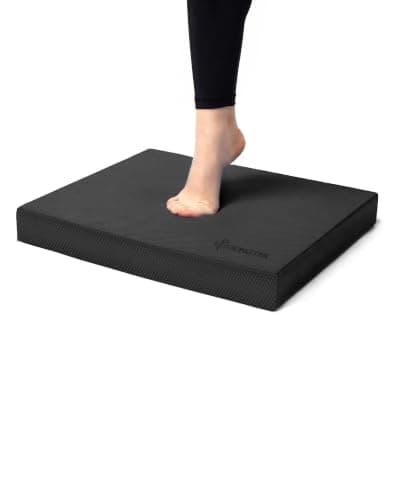
One last piece of advice that costs nothing. Poles change how far you can comfortably go, which is the real point of them; our guide to how far seniors should walk puts that in the context of the CDC’s weekly target, and a balance padindoors is the cheapest companion purchase to a pair of poles outdoors — one trains the balance, the other lets you use it.

General information, not medical advice. Tread & Tone is written by an enthusiast, not a clinician. Nobody here is a doctor, a physical therapist or a trainer, and nothing on this site has been medically reviewed. Talk to your doctor or physical therapist before starting something new, particularly after surgery, a fall, or a change in medication.

Questions people ask

What are the best walking poles for seniors?

The Urban Poling ACTIVATOR, because it is the only pole in our registry whose maker publishes a weight-bearing figure — 200 lb per pole, with a 250 lb maximum user weight. That is the number that separates a mobility aid from a hiking pole, and three of the four poles here do not state it. It also publishes a fitted user-height range of 4 ft 2 in to 6 ft, the lowest minimum we found, bell-shaped stability tips as standard, a strapless grip published as holding the wrist neutral, and 1.44 lb per pair.

What is the difference between walking poles and trekking poles?

What they are built to take. A trekking pole is designed for propulsion and for catching an occasional stumble on a trail; a rehabilitation or Nordic walking pole intended as a mobility aid is designed to be loaded. They look nearly identical and appear in the same search results, and the only reliable way to tell them apart is whether the maker publishes a weight-bearing capacity. In our registry exactly one does. If you intend to lean on the pole, that distinction is the whole purchase.

What height walking pole do I need?

Read the published range carefully, because the four poles here express it in three different ways. The ACTIVATOR publishes a fitted user height of 4 ft 2 in to 6 ft. The Trekology publishes a pole length of 110-130 cm and states it is designed for 5 ft 2 in and taller — so its own maker rules out shorter walkers. LEKI publishes 100-130 cm, and Cascade 26 to 54 inches, neither converted into a user height. As a rule of thumb rather than a specification, a pole set for level ground puts your elbow near a right angle with the tip on the floor.

Do walking poles help with balance?

They give you two extra points of contact with the ground, which is why people with balance issues look for them — but we will not tell you they prevent falls, because no maker on this page publishes a study, a rate or any claim we could check. What the evidence does support, from the CDC and the National Institute on Aging, is that walking is valuable moderate-intensity activity and that balance work and home modification reduce fall risk. Poles are what keep an unsteady walker walking outdoors; they are not a treatment for being unsteady.

What tips should walking poles have for pavement?

Rubber, and this is where the senior answer diverges from the hiking answer most sharply. A tungsten carbide spike is excellent in dirt and skates on wet concrete. The LEKI publishes rubber Fitness Lite tips specifically designed for traction on pavement and smooth surfaces, which is why it is our pick for pavement walking, and it publishes its carbide ferrule as replaceable. The ACTIVATOR includes bell-shaped stability tips as the default. The Trekology and Cascade are specified for trails — the Cascade at least includes rubber boots and baskets in the box.

Can walking poles replace a cane or a walker?

No. A cane is engineered and rated to be loaded one-handed, and a walker surrounds you; poles work in pairs, need both hands, and need enough coordination to place them. If a hand is needed for a bag, a dog lead or a stair rail, poles stop being the answer. For indoor practice with support on both sides the right equipment is parallel bars, and for the bathroom and stairs it is grab bars. Nothing on this page substitutes for either, and a mobility assessment should come before any of them.

Do walking poles burn more calories?

The Urban Poling ACTIVATOR's listing claims its grip helps burn up to 20 to 46 percent more calories than walking without poles. We report that as the maker's claim because the listing cites no study for it, and we rank the pole on the figures we can actually check instead — the published weight-bearing capacity, the height range, the tips and the lock. If the calorie figure is the reason you are buying, treat it as marketing rather than as a finding.

Sources

Product measurements are cited individually inside each Fit-to-You panel, against the manufacturer page or dated retailer listing they were read from.

Read next