Tread & Tone

The Best Fall-Prevention Equipment Under $50

Fall prevention has two halves — something solid to hold when you are already going, and something unstable to practise on so you are not. Fifty dollars genuinely buys both. Here is which, and in what order.

By Stephen V.Last updated How we choose

How this is funded: we earn a commission if you buy through our links, at no extra cost to you. It never changes what we recommend, and every page here names at least one thing we would not buy. Full disclosure.

The thing to buy first for under fifty dollars is the Moen Home Care 8724 grab bar, and the reason is one sentence of Moen's own wording: it supports up to 500 lb “when installed in a stud or when using SecureMounts”. A load rating with its installation condition attached is a load rating. A bare number is marketing. Moen is also the only bar in our registry that publishes a diameter — 1.25 inches, the bottom of the range the ADA allows for a round gripping surface — and the only one claiming ADA compliance at all. Our budget pick is the Gotega 16 inch pair, which puts two knurled bars on the wall for less than the price of one Moen, with the honest caveat that its own 500 lb claim comes with no installation condition attached to it whatsoever.

This page exists because fifty dollars is an unusually good budget in this corner of the site, and because nothing else here spends it across both halves of the problem. Our grab bar shortlist ranks five bars against the published ADA figures with no cap; our balance pad shortlist ranks the soft training surfaces; and fall prevention at home walks the house room by room without selling you anything. This page is the one that asks what a single fifty-dollar note should actually buy, and the answer turns out to be one of each.

Two criteria, and they apply differently to the two halves. For anything you hold: the published load rating and the condition attached to it, then the diameter, then the grip texture, then how it mounts. For anything you stand on: the standing surface and the thickness, which are the two numbers that decide whether the exercise is doable and how hard it is. We rank the holding half above the training half throughout, for the plain reason that training reduces risk over months and a bar reduces it the moment it is on the wall.

The finding is a contrast rather than a number. Three products on this page publish a load rating and only one of them attaches a condition to it. Moen publishes 500 lb with the stud-or-anchor condition stated. Gotega publishes “up to 500 pounds of pulling force” with no stud, no anchor, no fastener and no diameter anywhere in the listing. TAILI publishes 240 lb per bar and, two lines later in the same bullet, asks you not to put all your body weight on it. The two balance products publish no capacity at all, which matters much less, because a foam pad that bottoms out gives you a worse exercise rather than a fall.

Why bother: the CDC records more than one in four adults 65 and over falling each year, and that falling once roughly doubles the chance of falling again. Its STEADI initiative frames the clinical response as screen, assess, intervene — and the National Institute on Aging's own guidance on falls and fractures puts strength and balance work alongside home modification rather than instead of it. Both halves. That is the whole thesis of this page.

Live prices sit inside the buttons with the date of our last check. We have not installed or stood on any of these. What we did instead is written down.

About the “under $50” in the title: we check it rather than assert it. Of the 5 products on this page, our live price read on November 22, 2026 puts 5 under fifty dollars — all of them. Prices move, ours expire by themselves after forty-eight hours, and the number in the button is always the more recent one.

Quick picks

Ranked on the published accessibility measurements and on who each machine actually suits. Select a row to jump to the full write-up. The last column is the number of the nine measurements the manufacturer will not publish — we have not used any of these machines, and here is exactly what we did instead.

#MachineBest forSpecs withheldPrice
1
Moen Home Care 24 in Grab Bar with Concealed Screws

Moen Home Care 24 in Grab Bar with Concealed Screws

Publishing the number AND the condition

Best under $500of 6
$19.98 · Check price on Amazon

$27.2927% off

Price as of November 22, 2026. #ad How we’re funded

2
StrongTek Extra Wide TPE Balance Pad

StrongTek Extra Wide TPE Balance Pad

Room for two feet

Best training surface1of 6
$30.59 · Check price on Amazon

$35.9915% off

Price as of November 22, 2026. #ad How we’re funded

3
Gotega 16 in Stainless Grab Bars, 2-Pack

Gotega 16 in Stainless Grab Bars, 2-Pack

A knurled pair, cheapest here

Budget pick2of 6
$16.99 · Check price on Amazon

$19.9915% off

Price as of November 22, 2026. #ad How we’re funded

4
TAILI Suction Shower Grab Bars, 16.8 in, 2-Pack

TAILI Suction Shower Grab Bars, 16.8 in, 2-Pack

A rental, where nothing can be drilled

For a rental1of 6
$33.99 · Check price on Amazon

$39.9915% off

Price as of November 22, 2026. #ad How we’re funded

5
ProSource Core Balance Disc Trainer, 14 in

ProSource Core Balance Disc Trainer, 14 in

Adjustable difficulty

Difficulty you set1of 6
$20.94 · Check price on Amazon

$25.9919% off

Price as of November 22, 2026. #ad How we’re funded

1.Best under $50

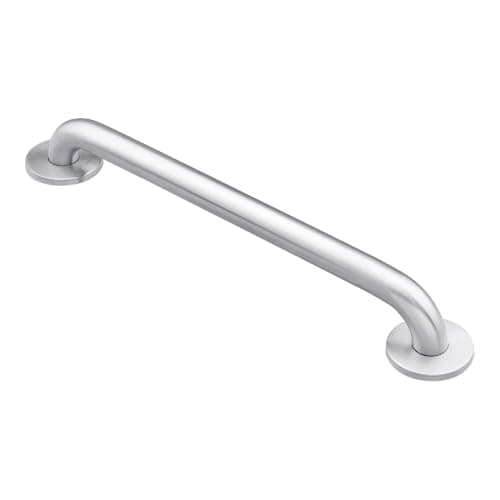
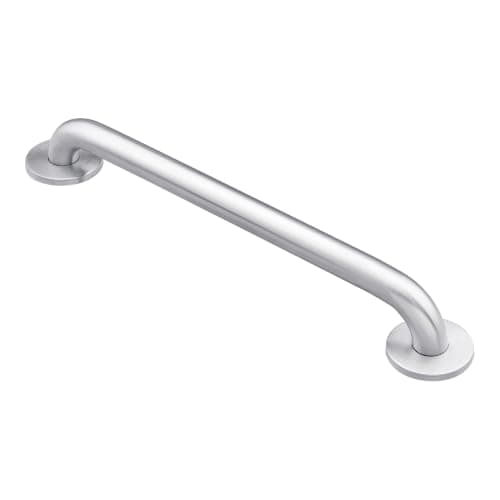
Moen Home Care 24 in Grab Bar with Concealed Screws(8724)
Moen Home Care 24 in Grab Bar with Concealed Screws
$19.98 · Check price on Amazon

$27.2927% off

Price as of November 22, 2026. #ad How we’re funded

The only bar in this category that publishes all three of the numbers that decide the purchase — 24 in long, 1.25 in diameter, and a 500 lb rating with the installation condition stated rather than implied — and the only one that claims to comply with the ADA specification. The catch is in Moen's own wording: the rating holds when the bar is fixed into a stud or with SecureMount anchors, and those anchors are not in the box.

What it gets right

  • Publishes a 1.25 in diameter, which is the bottom of the ADA's 1.25–2 in range for a round bar
  • Publishes 500 lb with the condition attached: installed in a stud, or using SecureMounts
  • States compliance with the ADA specification — the only bar here that does
  • 24 in of bar covers a hand-over-hand move rather than a single grab
  • Concealed screw covers, corrosion-resistant stainless, and a limited lifetime warranty

What to know first

  • The SecureMount anchors the rating depends on are sold separately and are not included
  • A single bar, where three of the five others in this category are sold as a pair
  • The stainless finish is smooth, not knurled or peened, so it offers less grip to a wet hand than Moen's own peened bar
  • Nothing in the listing tells you the 33–36 in mounting height the ADA specifies, so that part is on you

Fit-to-You: the nine measurements

Moen publishes every measurement on this list. That is unusual enough to be worth saying. How we compile these

Bar lengthWhether it covers one grab or a whole hand-over-hand move from sitting to standing.
24 in of bar; Amazon's unlabeled length field for the assembly reads 28.375 in

Source: Amazon product listing data (Creators API) · read 2026-10-31

Bar diameterHow thick the bar is. The ADA sets 1.25 to 2 in for a round bar because grip thickness decides how much force a weak hand can put through it.
1.25 in — the minimum the ADA allows for a round gripping surface

Source: Amazon product listing data (Creators API) · read 2026-10-31

Published load ratingThe rating is only as good as the condition attached to it — and the bar is almost never the part that fails.
“Supports up to 500 lbs when installed in a stud or when using SecureMounts (not included)” — the condition is Moen's own wording, not ours

Source: Amazon product listing data (Creators API) · read 2026-10-31

How it mountsWhat actually holds it to the wall. This is the whole safety question.
Screwed to the wall, with concealed screw covers; SecureMount anchors are described as sold separately

Source: Amazon product listing data (Creators API) · read 2026-10-31

Grip textureWet hands and soap. A polished bar is the one your hand slides along.
Lightly brushed stainless finish. No knurling or peening stated

Source: Amazon product listing data (Creators API) · read 2026-10-31

Standard claimedThe rating is only as good as the condition attached to it — and the bar is almost never the part that fails.
“Complies with Americans with Disabilities Act (ADA) specifications”

Source: Amazon product listing data (Creators API) · read 2026-10-31

We have not used this machine. Everything above comes from the manufacturer’s published documentation and the dated retailer listing, with the source given for each figure. Where they don’t publish a number, we say so. We can’t tell you how it feels to ride, how quiet it really is, or how it holds up after two years — and anyone who tells you otherwise without owning one is guessing.
2.Best training surface

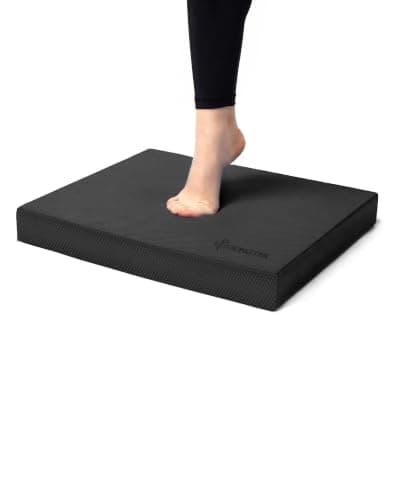
StrongTek Extra Wide TPE Balance Pad

StrongTek Extra Wide TPE Balance Pad
$30.59 · Check price on Amazon

$35.9915% off

Price as of November 22, 2026. #ad How we’re funded

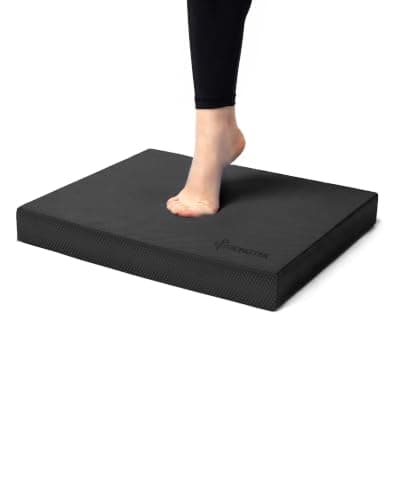
At 19 by 15.8 inches it is the only pad here with room for two feet side by side and still some margin. That margin is the difference between a balance exercise and a stumble off the edge, and it is the reason to pay a few dollars more than the standard size.

What it gets right

  • 19 in × 15.8 in — genuinely wide enough for a two-foot stance with margin
  • 2.4 in thick, so it gives a real balance challenge without being tall enough to roll an ankle
  • High-density TPE that is described as holding its shape rather than compressing flat
  • Textured non-slip top and a water-resistant foam body

What to know first

  • No published weight capacity
  • No firmness figure of any kind — 'high-density' is a description, not a specification
  • Costs roughly half again as much as a standard-size pad

Fit-to-You: the nine measurements

StrongTek does not publish 1 of 6 of these. Where that is the case, this panel says so rather than guessing. How we compile these

ThicknessPad height sets the difficulty. Too tall is not 'more effective', it is a fall.
2.4 in

Source: Amazon product listing data (Creators API) · read 2026-08-13

Standing surfaceWhether there is room for two feet, or only one.
19 in × 15.8 in

Source: Amazon product listing data (Creators API) · read 2026-08-13

Weight capacitySearched directly, and two of the senior-focused competitors omit it entirely.
Not published by the manufacturer
FirmnessA pad that bottoms out gives no training effect; one that is too soft is unstable.
Described as high-density TPE foam; no density figure published

Source: Amazon product listing data (Creators API) · read 2026-08-13

Non-slip baseWhether you need something solid to hold while you use it — and most people do.
Textured non-slip surface, water-resistant foam

Source: Amazon product listing data (Creators API) · read 2026-08-13

Needs support nearbyWhether you need something solid to hold while you use it — and most people do.
Yes — use it within reach of a wall, counter or sturdy chair. Every balance product on this page needs that

Source: Amazon product listing data (Creators API) · read 2026-08-13

We have not used this machine. Everything above comes from the manufacturer’s published documentation and the dated retailer listing, with the source given for each figure. Where they don’t publish a number, we say so. We can’t tell you how it feels to ride, how quiet it really is, or how it holds up after two years — and anyone who tells you otherwise without owning one is guessing.
3.Budget pick

Gotega 16 in Stainless Grab Bars, 2-Pack

Gotega 16 in Stainless Grab Bars, 2-Pack
$16.99 · Check price on Amazon

$19.9915% off

Price as of November 22, 2026. #ad How we’re funded

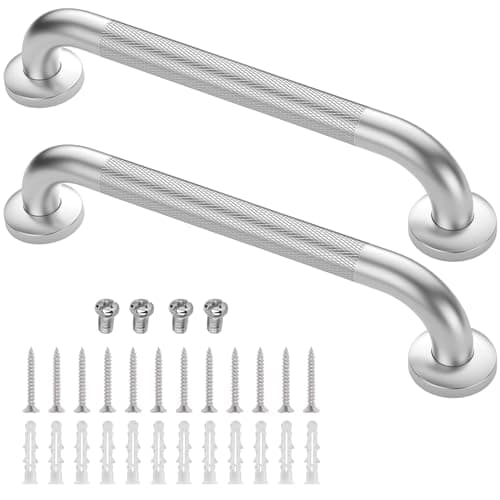
Two knurled bars for less than the price of one Moen, and the knurling is a real advantage over the 8724's smooth stainless. But the headline figure is published without the one thing that makes a figure mean anything: “up to 500 pounds of pulling force”, with no installation condition, no fastener specified and no diameter stated anywhere.

What it gets right

  • A knurled, textured surface on both bars — better for a wet hand than smooth stainless
  • Two bars in the box, so the bath and the toilet get one each
  • Concealed screw covers, and stated installation at any angle: horizontal, vertical or diagonal
  • The cheapest way here to get a textured grip onto a wall

What to know first

  • The 500 lb “pulling force” claim carries NO installation condition — no stud, no anchor, no fastener spec
  • No diameter published anywhere in the listing, so there is no way to check it against the ADA's 1.25–2 in range
  • No ADA claim, no warranty term and no manufacturer model number published
  • 16 in is a single-grab bar, not enough to follow a sit-to-stand movement

Fit-to-You: the nine measurements

Gotega does not publish 2 of 6 of these. Where that is the case, this panel says so rather than guessing. How we compile these

Bar lengthWhether it covers one grab or a whole hand-over-hand move from sitting to standing.
16 in, two bars per box

Source: Amazon product listing data (Creators API) · read 2026-10-31

Bar diameterHow thick the bar is. The ADA sets 1.25 to 2 in for a round bar because grip thickness decides how much force a weak hand can put through it.
Not published by the manufacturer
Published load ratingThe rating is only as good as the condition attached to it — and the bar is almost never the part that fails.
“Up to 500 pounds of pulling force” — stated with no installation condition, no fastener and no test attached

Source: Amazon product listing data (Creators API) · read 2026-10-31

How it mountsWhat actually holds it to the wall. This is the whole safety question.
Screwed to the wall with concealed screw covers; the listing states installation at any angle but names no anchor type

Source: Amazon product listing data (Creators API) · read 2026-10-31

Grip textureWet hands and soap. A polished bar is the one your hand slides along.
Knurled non-slip surface, stated to work with wet hands

Source: Amazon product listing data (Creators API) · read 2026-10-31

Standard claimedThe rating is only as good as the condition attached to it — and the bar is almost never the part that fails.
Not published by the manufacturer

We have not used this machine. Everything above comes from the manufacturer’s published documentation and the dated retailer listing, with the source given for each figure. Where they don’t publish a number, we say so. We can’t tell you how it feels to ride, how quiet it really is, or how it holds up after two years — and anyone who tells you otherwise without owning one is guessing.
4.For a rental

TAILI Suction Shower Grab Bars, 16.8 in, 2-Pack(AW678)

TAILI Suction Shower Grab Bars, 16.8 in, 2-Pack
$33.99 · Check price on Amazon

$39.9915% off

Price as of November 22, 2026. #ad How we’re funded

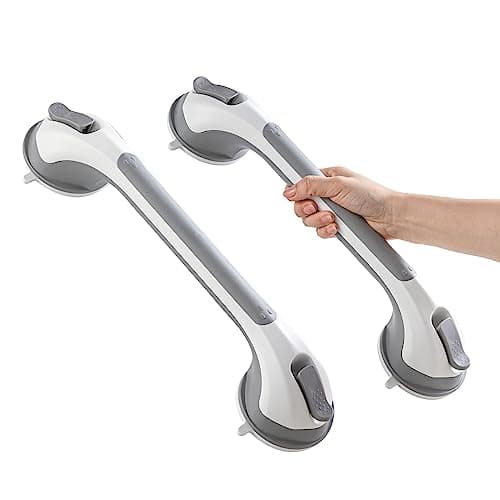
The only bar here that goes up without drilling, and the only one whose own listing tells you not to trust it with your weight: it claims 240 lb per bar and then asks, in the same bullet, that you “don't put all the body weight on the shower grip”. Read that as what it is — a balance aid for a steady hand, on tile 4 in square or bigger, and not a substitute for a bar fixed to the building.

What it gets right

  • No drilling at all, and TAILI states it is removable and reusable without damaging the wall
  • Two locking-latch suction cups per bar, so each one tells you whether it is seated
  • An anti-slip strip on the top of the rail and a curved finger channel underneath
  • The only option here for a bathroom you are not allowed to put a screw into

What to know first

  • TAILI's own instruction: “please don't put all the body weight on the shower grip” — which contradicts the 240 lb figure printed two lines above it
  • Only works on smooth, non-porous, airtight surfaces. Painted wall, drywall, wallpaper, unfinished marble and uneven or textured tile are all ruled out by the maker
  • Needs tiles 4 in square or larger, because a cup spanning a grout line does not seal
  • Nothing warns you when a seated cup starts to let go, which is the failure mode that matters
  • Costs more than either single Moen bar as we write this, for a fixing that is explicitly not load-bearing

Fit-to-You: the nine measurements

TAILI does not publish 1 of 6 of these. Where that is the case, this panel says so rather than guessing. How we compile these

Bar lengthWhether it covers one grab or a whole hand-over-hand move from sitting to standing.
16.8 in, two bars per box

Source: Amazon product listing data (Creators API) · read 2026-10-31

Bar diameterHow thick the bar is. The ADA sets 1.25 to 2 in for a round bar because grip thickness decides how much force a weak hand can put through it.
Not published by the manufacturer
Published load ratingThe rating is only as good as the condition attached to it — and the bar is almost never the part that fails.
“Able to support up to 240 LBS heavy duty EACH”, published in the same bullet as “please don't put all the body weight on the shower grip”

Source: Amazon product listing data (Creators API) · read 2026-10-31

How it mountsWhat actually holds it to the wall. This is the whole safety question.
Two suction cups per bar with locking latches. No screws, removable and reusable

Source: Amazon product listing data (Creators API) · read 2026-10-31

Surface it is allowed onWhere it is allowed to go, which for a suction bar rules out most bathrooms.
Smooth, non-porous, airtight surfaces only — metal, glass, tile, marble, stainless, acrylic — on tiles 4 in square or larger. Explicitly NOT uneven tile, unfinished marble, wallpaper, drywall, porous or painted wall

Source: Amazon product listing data (Creators API) · read 2026-10-31

Grip textureWet hands and soap. A polished bar is the one your hand slides along.
Anti-slip strip along the top of the rail, with a curved finger channel beneath

Source: Amazon product listing data (Creators API) · read 2026-10-31

We have not used this machine. Everything above comes from the manufacturer’s published documentation and the dated retailer listing, with the source given for each figure. Where they don’t publish a number, we say so. We can’t tell you how it feels to ride, how quiet it really is, or how it holds up after two years — and anyone who tells you otherwise without owning one is guessing.
5.Difficulty you set

ProSource Core Balance Disc Trainer, 14 in(ps-2143-bd-red)

ProSource Core Balance Disc Trainer, 14 in
$20.94 · Check price on Amazon

$25.9919% off

Price as of November 22, 2026. #ad How we’re funded

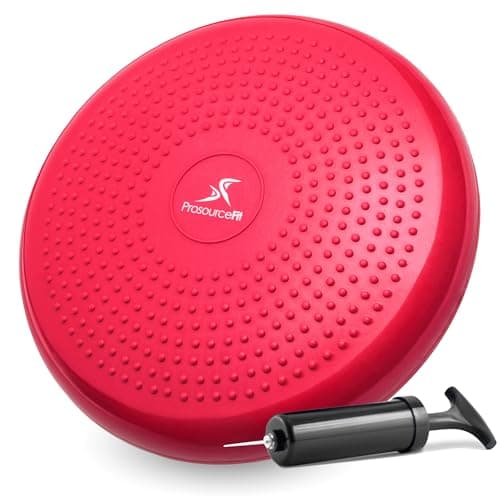
An inflatable disc whose difficulty you set yourself: let air out and it is nearly a firm pad, pump it up and it is genuinely unstable. That adjustability is the reason to choose a cushion over a foam pad — you can start easy and progress without buying twice.

What it gets right

  • You control the challenge by inflation level, so it grows with you
  • Published 14 in diameter, 3 in height, 2.2 lb — all three numbers stated
  • Hand pump included, so no separate purchase
  • Works as a seat cushion too, which is how most people get regular use out of one

What to know first

  • PVC, not foam, so it will feel like a beach ball at high inflation
  • No published weight capacity
  • A round 14 in disc is a one-foot or narrow two-foot stance, not a wide one
  • Inflatables lose air slowly and need topping up

Fit-to-You: the nine measurements

ProSource does not publish 1 of 6 of these. Where that is the case, this panel says so rather than guessing. How we compile these

ThicknessPad height sets the difficulty. Too tall is not 'more effective', it is a fall.
3 in at full inflation, and lower as you let air out

Source: Amazon product listing data (Creators API) · read 2026-08-13

Standing surfaceWhether there is room for two feet, or only one.
14 in diameter

Source: Amazon product listing data (Creators API) · read 2026-08-13

Weight capacitySearched directly, and two of the senior-focused competitors omit it entirely.
Not published by the manufacturer
FirmnessA pad that bottoms out gives no training effect; one that is too soft is unstable.
Set by the user via the included hand pump; no firmness scale published

Source: Amazon product listing data (Creators API) · read 2026-08-13

Non-slip baseWhether you need something solid to hold while you use it — and most people do.
Dual-textured PVC — raised massaging bumps one side, smoother bumps the other

Source: Amazon product listing data (Creators API) · read 2026-08-13

Needs support nearbyWhether you need something solid to hold while you use it — and most people do.
Yes, and more so than a foam pad at high inflation

Source: Amazon product listing data (Creators API) · read 2026-08-13

We have not used this machine. Everything above comes from the manufacturer’s published documentation and the dated retailer listing, with the source given for each figure. Where they don’t publish a number, we say so. We can’t tell you how it feels to ride, how quiet it really is, or how it holds up after two years — and anyone who tells you otherwise without owning one is guessing.
What we found looking for these numbers

We went looking for 30 measurements across the 5machines on this page — the nine that decide whether an older adult can get on, reach the controls, read the screen and hear themselves think. 5 of those 30 are not published by anybody. 1 of these machines publishes the full set.

Step-over height is the worst of them. It is the single measurement that decides whether you can get onto a machine at all, and across everything we checked, not one manufacturer states it. That is not an oversight in a category explicitly marketed to seniors, and the count in each panel above is there so you can see who is doing it.

Where a figure exists, we cite it and date it. Where it doesn’t, the panel says Not published by the manufacturer rather than an estimate dressed up as a fact. You can measure step-over height yourself in about a minute — and if a machine is already in your house, that is the fastest way to settle it.

A load rating without its condition is not a load rating

This is the finding that decides the order, so it goes first. Three of the five products here publish a number for how much they will hold, and the numbers are not comparable, because only one of them says under what circumstances.

Moen publishes 500 lb and then publishes the condition: “when installed in a stud or when using SecureMounts (not included)”. Read the parenthesis. The anchors the rating depends on are a separate purchase, and if the bar goes into plain drywall with the screws in the box, the 500 lb figure describes a situation that does not exist in your bathroom. That is not a criticism of Moen — it is the most honest thing any seller in this category does, because the bar is almost never the part that fails. The wall is. The U.S. Access Board's ADA guidance puts the 250 lbf requirement on the bar, the fastener, the mounting device and the supporting structure together, for exactly this reason.

Gotega publishes “up to 500 pounds of pulling force” and stops there.No stud, no anchor, no fastener type, no test. It also publishes no diameter anywhere in the listing, so there is no way to check it against the ADA's 1.25 to 2 inch range for a round bar. We still rank it third and call it the budget pick, because what it does publish is genuinely useful: two bars in the box, a knurled textured surface on both — which is better for a wet hand than Moen's smooth brushed stainless — concealed screw covers, and stated installation horizontally, vertically or diagonally. Two textured bars for less than one smooth one is a real argument. Just do not read its 500 lb as the same claim Moen is making.

TAILI publishes 240 lb per bar and contradicts itself in the same bullet, asking you not to put all your body weight on the grip. When a seller's number and a seller's warning disagree, we resolve it in favour of the warning, every time. So the suction bar is not a load-bearing bar, and we rank it fourth and recommend it for exactly one situation: a rental or a bathroom where nothing can be drilled. It needs smooth, non-porous, airtight surfaces and tiles at least 4 inches square, because a cup spanning a grout line does not seal, and TAILI rules out painted wall, drywall, wallpaper, unfinished marble and textured tile in its own listing. Its real weakness is that nothing warns you when a seated cup begins to let go, which is the failure mode that matters.

One thing none of them publishes: the mounting height.The ADA specifies 33 to 36 inches for a grab bar and not one of these listings mentions it, so that part is on you or on whoever installs it. We do not give installation advice on this site — stud finding, anchor selection and subfloor are a contractor's or an occupational therapist's job, and getting them wrong is how a bar becomes more dangerous than no bar.

The other half: fifty dollars of training, which is the part people skip

A grab bar changes what happens when you are already falling. It does nothing about how often that moment arrives. The NIA's guidance on falls puts strength and balance work alongside home modification, and lists balance as one of four distinct types of exercise older adults need — naming the specific moves, standing on one foot and heel-to-toe walking, that a soft surface makes harder in a controlled way.

The StrongTek extra-wide pad is the training surface to buy, and the published reason is simple: 19 by 15.8 inches of standing area, against 15.5 by 12.75 on a standard pad. That is roughly half as much usable floor again, and the margin is what allows the small corrective steps the exercise is supposed to produce rather than a step off the edge. It publishes 2.4 inches of thickness, a textured non-slip top and a water-resistant high-density TPE body. It publishes no weight capacity and no firmness figure, which is true of every soft balance product we track.

The ProSource 14 inch disc is the alternative, and it has one property nothing else here does: you set the difficulty yourself. Deflate it and it approaches a firm pad; pump it up with the included hand pump and it becomes genuinely unstable. For someone meant to progress over weeks, that is one purchase rather than two. It publishes a 14 inch diameter, 3 inches of height at full inflation and 2.2 lb. Its honest costs are published too: it is PVC rather than foam, so at high inflation it feels like a beach ball; a round 14 inch surface is a narrow stance rather than a hip-width one; and inflatables lose air slowly and need topping up.

The non-negotiable with either of them: use it within arm's reach of a counter, a worktop or a sturdy chair back, every single time. The pad's entire job is to make standing harder, which by design makes a wobble likelier. That is the training effect and the risk in one sentence, and the published non-slip bases address the pad sliding rather than you. Our printable balance routine is built around that rule.

How to spend the fifty, and what sits just above it

Here is the order we would actually spend it in, and it is not the order of the prices.

If the bathroom has nothing to hold, buy a bar and stop reading. The Moen if the wall will take a screw into a stud or an anchor, the Gotega pair if the budget is tight or two rooms need one each and you want the knurled surface, the TAILI only if drilling is genuinely not allowed — and in that case treat it as a balance aid for a steady hand rather than as something to haul yourself up on, because that is what its own maker says it is.

If the bathroom is already covered, buy the pad.It is the cheapest object in this registry with a plain mechanism behind it, and it addresses the half of the problem a bar cannot touch. If the budget stretches to both — a Gotega pair and a ProSource disc together still land under this cap on our last read — buy both and you have covered the house and the training in one order.

What sits just above fifty dollars is worth knowing. A longer bar: Moen's 30 inch peened-grip model adds length and a textured surface in one, and length is what turns a single grab into a hand-over-hand move from sitting to standing. A rigid wobble board, which is a real step up in difficulty from anything soft and the only balance product in our registry that publishes a weight capacity — 265 lb — though its own listing warns against smooth or wet floors, which rules out a lot of kitchens. Parallel bars, which are the serious home answer for gait practice and are several times this budget; we rank those on the parallel bars shortlist.

And one thing no budget buys. If you are reading this because somebody has already fallen, the equipment is the second conversation rather than the first. The CDC's STEADI framing is screen, assess, intervene — and the NIA is explicit that balance problems have causes worth investigating, from inner ear and blood pressure to medication and vision. None of those is addressed by a grab bar. Have the conversation, then buy the bar, then buy the pad. The full balance equipment shortlist is where to go when the budget is not fifty dollars.

One more thing that now fits inside this budget: a caregiver pager. Two of the four we rank read under fifty dollars on our live check, and for a household where somebody is home but not always in the room, a button on a lanyard is the cheapest useful thing on this site.

General information, not medical advice. Tread & Tone is written by an enthusiast, not a clinician. Nobody here is a doctor, a physical therapist or a trainer, and nothing on this site has been medically reviewed. Talk to your doctor or physical therapist before starting something new, particularly after surgery, a fall, or a change in medication.

Questions people ask

What is the best fall-prevention equipment under $50?

The Moen Home Care 8724 grab bar. It is the only bar in our registry that publishes a load rating with its installation condition attached — 500 lb 'when installed in a stud or when using SecureMounts (not included)' — the only one that publishes a diameter, at 1.25 inches, which is the bottom of the ADA's range for a round gripping surface, and the only one claiming ADA compliance. Its 24 inches of length cover a hand-over-hand move rather than a single grab. The catch is in the parenthesis: the anchors the rating depends on are sold separately.

Can you really prevent falls with $50 of equipment?

You can address both halves of the problem with it, which is more than most budgets on this site manage. A grab bar changes what happens when you are already going; a balance pad changes how often that moment arrives. The NIA's guidance on falls and fractures puts strength and balance work alongside home modification rather than instead of it, and the CDC's STEADI framing is screen, assess, intervene. Equipment is the intervene part. It is not a substitute for the screening conversation with a doctor, especially after a first fall.

Are cheap grab bars safe?

The bar is almost never the part that fails — the wall is — so the question is less about price than about what the listing commits to. Our budget pick, the Gotega 16 inch pair, publishes 'up to 500 pounds of pulling force' with no stud, no anchor and no fastener named, and no diameter published at all, so there is no way to check it against the ADA's 1.25 to 2 inch range. What it does publish is genuinely useful: two knurled bars, better for a wet hand than smooth stainless, with concealed screw covers. Buy it knowing the number is not the same claim Moen is making.

Do suction grab bars work?

As a balance aid for a steady hand, on the right surface. As something to haul yourself up with, no — and the clearest evidence for that is TAILI's own listing, which publishes 240 lb per bar and then asks, in the same bullet, that you do not put all your body weight on the grip. When a seller's figure and a seller's warning disagree we go with the warning. It also needs smooth, non-porous, airtight surfaces and tiles at least 4 inches square, and nothing warns you when a seated cup starts to let go. Buy it for a rental where nothing can be drilled, and for nothing else.

Is a balance pad or a grab bar more useful?

The bar first, if the bathroom has nothing in it. It reduces risk the moment it is on the wall, where training reduces it over months — and the bathroom is the room where the odds are worst. Once something solid is in place, the pad is the better next purchase, because it is the only half of fall prevention that changes how often you need the bar. Both fit inside fifty dollars together on our last price read, which is the real reason this page exists.

What height should a grab bar be mounted at?

The ADA specifies 33 to 36 inches, and not one of the listings in our registry mentions it — so that part is on you or on whoever installs it. We do not give installation advice on this site. Stud location, anchor selection and what is behind the tile are a contractor's or an occupational therapist's job, and a bar fixed into plain drywall with the screws from the box is more dangerous than no bar at all, because it invites you to trust it. The published instructions and a competent installer are the right answer here.

How is this different from your grab bar and balance pad pages?

Those pages each rank one product type with no price cap: the grab bar shortlist compares five bars against the published ADA figures, and the balance pad shortlist ranks the soft training surfaces on standing area and thickness. This page spans both under one budget, which is the decision somebody actually makes with fifty dollars — and it is the only page here that argues for buying one of each rather than the best of one.

Sources

Product measurements are cited individually inside each Fit-to-You panel, against the manufacturer page or dated retailer listing they were read from.

Read next