Resistance Band Exercises for Seniors
The cheapest way to meet the CDC's two-days-a-week strength guideline, with a seated routine you can do from a dining chair — and the honest limits of a rubber band.
Read the guideBands are the cheapest useful thing on this site and the hardest to shop for, because most sets describe their resistance with a color instead of a number. Two of these five publish pounds. Only one of the two starts light enough to be any use.
How this is funded: we earn a commission if you buy through our links, at no extra cost to you. It never changes what we recommend, and every page here names at least one thing we would not buy. Full disclosure.
The short answer
Buy the THERABAND beginner kit. It is the only set we track that publishes its resistance in pounds at a genuinely light starting point — yellow 3 to 4.3 lb, red 3.7 to 5.5 lb, green 4.6 to 6.7 lb — which means you can tell what you are using today and exactly what you are stepping up to. If your hands cannot grip a flat band, buy a set with foam handles instead and accept that it will not publish a number.
Resistance bands are the best-value purchase on this entire site. They cost about as much as a takeaway, they live in a drawer, they work from a chair, and they are the only piece of equipment here that covers the strength half of the CDC’s recommendation for adults 65 and over — which asks for muscle-strengthening activity on at least two days a week on top of the 150 aerobic minutes and separate balance work. A recumbent bike does nothing for that line. A $12 set of bands does.
They are also, strangely, the hardest category on this site to shop for honestly. Most band sets describe their resistance with a color or an adjective rather than a number, which is like selling dumbbells labeled “light” and “heavy” and leaving you to guess. For a buyer who needs to start genuinely gently and then progress in small, deliberate steps, that is not a cosmetic omission — it is the whole decision being withheld.
Resistance in pounds, at a stated stretch. That last clause matters, because a band is not a dumbbell: its resistance rises the further you pull it. A band rated at 4 lb is giving you almost nothing at the start of the movement and 4 lb near the end of it, which is why a credible figure is always a range rather than a single number.
Of the five sets we track, two publish pounds and three do not. The two that do are not alternatives to each other:
The THERABAND beginner kit publishes 3 to 6.7 lb across three bands— yellow 3 to 4.3 lb, red 3.7 to 5.5 lb, green 4.6 to 6.7 lb, each band 5 feet long and 4 inches wide. Those are small numbers and they are supposed to be. They are also color-coded on the scale clinics use, which means if a physical therapist ever says “use the red one” you will know what they mean.
A five-tube set publishes 10, 20, 30, 40 and 50 lb, stackable to a stated 150 lb. Note what that means: its LIGHTEST band is heavier than the THERABAND kit’s STRONGEST one. For somebody who already trains with bands and wants somewhere to progress to, it is the better buy. For an older beginner it is the wrong product, and nothing on the listing says so — it is sold on the 150 lb headline, which is the number least relevant to this reader.
The three that publish no figuredescribe their bands as light, medium and heavy, or publish a thickness in inches (0.01, 0.02 and 0.022 in on one set) which is a real measurement of the wrong thing — thickness correlates with resistance but is not interchangeable with it, and you cannot compare it against anybody else’s band. One of the three is sold specifically for seniors and still will not state a number, which is the most frustrating single fact on this page.
This belongs near the top rather than in a footnote, because unlike most specifications on this site it is a medical question rather than a fit question. Many resistance bands are made of natural rubber, and natural rubber is latex. Latex allergy is common enough in this age group that it is worth checking on every single purchase, and the listings make that unnecessarily hard.
Across the five sets: one publishes TPE and is latex-free, one publishes latex-free outright, one is published as natural rubber and therefore is not suitable, and the THERABAND kit’s own listing contradicts itself — the title and one bullet say non-latex, while a different bullet on the same listing calls them latex bands. We are not going to resolve that for you and we are not going to quietly pick the reading that suits our top pick. If you have a latex allergy, treat that listing as unresolved and confirm with the seller before ordering, or buy one of the two that state latex-free without contradicting themselves.
Two smaller things in the same category of “check before you buy”. Bands perish: they are a consumable, and a band that has gone sticky, chalky or nicked at an edge should be thrown away rather than stretched one more time, because they fail suddenly and they fail toward your face. And if a listing makes clinical claims — one of these states that strength training reduces the symptoms of osteoarthritis, diabetes, osteoporosis, back pain and depression — that is the seller talking, not us. The National Institute on Aging’s own summary of the benefits of activity is the version we would read instead, and it also says to talk to a doctor before starting something new.
A flat band is the most versatile thing in this category. You can loop it round a chair leg, stand on it, put it round both wrists, anchor it in a door — it works in directions a tube with handles cannot, and it is what clinics hand out. All of which is irrelevant if your hand cannot close around a flat strip of rubber and hold it under load.
That is not an unusual problem in this audience; it is one of the commonest. Arthritic finger joints, reduced grip strength and numbness from neuropathy all make a bare band harder to use than the exercise itself is. Foam handles fix exactly that, by moving the load off your fingertips and into a closed fist, and a handled set you will actually use beats a better-specified set you put back in the drawer.
The honest trade is that in this price range, handled tube sets mostly do not publish their resistance in pounds. So the decision is a straight one: if grip is fine, buy the numbered flat bands; if grip is the limiting factor, buy the handles and accept that you are shopping blind on resistance. Either way our band exercises for seniors covers what to actually do with them, and chair exercises for seniors is where to start if standing is the harder part.
A band only works if the other end is held, and this is where the practical failures happen rather than in the rubber itself. Three options, in the order we would try them.
Your own body is the safest anchor.Sitting in a chair with the band under both feet, or looped around one foot, or held in the opposite hand — nothing can come loose, nothing is above you, and you can stop instantly by relaxing. Almost every useful seated movement can be set up this way, which is why the two chair-focused sets here are sold with a flat band or a soft-grip tube rather than a rack of hardware.
A chair leg or a table leg is the next step up, and the thing to check is whether the furniture is heavier than the pull. A dining chair you are not sitting on will slide across a hard floor; the same chair with you in it will not. Loop low, around the leg near the floor rather than near the seat, so the pull cannot tip it.
A door anchor is the one to be careful with.Two of these sets ship one — a strap with a soft block that you shut inside a closed door, so the band pulls against the door frame. It works, and it is how you get a horizontal pull at chest height without a gym. The rules are not optional: use a door that opens towardyou so the pull pushes it shut rather than open, never a sliding or folding door, never a door someone else might open mid-set, and check the anchor is fully through before you load it. If any of that sounds like more than you want to think about, skip the door work entirely — you can reach every muscle group from a chair without it.
What we would not do is anchor to anything at head height or above. A band that lets go under tension travels back along its own line, and the whole point of the seated setups above is that the line never crosses your face. This is also the one real argument for buying the set with the illustrated chart: somebody has already worked out where to put the band for each movement.
Every other product on this site is a machine you buy once. A resistance band is closer to a running shoe: it degrades with use, with heat and with sunlight, and it has a service life rather than a lifespan. None of these five listings publishes one, which is worth saying plainly since it is the same disclosure gap as the resistance figures.
Check them before each session and it takes five seconds.Run the band through your fingers looking for a nick at an edge, a thin spot, a change in color, or a surface that has gone chalky or tacky. Any of those means throw it away. Bands do not sag gradually and warn you — they tear suddenly, at the moment of highest tension, which is the moment your face is closest to it. A replacement costs a few dollars and there is no version of this where keeping a suspect band is the right call.
Store them out of the sun and away from heat.A drawer or the bag they came in is ideal; a sunny windowsill, a radiator, or the back of a car in summer will age rubber faster than exercise does. Keep them dry, do not store them stretched or knotted, and if they came with a storage bag, use it — it is not packaging.
Two things that shorten a band’s life more than anything else:stretching it over jewelry or a watch, and dragging it across a rough floor or a metal chair edge. Both cut the surface. If you use a handled set, inspect the point where the tube meets the buckle as well — on tube sets that junction is the usual failure point rather than the middle of the band, and the five-tube set here adds metal buckles and a door anchor, which is more hardware to check than a single looped band has.
Can you grip a flat band? If yes, buy the THERABAND kit. It is the cheapest option on the page, it is the only one with published pounds in a sensible starting range, and the clinical color code means it talks to your physical therapist. Read the latex note above first.
Are your hands the problem? Buy a handled set. The Gemscream three-piece is the cheaper of the two here and publishes band thickness if not pounds; the Healthy Seniors chair program costs roughly double and earns it with a large-print illustrated chart and video access, which is worth real money if nobody has ever shown you how to use a band.
Do you want one band and a routine, not a kit and a decision? The Curtis Adams senior band is a single latex-free 4 ft band with a ten-exercise poster. It publishes no resistance figure at all, which is the price of its simplicity.
Already training with bands? The five-tube set at 10 to 50 lb is the one with somewhere to go. It is not a beginner purchase and we would not sell it as one.
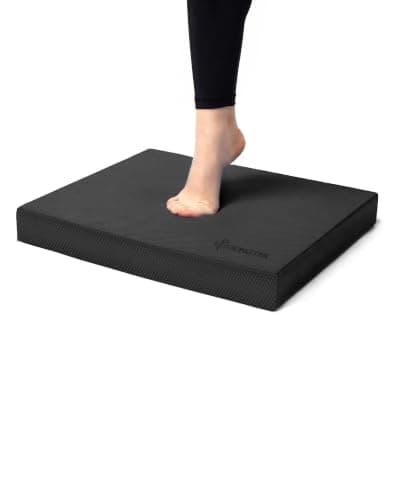
One last piece of perspective, because this page should not oversell its own subject. The NIA treats endurance, strength, balance and flexibility as four separate things you have to do separately. Bands cover one of the four well and contribute a little to a second. They do nothing for your aerobic minutes and nothing for your balance, so a band purchase sits alongside the walking or the cycling and a foam pad for the balance work rather than replacing either. And if you have a chronic condition, the NIA’s guidance on exercising with one is worth reading before you start, and worth raising with whoever manages it.
General information, not medical advice. Tread & Tone is written by an enthusiast, not a clinician. Nobody here is a doctor, a physical therapist or a trainer, and nothing on this site has been medically reviewed. Talk to your doctor or physical therapist before starting something new, particularly after surgery, a fall, or a change in medication.
The lightest one that is still a real effort by the last few repetitions — and to judge that you need a number, which most sets will not give you. The THERABAND beginner kit publishes yellow at 3 to 4.3 lb, red at 3.7 to 5.5 lb and green at 4.6 to 6.7 lb, which is the range an older beginner should actually be working in. Be wary of general-purpose sets sold in pounds: one popular five-band set starts at 10 lb, which is heavier than the strongest band in that THERABAND kit.
It depends entirely on the set, and most will not tell you. Of the five sets we track, two publish pounds: the THERABAND kit at 3 to 6.7 lb across three bands, and a five-tube set at 10, 20, 30, 40 and 50 lb stacking to a stated 150 lb. The other three describe resistance only as light, medium or heavy, or by band thickness in inches. A color or a word is not a measurement, and it means you cannot tell what you are progressing to.
Often yes, and it matters if you have a latex allergy — which is common enough in this age group to check every time. Of the sets we track, one is explicitly TPE and latex-free, one is published as latex-free, one is natural rubber (which is latex), and the THERABAND kit's own listing contradicts itself: the title and one bullet say non-latex while another bullet calls them latex bands. We report that rather than tidying it away. If you have an allergy, confirm with the seller before buying rather than trusting a bullet point.
Bands first for most people, with light dumbbells as a useful addition rather than a replacement. A band's resistance rises as you stretch it, so the hardest point is where you are strongest and the start of the movement is gentle — which is kinder to a joint than a fixed weight. Bands also cost a fraction as much, store in a drawer, and let you work in directions a dumbbell cannot. Dumbbells win on knowing exactly what you lifted and on gripping easily.
Yes. The CDC's guidance for adults 65 and over asks for muscle-strengthening activity on at least two days a week, alongside the aerobic minutes and separate balance work, and it does not specify equipment — working against a band counts. The National Institute on Aging treats strength as one of four distinct types of exercise you need to do separately, so bands are not a substitute for your walking or your balance practice. They are the strength quarter of the picture.
When the last repetition of your set stops being hard. That is also the practical argument for buying a set with published numbers: stepping from a 3 to 4.3 lb band to a 4.6 to 6.7 lb one is a known, modest increase you can plan, whereas going from light to medium on an unnumbered set is a jump of unknown size. If the next band up feels like a wall rather than a step, you have found the limit of a set that would not tell you its figures.
Different jobs, and grip decides it. Flat bands can be looped around a chair leg, a foot or a door anchor and work in almost any direction, which is why clinics use them — but a hand that cannot close around a flat band has nothing to hold. Foam handles solve exactly that problem and are the right answer for arthritic hands or a weak grip. The trade is that handled tube sets in this price range mostly do not publish their resistance in pounds.
Yes, and for a lot of readers that is the best way to start — it removes balance from the exercise entirely so you can concentrate on the movement. Two sets here are built around it: one ships a large-print illustrated chair-exercise chart with video access, and another includes a ten-exercise poster written for older users. If standing tolerance is the constraint rather than strength, our seated-exercise guide covers what to do with no equipment at all.
Product measurements are cited individually inside each Fit-to-You panel, against the manufacturer page or dated retailer listing they were read from.
The cheapest way to meet the CDC's two-days-a-week strength guideline, with a seated routine you can do from a dining chair — and the honest limits of a rubber band.
Read the guideA gentle seated-and-standing routine with a pair of light weights that covers the CDC's two-days-a-week strength guideline — and how to pick a starting weight you will not regret.
Read the guideWhich chair to use — and it matters more than the exercises — followed by a routine that takes twelve minutes.
Read the guideThere is no single best one, and anybody who names one is selling something. The four types the NIA lists, and the one question that picks between them: what has already stopped you?
Read the guideEight movements you can do from a dining chair, and where equipment genuinely adds something rather than just costing money.
Read the guideBest Balance Gear
Pads, cushions, boards and rails ranked by how safely you can start — including the one we tell you not to start on.
Top pick: StrongTek Extra Wide TPE Balance Pad
Price as of October 25, 2026. #ad How we’re funded