What each price band actually buys — from the entry-level step-through frames to the machines over $1,000 — and the point where the extra money stops improving anything a senior buyer needs.
Recumbent bikes span roughly $150 to well over $1,000. Budget step-through frames run about $150 to $250, mid-range and high-capacity models about $300 to $500, brand-name machines roughly $650 to $900, and seated steppers like the Teeter FreeStep $1,000 and up. Price tracks features loosely — not how easy the bike is to use.
The honest answer to how much a recumbent bike costs is that it depends far less on quality than the prices suggest. Machines span from roughly $150 to well over $1,000, and it is tempting to read that spread as cheap-to-good. It is not. Price tracks features — how many resistance levels, how big the display, whether the seat slides on rails — and it tracks them loosely at that. It does not track the thing a senior buyer cares about most, which is how easy the machine is to get on, sit in, and use comfortably day after day. A $200 bike and an $800 bike can be equally accessible, or the cheaper one can be the better fit. So the useful question is not what is the most you could spend, but what each band actually buys you, and where the extra money stops improving anything you need.
The map: what the whole range looks like
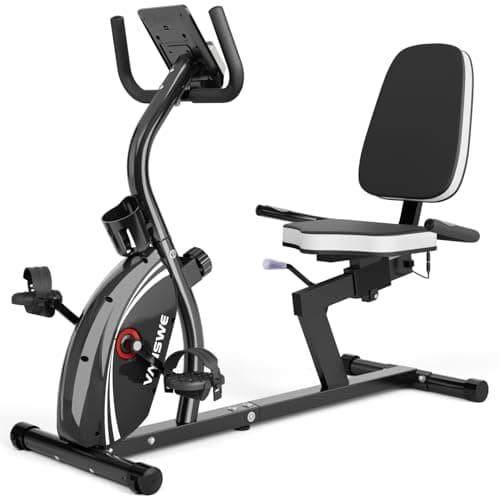
Before the details, here is the shape of the market. At the bottom, roughly $150 to $250, are budget step-through frames — simple, sturdy, no-frills bikes that do the core job. In the middle, roughly $300 to $500, are mid-range and high-capacity models that add a sliding seat, more resistance levels, and heavier weight ratings; this is where the best value for most senior buyers tends to sit. Above that, roughly $650 to $900, are the brand-name machines from makers like Schwinn and Horizon, which sell support and finish as much as function. And beyond $1,000 are the not-quite-bikes — seated steppers such as the Teeter FreeStep that use a different motion entirely. Four bands, and the jump from one to the next buys less than the price gap implies.
The budget band: roughly $150 to $250
This is the entry point, and it is a more serious one than the low price suggests. For roughly $150 to $250 you get a steel step-through frame, around eight resistance levels set with a tension knob, a basic LCD that shows time, distance, and an estimated calorie count, and a seat you slide and lock by hand. The archetype of the band is the Marcy NS-1201R, which strips the category down to what matters and charges accordingly. It is a knob, a seat, and a screen, and for a lot of people that is the whole of what they need. Marcy’s older ME-709 held this slot for years and was sold out everywhere when we last checked, on 15 September 2026.
What you give up at this price is real but narrow. The resistance is magnetic and adjusted by hand rather than from the console, so the steps between levels are coarser and the very lowest setting may not be as feather-light as some stiff or deconditioned riders would like. The seat slides on the frame but does not glide on smooth rails, so adjusting it takes a bit of effort. Weight capacities are usually lower here, often in the 250 to 300 pound range. And the display is informational rather than interactive — no programs, no app, no bells. None of that changes the core benefit of pedaling. A budget bike moves your legs and your heart exactly as well as an expensive one does.
The mid and high-capacity band: roughly $300 to $500
Step up to roughly $300 to $500 and the money starts buying things a senior buyer can actually feel. This is the sweet spot for most people. The seat typically moves on proper sliding rails, often with a one-handed lever, so setting your leg reach is easy rather than a wrestling match — which matters a great deal if more than one person shares the bike or if bending and pulling is itself hard. Resistance usually jumps to around sixteen console-controlled levels, giving you finer, gentler low-end steps to start from. And weight capacities climb, with many frames in this band rated to around 400 to 450 pounds and built wider and sturdier to match.
That last point is why this band matters beyond general polish. If you are a heavier rider, a high-capacity frame is not an indulgence — it is what makes the machine feel solid and safe rather than tippy. Our roundup of the best high-weight-capacity recumbent bikes lives almost entirely in this price range, because a genuinely sturdy, well-rated frame simply costs a bit more to build. For a senior buyer choosing one machine to keep for years, spending here rather than at the very bottom is usually the trade that pays off: the finer resistance and the easy seat are the two upgrades you notice every single session.
The brand-name band: roughly $650 to $900
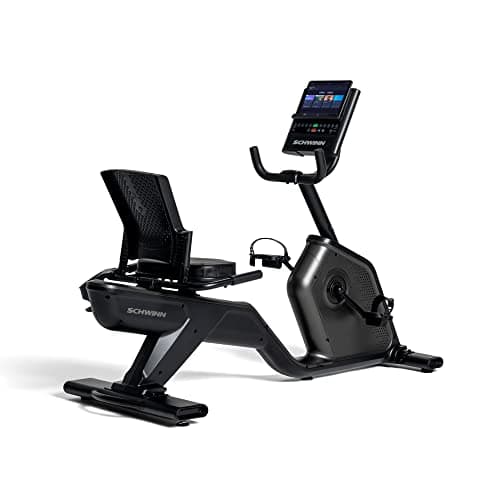
Above the value band, roughly $650 to $900, sit the brand-name machines from established makers like Schwinn and Horizon. What the extra money buys here is worth naming honestly, because it is not nothing and it is not magic either. You get a real parts and support channel — a company to call when a console dies in year three, and replacement pieces that actually exist. You get a bigger, clearer display and often more built-in workout programs. And you get finer resistance still, with smoother transitions between levels and a heavier flywheel that makes the pedal stroke feel more even.
Those are genuine improvements. What they are not is a guarantee of accessibility. A telling detail: even at this price, manufacturers rarely publish a step-over height — the single measurement that best predicts whether a stiff-hipped rider can get a leg across the frame comfortably. You can spend brand-name money and still have to judge that in person. So treat this band as buying longevity, support, and finish, all of which have value, rather than buying an easier machine to use. If those things matter to you, the premium is defensible. If they do not, the money is largely going to a badge and a bigger screen.
The not-quite-bikes: $1,000 and up
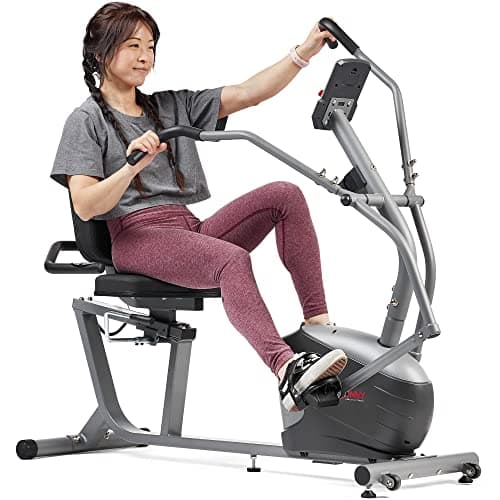
Past $1,000 you leave conventional recumbent bikes behind and enter a different category. The clearest example is the Teeter FreeStep, a seated stepper rather than a bike. Instead of a round pedal stroke, it moves your legs along a gliding, stepping path, which keeps pressure off the knees in a different way and works the legs through a different arc. For some joint situations that motion is genuinely preferable, and that is the reason to consider it — not the price, which is high because the mechanism is more complex and the brand sells into the rehab-adjacent market.
The point for a cost-conscious buyer is to be clear about what you are paying for. You are not buying a better recumbent bike at $1,000 and up; you are buying a different machine that happens to also be seated. If the glide-style motion suits your knees and hips, it can be worth every dollar. If you simply want a comfortable seated bike, spending into this band gets you a different exercise, not a superior version of the one you started shopping for. Match the machine to your joints first, and let the price follow from that.
Where the money stops mattering for this buyer
Now the useful part: the point where extra money stops improving anything a senior buyer needs. One upgrade is worth paying for — finer, gentler low-end resistance. If the lowest setting on a cheap bike still feels like too much, a machine with more, smaller steps lets you start where your body actually is, and that is the difference between riding and giving up. That single feature is often reason enough to move from the budget band into the value band. The Arthritis Foundation notes that cycling’s continuous motion moves the joint through its range and helps lubricate it, and a resistance you can actually sustain is what keeps that gentle motion going.
Almost everything above that stops mattering. Bigger touchscreens, streaming apps, virtual classes, and the monthly subscriptions that come with them add cost and add nothing to whether the pedaling helps you. They are entertainment, and there is no shame in wanting entertainment, but do not mistake it for a health feature you are obliged to buy. The math that should govern the whole decision is simple. The CDC recommends at least 150 minutes a week of moderate activity for adults 65 and over, and those minutes come from the bike you climb onto, not the one you admired and left in the spare room. The cheapest machine you will actually ride beats the most expensive one you will not, every time.
A brief, honest word on the used market, since it is the one real way to buy above your band for less. A gently used recumbent bike from a private seller can be a genuine bargain, but inspect it in person before you hand over money — sit in it, run the resistance through its full range, and check that the seat slide and console actually work. And remember these machines are heavy and awkward, so plan how you will move it and where it will live before you commit. A good used bike is a smart buy; a bad one is heavy, non-refundable regret.
So how much does a recumbent bike cost? Anywhere from roughly $150 to well over $1,000, but the number that matters to you is far narrower than that. Most senior buyers are best served somewhere between the budget band and the value band — a machine that fits your body, starts gently enough, and is sturdy enough for your weight, without paying for screens and subscriptions that do not move your legs. To turn these bands into real models with real, current prices, start with the best budget recumbent bikes and the best recumbent bikes for seniors, and read our guide to choosing a recumbent bike to match one to your joints and your room before you spend a dollar.
General information, not medical advice. Tread & Tone is written by an enthusiast, not a clinician. Nobody here is a doctor, a physical therapist or a trainer, and nothing on this site has been medically reviewed. Talk to your doctor or physical therapist before starting something new, particularly after surgery, a fall, or a change in medication.
Questions people ask
How much should I expect to spend on a recumbent bike?+
Recumbent bikes run from roughly $150 for a basic step-through frame to well over $1,000 for a seated stepper like the Teeter FreeStep. For most senior buyers the useful money sits lower than people expect — a solid, comfortable machine that a senior will actually ride most often lands somewhere in the roughly $300 to $500 range, and plenty of people are perfectly happy with a $150 to $250 budget bike. Price tracks features loosely, not accessibility, so a more expensive machine is not automatically an easier one to get on and off.
Is a cheap recumbent bike worth it?+
For a lot of people, yes. A budget step-through bike in the roughly $150 to $250 band gives you a steel frame, around eight resistance levels on a knob, and a basic display — which is genuinely enough to pedal gently and often. What you give up is finer resistance, a sliding seat, and a higher weight rating, not the core benefit of the exercise. The bike you will actually ride beats the expensive one you will not, so a cheap bike that fits your body and gets used is money well spent.
Why do some recumbent bikes cost over $1,000?+
Usually because they are not quite recumbent bikes. The Teeter FreeStep, for example, is a seated stepper that moves your legs along a different, glide-style path rather than a round pedal stroke, and that different mechanism sits at $1,000 and up. Among conventional recumbent bikes, the extra money at the brand-name end mostly buys a parts channel, phone support, a bigger display, and finer resistance steps — useful things, but not the ones that decide whether a senior can get on and off comfortably.
Do I need to pay more for a higher weight capacity?+
Sometimes, and it is one of the few upgrades worth paying for. Budget bikes often cap out lower, while the roughly $300 to $500 band is where you find frames rated to around 400 to 450 pounds along with sturdier, wider seats. If you are a heavier rider, that capacity is not a luxury — it is what makes the machine stable and reassuring to use. It is a specific reason to step up a band rather than a general one.
Is it worth buying a used recumbent bike?+
It can save real money, with two honest cautions. First, inspect it in person before you pay — sit on it, work the resistance through its range, and check the seat slide and the console. Second, these machines are heavy and awkward to move, so factor in how you will get it home and into the room where it will live. A good used bike from a private seller can be a bargain, but a bad one is hard to return and hard to shift.
Where can I see actual prices for specific bikes?+
Because live prices change constantly and this guide only works in rough bands, the place to see current numbers is our shortlists. The budget roundup and the high-capacity roundup line up specific machines with their current listings, and the how-to-choose guide walks you through matching a bike to your body and your room before you spend anything. Start there when you are ready to compare real models rather than bands.
CDC — Older Adult Activity: An Overview — At least 150 minutes a week of moderate-intensity activity, 2 days of muscle strengthening, plus balance activities for adults 65 and over (read July 24, 2026)
Product measurements are cited individually inside each Fit-to-You panel, against the manufacturer page or dated retailer listing they were read from.
Step-through bikes around $300 and under that still publish a real weight capacity and seat range — ranked on value, with the one we tell you to skip even at this price.
The handful of measurements that actually decide whether a seated bike fits your body and your room — seat range, capacity, resistance control and step-through — and the specs you are paying for that do not matter.