Exercise Equipment After a Knee Replacement
Which low-impact machines people commonly return to after knee surgery, why the seated ones come first, and the rule that outranks anything on this page: follow your surgeon.
Read the guideIt can be — MedlinePlus tells discharged patients to ask about a stationary bicycle, and this is the twenty-dollar version of one. What decides it is pedal height, how low the resistance goes, and whether you can turn the cranks at all yet.
How this is funded: we earn a commission if you buy through our links, at no extra cost to you. It never changes what we recommend, and every page here names at least one thing we would not buy. Full disclosure.
The short answer
Potentially yes, with your surgeon’s or therapist’s say-so first. MedlinePlus’s own knee-replacement discharge instructions tell patients to ask about using a stationary bicycle, and a pedal exerciser is the cheapest, smallest version of that machine. Two published numbers decide which one: pedal height (7.4 to 11.7 inches across the units we track, with only one publishing an adjustable range) and how low the resistance goes. If you cannot yet turn the cranks at all, that is a conversation for your therapist, not a reason to buy a motor.
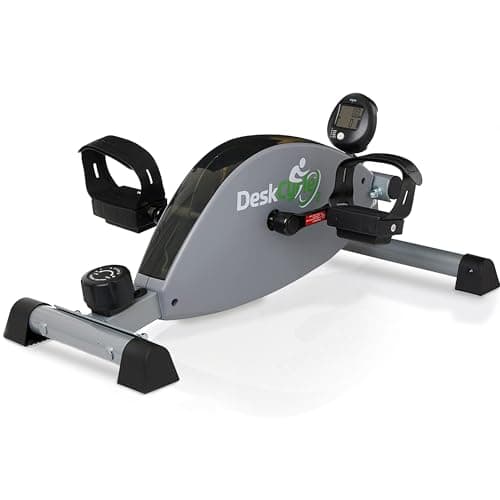
A pedal exerciser is about the least impressive piece of fitness equipment there is: a weighted frame, two cranks, a tension knob and a small display, sitting on the floor in front of a chair. After a knee replacement it is also one of the most commonly recommended things to buy, and that is not an accident. The motion it provides — repeated, controlled, supported knee flexion with no weight through the joint — is close to what a therapist will have you doing anyway, and it is available from the armchair without getting up.
We need to be straight about the boundary before anything else. This page is about which machine publishes which specifications. It is not a rehabilitation plan, and we are not qualified to write you one. Your surgeon and your physical therapist know your operation, your range of motion and your weight-bearing restrictions; we know what is in the listings. Use the second to shop once the first have told you to.
It is worth quoting, because it is both more permissive and more specific than people expect. The MedlinePlus Medical Encyclopedia’s discharge instructions for knee joint replacement tell patients: “Ask your surgeon or physical therapist about using a stationary bicycle and swimming as extra exercises to build your muscles and bones.”
Three things follow from that sentence. First, a bicycle-type motion is on the listrather than being something to avoid — it is named as a way to build muscle and bone. Second, it is described as extra, alongside the instruction to “do the exercises your physical therapist taught you on your own each day”. A pedal unit is an addition to the program, not a replacement for it. Third, the permission is explicitly yours to ask for, which is the part that should decide your order of operations.
One more line from the same page is relevant to where you put the thing: patients are told to try not to sit for more than 45 minutes at a time. A pedal unit under the armchair can break up sitting, which is useful. It can also become a reason to stay in the chair longer, which is not. Worth being honest with yourself about which one it will be.
Pedal height, because it sets how far the knee has to bend.On a seated pedal unit the cranks are fixed at one height and your chair sets the rest of the geometry, so the unit’s own height is the variable you are buying. Published figures across the units we track run from 7.4 inches to 11.7 inches — a four-inch spread, which on a knee being nursed through its range is not a small difference. Only one unit publishes an adjustable height at all, giving 9 to 10 inches and stating that it clears desks from 27 inches. Everybody else publishes a single overall height, and some publish nothing.
If your therapist has given you a flexion range to work within, this is the specification to take to them. A taller unit asks for more bend at the top of the stroke; a lower one asks for less.
How low the resistance goes, because early on the answer should be “almost none”.Here the category divides into three published approaches. One unit publishes resistance in actual pounds — eight magnetic settings up to 39 lb — which is the only figure in the category you can compare against anything. One publishes stepless micro-adjustment rather than fixed levels, which means the gentlest possible starting point because you are not jumping from level one to level two. The rest publish “adjustable” with no range at all, and one well-known unit publishes no resistance information whatsoever despite sitting at the top of the price band.
A third factor, which is not a specification so much as a question: can you turn the cranks at all yet?Most of these units are self-powered — you provide the motion. One is motorised, with a published 60 W motor and forward and reverse, and it exists for people who cannot start the movement themselves. That is a different product category rather than a fancier version of the same thing, and passive movement is not the same as exercise you perform. If you are wondering whether you need it, the person to ask is your therapist.
| Machine | Pedal height | Resistance range | Motorized or self-powered | Weight capacity |
|---|---|---|---|---|
| DeskCycle DeskCycle 2 Under Desk Bike | Adjustable 9 in to 10 in; stated to fit desks as low as 27 in | 8 magnetic settings, up to 39 lb | Self-powered. You turn the pedals | Not published by the manufacturer |
| Sunny Health & Fitness Under Desk Smart Mini Pedal Exerciser | 11.7 in overall height, not adjustable | Stepless micro-adjustment; no numeric range published | Self-powered | Not published by the manufacturer |
| MERACH Under Desk Elliptical MR-E32 | 7.4 in overall height, not adjustable | 12 manual speed levels plus 12 automatic programs (P1–P12) | Motorized, 60 W, with forward and reverse | Not published by the manufacturer |
| Drive Medical Deluxe Folding Pedal Exerciser RTL10273 | Listing dimension field says 7.6 in high; the same listing's text says 17 in high. Both are published and they disagree | Adjustable via a tension knob; no range published | Self-powered | Not published by the manufacturer |
Look down the last column: not one of these units publishes a weight capacity. That is the category’s standing gap, and it is a strange one on a product sold for rehabilitation. It matters less than it would on something you stand on, because the unit is taking your feet rather than your body weight, but it is still a question nobody will answer. Look down the pedal-height column and you get the other finding — one adjustable range, three fixed numbers, and a four-inch spread between the lowest and the highest.
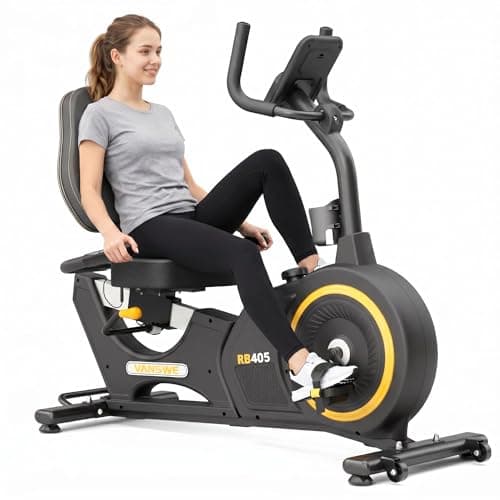
A pedal unit is a compromise, and it is worth knowing what you are compromising. If you have the floor space and the budget, a recumbent bike does the same motion better in three ways: your back is supported, the seat distance is adjustable so you can control exactly how far the knee bends, and the resistance range is wider at both ends. That middle point is the important one after a replacement — seat position is how you manage flexion, and a chair is a far blunter instrument than a sliding seat rail.
That is why our knee-replacement bike shortlist is ranked on published seat travel, and why it favours the machines with a continuous slider over the ones with pre-drilled notches. If you are choosing between the two categories rather than within one, our pedal exerciser versus recumbent bike comparison is the page for that.
Where the pedal unit genuinely winsis cost, storage and immediacy. It is a fraction of the price, it lives under a chair, and it requires no transfer onto a machine at all — which in the first weeks after surgery, when getting onto anything is a project, is not a small advantage. Plenty of people buy the pedal unit first and the bike later, and that is a perfectly sensible order.
Your therapist’s instructions outrank everything below. With that said, four practical notes that come from the specifications rather than from clinical practice.
Set the chair before you set the resistance. The geometry is doing most of the work here: how far the chair sits from the unit decides how much the knee bends, and that is the variable to get right first. Our guide to using a pedal exerciser walks through the setup.
Make sure the unit cannot walk away. The most common complaint about cheap pedal units is that they slide across a hard floor, which turns a controlled motion into a chase. One unit in our registry publishes four anti-slip rubber pads for exactly this reason; on a unit that does not, a rubber mat under it is a two-dollar fix.
Start at the bottom of the resistance range and add minutes, not tension. The point of the stepless and the pounds-published units above is that the bottom of the range is where recovery happens. Minutes are also what accumulate toward the activity the CDC counts once you are back to ordinary exercise.
Treat next-day swelling as information.More swelling or more pain the morning after than before means the session was too long or too hard. That is worth reporting at your next appointment rather than working through, and it is also worth saying that straightforward osteoarthritis guidance — movement helps the joint rather than aggravating it — is about a managed dose, not a maximal one.
General information, not medical advice. Tread & Tone is written by an enthusiast, not a clinician. Nobody here is a doctor, a physical therapist or a trainer, and nothing on this site has been medically reviewed. Talk to your doctor or physical therapist before starting something new, particularly after surgery, a fall, or a change in medication.
It can be a useful piece of kit, with one firm condition: your surgeon or physical therapist should be the one who says when to start and how much. MedlinePlus's own discharge instructions for knee joint replacement tell patients to 'ask your surgeon or physical therapist about using a stationary bicycle' as extra exercise, and a pedal exerciser is the smallest, cheapest version of that machine. What it is not is a substitute for the exercises your therapist taught you — MedlinePlus is equally clear that you should do those each day.
When your surgeon or therapist tells you, and not before. The timing depends on your operation, your progress and how much weight you are allowed to put through the leg — MedlinePlus notes that your surgeon or physical therapist will tell you when you can start putting weight on your leg and how much is OK. Bring the specific machine into that conversation if you can, because a therapist's answer may depend on the pedal height and how low the resistance goes.
A recumbent bike is the better machine if you have the room and the budget; the pedal unit is the better machine if you do not, or if you want something you can use from the chair you are already sitting in. The bike gives you a supported back, a seat you can set precisely — which is how you control how far the knee bends — and a proper resistance range. We rank those on our knee-replacement shortlist, which is built on published seat travel for exactly this reason.
Lower is generally easier to get your foot onto and asks less of the knee at the top of the stroke, and the published figures across the units we track range from 7.4 to 11.7 inches. Only one publishes an adjustable range — 9 to 10 inches — and states the desk height it clears at 27 inches. Everybody else gives a single fixed overall height or nothing. Since knee flexion is the thing being managed after a replacement, this is a specification worth asking your therapist about rather than guessing at.
Only if turning the cranks yourself is genuinely not available, and that is a clinical judgement rather than a shopping preference. A motorised unit moves your legs for you, which is passive movement — not the same thing as exercise you perform, and not the same thing as the strengthening your therapist is asking for. It has a real place for somebody who cannot start the motion, and the one in our registry publishes a 60 W motor with forward and reverse. Ask before you buy it.
Follow your therapist's numbers, not ours. What we can add is a practical note from MedlinePlus's discharge instructions, which tell patients to try not to sit for more than 45 minutes at a time — a pedal unit under the chair is one way to break up sitting rather than extend it. Little and often tends to suit a recovering knee better than one long session, and any increase in swelling or pain the following day is information worth passing on at your next appointment.
Almost never, and it is the biggest documentation gap in the category. Not one of the seated pedal units in our registry publishes a weight capacity or a maximum user weight. That is less critical than on a machine you stand on, since the unit takes your feet rather than your body, but it is still a strange thing for a maker to leave blank on a product sold for rehabilitation. We count the blanks rather than filling them in.
Product measurements are cited individually inside each Fit-to-You panel, against the manufacturer page or dated retailer listing they were read from.
Which low-impact machines people commonly return to after knee surgery, why the seated ones come first, and the rule that outranks anything on this page: follow your surgeon.
Read the guideBest for Knee Replacement
Early on the limit is how far the knee will bend, and that is set by seat distance — so what decides it is which bikes slide continuously instead of stopping at pre-drilled holes.
Top pick: VANSWE Recumbent Exercise Bike, 450 lb capacity
Price as of October 23, 2026. #ad How we’re funded
Best Pedal Exerciser
Pedal height is the spec that decides whether your knees hit the desk, and exactly one manufacturer publishes it as a range.
Top pick: DeskCycle DeskCycle 2 Under Desk Bike
Price as of October 23, 2026. #ad How we’re funded
Where to put it, how to stop it sliding, how to set the tension and how long to go for — the small setup details that decide whether a set of pedals becomes a daily habit or a closet ornament.
Read the guideA $50 set of pedals under your own armchair against a full seated bike. When the smaller thing is the smarter buy, and when it isn't enough.
Read the guideEight movements you can do from a dining chair, and where equipment genuinely adds something rather than just costing money.
Read the guide