Treadmill Cushioning, Explained
What a 'cushioned deck' really is, why it matters more past 60 than at any other age, and how to tell a genuine system from a marketing word.
Read the guideMost treadmill knee pain traces to three things you can change without buying anything — speed, stride and the deck under you. Fix those first, and know the signs that mean it's time to stop and ask someone qualified.
The short answer
Most treadmill knee pain comes from walking too fast — which forces a longer, harder stride — from landing heel-first, from a hard deck, or from worn shoes. All of it is fixable without buying anything. Sharp or one-sided pain, or pain worse the next morning, means stop and see a doctor or physical therapist.
Knees are honest. A treadmill will not tell you it is set up wrong, but your knees will, often within the first few minutes of a walk. The good news is that the usual causes are things you control from the console or the shoe rack, not things you fix with a bigger purchase. Work through the free changes first. Most of the time, one of them is the whole answer.
The one thing we will not do is diagnose you. Nobody producing this site is a doctor or a physical therapist, and knee pain has causes that no amount of treadmill tuning touches. This guide is about the equipment and how you use it. If the pattern of your pain matches the warning signs near the end, treat that section as the important one and the rest as background.
Before you blame the treadmill, look at how it is set, because the two most common causes of knee pain are decisions you are making rather than faults in the equipment.
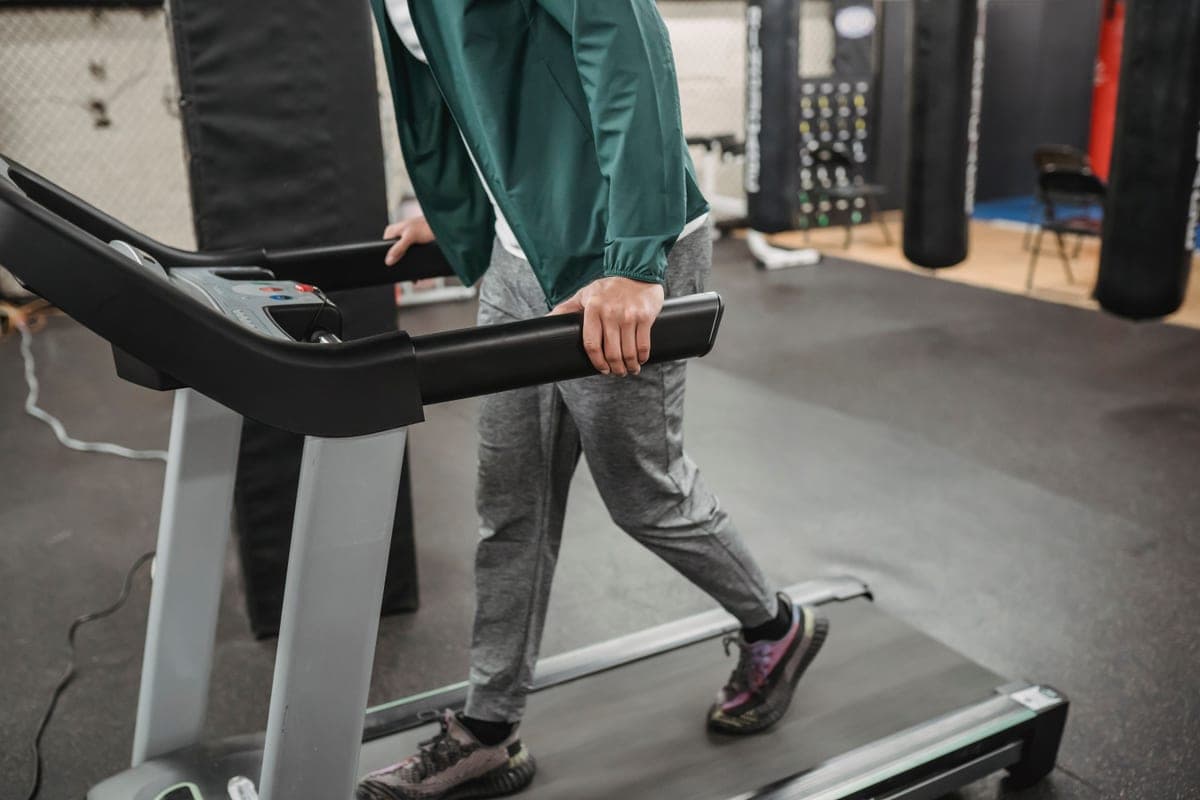
Speed is the first one.When you push the pace past your natural walking speed, your body does not simply move your legs faster — it reaches the front foot further out to cover more ground. That longer stride lands harder, further in front of your body, and lands on the heel with the leg nearly straight. A straight leg has nothing to absorb the impact with, so it goes into the knee. Slow the belt down until your stride feels short and comfortable and your foot lands under you rather than out ahead. You lose nothing that matters: the goal of walking indoors is regular, sustainable movement, not speed. The CDC’s activity guidance for adults 65 and over is built around 150 minutes a week of moderate activity, and moderate is a pace you can hold a conversation at — not a pace that makes your knees ache.
The rails are the second. It is tempting, especially when you feel unsteady, to lean on the handrails or hang your weight off them. But leaning forward shifts your posture and pushes your stride out in front of you, which is exactly the pattern that hurts the knee. Hanging off the rails does something worse: it lets you walk at a speed your legs cannot actually keep up with, so you overstride to catch the belt. Rest a hand on the rail for steadiness if you need one, but do not let it carry you. If you cannot walk at a given speed without gripping the rails, that speed is too fast, full stop.
Incline is the third setting to check. A gentle rise can be kinder to the knee than dead flat, because it naturally shortens your stride and flattens your footstrike. But a steep incline loads the joint harder on every step, bending it deeper while it carries your weight, and a sensitive knee will notice quickly. If you use incline, add it in small amounts and drop it back at the first complaint. Our guide to what incline walking actually does covers how to build it in without overdoing it.
Once the settings are right, the next variable is the surface. Every step you take on a treadmill sends a shock up through your foot, and the deck decides how much of it comes back to you.
A well-cushioned deck flexes slightly under each footfall and absorbs a share of the impact before it reaches your joints. A thin, hard deck — the kind you find on the cheapest machines and on many bare-bones walking pads — does almost none of that, so more of every step travels straight up the leg into the knee and hip. On a hard floor over a hard deck, you are essentially walking on concrete indoors. This is not a small difference over a thirty-minute walk; it is thousands of steps, each one a little harsher than it needed to be.
The reason this matters for knees specifically is the same reason gentle movement is recommended in the first place. The Arthritis Foundation explains that movement helps osteoarthritis rather than aggravating it — a joint that keeps moving stays lubricated, and the muscles that support it stay strong. But that holds for low-impact movement. The lower the impact of each step, the more walking you can do before the joint has had enough, which means a cushioned deck is not a luxury for a bad knee — it is what lets you get the miles in at all.
If you want to understand what actually makes one deck softer than another, and why “shock absorption” on a spec sheet is not all equal, our explainer on treadmill cushioning goes into the mechanics. And if you are shopping rather than adjusting, the machines we rank for a gentler ride are on our best treadmills for seniors page, where deck cushioning is one of the things we weigh most heavily.
The last free fixes are about you rather than the machine, and they are the ones people skip because they feel too simple to matter. They matter.
Stride.Let your stride be short and natural. The instinct on a treadmill is to stretch out and land the heel well in front of you, partly because the belt is moving toward you and partly because it feels like you are covering more ground. That reaching, heel-first landing is one of the hardest things you can do to a knee, because the leg is straight at the moment of impact. Aim to have your foot come down roughly underneath you, with a soft, rolling contact rather than a hard heel strike. If that feels awkward, the belt is almost always too fast — slow it down and the natural stride comes back on its own.
Shoes.Supportive, closed, laced shoes with real cushioning left in them do a surprising amount of the work. A shoe that has been walked flat has lost the structure that spreads each landing across the whole foot, so the shock funnels straight up the leg. You do not need expensive trainers — you need shoes that are not worn out, that stay firmly on your foot, and that grip the belt. Slippers, socks and backless sandals are not shoes for this purpose.
Warm-up. Give the knee a few gentle minutes before you ask anything of it. Start the belt at its slowest speed and walk easy for two or three minutes before you build to your real pace. A cold joint is a stiff joint, and stiffness is where a lot of early-walk aches come from.
Then use the test that matters more than anything you feel during the walk: the next morning. Stiffness that eases as you get moving is normal and usually nothing to worry about. Pain that builds the longer you walk, or a knee that is clearly worse the day after, is the signal to back off — less speed, less time, less incline, or a rest day. Judge the walk by how the knee feels twelve hours later, not by how it feels at minute ten.
Some knee pain is not a settings problem, and pretending otherwise is how people hurt themselves. A site that sells treadmills should be willing to say when a treadmill is the wrong thing to be standing on.
Stop and see a doctor or physical therapistif the pain is sharp rather than achy, if it came on suddenly, if it is clearly in one knee and not the other, or if it comes with swelling, clicking, or a sense that the knee might give way. The same goes if the knee is post-surgical, recently injured, or has changed noticeably in the last little while. None of that is something to walk off, and none of it is something a website can assess. A knee that buckles is also a fall risk in its own right — the CDC reports that more than one in four adults aged 65 and over falls each year, and a moving belt is not the place to find out whether your knee will hold. Get it looked at first.
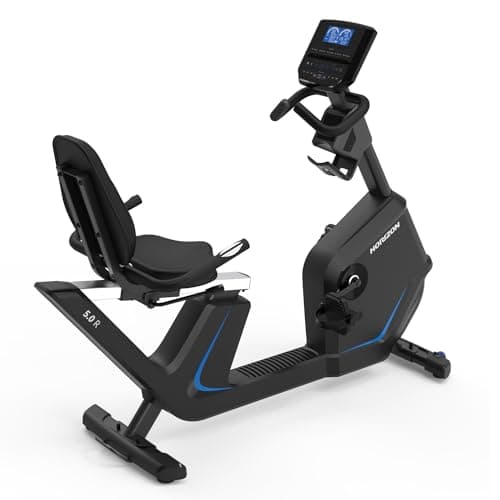
If any footstrike aggravates it— if the problem is the impact of your foot hitting the belt at all, not your pace or your shoes — then the answer may be to take the weight off your feet entirely. On a recumbent bike you are seated, so your body weight rests on the seat and the knee moves a pedal instead of absorbing a landing thousands of times a walk. The Arthritis Foundation lists cycling among its low-impact ways to work out with arthritis, alongside walking and water exercise. If the treadmill and the bike both belong in the conversation, our recumbent bikes for bad knees page walks through when the seated option is the smarter one.
Be honest with yourself about which situation you are in. If you can walk comfortably once the speed, deck, stride and shoes are sorted, the treadmill is the right tool and you should keep it. If you cannot — if the pain is there no matter how you set things — that is not a failure of nerve, it is information, and the sensible next moves are a professional opinion and a machine that keeps your feet off the ground.
General information, not medical advice. Tread & Tone is written by an enthusiast, not a clinician. Nobody here is a doctor, a physical therapist or a trainer, and nothing on this site has been medically reviewed. Talk to your doctor or physical therapist before starting something new, particularly after surgery, a fall, or a change in medication.
Usually one of four things, and all of them are free to fix. You are walking faster than your natural pace, which lengthens your stride and makes each landing harder; you are reaching your foot out in front and landing heel-first; the deck is thin and hard, so more of each step comes back up through the joint; or your shoes are worn flat. Change those before you change machines. If the pain is sharp, one-sided, or worse the next morning, stop and see a doctor or physical therapist instead.
Generally the opposite. The Arthritis Foundation explains that movement helps osteoarthritis rather than aggravating it, because a joint that keeps moving stays better lubricated and the muscles around it stay stronger. What arthritic knees object to is not walking but pounding — too fast, too far, too soon, on too hard a surface. Walk at a comfortable pace on a cushioned deck and build up slowly, and you are giving the joint the gentle, repeated motion it actually wants. If a specific knee reacts badly to any walking at all, that is a conversation for your doctor, not a website.
No, and nobody on this site is qualified to tell you otherwise. Mild stiffness that loosens up as you warm up is different from pain that builds the longer you walk, or a knee that is worse the following morning. The first is usually fine; the second means back off. Pain is information, not weakness, and pushing through it on a moving belt is a good way to turn a small problem into a bigger one. If it keeps happening, stop and talk to your doctor or physical therapist — equipment is not a treatment plan.
It depends on the angle and the knee. A gentle incline can actually take load off the front of the knee by shortening your stride and encouraging a flatter footstrike, which is part of why many people find a slight rise more comfortable than dead flat. A steep incline does the reverse: it bends the knee more under load on every step and can light up a sensitive joint quickly. Start flat, add incline in small amounts, and drop it back the moment the knee complains.
If any footstrike hurts — if the problem is the impact of your foot hitting the belt at all, rather than your pace or your shoes — a recumbent bike removes it. Seated, your weight rests on the seat instead of coming down through the knee, so the joint moves a pedal instead of also absorbing a landing. The Arthritis Foundation lists cycling among its low-impact options for arthritic joints. A treadmill is the better tool if you can walk comfortably once the settings are right; a bike is the better tool if you cannot.
Yes, more than most people expect, and it is the cheapest fix on this list. A worn-out shoe has lost the cushioning and the structure that spread each landing across your foot, so the shock goes straight up the leg. Supportive, closed, laced shoes that still have life in them absorb a real share of every step. You do not need expensive running shoes — you need shoes that are not flattened, that stay firmly on your foot, and that grip the belt.
Product measurements are cited individually inside each Fit-to-You panel, against the manufacturer page or dated retailer listing they were read from.
What a 'cushioned deck' really is, why it matters more past 60 than at any other age, and how to tell a genuine system from a marketing word.
Read the guideBest Treadmill
Step-up height, minimum speed and handrail length — the three numbers that decide it, and which machines publish them.
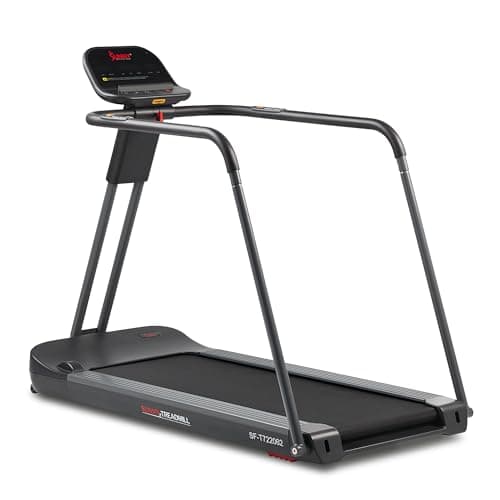
Top pick: Sunny Health & Fitness Treadmill with Extended Safety Handrails, Low Deck
Best for Bad Knees
Resistance granularity is the whole question here. The machines that can be set genuinely light, and the ones whose lowest setting is already too much.
Top pick: Horizon Fitness 5.0 R Recumbent Bike
Which low-impact machines people commonly return to after knee surgery, why the seated ones come first, and the rule that outranks anything on this page: follow your surgeon.
Read the guide