Tread & Tone

The Best Arm Exercisers for Seniors

Our pick is the KEAJVXT arm bike, because it is the only unit here that clamps to the table instead of trusting a rubber cup to hold it. Ranked on what holds the machine still, whether a motor turns the cranks, and whether one arm can work without the other.

By Stephen V.Last updated How we choose

How this is funded: we earn a commission if you buy through our links, at no extra cost to you. It never changes what we recommend, and every page here names at least one thing we would not buy. Full disclosure.

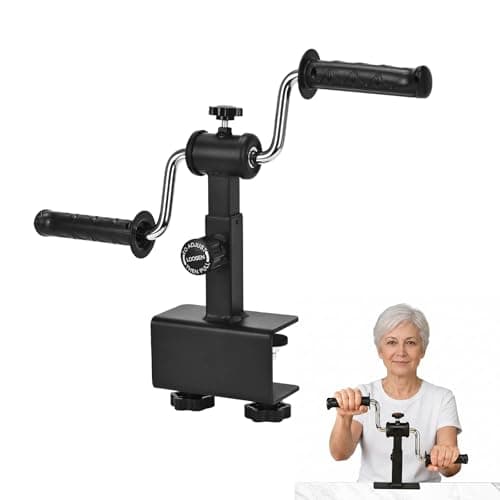
The pick is the KEAJVXT arm bike, and it wins on the least glamorous specification in this entire category: it bolts to the table. KEAJVXT publishes a clamp for tabletops between 0.4 and 1.95 inches thick, with a silicone pad to protect the surface. Everything else on this page is held down by suction cups, by its own weight, or by nothing at all — and the sliding is the single most common reason an arm exerciser ends up in a closet after two weeks.

That is the whole problem with this aisle. Search “arm bike” or “pedal exerciser for arms” and you get dozens of nearly identical listings, all photographed on a glass table, all promising strong suction, almost none of them publishing the one measurement that decides whether it stays put. So we ranked these seven on what each seller will actually state about how the unit is held in place, then on whether a motor turns the cranks or you do, then on whether a single arm can work independently, and last on what each listing publishes at all.

Who this page is for: somebody whose legs are not the part that needs work. That might be an arm or shoulder rehabilitating after surgery, a hand recovering coordination after a stroke, a shoulder stiff from months of sitting, or simply the reality that the person doing the exercise cannot get out of their chair but can still move their arms. If the legs are the goal, you want our pedal exerciser shortlist instead, and if the problem is that the legs cannot turn the cranks at all, the motorized pedal page is the one that ranks units on exactly that.

One honest warning before the list. Not one of the seven machines here publishes a user weight capacity, not one publishes a resistance range in any unit you could compare against another product, and five of the seven publish no decibel figure. This is the least-documented corner of home fitness we have surveyed, and the ranking below reflects who publishes something checkable rather than who makes the boldest claim.

Quick picks

Ranked on the published accessibility measurements and on who each machine actually suits. Select a row to jump to the full write-up. The last column is the number of the nine measurements the manufacturer will not publish — we have not used any of these machines, and here is exactly what we did instead.

#MachineBest forSpecs withheldPrice
1
KEAJVXT Arm Bike with Desktop Clamp
KEAJVXT Arm Bike with Desktop Clamp

Arms only, bolted down

Clamped, not suctioned3of 7
$45.99 · Check price on Amazon

Price as of October 11, 2026. #ad How we’re funded

2
Pukalia Arm Bike Pedal Exerciser BB2025

Pukalia Arm Bike Pedal Exerciser BB2025

Weak grip, four suction cups

Best for a weak grip3of 7
$42.99 · Check price on Amazon

$47.499% off

Price as of October 11, 2026. #ad How we’re funded

3
Jeogejin Hand Bike with Three Training Modes

Jeogejin Hand Bike with Three Training Modes

One arm at a time

One arm at a time3of 7
$49.99 · Check price on Amazon

$59.9917% off

Price as of October 11, 2026. #ad How we’re funded

4
MDODM Sway Exerciser, Upper and Lower Limb Trainer

MDODM Sway Exerciser, Upper and Lower Limb Trainer

Arms and legs, no table needed

No table required4of 7
$97.97 · Check price on Amazon

Price as of October 11, 2026. #ad How we’re funded

5
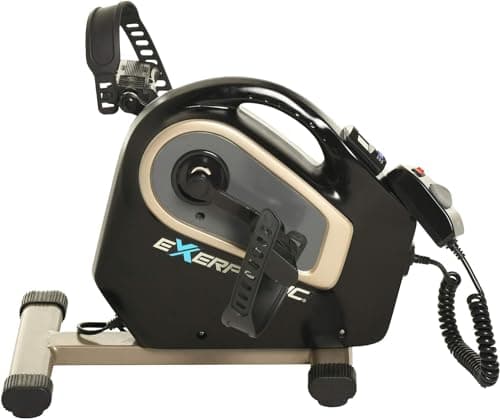
EasyVibe Motorized Arm and Leg Exerciser with Adjustable Base

EasyVibe Motorized Arm and Leg Exerciser with Adjustable Base

Use from a bed, not a chair

Works from a bed5of 7
$151.99 · Check price on Amazon

$159.995% off

Price as of October 11, 2026. #ad How we’re funded

6
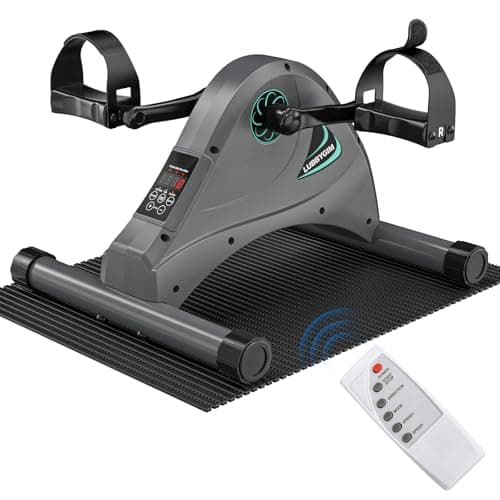
LUBBYGIM Electric Mini Exercise Bike, Arm and Leg Pedal Exerciser

LUBBYGIM Electric Mini Exercise Bike, Arm and Leg Pedal Exerciser

The lowest price with a motor

Cheapest with a motor2of 7
$61.11 · Check price on Amazon

Price as of October 11, 2026. #ad How we’re funded

7
Qoxvyn Arm Bike with Three Functions

Qoxvyn Arm Bike with Three Functions

We would skip this one — see below

The one to skip5of 7
$44.99 · Check price on Amazon

$56.9921% off

Price as of October 11, 2026. #ad How we’re funded

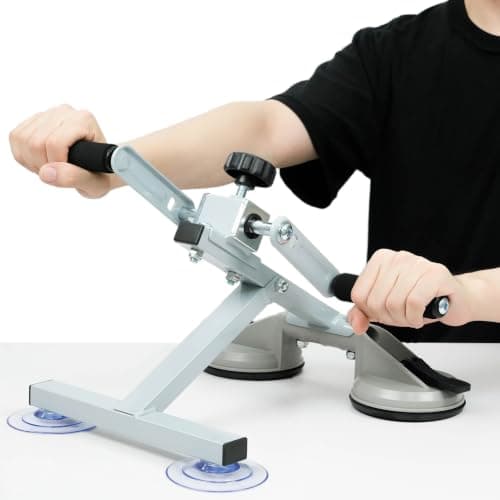
1.Clamped, not suctioned

KEAJVXT Arm Bike with Desktop Clamp

KEAJVXT Arm Bike with Desktop Clamp
$45.99 · Check price on Amazon

Price as of October 11, 2026. #ad How we’re funded

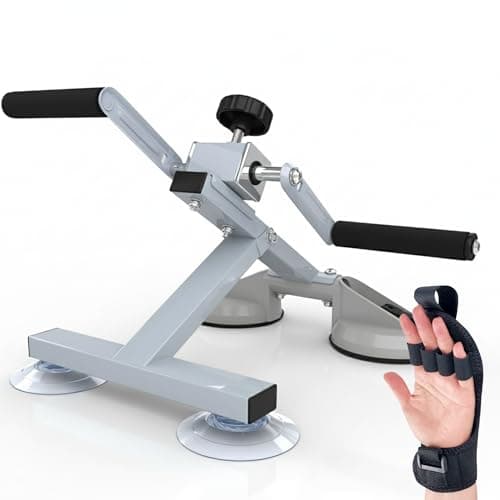
It bolts to the table. Every other unit that advertises arm use is a floor unit you lift onto a surface and then chase around it, and the sliding is the reason arm sessions stop. This one clamps to a tabletop between 0.4 and 1.95 in thick and does not move. It is arms only, it has no motor and no display, and for somebody whose legs are not the part that needs work it is still the best value on this page.

What it gets right

  • Published desktop clamp for tabletops 0.4–1.95 in thick — the listing specifically contrasts it with suction-cup units that move
  • Silicone pad on the clamp, published, to protect the table surface
  • Resistance by tension knob, so the lowest setting is continuous rather than a step
  • Published 3.3 lb and metal construction — light enough to move room to room, heavy-duty enough to clamp
  • Cheapest route in on this page, and the only one that needs no power outlet

What to know first

  • Arms only. No leg use at all, which is most of what this page is about
  • Self-powered, so it does nothing for somebody who cannot turn the cranks themselves
  • The listing describes no display or monitor of any kind — the tension knob is the only control
  • No published resistance range and no published user weight capacity
  • Needs a table edge in the published thickness range; a thick farmhouse table or a glass top rules it out

Fit-to-You: the nine measurements

KEAJVXT does not publish 3 of 7 of these. Where that is the case, this panel says so rather than guessing. How we compile these

Pedal heightThe clearance under your desk or chair. Get this wrong and the pedals hit your knees.
8.5 in high, and it clamps to a table edge rather than standing on the floor, so the crank height is set by your table

Source: Amazon product listing data (Creators API) · read 2026-10-03

Resistance rangeHow gently it can be set. The lowest setting matters far more than the highest.
Adjustable by tension knob; no range published

Source: Amazon product listing data (Creators API) · read 2026-10-03

Weight capacitySearched directly, and two of the senior-focused competitors omit it entirely.
Not published by the manufacturer
Motorized or self-poweredWhether the machine moves your legs or you move it. For very low leg strength that is the whole decision.
Self-powered. You turn the cranks with your hands

Source: Amazon product listing data (Creators API) · read 2026-10-03

Display and controlsCharacter height and contrast. Presbyopia is close to universal past 60.
Not published by the manufacturer
FootprintWhether it actually fits the room you have in mind, with clearance to get on and off.
16 in × 4.7 in × 8.5 in; 3.3 lb. Clamps to tabletops 0.4–1.95 in thick

Source: Amazon product listing data (Creators API) · read 2026-10-03

Noise (dB)Apartments, shared walls, and a sleeping partner in the next room.
Not published by the manufacturer

We have not used this machine. Everything above comes from the manufacturer’s published documentation and the dated retailer listing, with the source given for each figure. Where they don’t publish a number, we say so. We can’t tell you how it feels to ride, how quiet it really is, or how it holds up after two years — and anyone who tells you otherwise without owning one is guessing.
2.Best for a weak grip

Pukalia Arm Bike Pedal Exerciser BB2025(BB2025)

Pukalia Arm Bike Pedal Exerciser BB2025
$42.99 · Check price on Amazon

$47.499% off

Price as of October 11, 2026. #ad How we’re funded

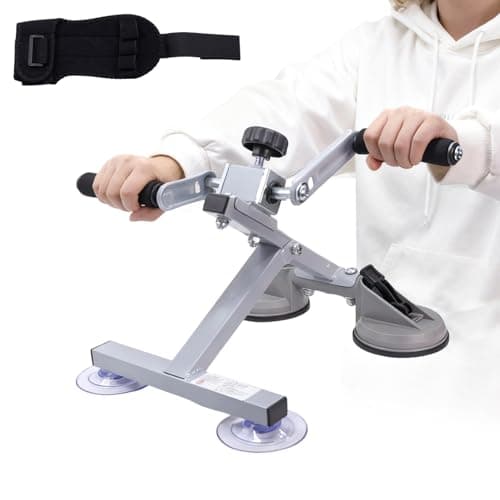
Two things here that nothing else on this page publishes: four suction cups rather than one or two, and a pair of non-slip gloves in the box. The gloves are the part that matters. An arm bike asks you to hold a rotating handle for ten minutes at a time, and a hand that cannot close around it is the reason arm sessions stop — before resistance, before stability, before anything else on the spec sheet.

What it gets right

  • Four suction cups published, against one or two on most units in this aisle
  • Two non-slip gloves included and published as one-size, aimed explicitly at a weak grip
  • Published 9.4 in base width and 7.8 in vertical support — the geometry that decides whether it tips
  • Resistance adjustable by tension, so the lowest setting is continuous rather than a step
  • Cheapest route in on this page, and needs no power outlet

What to know first

  • Arms only. It does nothing for legs
  • Self-powered, so it is no help to somebody who cannot turn the cranks at all
  • No display of any kind, so there is no way to see how long you have gone
  • Suction cups need a smooth, hard tabletop — a cloth, a textured laminate or an old timber table defeats them
  • No published resistance range, no published weight, no published user weight capacity

Fit-to-You: the nine measurements

Pukalia does not publish 3 of 7 of these. Where that is the case, this panel says so rather than guessing. How we compile these

Pedal heightThe clearance under your desk or chair. Get this wrong and the pedals hit your knees.
12.2 in tall overall on a published 9.4 in base with a 7.8 in vertical support. It stands on a table, so the crank height is your table height plus the unit

Source: Amazon product listing data (Creators API) · read 2026-10-10

Resistance rangeHow gently it can be set. The lowest setting matters far more than the highest.
Adjustable by tension; no range, units or number of settings published

Source: Amazon product listing data (Creators API) · read 2026-10-10

Weight capacitySearched directly, and two of the senior-focused competitors omit it entirely.
Not published by the manufacturer
Motorized or self-poweredWhether the machine moves your legs or you move it. For very low leg strength that is the whole decision.
Self-powered. You turn the cranks with your hands

Source: Amazon product listing data (Creators API) · read 2026-10-10

Display and controlsCharacter height and contrast. Presbyopia is close to universal past 60.
Not published by the manufacturer
FootprintWhether it actually fits the room you have in mind, with clearance to get on and off.
12.59 in × 14.57 in × 12.2 in, held by four suction cups; product weight not published

Source: Amazon product listing data (Creators API) · read 2026-10-10

Noise (dB)Apartments, shared walls, and a sleeping partner in the next room.
Not published by the manufacturer

We have not used this machine. Everything above comes from the manufacturer’s published documentation and the dated retailer listing, with the source given for each figure. Where they don’t publish a number, we say so. We can’t tell you how it feels to ride, how quiet it really is, or how it holds up after two years — and anyone who tells you otherwise without owning one is guessing.
3.One arm at a time

Jeogejin Hand Bike with Three Training Modes

Jeogejin Hand Bike with Three Training Modes
$49.99 · Check price on Amazon

$59.9917% off

Price as of October 11, 2026. #ad How we’re funded

The only unit here that publishes a single-arm mode, and that is the mode that matters after a stroke: one arm works, the other rests, and the machine is not forcing a weak side to follow a strong one around the circle. It is also the flattest and lightest thing on this page at 4.7 in high and 5 lb, which is what makes it the one that gets carried to the kitchen table and back.

What it gets right

  • Three modes published: single-arm independent, both arms synchronized, and standard cycling
  • 4.7 in high and 5 lb published — the flattest, lightest unit on this page
  • Oversized suction cups with anti-slip silicone pads published for the base
  • Assembles with the one included hex wrench, so a single person can set it up
  • Published footprint on all three dimensions, which half of this aisle does not manage

What to know first

  • Arms only, and self-powered — no help if you cannot turn the cranks
  • No resistance range, no number of settings, and no units published
  • No display of any kind
  • The 300 percent adhesion claim has no baseline, so it is a marketing number rather than a specification
  • No published user weight capacity

Fit-to-You: the nine measurements

Jeogejin does not publish 3 of 7 of these. Where that is the case, this panel says so rather than guessing. How we compile these

Pedal heightThe clearance under your desk or chair. Get this wrong and the pedals hit your knees.
4.7 in high, the flattest unit here. It stands on a table, so the crank height is set by the table you put it on

Source: Amazon product listing data (Creators API) · read 2026-10-10

Resistance rangeHow gently it can be set. The lowest setting matters far more than the highest.
Three training modes published — single-arm independent, bilateral synchronized, standard cycling. No resistance range or units published

Source: Amazon product listing data (Creators API) · read 2026-10-10

Weight capacitySearched directly, and two of the senior-focused competitors omit it entirely.
Not published by the manufacturer
Motorized or self-poweredWhether the machine moves your legs or you move it. For very low leg strength that is the whole decision.
Self-powered. You turn the cranks with your hands

Source: Amazon product listing data (Creators API) · read 2026-10-10

Display and controlsCharacter height and contrast. Presbyopia is close to universal past 60.
Not published by the manufacturer
FootprintWhether it actually fits the room you have in mind, with clearance to get on and off.
13.38 in × 12.79 in × 4.7 in; 5 lb; oversized suction cups with anti-slip silicone pads

Source: Amazon product listing data (Creators API) · read 2026-10-10

Noise (dB)Apartments, shared walls, and a sleeping partner in the next room.
Not published by the manufacturer

We have not used this machine. Everything above comes from the manufacturer’s published documentation and the dated retailer listing, with the source given for each figure. Where they don’t publish a number, we say so. We can’t tell you how it feels to ride, how quiet it really is, or how it holds up after two years — and anyone who tells you otherwise without owning one is guessing.
4.No table required

MDODM Sway Exerciser, Upper and Lower Limb Trainer(Sway Exerciser)

MDODM Sway Exerciser, Upper and Lower Limb Trainer
$97.97 · Check price on Amazon

Price as of October 11, 2026. #ad How we’re funded

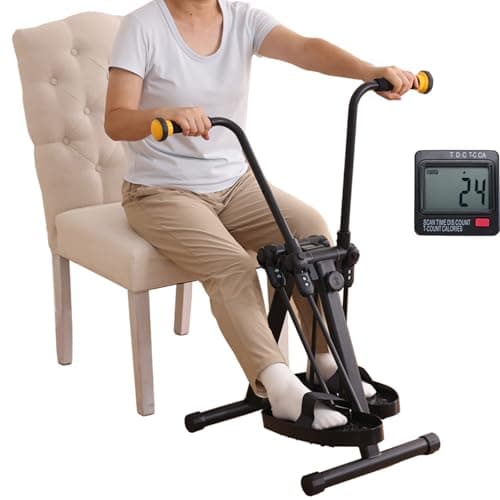
The only pick here that needs no table: it stands on the floor on four corner feet and swings arms and legs together in a cross-body motion, which is a different exercise from turning a crank. It is also the only one with a display, and that display is driven by a single red button — the right number of buttons for this job. What MDODM will not publish is a single dimension other than the 15.4 lb weight, so you cannot know it fits in front of your chair until it arrives.

What it gets right

  • Needs no tabletop at all — published as four corner feet on thickened steel tubing
  • Arms and legs together, published as a cross-body motion with a lateral swing of the lower limbs
  • LCD published to show time, distance, swing count, total swings and calories
  • One red button cycles the readout, so there is no menu to learn
  • 15.4 lb published, light enough to move between rooms

What to know first

  • Not one dimension is published — no length, no width, no height, so the space it needs is unknown
  • Priced at roughly twice the table-top arm bikes on this page
  • No resistance mechanism or range published, so you cannot know how it gets harder
  • 'High load-bearing capacity' is claimed with no user weight figure behind it
  • Self-powered, so it is no help if you cannot start the motion yourself

Fit-to-You: the nine measurements

MDODM does not publish 4 of 7 of these. Where that is the case, this panel says so rather than guessing. How we compile these

Pedal heightThe clearance under your desk or chair. Get this wrong and the pedals hit your knees.
Not published by the manufacturer
Resistance rangeHow gently it can be set. The lowest setting matters far more than the highest.
Not published by the manufacturer
Weight capacitySearched directly, and two of the senior-focused competitors omit it entirely.
Not published by the manufacturer
Motorized or self-poweredWhether the machine moves your legs or you move it. For very low leg strength that is the whole decision.
Self-powered. The listing describes a cross-body swing of arms and legs that you drive yourself; there is no motor

Source: Amazon product listing data (Creators API) · read 2026-10-10

Display and controlsCharacter height and contrast. Presbyopia is close to universal past 60.
LCD showing time, distance, swing count, total swings and calories, cycled by one red button. Character height not published

Source: Amazon product listing data (Creators API) · read 2026-10-10

FootprintWhether it actually fits the room you have in mind, with clearance to get on and off.
15.4 lb published weight and four corner feet; no length, width or height published anywhere in the listing

Source: Amazon product listing data (Creators API) · read 2026-10-10

Noise (dB)Apartments, shared walls, and a sleeping partner in the next room.
Not published by the manufacturer

We have not used this machine. Everything above comes from the manufacturer’s published documentation and the dated retailer listing, with the source given for each figure. Where they don’t publish a number, we say so. We can’t tell you how it feels to ride, how quiet it really is, or how it holds up after two years — and anyone who tells you otherwise without owning one is guessing.
5.Works from a bed

EasyVibe Motorized Arm and Leg Exerciser with Adjustable Base

EasyVibe Motorized Arm and Leg Exerciser with Adjustable Base
$151.99 · Check price on Amazon

$159.995% off

Price as of October 11, 2026. #ad How we’re funded

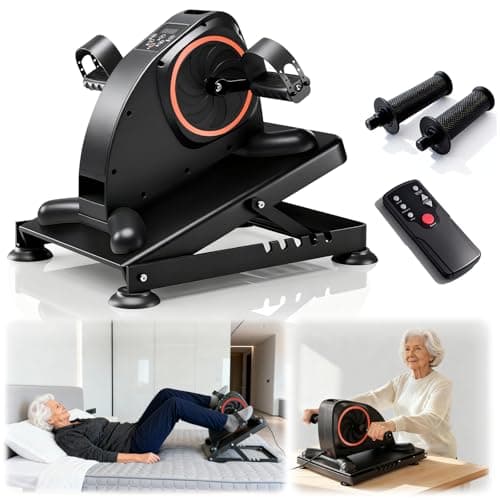
The one unit here that publishes being usable lying down, with a base that tilts through five angles and grips that swap for the foot pedals. If the person using it cannot transfer into a chair, that is not a convenience feature — it is the only thing on this page that works. It is also the thinnest spec sheet on the page by a wide margin, and we would rather you knew that before you paid a mid-range price for it.

What it gets right

  • Published for use sitting or lying down, which no other unit here states
  • Published 5-angle adjustable base, so the cranks can be met at a workable height from a bed or a recliner
  • Detachable hand grips and foot pedals, published, so the same unit covers arms and legs
  • Published Active and Passive modes — in Passive the motor moves the limb, in Active you work against resistance
  • Published adjustable non-slip base, and the base detaches for storage

What to know first

  • Publishes no dimensions of any kind, which for a unit meant to sit on a bed is the measurement you most need
  • No published unit weight, no motor wattage, no number of speed levels, and no model number
  • The listing describes no display and no remote, so there is nothing to read and nothing to adjust from a distance
  • No published user weight capacity and no decibel figure
  • It publishes less than the MOMODA and the PHYCISER while costing about the same, and five of the seven fields below are blank because of it

Fit-to-You: the nine measurements

EasyVibe does not publish 5 of 7 of these. Where that is the case, this panel says so rather than guessing. How we compile these

Pedal heightThe clearance under your desk or chair. Get this wrong and the pedals hit your knees.
Not published by the manufacturer
Resistance rangeHow gently it can be set. The lowest setting matters far more than the highest.
Active mode has adjustable resistance. No number of levels and no resistance figure published

Source: Amazon product listing data (Creators API) · read 2026-10-03

Weight capacitySearched directly, and two of the senior-focused competitors omit it entirely.
Not published by the manufacturer
Motorized or self-poweredWhether the machine moves your legs or you move it. For very low leg strength that is the whole decision.
Motorized, with a published Passive mode in which the motor moves the legs or arms with no effort required, and an Active mode you drive yourself. No motor wattage published

Source: Amazon product listing data (Creators API) · read 2026-10-03

Display and controlsCharacter height and contrast. Presbyopia is close to universal past 60.
Not published by the manufacturer
FootprintWhether it actually fits the room you have in mind, with clearance to get on and off.
Not published by the manufacturer
Noise (dB)Apartments, shared walls, and a sleeping partner in the next room.
Not published by the manufacturer

We have not used this machine. Everything above comes from the manufacturer’s published documentation and the dated retailer listing, with the source given for each figure. Where they don’t publish a number, we say so. We can’t tell you how it feels to ride, how quiet it really is, or how it holds up after two years — and anyone who tells you otherwise without owning one is guessing.
6.Cheapest with a motor

LUBBYGIM Electric Mini Exercise Bike, Arm and Leg Pedal Exerciser(LUB-DPEDAL-GRAY)

LUBBYGIM Electric Mini Exercise Bike, Arm and Leg Pedal Exerciser
$61.11 · Check price on Amazon

Price as of October 11, 2026. #ad How we’re funded

The cheapest way to get a motor, by a wide margin, and at 5 in tall the lowest-profile unit on this page. The trade is that it publishes less than anything above it and its own listing contradicts itself on what its modes do — it calls the self-powered option "Passive mode", which is the reverse of the clinical meaning. Worth having anyway if the budget is the constraint, as long as nobody is relying on the mode labels.

What it gets right

  • Published 5 in overall height — the lowest-profile unit on this page, and the only one likely to clear a low desk
  • Published motorized or manual-assisted pedaling, forward and backward
  • Published ergonomic adjustable pedals stated for use with either feet or hands
  • Remote plus on-unit buttons, and a multi-function LED showing time, speed and calories
  • Published weight of 9.24 lb, light enough for one person to reposition
  • Published 1-year warranty

What to know first

  • Its own listing calls the self-powered option "Passive mode" — the exact reverse of how the word is used clinically, so the mode names cannot be taken at face value
  • The listing says "easy to install" and "in a few minutes", so it does not arrive ready to use
  • No straps and no leg supports published — the feet sit on the pedals unheld
  • No published user weight capacity and no decibel figure
  • 6 speed levels is the smallest range of any motorized unit here

Fit-to-You: the nine measurements

LUBBYGIM does not publish 2 of 7 of these. Where that is the case, this panel says so rather than guessing. How we compile these

Pedal heightThe clearance under your desk or chair. Get this wrong and the pedals hit your knees.
5 in overall height, not adjustable — the lowest on this page

Source: Amazon product listing data (Creators API) · read 2026-10-03

Resistance rangeHow gently it can be set. The lowest setting matters far more than the highest.
6 speed levels. No resistance figure published, and the listing's own mode names invert the usual meanings

Source: Amazon product listing data (Creators API) · read 2026-10-03

Weight capacitySearched directly, and two of the senior-focused competitors omit it entirely.
Not published by the manufacturer
Motorized or self-poweredWhether the machine moves your legs or you move it. For very low leg strength that is the whole decision.
Motorized, forward and backward, with a manual-assisted option. The listing calls the self-powered option "Passive mode", which is the reverse of normal usage

Source: Amazon product listing data (Creators API) · read 2026-10-03

Display and controlsCharacter height and contrast. Presbyopia is close to universal past 60.
Multi-function LED showing time, speed and calories; a remote plus buttons on the unit itself

Source: Amazon product listing data (Creators API) · read 2026-10-03

FootprintWhether it actually fits the room you have in mind, with clearance to get on and off.
15 in × 12 in × 5 in; 9.24 lb

Source: Amazon product listing data (Creators API) · read 2026-10-03

Noise (dB)Apartments, shared walls, and a sleeping partner in the next room.
Not published by the manufacturer

We have not used this machine. Everything above comes from the manufacturer’s published documentation and the dated retailer listing, with the source given for each figure. Where they don’t publish a number, we say so. We can’t tell you how it feels to ride, how quiet it really is, or how it holds up after two years — and anyone who tells you otherwise without owning one is guessing.
7.We would skip this one

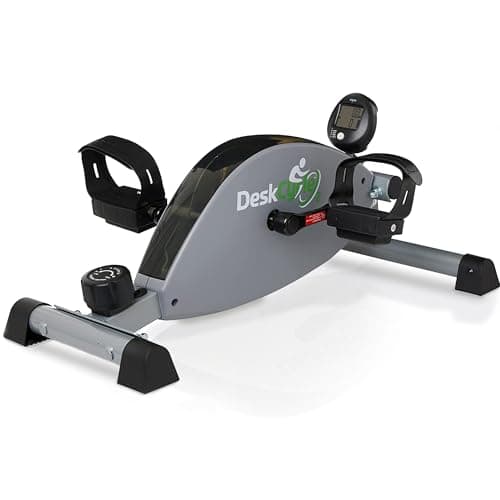
Qoxvyn Arm Bike with Three Functions

Qoxvyn Arm Bike with Three Functions
$44.99 · Check price on Amazon

$56.9921% off

Price as of October 11, 2026. #ad How we’re funded

Priced within a few dollars of the better-documented units on this page and publishing less than any of them: no dimensions, no weight, no suction-cup count, no resistance range, no capacity. The listing is a page of adjectives where the others print numbers, and on a site whose whole job is reporting published figures, that is the finding.

Why we would skip it

Skip it — and not because we know it is bad. We have no idea whether it is bad, and that is the point. At the same money the Pukalia publishes a base width, a support height, a cup count and the gloves in the box, and the Jeogejin publishes three modes, a full footprint and a weight. This listing publishes an adjective in place of every one of those. When two units cost the same and only one will tell you what you are getting, buy the one that tells you.

What it gets right

  • A live, in-stock listing at the bottom of this category's price range
  • Resistance is stated to be adjustable, and the installation is stated at 10 minutes
  • Marketed for the same uses as the rest of this page — Parkinson's, stroke, limited upper-limb mobility

What to know first

  • No dimensions published at all — you cannot tell whether it fits your table
  • No weight published, so you cannot tell whether you can lift it
  • Suction cups described as 'industrial grade' with no count and no diameter
  • No resistance range, no settings count, no units
  • No display, and no user weight capacity

Fit-to-You: the nine measurements

Qoxvyn does not publish 5 of 7 of these. Where that is the case, this panel says so rather than guessing. How we compile these

Pedal heightThe clearance under your desk or chair. Get this wrong and the pedals hit your knees.
Not published by the manufacturer
Resistance rangeHow gently it can be set. The lowest setting matters far more than the highest.
Stated as multiple adjustments; no range, units or number of settings published

Source: Amazon product listing data (Creators API) · read 2026-10-10

Weight capacitySearched directly, and two of the senior-focused competitors omit it entirely.
Not published by the manufacturer
Motorized or self-poweredWhether the machine moves your legs or you move it. For very low leg strength that is the whole decision.
Self-powered. You turn the cranks with your hands

Source: Amazon product listing data (Creators API) · read 2026-10-10

Display and controlsCharacter height and contrast. Presbyopia is close to universal past 60.
Not published by the manufacturer
FootprintWhether it actually fits the room you have in mind, with clearance to get on and off.
Not published by the manufacturer
Noise (dB)Apartments, shared walls, and a sleeping partner in the next room.
Not published by the manufacturer

We have not used this machine. Everything above comes from the manufacturer’s published documentation and the dated retailer listing, with the source given for each figure. Where they don’t publish a number, we say so. We can’t tell you how it feels to ride, how quiet it really is, or how it holds up after two years — and anyone who tells you otherwise without owning one is guessing.
What we found looking for these numbers

We went looking for 49 measurements across the 7machines on this page — the nine that decide whether an older adult can get on, reach the controls, read the screen and hear themselves think. 25 of those 49 are not published by anybody. Not one manufacturer here publishes the full set.

Step-over height is the worst of them. It is the single measurement that decides whether you can get onto a machine at all, and across everything we checked, not one manufacturer states it. That is not an oversight in a category explicitly marketed to seniors, and the count in each panel above is there so you can see who is doing it.

Where a figure exists, we cite it and date it. Where it doesn’t, the panel says Not published by the manufacturer rather than an estimate dressed up as a fact. You can measure step-over height yourself in about a minute — and if a machine is already in your house, that is the fastest way to settle it.

Four ways an arm bike is held down, best to worst

An arm bike works against you in a way a leg unit does not. When you pedal with your feet, your body weight pins the machine to the floor. When you turn cranks with your hands, nothing is holding the unit down except whatever the maker supplied — and you are pushing it away from you on every stroke. So this is the first spec, not a footnote.

1. A clamp. Mechanical, measurable, and indifferent to the surface. The KEAJVXT publishes a jaw range of 0.4 to 1.95 inches, which covers most dining tables and desks and rules out a thick farmhouse top or a glass slab with no overhang. It is the only unit on this page with one, and it is why it is first.

2. Four suction cups with a published base.The Pukalia states four cups, a 9.4-inch base width and a 7.8-inch vertical support. Those three numbers together tell you something real: a wide base resists tipping, and the cups resist sliding. It needs a smooth, hard, clean surface — a tablecloth or a textured laminate defeats any suction cup ever made.

3. Oversized cups with silicone pads.The Jeogejin publishes oversized industrial-grade cups plus anti-slip silicone pads, which is a belt and braces approach and probably works well. It also claims “300 percent enhanced adhesion”, which is a number with no baseline and therefore not a specification. We cite the design, not the percentage.

4. Its own weight, or nothing stated.The MDODM stands on the floor on four corner feet and relies on a published 15.4 pounds of steel to stay there. That genuinely sidesteps the whole problem, which is why it is on the page. The Qoxvyn, at the bottom, describes an “industrial grade suction cup” without saying how many, how wide, or how the unit measures.

Practical note that costs nothing: a rubber shelf liner or a thin mat under any of the suction-cup units gives the cups a clean, flat surface to grab and stops the whole assembly walking across a waxed table. It is the cheapest fix on this page and it works on every single one of them.

Self-powered or motorized: decide this before you compare anything else

These are two different products that share a shelf, and buying the wrong one is the most expensive mistake in this category.

Self-powered means you turn the cranks. Four of the seven here work this way: the KEAJVXT, the Pukalia, the Jeogejin and the Qoxvyn. They are cheap, they need no outlet, there is nothing electronic to fail, and the resistance knob means the easiest setting is genuinely easy. They are also completely useless to somebody who cannot initiate the movement, because there is no movement until the user makes one.

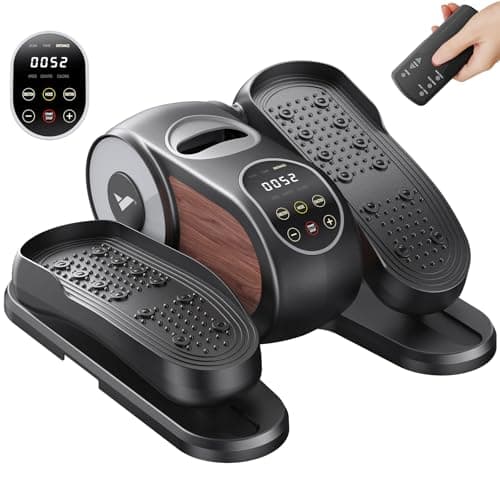
Motorizedmeans the machine turns and your limbs go along with it. The EasyVibe and the LUBBYGIM both publish a motor. That is the right answer when starting the motion is the problem rather than sustaining it — which is common after a stroke, and the reason the CDC describes physical therapy as using exercises to help relearn movement and coordination lost to a stroke. A motor is not a shortcut in that situation; it is the only version of the exercise that happens at all.

Two cautions on the motorized pair. The LUBBYGIM’s own listing calls its self-powered option “Passive mode”, which is the reverse of how that word is used clinically, so its mode labels cannot be taken at face value. And the EasyVibe publishes no dimensions at all despite being sold for use on a bed, where the dimensions are precisely what you need. Both are on the page because what they do is valuable; both cards say exactly what they withhold.

If you want a far deeper read on the motorized half of this decision, including what each unit does when a limb stops rotating mid-stroke, our shortlist of exercise pedals for disabled adults ranks nine machines on that question alone.

The grip problem nobody puts on a spec sheet

Here is what actually ends arm-bike sessions, and it is not resistance or stability. It is that holding a rotating handle for ten minutes is itself a grip exercise, and a hand with arthritis, neuropathy or post-stroke weakness gives out long before the shoulder does.

Exactly one unit here addresses it: the Pukaliaships two non-slip gloves, published as one-size, aimed explicitly at users with a weak grip or in recovery. Gloves sound like a throwaway accessory until you consider the alternative, which is gripping harder — and gripping harder is how people with hand pain stop exercising.

If the unit you want does not come with them, the fix is the same one occupational therapists use: anything that increases the diameter of what you are holding and adds friction. Self-adhesive foam grip tape or a cheap pair of grip gloves will do it. A hand that can rest around a handle rather than squeeze it is a session that finishes.

The second half of this problem is reach. Every table-top unit here puts the cranks at your table height plus the unit height, and that total decides whether your shoulder is working comfortably or hitched up by your ear. The published heights vary enormously — the Jeogejin is 4.7 inches tall, the Pukalia is 12.2 inches — so a high table plus a tall unit can leave a seated user reaching up and out, which is the one position a stiff shoulder cannot sustain. Sit at the table you intend to use, hold your hands where the cranks would be, and see whether your elbows are near your ribs or up by your shoulders. Lower is almost always better.

For what to do with the arms once the machine is set up, our seated exercises for limited mobility guide covers the movements that pair with a cranking unit, and the light dumbbell guide covers the strength side that no circular motion can replace.

What an arm exerciser counts for, and what it does not

Let us be straight about what this machine is. Turning cranks with your arms is aerobic activity, and the CDC is explicit that adults with chronic conditions or disabilities should aim for the same 150 minutes a week of moderate-intensity aerobic activity as everyone else, that “some physical activity is better than none”, and that the right types and amounts are a conversation to have with a health care professional. Arm cranking can be part of that total. It is also a far smaller muscle mass than your legs, so the same minutes at the same perceived effort do less cardiovascular work than cycling or walking would.

It is not strength training either. The CDC’s guidance for adults 65 and over includes two days a week of muscle-strengthening activity, and the National Institute on Aging treats endurance, strength, balance and flexibility as four separate things you need to do separately. A tension knob on an arm bike with no published resistance range is not a load you can progress deliberately. Treat these units as circulation, range of motion and endurance for the upper body, and get strength somewhere you can count it.

What they are genuinely good at is being available. A unit on the kitchen table is used while the kettle boils; a unit in the spare room is used in January. If the person exercising spends most of the day in one chair, the machine that reaches that chair is worth more than the better-specified one that does not.

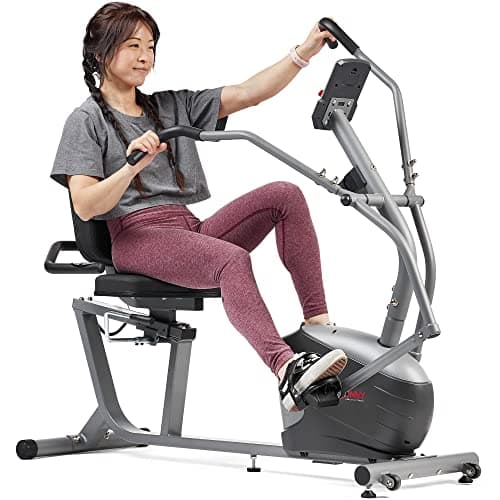
And if arms are wanted alongside a real leg workout, recumbent bikes with arm exercisers are a different and often better answer — one machine, both halves of the body, with a seat and a back on it. That page ranks them on whether the handles move independently of the pedals, which only one of them does.

What we left off this page, and why

Listings with thin stock. One otherwise reasonable table-top unit showed six units left when we checked. A shortlist is no use if the link is dead next week, so it is not here.

Clinical upper-body ergometers.The wall-mounted and floor-standing arm cycles used in rehabilitation clinics are genuinely better machines, with real resistance scales and published ranges. They also cost several times the top of this page’s range, and they are not what somebody searching for an arm bike for a parent is shopping for. If a therapist has prescribed a specific ergometer, buy that, not this.

Resistance bands and hand grippers.They do a different job — strength, not continuous motion — and we would rather point you to the band exercises guide than pretend a band is an arm bike.

The folding leg-pedal units sold with “use it for arms too”. Almost every pedal exerciser in the medical-supply aisle carries that line, including the Drive Medical RTL10273, which is a good machine and is in our registry. The trouble is that none of them is held to the table in any way at all: you lift a floor unit onto a tabletop and then chase it around the surface. If you already own one, try it with a rubber mat underneath before buying anything. If you are buying specifically for arms, buy something designed to stay put.

And one that is here but should not be bought for the specs. The Qoxvyn is last with a skip note. It is in stock, it is cheap, and it may well work. It publishes no dimensions, no weight, no cup count and no resistance range, while costing within a couple of dollars of two units that publish all of those. That is the whole case against it.

General information, not medical advice. Tread & Tone is written by an enthusiast, not a clinician. Nobody here is a doctor, a physical therapist or a trainer, and nothing on this site has been medically reviewed. Talk to your doctor or physical therapist before starting something new, particularly after surgery, a fall, or a change in medication.

Questions people ask

What is an arm exerciser actually for?

Continuous, low-load motion for the shoulders, elbows and hands, usually seated. The common reasons people buy one are rehabilitating a shoulder or arm, regaining coordination in a hand after a stroke, keeping an upper body moving when the legs cannot be used, and loosening a stiff shoulder. It counts toward aerobic activity minutes, but because the arms are a much smaller muscle mass than the legs, the same effort does less cardiovascular work than cycling or walking.

Why does my arm bike slide across the table?

Because nothing is holding it down except the base, and you are pushing it away from you on every stroke. Suction cups need a smooth, hard, clean surface to work at all; a tablecloth, a textured laminate or an old timber top defeats them. The two fixes are a mechanical clamp instead of cups, which is what the KEAJVXT publishes, or a rubber shelf liner under the unit to give the cups something to grab. The mat trick costs a few dollars and works with every unit on this page.

Should I get a motorized arm exerciser or a manual one?

If you can start the motion yourself, buy manual: it is cheaper, there is nothing electronic to fail, and a tension knob gives you a genuinely easy lowest setting. If starting the motion is the problem rather than sustaining it, which is common after a stroke, buy motorized, because the alternative is no exercise at all. Two units here publish a motor. Do not buy a motorized unit for the convenience if a manual one would be used, as you lose both the resistance control and about half the price.

Can one arm work on its own?

On one unit here, yes. The Jeogejin publishes three modes, including single-arm independent training, so a weak side is not dragged around the circle by the strong one. Everything else on this page links the two handles, which means the stronger arm does the work and the weaker arm comes along for the ride. If one side is significantly weaker than the other, this is the specification to shop on.

Will an arm exerciser build muscle?

Not meaningfully. None of these units publishes a resistance range in units you could progress deliberately, which is what strength training requires. The CDC's guidance for adults 65 and over asks for two days a week of muscle strengthening, and the National Institute on Aging treats strength as a separate type of exercise from endurance. Treat an arm bike as circulation, range of motion and endurance, and get strength from bands or light weights where you can count the load.

What height should the cranks be?

Low enough that your elbows stay near your ribs rather than lifting toward your shoulders. The total is your table height plus the unit height, and the published unit heights here range from 4.7 inches to 12.2 inches, which is a big difference once it is on a 30-inch table. Sit in the chair you will actually use, hold your hands where the cranks would be, and check your elbow position before you buy. A seated user with a stiff shoulder cannot sustain a reach that is up and away.

Do any of these publish a user weight capacity?

No. Not one of the seven machines on this page publishes a user weight capacity, which matters less than it would on a bike or treadmill because you are not standing on them, but is still a conspicuous gap on the floor-standing unit. Where a listing claims 'high load-bearing capacity' with no figure behind it, our panels record the field as not published rather than repeating the claim.

Is this safe after a shoulder operation or a stroke?

That is a question for the surgeon or therapist who knows the case, not for us. The CDC's guidance for people with disabilities and chronic conditions says plainly to consult a health care professional or a physical activity specialist, such as a physical therapist, about what is appropriate. What we can tell you is what each machine publishes, which is the part nobody else will.

Sources

  • CDC — Older Adult Activity: An Overview — At least 150 minutes a week of moderate-intensity activity, 2 days of muscle strengthening, plus balance activities for adults 65 and over (read July 24, 2026)
  • CDC — Chronic Conditions & Disabilities Activity — "Get at least 150 minutes (for example, 30 minutes 5 days a week) of moderate-intensity aerobic physical activity a week"; "Some physical activity is better than none — be as active as you are able"; and "If you have chronic health conditions or disabilities, consult a health care professional or physical activity specialist about appropriate types and amounts of physical activity" (read October 3, 2026)
  • CDC — Physical Activity for People with Disability — All adults, with or without disabilities, should get at least 150 minutes of aerobic physical activity a week, and the activity "can be broken down into smaller amounts, such as about 25 minutes a day every day"; consult a healthcare professional or physical activity specialist, for example a physical therapist, about how a disability affects what is safe (read October 3, 2026)
  • CDC — Treatment and Intervention for Stroke — "Rehabilitation after a stroke begins in the hospital, often within a day or 2 after the stroke"; "Rehab can include working with speech, physical, and occupational therapists"; "Physical therapy uses exercises to help you relearn movement and coordination skills you may have lost because of the stroke" (read October 5, 2026)
  • National Institute on Aging — Four Types of Exercise Can Improve Your Health and Physical Ability — Endurance, strength, balance and flexibility, with named balance exercises including heel-to-toe walking and standing on one foot (read July 24, 2026)
  • National Institute on Aging — Exercising With Chronic Conditions — "Almost anyone, at any age, can do some type of physical activity, even with a chronic condition"; riding a bike is listed among the moderate-intensity activities that are safe for most people if built up slowly. For arthritis: low-impact activity, and "When done safely, being physically active with arthritis shouldn't make the disease or pain worse." For chronic pain: listen to your body and avoid overexercising on good days. For osteoporosis: weight-bearing exercise, plus muscle-strengthening and balance work (read October 5, 2026)

Product measurements are cited individually inside each Fit-to-You panel, against the manufacturer page or dated retailer listing they were read from.

Read next