Tread & Tone

The Best Exercise Equipment for Osteoporosis

Bone gets stronger when it is loaded, and a seated machine does not load it. So this shortlist is walking with something to hold, a foam pad for the balance work that stops the fall, and a grab bar — which is the cheapest fracture prevention money can buy.

By Stephen V.Last updated How we choose

How this is funded: we earn a commission if you buy through our links, at no extra cost to you. It never changes what we recommend, and every page here names at least one thing we would not buy. Full disclosure.

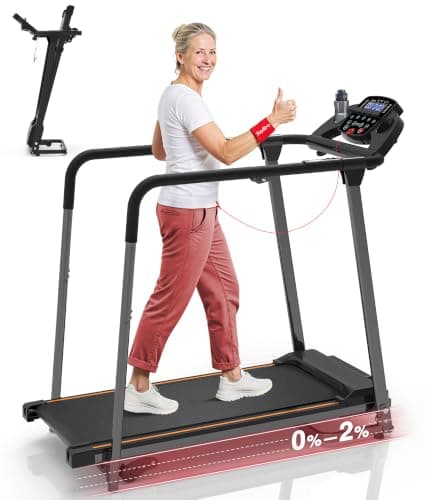
The machine to buy is the Redliro CS1271D, and it is for the reader who has been told to do weight-bearing exercise and wants to do it holding on to something. It is a full treadmill rather than a flat pad: the handrails run the length of the deck with the speed buttons mounted on the rails, so you change pace without taking a hand off, and it publishes a 0.5 mph minimum speed, which is slower than most people’s shuffling pace and exactly the point. It publishes a 300 lb capacity and a true 0 percent incline setting as well as a 2 percent one. The budget pick is the StrongTek balance pad, which costs a small fraction of anything else on this page and is not a lesser purchase — it is the one item here that addresses the thing that actually breaks a bone, which is the fall rather than the bone density.

Before the list, the finding that shaped it, because it cuts against most of this site. NIAMS — the NIH institute for bone and musculoskeletal disease — is explicit in Exercise for Your Bone Health that bone is living tissue which responds to exercise by becoming stronger, and that the exercises which do this are weight-bearingones — ones that “produce a force on bones that makes them work harder”. The examples it gives are brisk walking, climbing stairs and dancing. The NIA says the same thing in its guidance on exercising with chronic conditions: for osteoporosis, weight-bearing exercise, plus muscle-strengthening and balance work.

A recumbent exercise bike is not weight-bearing. Your weight is on the seat. It is the single most popular category on this site and we sell more of them than anything else, and for osteoporosis specifically it is not the answer to the question you are asking. That does not make it useless — it is excellent low-impact cardio, it is the safest machine here if you have already had a fracture or are too unsteady to walk unsupported, and we walk through exactly where it does and does not help in our guide to recumbent bikes and osteoporosis. But a page about equipment for osteoporosis that led with a seated bike would be selling you the thing we have most of rather than the thing that loads a bone, so there is no bike on this list.

The second thing that shaped the list is less obvious. Low bone density does not break a hip on its own; a fall does. The CDC reports that more than one in four adults 65 and over falls each year, and that falling once doubles the chance of falling again. So half of this shortlist is about load and half of it is about not going down: rails on the walking machine, a foam pad for the balance work the NIA lists as one of four types of exercise older adults need, and a grab bar for the room where a wet floor meets a hard edge. Nobody sells a grab bar as exercise equipment. For this reader it belongs on the list.

One more thing, and it is not a formality. NIAMS says plainly that anyone with low bone density or osteoporosis should talk to a health care provider before starting an exercise program. Some movements — forward bending and twisting in particular — are commonly restricted after a vertebral fracture, and which ones apply to you is a question for the person holding your scan, not for us. We are a buying guide. Live prices sit in the buttons with the date of our last check, and how we choose is written down.

Quick picks

Ranked on the published accessibility measurements and on who each machine actually suits. Select a row to jump to the full write-up. The last column is the number of the nine measurements the manufacturer will not publish — we have not used any of these machines, and here is exactly what we did instead.

#MachineBest forSpecs withheldPrice
1
Redliro Treadmill for Seniors with Long Handrails

Redliro Treadmill for Seniors with Long Handrails

Changing speed without letting go

Weight-bearing, with rails4of 10
$269.99 · Check price on Amazon

$299.9910% off

Price as of November 12, 2026. #ad How we’re funded

2
Sunny Health & Fitness Pacer 2-in-1 Auto Incline Treadpad Treadmill

Sunny Health & Fitness Pacer 2-in-1 Auto Incline Treadpad Treadmill

A handrail you can fold out of the way

Adds load without speed1of 10
$498.16 · Check price on Amazon

Price as of November 12, 2026. #ad How we’re funded

3
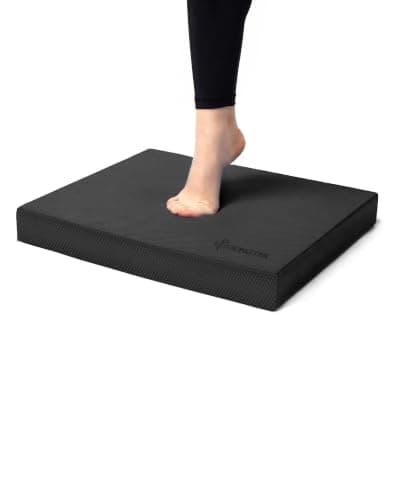
StrongTek Extra Wide TPE Balance Pad

StrongTek Extra Wide TPE Balance Pad

Room for two feet

Budget pick1of 6
$39.99 · Check price on Amazon

Price as of November 12, 2026. #ad How we’re funded

4
Moen Home Care 24 in Grab Bar with Concealed Screws

Moen Home Care 24 in Grab Bar with Concealed Screws

Publishing the number AND the condition

Where the fracture happens0of 6
$27.29 · Check price on Amazon

Price as of November 12, 2026. #ad How we’re funded

5
ELDGREON Balance Board with Spring System

ELDGREON Balance Board with Spring System

We would skip this one — see below

A fall from height1of 6
$64.98 · Check price on Amazon

Price as of November 12, 2026. #ad How we’re funded

1.Weight-bearing, with rails

Redliro Treadmill for Seniors with Long Handrails(CS1271-D)
Redliro Treadmill for Seniors with Long Handrails
$269.99 · Check price on Amazon

$299.9910% off

Price as of November 12, 2026. #ad How we’re funded

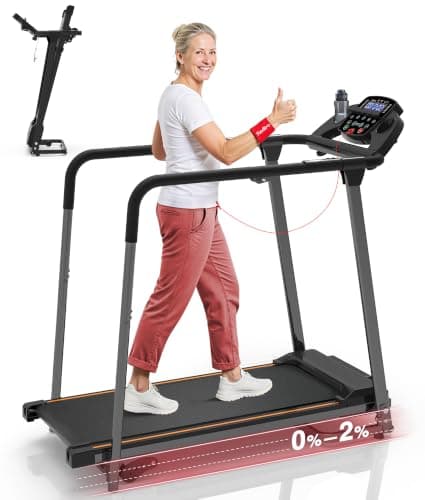
Handrails that run the full length of the deck with the speed buttons mounted on the rails, so you change pace without letting go. It also starts at 0.5 mph, which is genuinely slow — slower than most people's shuffling pace, which is exactly the point.

What it gets right

  • Speed controls on the handrails themselves — you never take a hand off to adjust
  • 0.5 mph minimum speed published; slow enough for a genuine warm-up or recovery pace
  • Full-length handrails spanning the deck, published as the design point
  • 0–2% incline with a true 0% setting, published

What to know first

  • 22.6 in total width means a narrow belt — no published belt width at all
  • 300 lb capacity is fine but not generous
  • Only a 12-month warranty
  • Display is described as large numbers with no character height given

Fit-to-You: the nine measurements

Redliro does not publish 4 of 10 of these. Where that is the case, this panel says so rather than guessing. How we compile these

Step-up heightHow high you have to lift your foot to get onto the deck, every single time.
Not published by the manufacturer
HandrailsThe difference between a treadmill a nervous walker will use and one they won't.
Full-length rails spanning the deck, with speed buttons mounted on the rails. Length in inches not published

Source: Amazon product listing data (Creators API) · read 2026-07-24

Weight capacitySearched directly, and two of the senior-focused competitors omit it entirely.
300 lb

Source: Amazon product listing data (Creators API) · read 2026-07-24

Minimum speedThe slowest the belt will go. A machine that starts at 1 mph is unusable if your walking pace is slower than that.
0.5 mph to 5 mph

Source: Amazon product listing data (Creators API) · read 2026-07-24

Belt sizeA short belt means a shortened stride and a real risk of stepping off the back.
Not published by the manufacturer
Display character heightCharacter height and contrast. Presbyopia is close to universal past 60.
Dual-data display described as large numbers; character height not published

Source: Amazon product listing data (Creators API) · read 2026-07-24

Controls and reachCan it be operated one-handed, by feel, while seated? This is where low-strength and low-vision buyers get stranded.
Rail-mounted speed buttons plus console shortcuts; manual incline pins; two external transport wheels

Source: Amazon product listing data (Creators API) · read 2026-07-24

Assembly and box weightBox weight and how many people it needs. A 130 lb box is a real barrier, not a footnote.
Not published by the manufacturer
Noise (dB)Apartments, shared walls, and a sleeping partner in the next room.
Not published by the manufacturer
FootprintWhether it actually fits the room you have in mind, with clearance to get on and off.
46.8 in long × 22.6 in wide × 44.1 in high

Source: Amazon product listing data (Creators API) · read 2026-07-24

We have not used this machine. Everything above comes from the manufacturer’s published documentation and the dated retailer listing, with the source given for each figure. Where they don’t publish a number, we say so. We can’t tell you how it feels to ride, how quiet it really is, or how it holds up after two years — and anyone who tells you otherwise without owning one is guessing.
2.Adds load without speed

Sunny Health & Fitness Pacer 2-in-1 Auto Incline Treadpad Treadmill(SF-T722076)

Sunny Health & Fitness Pacer 2-in-1 Auto Incline Treadpad Treadmill
$498.16 · Check price on Amazon

Price as of November 12, 2026. #ad How we’re funded

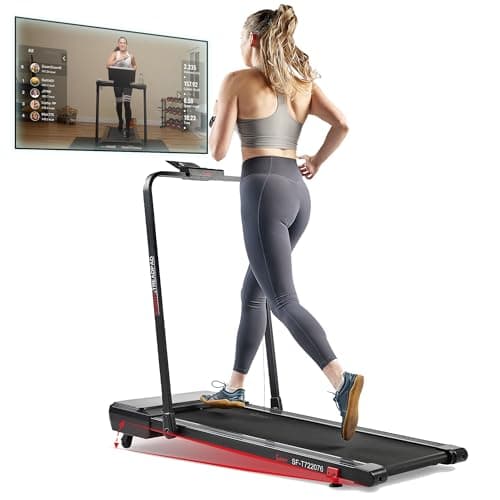
The Treadpad whose handlebar folds: up, it is a railed walking machine that will run to 6 mph; down, it slides under a desk and caps itself at 3.7 mph. Sunny publishes the one number almost nobody publishes — deck-to-floor height, 4.1 in flat — along with both ends of the user-weight range and the shipping weight. It is the one pad here you have to assemble.

What it gets right

  • Sunny publishes the deck-to-floor height outright: 4.1 in flat, 5.7 in at full incline
  • The handlebar folds down, so one machine is both a railed walker and an under-desk pad
  • Publishes both ends of the user-weight range — 265 lb maximum and a 99 lb minimum
  • Publishes a 93.7 lb ship weight and the carton size, so you know what arrives at the door
  • 45.7 in × 16 in walking surface, published, with an emergency stop brake and a remote
  • 3-year structural frame warranty and 180 days on other parts, published by Sunny

What to know first

  • Assembly required — Sunny calls it an easy-to-assemble frame setup, but both flat pads here arrive ready to use
  • 265 lb capacity: better than the 245 lb pads, still short of the 300 lb railed machines
  • Sunny describes a handlebar, not a rail down each side, and the 6 mph mode needs it unfolded and fully extended
  • No decibel figure, and no character height for the 6.3 in × 2.4 in display

Fit-to-You: the nine measurements

Sunny Health & Fitness does not publish 1 of 10 of these. Where that is the case, this panel says so rather than guessing. How we compile these

Step-up heightHow high you have to lift your foot to get onto the deck, every single time.
4.1 in flat, rising to 5.7 in at full incline — Sunny publishes this as “deck to floor height”, which almost no maker does

Source: Sunny Health & Fitness product page, SF-T722076 · read 2026-09-15

HandrailsThe difference between a treadmill a nervous walker will use and one they won't.
A folding handlebar rather than rails on both sides. Folded down it is an under-desk pad capped at 3.7 mph; unfolded and fully extended it allows up to 6 mph

Source: Sunny Health & Fitness product page, SF-T722076 · read 2026-09-15

Weight capacitySearched directly, and two of the senior-focused competitors omit it entirely.
265 lb maximum, and a 99 lb MINIMUM user weight — Sunny publishes both ends

Source: Sunny Health & Fitness product page, SF-T722076 · read 2026-09-15

Minimum speedThe slowest the belt will go. A machine that starts at 1 mph is unusable if your walking pace is slower than that.
0.5 mph to 3.7 mph with the handlebar folded, 0.5 to 6 mph with it extended; 2.0 hp peak DC motor

Source: Sunny Health & Fitness product page, SF-T722076 · read 2026-09-15

Belt sizeA short belt means a shortened stride and a real risk of stepping off the back.
45.7 in long × 16 in wide, which Sunny labels the running surface

Source: Sunny Health & Fitness product page, SF-T722076 · read 2026-09-15

Display character heightCharacter height and contrast. Presbyopia is close to universal past 60.
6.3 in × 2.4 in backlit LED showing calories, distance, speed, steps and time; character height not published

Source: Amazon product listing data (Creators API) · read 2026-09-15

Controls and reachCan it be operated one-handed, by feel, while seated? This is where low-strength and low-vision buyers get stranded.
Remote control for speed, incline, start and pause; emergency stop brake; 6 auto-incline levels; Bluetooth to the SunnyFit app; device holder

Source: Sunny Health & Fitness product page, SF-T722076 · read 2026-09-15

Assembly and box weightBox weight and how many people it needs. A 130 lb box is a real barrier, not a footnote.
Assembly required; Sunny describes an easy-to-assemble frame setup and publishes a 93.7 lb ship weight in a 64.2 × 27.2 × 7.1 in carton

Source: Sunny Health & Fitness product page, SF-T722076 · read 2026-09-15

Noise (dB)Apartments, shared walls, and a sleeping partner in the next room.
Not published by the manufacturer
FootprintWhether it actually fits the room you have in mind, with clearance to get on and off.
58.2 in long × 26.4 in wide × 47.4 in high in use; 63.9 × 26.4 × 7.7 in with the handlebar folded down. Product weight 79.4 lb

Source: Sunny Health & Fitness product page, SF-T722076 · read 2026-09-15

We have not used this machine. Everything above comes from the manufacturer’s published documentation and the dated retailer listing, with the source given for each figure. Where they don’t publish a number, we say so. We can’t tell you how it feels to ride, how quiet it really is, or how it holds up after two years — and anyone who tells you otherwise without owning one is guessing.
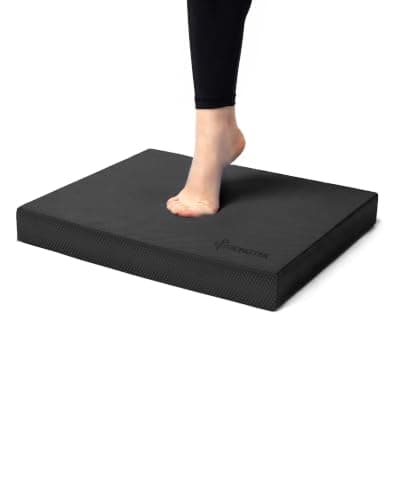
3.Budget pick

StrongTek Extra Wide TPE Balance Pad

StrongTek Extra Wide TPE Balance Pad
$39.99 · Check price on Amazon

Price as of November 12, 2026. #ad How we’re funded

At 19 by 15.8 inches it is the only pad here with room for two feet side by side and still some margin. That margin is the difference between a balance exercise and a stumble off the edge, and it is the reason to pay a few dollars more than the standard size.

What it gets right

  • 19 in × 15.8 in — genuinely wide enough for a two-foot stance with margin
  • 2.4 in thick, so it gives a real balance challenge without being tall enough to roll an ankle
  • High-density TPE that is described as holding its shape rather than compressing flat
  • Textured non-slip top and a water-resistant foam body

What to know first

  • No published weight capacity
  • No firmness figure of any kind — 'high-density' is a description, not a specification
  • Costs roughly half again as much as a standard-size pad

Fit-to-You: the nine measurements

StrongTek does not publish 1 of 6 of these. Where that is the case, this panel says so rather than guessing. How we compile these

ThicknessPad height sets the difficulty. Too tall is not 'more effective', it is a fall.
2.4 in

Source: Amazon product listing data (Creators API) · read 2026-08-13

Standing surfaceWhether there is room for two feet, or only one.
19 in × 15.8 in

Source: Amazon product listing data (Creators API) · read 2026-08-13

Weight capacitySearched directly, and two of the senior-focused competitors omit it entirely.
Not published by the manufacturer
FirmnessA pad that bottoms out gives no training effect; one that is too soft is unstable.
Described as high-density TPE foam; no density figure published

Source: Amazon product listing data (Creators API) · read 2026-08-13

Non-slip baseWhether you need something solid to hold while you use it — and most people do.
Textured non-slip surface, water-resistant foam

Source: Amazon product listing data (Creators API) · read 2026-08-13

Needs support nearbyWhether you need something solid to hold while you use it — and most people do.
Yes — use it within reach of a wall, counter or sturdy chair. Every balance product on this page needs that

Source: Amazon product listing data (Creators API) · read 2026-08-13

We have not used this machine. Everything above comes from the manufacturer’s published documentation and the dated retailer listing, with the source given for each figure. Where they don’t publish a number, we say so. We can’t tell you how it feels to ride, how quiet it really is, or how it holds up after two years — and anyone who tells you otherwise without owning one is guessing.
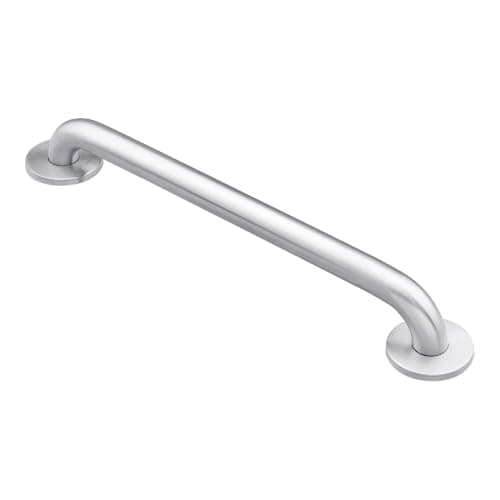
4.Where the fracture happens

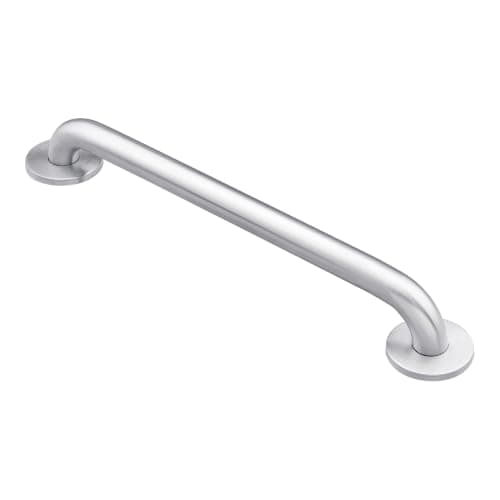
Moen Home Care 24 in Grab Bar with Concealed Screws(8724)

Moen Home Care 24 in Grab Bar with Concealed Screws
$27.29 · Check price on Amazon

Price as of November 12, 2026. #ad How we’re funded

The only bar in this category that publishes all three of the numbers that decide the purchase — 24 in long, 1.25 in diameter, and a 500 lb rating with the installation condition stated rather than implied — and the only one that claims to comply with the ADA specification. The catch is in Moen's own wording: the rating holds when the bar is fixed into a stud or with SecureMount anchors, and those anchors are not in the box.

What it gets right

  • Publishes a 1.25 in diameter, which is the bottom of the ADA's 1.25–2 in range for a round bar
  • Publishes 500 lb with the condition attached: installed in a stud, or using SecureMounts
  • States compliance with the ADA specification — the only bar here that does
  • 24 in of bar covers a hand-over-hand move rather than a single grab
  • Concealed screw covers, corrosion-resistant stainless, and a limited lifetime warranty

What to know first

  • The SecureMount anchors the rating depends on are sold separately and are not included
  • A single bar, where three of the five others in this category are sold as a pair
  • The stainless finish is smooth, not knurled or peened, so it offers less grip to a wet hand than Moen's own peened bar
  • Nothing in the listing tells you the 33–36 in mounting height the ADA specifies, so that part is on you

Fit-to-You: the nine measurements

Moen publishes every measurement on this list. That is unusual enough to be worth saying. How we compile these

Bar lengthWhether it covers one grab or a whole hand-over-hand move from sitting to standing.
24 in of bar; Amazon's unlabeled length field for the assembly reads 28.375 in

Source: Amazon product listing data (Creators API) · read 2026-10-31

Bar diameterHow thick the bar is. The ADA sets 1.25 to 2 in for a round bar because grip thickness decides how much force a weak hand can put through it.
1.25 in — the minimum the ADA allows for a round gripping surface

Source: Amazon product listing data (Creators API) · read 2026-10-31

Published load ratingThe rating is only as good as the condition attached to it — and the bar is almost never the part that fails.
“Supports up to 500 lbs when installed in a stud or when using SecureMounts (not included)” — the condition is Moen's own wording, not ours

Source: Amazon product listing data (Creators API) · read 2026-10-31

How it mountsWhat actually holds it to the wall. This is the whole safety question.
Screwed to the wall, with concealed screw covers; SecureMount anchors are described as sold separately

Source: Amazon product listing data (Creators API) · read 2026-10-31

Grip textureWet hands and soap. A polished bar is the one your hand slides along.
Lightly brushed stainless finish. No knurling or peening stated

Source: Amazon product listing data (Creators API) · read 2026-10-31

Standard claimedThe rating is only as good as the condition attached to it — and the bar is almost never the part that fails.
“Complies with Americans with Disabilities Act (ADA) specifications”

Source: Amazon product listing data (Creators API) · read 2026-10-31

We have not used this machine. Everything above comes from the manufacturer’s published documentation and the dated retailer listing, with the source given for each figure. Where they don’t publish a number, we say so. We can’t tell you how it feels to ride, how quiet it really is, or how it holds up after two years — and anyone who tells you otherwise without owning one is guessing.
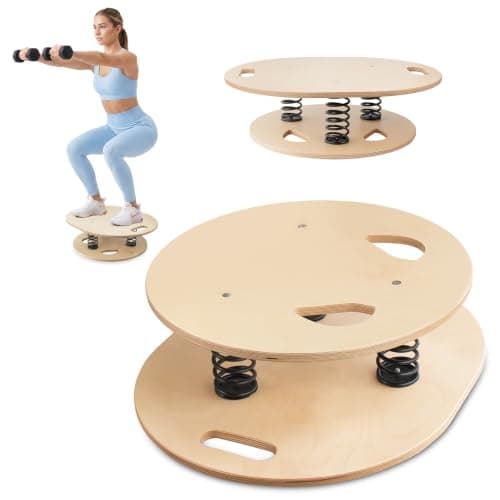
5.We would skip this one

ELDGREON Balance Board with Spring System

ELDGREON Balance Board with Spring System
$64.98 · Check price on Amazon

Price as of November 12, 2026. #ad How we’re funded

A birch board on springs with a published 350 lb capacity — the highest here. It also sits 6 inches off the floor and moves unpredictably, which makes it a progression tool for the already-steady, not a starting point.

Why we would skip it

Skip this one for a senior beginner. It is well made — birch multiplex, a published 350 lb capacity, 6.39 lb — but it stands 6 inches off the floor on springs that oscillate under you. Six inches is roughly a stair riser, and a spring-loaded platform is deliberately unpredictable. That combination is the opposite of what someone with a fall history needs. If you are already steady and want progression, it is a reasonable buy; if balance is the reason you are shopping, start on a 2 inch foam pad instead.

What it gets right

  • Publishes a 350 lb weight capacity — the highest of any balance product here
  • Birch multiplex construction with a published 6.39 lb board weight
  • Spring oscillation trains reaction rather than static hold
  • Published dimensions 18.8 in × 14.9 in × 6 in

What to know first

  • 6 in tall — about a stair riser. A fall off this is a fall from height
  • Springs make the platform move unpredictably, which is the point and also the risk
  • No published spring rate, so the difficulty cannot be compared to anything
  • Wrong first purchase for the audience this site is written for

Fit-to-You: the nine measurements

ELDGREON does not publish 1 of 6 of these. Where that is the case, this panel says so rather than guessing. How we compile these

ThicknessPad height sets the difficulty. Too tall is not 'more effective', it is a fall.
6 in

Source: Amazon product listing data (Creators API) · read 2026-07-24

Standing surfaceWhether there is room for two feet, or only one.
18.8 in × 14.9 in

Source: Amazon product listing data (Creators API) · read 2026-07-24

Weight capacitySearched directly, and two of the senior-focused competitors omit it entirely.
350 lb

Source: Amazon product listing data (Creators API) · read 2026-07-24

FirmnessA pad that bottoms out gives no training effect; one that is too soft is unstable.
Spring-mounted rigid birch platform; spring rate not published

Source: Amazon product listing data (Creators API) · read 2026-07-24

Non-slip baseWhether you need something solid to hold while you use it — and most people do.
Not published by the manufacturer
Needs support nearbyWhether you need something solid to hold while you use it — and most people do.
Yes, absolutely — and at 6 in off the floor, a rail rather than a countertop

Source: Amazon product listing data (Creators API) · read 2026-07-24

We have not used this machine. Everything above comes from the manufacturer’s published documentation and the dated retailer listing, with the source given for each figure. Where they don’t publish a number, we say so. We can’t tell you how it feels to ride, how quiet it really is, or how it holds up after two years — and anyone who tells you otherwise without owning one is guessing.
What we found looking for these numbers

We went looking for 38 measurements across the 5machines on this page — the nine that decide whether an older adult can get on, reach the controls, read the screen and hear themselves think. 7 of those 38 are not published by anybody. 1 of these machines publishes the full set.

Step-over height is the worst of them. It is the single measurement that decides whether you can get onto a machine at all, and across everything we checked, not one manufacturer states it. That is not an oversight in a category explicitly marketed to seniors, and the count in each panel above is there so you can see who is doing it.

Where a figure exists, we cite it and date it. Where it doesn’t, the panel says Not published by the manufacturer rather than an estimate dressed up as a fact. You can measure step-over height yourself in about a minute — and if a machine is already in your house, that is the fastest way to settle it.

Why walking, and why walking with rails

Of everything in this registry, the walking machines are the only ones that put your body weight through your legs and hips while you use them. That is the mechanism NIAMS describes, and it is why the top two picks on this page are both walking machines. The ordinary objection — that walking is free and you can do it outdoors — is a fair one, and if you can walk briskly outdoors you should. The machines earn their place when the pavement is icy, when the weather decides your week for you, or when you want to walk somewhere with a handrail within reach and a stop button under your thumb.

The Redliro leads because of where its controls are. Speed buttons on the handrails themselves mean you never take a hand off the rail to change pace, and the rails run the full length of the deck rather than being a single bar at the front — the design point Redliro publishes. Its 0.5 mph minimum is the slowest published figure on this page, and a slow minimum matters more than a fast maximum here: it means the first week can be genuinely gentle, and the NIA guidance is to build up slowly. The published 300 lb capacity is adequate rather than generous, and the honest gaps are a 22.6 inch overall width that implies a narrow belt with no published belt width at all, and a 12-month warranty.

The Sunny Pacer Treadpad is second for a different reason: it is the machine that lets you add load without adding speed. Six auto-incline levels change from a remote while you walk, and walking uphill increases the force through the leg without asking you to move your feet faster. Sunny also publishes the deck-to-floor height at both ends of its incline range — 4.1 inches flat, 5.7 inches at full tilt — which is the only published step-up figure of its kind on this site, and the step onto the deck is exactly the moment a fall would happen. Its handlebar folds up for support and down for storage. The published caveats are a 265 lb maximum (and, unusually, a published 99 lb minimum user weight), that it needs assembling, and that Sunny describes a handlebar rather than a rail down each side. We go into the incline question in detail on our shortlist of walking pads with an incline.

The cheapest two things on this page are the ones that stop the fracture

The StrongTek balance pad is our budget pick and the item we would buy first, which is an odd thing to say about the cheapest product in a shortlist. Here is the argument. The NIA lists balance as one of four types of exercise older adults need, and its own named examples — heel-to-toe walking, standing on one foot — need no equipment at all. What a foam pad adds is a slightly unstable surface, which makes those exercises harder in a controlled way. The StrongTek is the one we point at because of its size: 19 by 15.8 inches of standing surface, published, which is the only pad here with room for two feet side by side and margin left over. That margin is the difference between a balance exercise and a stumble off an edge. It publishes 2.4 inches of thickness and a textured non-slip top; it publishes no weight capacity and no firmness figure, and “high-density TPE” is a description rather than a specification.

The Moen 8724 grab bar is the other cheap entry, and it is here because osteoporosis changes what a bathroom is. It is the only bar in this registry that publishes all three of the numbers that decide the purchase: 24 inches of bar, a 1.25 inch diameter — the bottom of the 1.25 to 2 inch range the U.S. Access Board’s guide to the ADA standards gives for a round gripping surface — and a 500 lb rating with the installation condition stated rather than implied. That condition is the catch and we will not bury it: Moen’s rating holds when the bar is fixed into a stud or with SecureMount anchors, and those anchors are sold separately. It is also a single bar where several rivals come as a pair, and its brushed stainless finish is smooth rather than knurled, so it offers a wet hand less grip than a peened bar does. We go through the whole category, including the one that publishes a diameter below the ADA minimum, on our grab bar shortlist. We give no installation advice anywhere on this site: read the published instructions, and for a load-bearing fixture in a bathroom, use a contractor or an occupational therapist.

The one to skip, and the rule behind it

The ELDGREON spring board is on this page as the warning, and the reason is arithmetic rather than opinion. It is a well-made product: birch multiplex, a published 350 lb capacity — the highest of any balance item on this site — and a published 6.39 lb board weight. It also stands 6 inches off the floor on springs that oscillate under you. Six inches is roughly a stair riser, and the springs are deliberately unpredictable, because training reaction rather than static hold is the whole idea of the product.

For a reader with low bone density, that combination is the wrong end of every trade. A fall off a 6 inch platform is a fall from height onto a hard floor, which is the exact event the rest of this page is arranged to prevent. It publishes no spring rate, so the difficulty cannot be compared to anything else, and there is no way to start it gently. If you are already steady, already exercising, and progressing deliberately under a physiotherapist’s eye, it is a reasonable tool. If osteoporosis is why you are shopping, start on a 2 inch foam pad beside a kitchen counter instead.

Take the rule with you, because it generalizes past this one product. For osteoporosis, the equipment question has two halves and they pull in opposite directions: you want to load the bone, and you want to not fall while doing it. Anything that loads a bone by raising you off the floor, moving unpredictably, or asking you to balance without something to hold has solved the first half by making the second half worse. The purchases worth making are the ones where load and stability arrive together — a weight-bearing walk with a rail under your hand, and a low, wide, stable surface for the balance work. That is the whole list, and it is a short one on purpose. Our guide to walking pads and osteoporosis goes further into whether a flat pad loads bone enough to count.

General information, not medical advice. Tread & Tone is written by an enthusiast, not a clinician. Nobody here is a doctor, a physical therapist or a trainer, and nothing on this site has been medically reviewed. Talk to your doctor or physical therapist before starting something new, particularly after surgery, a fall, or a change in medication.

Questions people ask

Is a recumbent bike good for osteoporosis?

It is good low-impact cardio and it is not weight-bearing, which is the specific thing osteoporosis guidance asks for. NIAMS says bone responds to weight-bearing exercise — movement that produces a force on the bone and makes it work harder — and gives brisk walking, stair climbing and dancing as examples. On a recumbent bike your weight is on the seat, not through your legs. That is why there is no bike on this page. A bike is still the right machine if a fracture, a balance problem or a joint condition means you cannot walk unsupported, in which case some activity beats none. Ask your provider which applies to you.

What exercise equipment is best for osteoporosis at home?

A walking machine with handrails, plus something low and stable for balance work. On this page that is the Redliro CS1271D — full-length rails with the speed buttons on the rails, a published 0.5 mph minimum and a published 300 lb capacity — and the StrongTek balance pad, which at 19 by 15.8 inches is the only pad here with room for two feet and margin. The walking loads the bone; the balance work reduces the chance of the fall that actually breaks it. A grab bar in the bathroom belongs on the same list even though nobody sells it as exercise equipment.

Does walking on a treadmill count as weight-bearing exercise?

Yes. Weight-bearing means your legs and hips carry your body weight while you move, which is true on a treadmill belt just as it is on a pavement. NIAMS names brisk walking as a weight-bearing example. What the treadmill adds over the pavement is control: a published minimum speed so the first week can be genuinely slow, rails to hold, a stop button within reach, and no ice. What it cannot add is the variety of surface and direction you get outdoors, so if you can walk outside safely, do both.

Are balance boards safe with osteoporosis?

A rigid tilting board or a spring platform is a progression tool, not a starting point, and we would not start there with low bone density. The ELDGREON spring board on this page stands 6 inches off the floor — about a stair riser — on springs designed to move unpredictably, and publishes no spring rate, so the difficulty cannot be compared to anything. A fall off it is a fall from height. A 2 to 2.4 inch foam pad used beside a kitchen counter gives you a real balance challenge with a fraction of the consequence. Progress only on advice from a physical therapist who knows your scan.

How much walking should I do for bone health?

The CDC's guideline for adults 65 and over is at least 150 minutes a week of moderate-intensity activity, plus two days of muscle strengthening and balance activities — not an osteoporosis-specific prescription, but the baseline everything else is built on. The NIA's advice for chronic conditions is to build up slowly rather than to start at the target. In practice that means the published minimum speed on a machine matters more than its maximum, which is one reason the Redliro's 0.5 mph leads this page. Your provider or physical therapist sets the actual program.

Is an incline better for bone density than flat walking?

An incline increases the force going through your legs without asking you to walk faster, which is a reasonable way to add load — and NIAMS names stair climbing, which is essentially a steep incline, as a weight-bearing example alongside walking. That is why the Sunny Pacer is second here: its six auto-incline levels change from a remote while you are walking, so the load comes off the instant you want it off. We will not tell you an incline builds a measurable amount of bone, because nobody publishes that figure for a specific machine at a specific grade. Add load gradually and on advice.

Why is a grab bar on a list of exercise equipment?

Because low bone density does not break a hip on its own — a fall does, and the CDC reports that more than one in four adults 65 and over falls each year, with a first fall doubling the chance of a second. The cheapest item on this page that changes your fracture risk is a bar fixed to a wall in the room with a wet floor and hard edges. The Moen 8724 is the only bar in our registry publishing a diameter inside the ADA's 1.25 to 2 inch range, 24 inches of length, and a 500 lb rating with its installation condition stated. The anchors that rating depends on are sold separately, and installation is a job for a contractor or an OT, not for us.

Sources

  • NIAMS — Exercise for Your Bone Health — Bone is living tissue that responds to exercise by becoming stronger; weight-bearing exercises "produce a force on bones that makes them work harder", with brisk walking, climbing stairs and dancing given as examples. Anyone with low bone density or osteoporosis should talk to a health care provider before starting an exercise program (read October 5, 2026)
  • National Institute on Aging — Exercising With Chronic Conditions — "Almost anyone, at any age, can do some type of physical activity, even with a chronic condition"; riding a bike is listed among the moderate-intensity activities that are safe for most people if built up slowly. For arthritis: low-impact activity, and "When done safely, being physically active with arthritis shouldn't make the disease or pain worse." For chronic pain: listen to your body and avoid overexercising on good days. For osteoporosis: weight-bearing exercise, plus muscle-strengthening and balance work (read October 5, 2026)
  • CDC — Facts About Falls — More than one in four adults 65 and over falls each year; falling once doubles the chance of falling again (read July 24, 2026)
  • National Institute on Aging — Four Types of Exercise Can Improve Your Health and Physical Ability — Endurance, strength, balance and flexibility, with named balance exercises including heel-to-toe walking and standing on one foot (read July 24, 2026)
  • CDC — Older Adult Activity: An Overview — At least 150 minutes a week of moderate-intensity activity, 2 days of muscle strengthening, plus balance activities for adults 65 and over (read July 24, 2026)

Product measurements are cited individually inside each Fit-to-You panel, against the manufacturer page or dated retailer listing they were read from.

Read next