Recumbent Bike vs Walking
One is weight-bearing and builds bone; the other is not and never will be. Which answers your reason for exercising — and why for most people the honest answer is both.
Read the guideFor your bones, no — and that answer does not change at any resistance setting. Here is what NIAMS actually says about what builds bone, what a recumbent bike is still genuinely worth having for, and what has to sit beside it.
How this is funded: we earn a commission if you buy through our links, at no extra cost to you. It never changes what we recommend, and every page here names at least one thing we would not buy. Full disclosure.
The short answer
No, not for your bones. Cycling is not weight-bearing, and NIAMS is explicit that weight-bearing exercise — work against gravity, like brisk walking or stair climbing — is what makes bone work harder. No resistance setting changes that. A recumbent bike is still worth owning for aerobic fitness and because it cannot cause a fall, but it belongs beside walking and resistance work, not instead of them.
This is the page on this site where we most often disappoint the person reading it, so let us get the disappointing part out of the way and then be useful.
NIAMS describes bone as living tissue that responds to exercise by becoming stronger — denser, with old bone replaced by new. The exercise that does it is named, and named specifically: weight-bearing exercises, which “produce a force on bones that makes them work harder”, with brisk walking, hiking, stair climbing and dancing given as examples, plus resistance training, which loads muscles and in doing so stresses the bones they pull on.
A recumbent bike produces no such force. Your body weight is in the seat. That is the entire reason the category is kind to a sore knee, and it is the same reason it does nothing for your skeleton. There is no dial on any machine we list that turns pedalling into weight-bearing exercise, and anyone telling you otherwise is selling something.
Three things, and none of them is trivial if an osteoporosis diagnosis is why you are shopping.
1. It cannot cause a fall. This matters more here than almost anywhere, because the consequence of a fall is different when bone density is low. The CDC reports that more than one in four adults 65 and over falls each year, and that falling once roughly doubles the chance of falling again. A seated machine with your back supported and both feet on pedals removes that risk from the session entirely.
2. It conditions the legs that have to carry you. Walking is the weight-bearing exercise, and walking requires legs that can do it for twenty minutes without giving out. Pedalling builds that endurance without loading the joints to do it, which makes the bike a route to the walking rather than a replacement for it.
3. It delivers the aerobic minutes. The CDC’s target for adults 65 and over is 150 minutes a week of moderate activity plus two days of muscle strengthening and some balance work. Pedalling at moderate effort counts toward the first of those three, and on a week of bad weather it may be the only thing that does.
So the honest framing is not bike-versus-walking. We have a whole comparison on that, and the conclusion there is the same as here: they answer different parts of the question, and most people over 60 should be doing some of each.
If you buy a bike and nothing else, the bone half of the problem is untouched. The National Institute on Aging sets out the osteoporosis case in three parts: weight-bearing exercises such as walking, climbing stairs or dancing, plus muscle-strengthening work, plus balance exercises — and it starts by saying to talk with your health care provider about what is safe for you. NIAMS gives the same instruction: anyone with low bone density should speak to a provider before starting an exercise program.
With that said, here is what the three parts look like in a house.
The NIA’s page on falls and fractures is the other half of this, and it is worth twenty minutes: with low bone density, preventing the fall is as valuable as strengthening the bone, and most of what prevents falls is in the house rather than in a shop. Our fall prevention guide goes room by room.
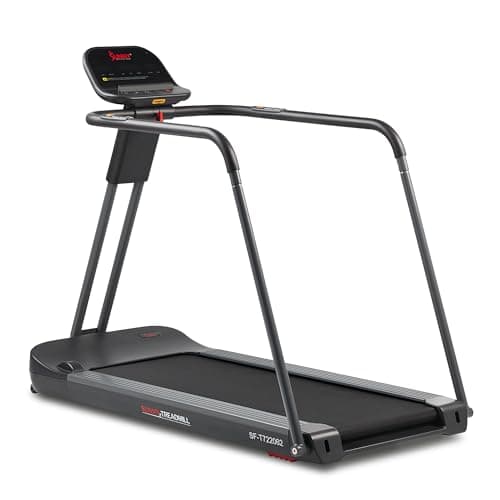
This is the purchase we would steer you toward if you came to this page intending to buy a bike. The specification that matters is the step-up height — how far you have to lift a foot to get on — and whether there is something to hold while you do.
| Machine | Step-up height | Handrails | Minimum speed |
|---|---|---|---|
| Sunny Health & Fitness Treadmill with Extended Safety Handrails, Low Deck | 4 in floor-to-deck | Extended safety handrails running alongside the deck, plus a safety clip for emergency stops. Length in inches not published | Top speed published as 8.5 mph; the minimum speed is not published |
| HitGo Walking Pad with Handrails | Not published by the manufacturer | Full-length carbon steel rails on both sides, stated as heavy-duty carbon steel giving 360-degree support. Length in inches not published | 0.6 mph to 6.2 mph, on a stated 2.5 hp motor |
The Sunny figure — 4 inches floor to deck — is the lowest published step-up anywhere on this site, and it is published as a number rather than described as “low”, which almost no maker manages. The HitGo publishes full-length rails on both sides and the only belt length we have found stated, 43.3 by 15.5 inches, which matters because a short belt shortens your stride and puts the back edge closer than you expect.
Both leave the noise question unanswered: not one walking machine we track publishes a decibel figure. Our treadmill shortlist ranks the full set on exactly these specs.
We will not tell you which movements to avoid. With reduced bone density some loads and some positions carry more risk than others, and the specifics depend on where your density is lowest and how low it is — which is information a scan and a clinician have and we do not. “Ask your doctor” is a phrase that usually means a writer has run out of material. Here it is the actual answer, and the question to ask is narrow enough to be useful: what should I avoid, and is walking at my current balance safe?
Related reading: recumbent bike versus walking is the full comparison behind this page, and fall-detection wearables is worth a look if living alone is part of the picture.
General information, not medical advice. Tread & Tone is written by an enthusiast, not a clinician. Nobody here is a doctor, a physical therapist or a trainer, and nothing on this site has been medically reviewed. Talk to your doctor or physical therapist before starting something new, particularly after surgery, a fall, or a change in medication.
Not for your bone density, no. Cycling is not weight-bearing — your weight is in the seat, so nothing loads the skeleton — and NIAMS is explicit that weight-bearing exercises are the ones that 'produce a force on bones that makes them work harder', giving brisk walking, stair climbing and dancing as examples. A recumbent bike is still worth having for cardiovascular fitness and for the leg conditioning that supports walking, but it is not the exercise that answers an osteoporosis diagnosis.
NIAMS names two families: weight-bearing exercise, where you work against gravity — brisk walking, hiking, stair climbing, dancing — and resistance training, which adds load to make muscles work harder and in doing so stresses the bones they pull on. The NIA adds balance work to that list for osteoporosis specifically, because preventing the fall is as important as strengthening the bone. Anyone with low bone density should talk to a health care provider before starting, which is NIAMS's own advice.
No — it is just answering a different question. It gives you aerobic minutes that count toward the weekly activity target, it conditions the legs that have to carry you, and it cannot cause a fall, which matters more than usual when a fall risks a fracture. Think of it as the machine that keeps you fit enough to do the weight-bearing work, not as a substitute for it.
It is the weight-bearing half, and NIAMS lists brisk walking among the exercises that load bone. What it does not cover is the resistance training NIAMS names alongside it, or the balance work the NIA recommends for osteoporosis. A realistic week for most people looks like walking most days, something resistance-based twice a week, and a few minutes of balance practice — which is close to the CDC's general target for adults 65 and over anyway.
That is a question for your doctor or physical therapist, and it is a real one — with reduced bone density some movements and loads carry more risk than others, and the specifics depend on where your density is lowest and how low it is. We are not going to generalise about it, because the answer is individual and getting it wrong is expensive. Ask directly what to avoid before you start anything new.
Then the honest answer is that the bone question needs a clinician rather than a purchase, and the bike becomes the right machine for what it does do. Say plainly at your next appointment that weight-bearing exercise is not currently available to you and ask what to do instead — there are supervised routes to loading bone that do not involve walking unaided, and they are not something to improvise from a website.
Product measurements are cited individually inside each Fit-to-You panel, against the manufacturer page or dated retailer listing they were read from.
One is weight-bearing and builds bone; the other is not and never will be. Which answers your reason for exercising — and why for most people the honest answer is both.
Read the guideBest Treadmill
Step-up height, minimum speed and handrail length — the three numbers that decide it, and which machines publish them.
Top pick: Sunny Health & Fitness Treadmill with Extended Safety Handrails, Low Deck
Price as of October 5, 2026. #ad How we’re funded
Best Balance Gear
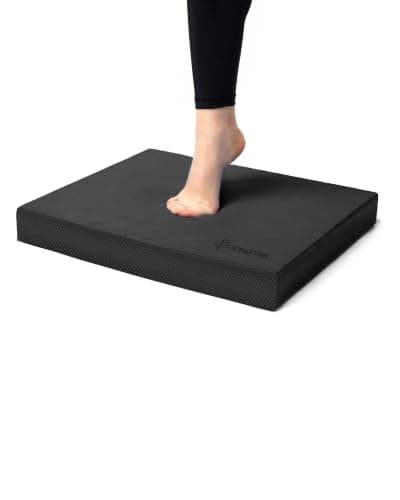
Pads, cushions, boards and rails ranked by how safely you can start — including the one we tell you not to start on.
Top pick: StrongTek Extra Wide TPE Balance Pad
Price as of October 5, 2026. #ad How we’re funded
A room-by-room list drawn from CDC and NIA guidance, ordered by how much difference each change makes relative to its cost.
Read the guideA gentle seated-and-standing routine with a pair of light weights that covers the CDC's two-days-a-week strength guideline — and how to pick a starting weight you will not regret.
Read the guideBest Fall Alert
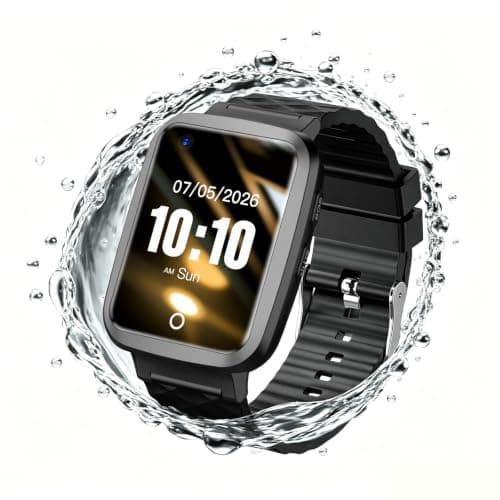
The monthly subscription is the real price, and only one of these publishes it. What each device actually does when someone falls.
Top pick: Fajocru Fall Detection Watch for Seniors
Price as of October 5, 2026. #ad How we’re funded