This is the feature people buy the Pacer for, and it is worth being precise about what it is and is not.
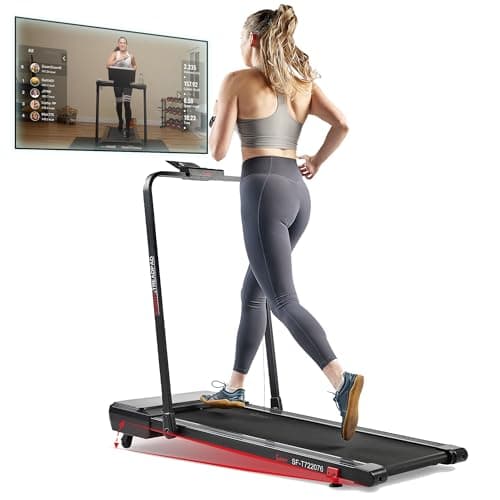
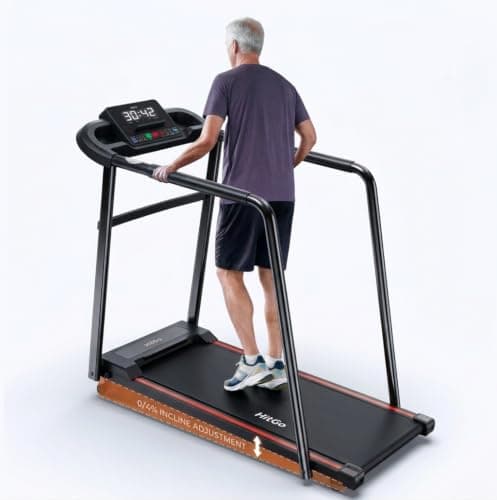
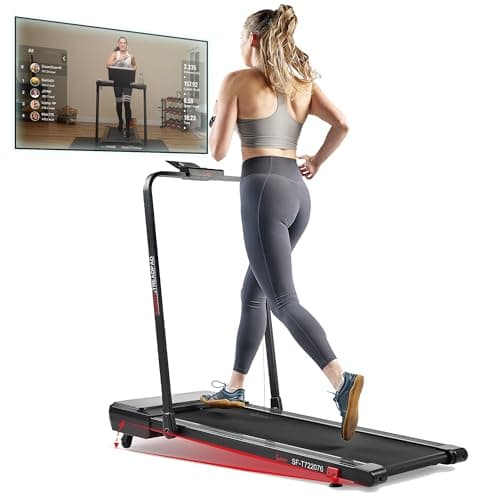
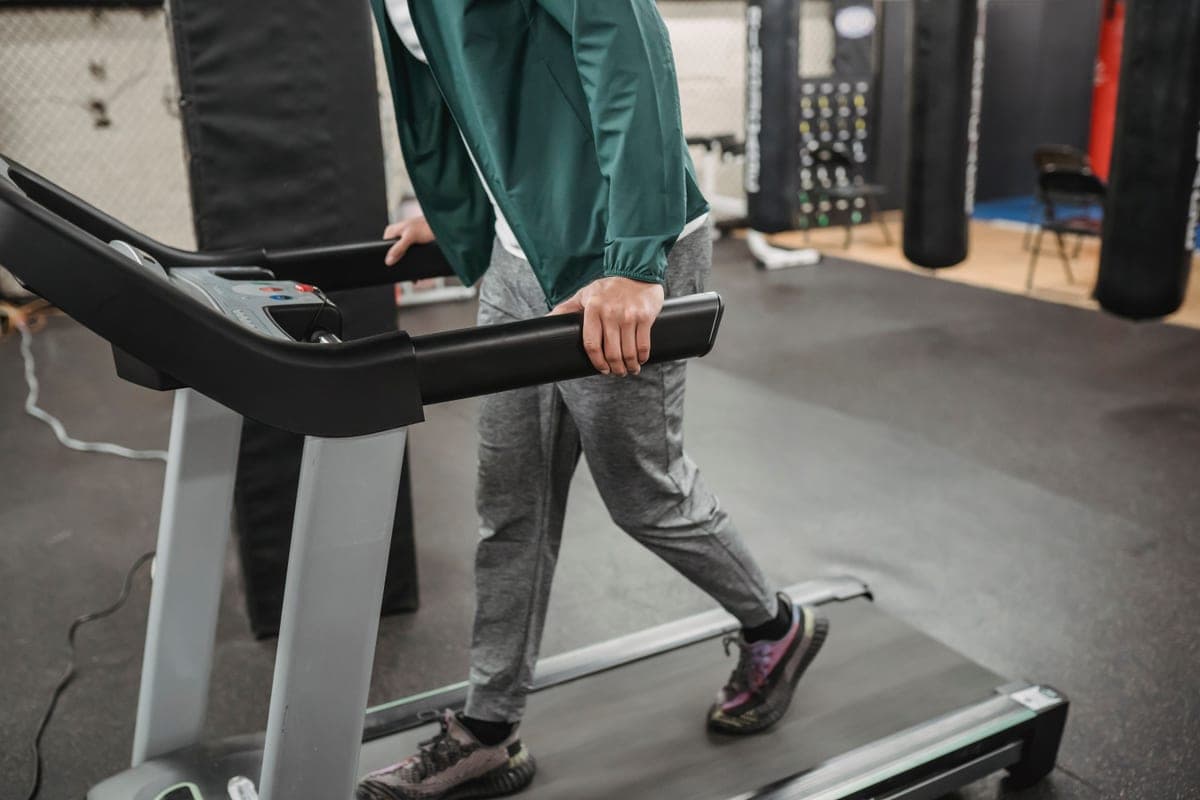
It is a handlebar, not a pair of rails.Sunny describes a single folding handlebar at the front rather than a rail running down each side at hip height. For a walker who wants something to steady a hand on, that is a meaningful step up from the bare pads in this category — including the W60, which has nothing at all. For a walker who genuinely needs support on both sides for the whole length of the walk, it is not the same thing, and the machines with full-length rails are ranked separately for exactly that reason.
The speed cap changes with the handlebar, which is a safety interlock worth understanding.Folded down, the machine runs 0.5 to 3.7 mph — walking speeds, under a desk. Unfolded and fully extended, it allows 0.5 to 6 mph. The reasoning is sound: faster belt speeds need something to hold. The practical note is that “fully extended” is a condition, so if the bar is up but not extended, the faster range is not available to you.
A 0.5 mph floor in both modes is the number we would highlight. That is genuinely slow — slower than a stroll, slow enough for a first week after a long spell of sitting — and the floor matters far more to this site’s reader than the 6 mph ceiling does. The CDC counts brisk walking as moderate-intensity activity, and brisk is a personal rather than an absolute pace; a machine that starts at 0.5 mph lets you find yours instead of starting above it. Our guide to what speed to set a walking pad to goes through the arithmetic.
And the controls sit where they should.A remote handles speed, incline, start and pause, there is an emergency stop brake, and there is a device holder. Six auto-incline levels mean the gradient changes without bending to the deck. The 6.3 in by 2.4 in backlit LED is a decent size for a pad — though Sunny does not publish the character height, which is the figure that actually decides readability for presbyopic eyes.