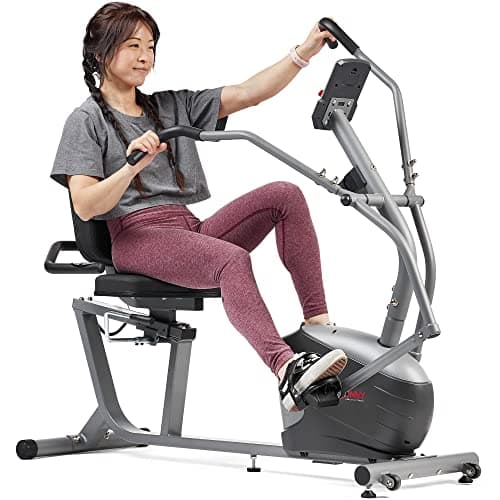
Recumbent Bike vs Upright Bike
Back support, step-over height, and the wrist and shoulder load nobody mentions. Which one suits which body.
Read the guideOften, because the seat back does the work your lower back would otherwise be doing. But 'back pain' covers a dozen different problems and only some of them respond the same way.
The short answer
Often yes. The padded seat back supports your lumbar spine, so your lower back is not holding your torso up for twenty minutes — which is precisely what an upright bike asks of it. Your hands and wrists also carry no weight. But “back pain” covers many different problems, and if yours is diagnosed, recent, or radiates into a leg, ask a physical therapist before buying anything.
On an upright bike your torso is unsupported. Your lower back and abdominal muscles hold you in a forward-leaning position for the entire session, and a real proportion of your upper-body weight travels down through your arms into the handlebars. If your lower back is the thing that objects, that is a twenty-minute isometric hold on the muscles that already hurt.
A recumbent removes both. The seat back supports the lumbar spine directly, and your hands rest on side handles that carry nothing. You are, structurally, sitting in a supported chair while your legs move.
That is the whole mechanism. It is not subtle and it is not a marketing claim — it follows from the geometry of the two machines. It is also why the recumbent tends to win for anyone whose problem is tolerating a position rather than tolerating movement.
Two of the bikes on this site publish a cushion thickness — 3.4 inches and 80 mm — and several publish an ergonomic or mesh backrest. Those are worth looking for, because the seat back is doing real work here rather than being a comfort feature.
The general picture from the public-health authorities is that activity supports back health rather than threatening it. The National Institute on Aging lists improved physical function and mobility among the benefits of regular activity for older adults, and the Arthritis Foundation makes the same case for osteoarthritis: movement keeps joints lubricated and makes moving easier, and inactivity tends to make things worse.
What none of those sources says, and what we will not say either, is that a recumbent bike treats back pain. It doesn’t. What it can do is let you get aerobic exercise in a position your back tolerates, which is a different and more modest claim — and for a lot of people it is the one that matters, because the alternative is no exercise at all.
All three are position problems rather than reasons to avoid cycling.
1. The seat is too far from the pedals. This is the big one. If you have to reach for the pedals with your legs, your pelvis rocks side to side on every revolution to make up the distance, and the muscles doing that rocking are in your lower back. Hundreds of small twists per session.
The fix: set the seat close enough that your knee keeps a slight bend at the furthest point of the stroke, and then watch your pelvis. If it rocks, come closer. This is the opposite of the advice cyclists give for power output, and for a sore back you want comfort rather than power.
2. The seat back angle is wrong for you.Too upright and you lose the support entirely. Too reclined and the lumbar curve flattens out. Some people want a small cushion in the lower back and some find that makes it worse, which is genuinely individual — and worth experimenting with over a week rather than deciding on day one.
3. The session is too long in one position. A static position is a large part of what makes a back ache, regardless of what the position is. Two ten-minute rides are frequently more comfortable than one twenty-minute ride, and they count identically toward the CDC’s 150 weekly minutes. If your back is fine at minute eight and sore at minute eighteen, the answer is two shorter rides, not a different bike.
We are going to be direct here, because “back pain” is doing an enormous amount of work as a phrase and this is the point where a website should stop.
Nobody producing this site is a doctor, a physical therapist or a trainer. Nothing here has been medically reviewed. If any of the following applies, the purchase decision is downstream of a conversation with someone who can examine you:
A physical therapist will also tell you something a spec sheet cannot: whether sitting is a good position for your particular back. For some conditions it is the worst one, and in that case no bike is the right answer, however well upholstered.
If sitting is uncomfortable but you want to move, walking is weight-bearing and upright, and for some backs it is more comfortable than any seated position. A treadmill with rails to hold lets you do it indoors with support.
If you want to start from a chair you already know is comfortable, a pedal exerciserlets you keep your own seating and add the leg movement, which sidesteps the seat-fit question entirely. It is less exercise, and it is a sensible way to find out whether seated pedaling suits your back before spending several hundred dollars on discovering that it doesn’t.
And a chair-based routine costs nothing at all: our chair exercise guide starts with which chair to use, which matters more than the exercises.
And one machine to think twice about. A rowing machine is often suggested to people who want a full-body seated workout, and a rowing stroke moves the lumbar spine through flexion and extension under load several hundred times per session. Our bike-versus-rower comparison sets out that difference, and why a backrest you stay against for the whole session is the thing a rower cannot offer.
General information, not medical advice. Tread & Tone is written by an enthusiast, not a clinician. Nobody here is a doctor, a physical therapist or a trainer, and nothing on this site has been medically reviewed. Talk to your doctor or physical therapist before starting something new, particularly after surgery, a fall, or a change in medication.
Often yes, because the padded seat back supports your lumbar spine rather than leaving your lower back to hold your torso up for twenty minutes — which is exactly what an upright bike asks of it. But 'back pain' covers many different conditions and they do not all respond alike, so if yours is diagnosed, or recent, or radiates down a leg, ask a physical therapist before buying anything.
The recumbent, in most cases, and the reason is structural. On an upright your lower back and core hold your torso in a forward-leaning position for the whole session, and a proportion of your upper-body weight goes through your hands into the bars. A recumbent removes both — the seat back supports the spine and the hands carry nothing.
It can, and the usual culprits are position rather than the activity. A seat set too far from the pedals makes you reach with your legs, which rocks the pelvis and works the lower back on every revolution. A seat back at the wrong angle can flatten or over-arch the lumbar spine. And any position held still for a long time gets uncomfortable — which is why breaking a session into shorter blocks often helps more than changing machines.
That is a question for a doctor or physical therapist rather than a website, and we are not qualified to answer it. Sciatica describes a symptom with several possible causes, and what helps one cause can aggravate another — some people find sitting the worst position for it, which would make any bike a poor choice. Ask someone who can examine you before you spend anything.
Close enough that you are not reaching for the pedals with your legs — reaching rocks the pelvis and puts the work into your lower back. Set it so your knee keeps a slight bend at the furthest point of the stroke, then check that your lower back stays in contact with the seat back throughout. If your pelvis rocks side to side as you pedal, the seat is too far away.
Shorter and more frequent beats long and occasional, because a static position is a large part of what makes a back ache. Two ten-minute rides are often more comfortable than one twenty-minute one, and they count the same toward the CDC's weekly total. Start at ten minutes and judge by how the back feels the next morning rather than during the ride.
Product measurements are cited individually inside each Fit-to-You panel, against the manufacturer page or dated retailer listing they were read from.
Back support, step-over height, and the wrist and shoulder load nobody mentions. Which one suits which body.
Read the guideBest for Seniors
Eleven bikes ranked on the measurements that decide whether you can get on — with the count of specs each manufacturer refuses to publish.
Top pick: Sunny Health & Fitness Smart Recumbent Bike with Dual-Motion Arm Exercisers
Eight movements you can do from a dining chair, and where equipment genuinely adds something rather than just costing money.
Read the guide