Tread & Tone

The Best Walking Pads for Weight Loss

Losing weight on a walking pad means an hour a day, most days, carrying your actual body weight. That is a duty-cycle question, and it is answered by three published figures almost nobody shopping for one thinks to look up.

By Stephen V.Last updated How we choose

How this is funded: we earn a commission if you buy through our links, at no extra cost to you. It never changes what we recommend, and every page here names at least one thing we would not buy. Full disclosure.

The walking pad we would buy for weight loss is the MERACH UltraWalk W60, because it is the only machine in this aisle that publishes a continuous motor rating — 1.25 CHP continuous against a 3.5 HP peak — and because it separates its capacity into 400 lb peak and 330 lb sustained. Those two disclosures answer the same question from two directions: what this machine can do for an hour, rather than for a minute. It also publishes the widest and one of the longest decks we have found, 41.3 by 16.5 inches, and a 12-level auto incline you change from a remote. The trade is real and we will not bury it: there is nothing whatsoever to hold onto.

Here is why this page is not a rerun of the other walking-pad shortlists on this site. Weight loss is the one use case that stresses a walking pad rather than merely using it. A ten-minute after-lunch walk asks almost nothing of the motor. The volume that actually moves the scale asks the same motor to carry a heavier-than-average walker, for forty-five to sixty minutes, five or six days a week, for months. Every other page here ranks these machines on getting on safely or on fitting your stride. This one ranks them on whether the hardware can take the hours — and that is a different ranking, which is why the winner is different too.

The volume is not our opinion. NIDDK’s guidance on eating and physical activity for weight management says that to prevent weight regain you should aim for at least 300 minutes a week of moderate-intensity activity, and brisk walking is the example it gives. That is double the 150 minutes the CDC recommends for adults 65 and over as a general activity floor. Five hours a week on a belt is the number this page is built around, because it is the number the research points at — and a 1 hp motor under a 245 lb ceiling is not the machine to attempt it on.

One honest limit before the shortlist. Only one of these six publishes a continuous motor rating.Everybody else quotes a peak figure, which is the number a motor can hit briefly rather than hold, and peak numbers in this category run two to three times the continuous ones. So the ranking below is partly a ranking of who will tell you — which is this site’s usual finding and never stops being irritating. Live prices come from the daily refresh; we have not walked on these machines for a month to test them, and what we did instead is written down.

Quick picks

Ranked on the published accessibility measurements and on who each machine actually suits. Select a row to jump to the full write-up. The last column is the number of the nine measurements the manufacturer will not publish — we have not used any of these machines, and here is exactly what we did instead.

#MachineBest forSpecs withheldPrice
1
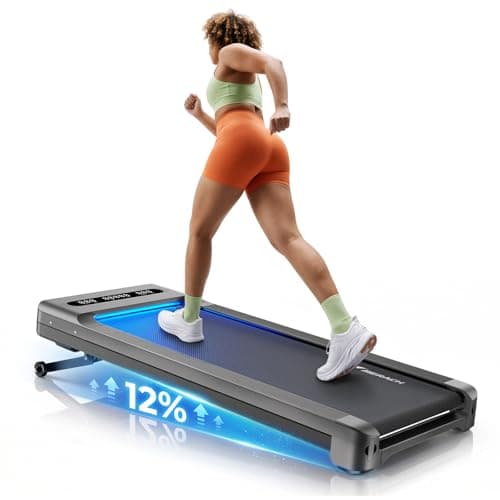
MERACH UltraWalk W60 Walking Pad

MERACH UltraWalk W60 Walking Pad

Publishes a sustained capacity

Only published continuous rating3of 10
$349.99 · Check price on Amazon

$399.9913% off

Price as of October 22, 2026. #ad How we’re funded

2
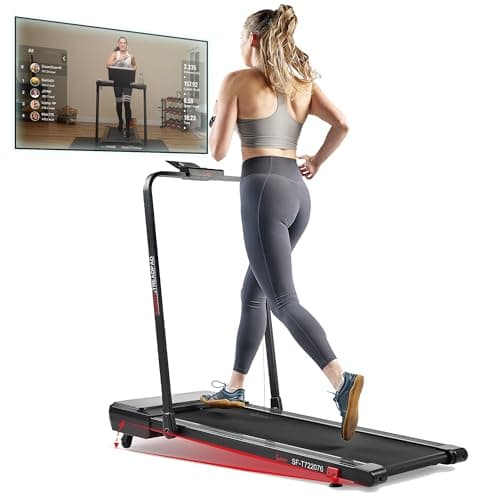
Sunny Health & Fitness Pacer 2-in-1 Auto Incline Treadpad Treadmill

Sunny Health & Fitness Pacer 2-in-1 Auto Incline Treadpad Treadmill

A handrail you can fold out of the way

Auto incline with a handlebar1of 10
$487.07 · Check price on Amazon

Price as of October 22, 2026. #ad How we’re funded

3
KALWOL Walking Pad with 14 Percent Auto Incline

KALWOL Walking Pad with 14 Percent Auto Incline

We would skip this one — see below

Steepest published incline2of 10
$399.98 · Check price on Amazon

Price as of October 22, 2026. #ad How we’re funded

4
WELLFIT Walking Pad with Incline and Handlebar

WELLFIT Walking Pad with Incline and Handlebar

350 lb with something to hold

350 lb with something to hold3of 10
$149.98 · Check price on Amazon

$218.9932% off

Price as of October 22, 2026. #ad How we’re funded

5
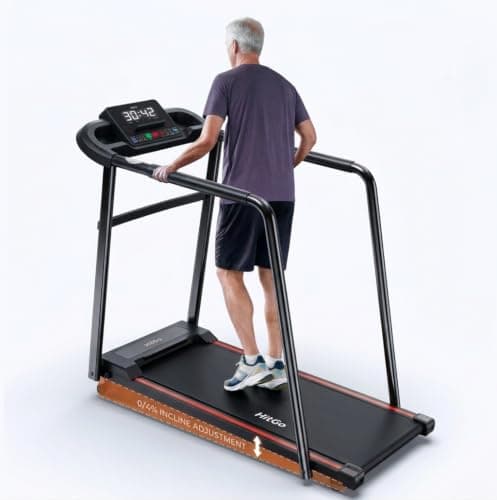
HitGo Walking Pad with Handrails

HitGo Walking Pad with Handrails

A published belt length

Rails on both sides2of 10
$299.90 · Check price on Amazon

Price as of October 22, 2026. #ad How we’re funded

6
Sunny Health & Fitness Wi-Fi Treadpad Walking Treadmill

Sunny Health & Fitness Wi-Fi Treadpad Walking Treadmill

We would skip this one — see below

Skip for this job2of 10
$299.99 · Check price on Amazon

Price as of October 22, 2026. #ad How we’re funded

1.Only published continuous rating

MERACH UltraWalk W60 Walking Pad(W60)
MERACH UltraWalk W60 Walking Pad
$349.99 · Check price on Amazon

$399.9913% off

Price as of October 22, 2026. #ad How we’re funded

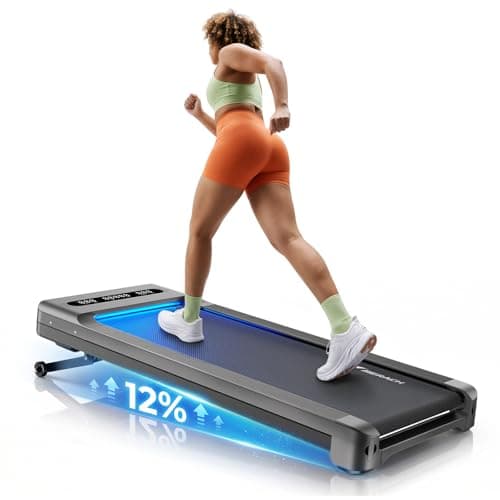
The only walking machine on this site that publishes two capacity figures instead of one: 400 lb peak and 330 lb sustained. The sustained figure is the one that matters, because it is the one you stand on for twenty minutes a day, and MERACH is alone here in telling you which number is which. It also has nothing at all to hold onto, which rules it out if balance rather than capacity is your reason for shopping.

What it gets right

  • Publishes BOTH a 400 lb peak and a 330 lb sustained capacity — the only machine here that separates the two
  • 16.5 in × 41.3 in deck published: the widest and longest walking surface on this page
  • Published 1.25 CHP continuous / 3.5 HP peak motor, so the continuous rating is stated and not just the peak
  • 67.7 lb published frame weight, which the listing ties directly to less shake under a heavier walker
  • 12-level auto incline driven from a remote, so you are not bending to the deck to change it

What to know first

  • No handrail, handlebar or upright of any kind. There is nothing to hold
  • Heaviest machine on this page at 67.7 lb, so moving it daily is a real job
  • 6.5 in tall, the highest profile of any pad here, and the step-up itself is not published
  • The 54 dB figure is the seller's average with no test method published
  • No speed range published anywhere in the listing, so the slowest the belt will go is unknown

Fit-to-You: the nine measurements

MERACH does not publish 3 of 10 of these. Where that is the case, this panel says so rather than guessing. How we compile these

Step-up heightHow high you have to lift your foot to get onto the deck, every single time.
Not published by the manufacturer
HandrailsThe difference between a treadmill a nervous walker will use and one they won't.
None. There is nothing to hold

Source: Amazon product listing data (Creators API) · read 2026-10-10

Weight capacitySearched directly, and two of the senior-focused competitors omit it entirely.
400 lb peak and 330 lb sustained — the only machine on this site publishing both figures

Source: Amazon product listing data (Creators API) · read 2026-10-10

Minimum speedThe slowest the belt will go. A machine that starts at 1 mph is unusable if your walking pace is slower than that.
Not published by the manufacturer
Belt sizeA short belt means a shortened stride and a real risk of stepping off the back.
41.3 in long × 16.5 in wide; stated as 33 percent more stride space

Source: Amazon product listing data (Creators API) · read 2026-10-10

Display character heightCharacter height and contrast. Presbyopia is close to universal past 60.
Not published by the manufacturer
Controls and reachCan it be operated one-handed, by feel, while seated? This is where low-strength and low-vision buyers get stranded.
Remote with a magnetic dock on the deck, plus app control syncing to Apple Health and Google Fit; 12-level auto incline; child lock; pause memory

Source: Amazon product listing data (Creators API) · read 2026-10-10

Assembly and box weightBox weight and how many people it needs. A 130 lb box is a real barrier, not a footnote.
67.7 lb machine weight published; no box weight and no assembly steps stated

Source: Amazon product listing data (Creators API) · read 2026-10-10

Noise (dB)Apartments, shared walls, and a sleeping partner in the next room.
Stated as around 54 dB average by the seller, with no test method published

Source: Amazon product listing data (Creators API) · read 2026-10-10

FootprintWhether it actually fits the room you have in mind, with clearance to get on and off.
51.4 in long × 22 in wide × 6.5 in high; wheels fitted, stored flat or upright

Source: Amazon product listing data (Creators API) · read 2026-10-10

We have not used this machine. Everything above comes from the manufacturer’s published documentation and the dated retailer listing, with the source given for each figure. Where they don’t publish a number, we say so. We can’t tell you how it feels to ride, how quiet it really is, or how it holds up after two years — and anyone who tells you otherwise without owning one is guessing.
2.Auto incline with a handlebar

Sunny Health & Fitness Pacer 2-in-1 Auto Incline Treadpad Treadmill(SF-T722076)

Sunny Health & Fitness Pacer 2-in-1 Auto Incline Treadpad Treadmill
$487.07 · Check price on Amazon

Price as of October 22, 2026. #ad How we’re funded

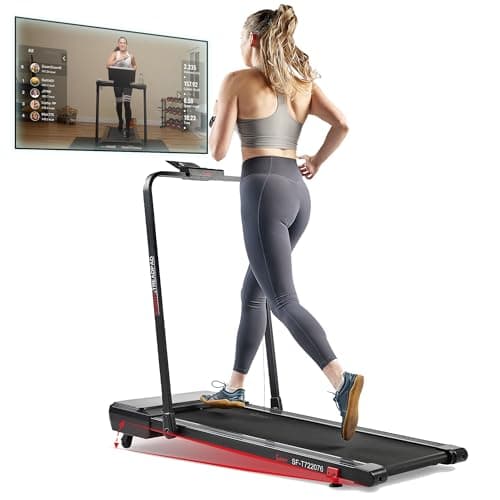
The Treadpad whose handlebar folds: up, it is a railed walking machine that will run to 6 mph; down, it slides under a desk and caps itself at 3.7 mph. Sunny publishes the one number almost nobody publishes — deck-to-floor height, 4.1 in flat — along with both ends of the user-weight range and the shipping weight. It is the one pad here you have to assemble.

What it gets right

  • Sunny publishes the deck-to-floor height outright: 4.1 in flat, 5.7 in at full incline
  • The handlebar folds down, so one machine is both a railed walker and an under-desk pad
  • Publishes both ends of the user-weight range — 265 lb maximum and a 99 lb minimum
  • Publishes a 93.7 lb ship weight and the carton size, so you know what arrives at the door
  • 45.7 in × 16 in walking surface, published, with an emergency stop brake and a remote
  • 3-year structural frame warranty and 180 days on other parts, published by Sunny

What to know first

  • Assembly required — Sunny calls it an easy-to-assemble frame setup, but both flat pads here arrive ready to use
  • 265 lb capacity: better than the 245 lb pads, still short of the 300 lb railed machines
  • Sunny describes a handlebar, not a rail down each side, and the 6 mph mode needs it unfolded and fully extended
  • No decibel figure, and no character height for the 6.3 in × 2.4 in display

Fit-to-You: the nine measurements

Sunny Health & Fitness does not publish 1 of 10 of these. Where that is the case, this panel says so rather than guessing. How we compile these

Step-up heightHow high you have to lift your foot to get onto the deck, every single time.
4.1 in flat, rising to 5.7 in at full incline — Sunny publishes this as “deck to floor height”, which almost no maker does

Source: Sunny Health & Fitness product page, SF-T722076 · read 2026-09-15

HandrailsThe difference between a treadmill a nervous walker will use and one they won't.
A folding handlebar rather than rails on both sides. Folded down it is an under-desk pad capped at 3.7 mph; unfolded and fully extended it allows up to 6 mph

Source: Sunny Health & Fitness product page, SF-T722076 · read 2026-09-15

Weight capacitySearched directly, and two of the senior-focused competitors omit it entirely.
265 lb maximum, and a 99 lb MINIMUM user weight — Sunny publishes both ends

Source: Sunny Health & Fitness product page, SF-T722076 · read 2026-09-15

Minimum speedThe slowest the belt will go. A machine that starts at 1 mph is unusable if your walking pace is slower than that.
0.5 mph to 3.7 mph with the handlebar folded, 0.5 to 6 mph with it extended; 2.0 hp peak DC motor

Source: Sunny Health & Fitness product page, SF-T722076 · read 2026-09-15

Belt sizeA short belt means a shortened stride and a real risk of stepping off the back.
45.7 in long × 16 in wide, which Sunny labels the running surface

Source: Sunny Health & Fitness product page, SF-T722076 · read 2026-09-15

Display character heightCharacter height and contrast. Presbyopia is close to universal past 60.
6.3 in × 2.4 in backlit LED showing calories, distance, speed, steps and time; character height not published

Source: Amazon product listing data (Creators API) · read 2026-09-15

Controls and reachCan it be operated one-handed, by feel, while seated? This is where low-strength and low-vision buyers get stranded.
Remote control for speed, incline, start and pause; emergency stop brake; 6 auto-incline levels; Bluetooth to the SunnyFit app; device holder

Source: Sunny Health & Fitness product page, SF-T722076 · read 2026-09-15

Assembly and box weightBox weight and how many people it needs. A 130 lb box is a real barrier, not a footnote.
Assembly required; Sunny describes an easy-to-assemble frame setup and publishes a 93.7 lb ship weight in a 64.2 × 27.2 × 7.1 in carton

Source: Sunny Health & Fitness product page, SF-T722076 · read 2026-09-15

Noise (dB)Apartments, shared walls, and a sleeping partner in the next room.
Not published by the manufacturer
FootprintWhether it actually fits the room you have in mind, with clearance to get on and off.
58.2 in long × 26.4 in wide × 47.4 in high in use; 63.9 × 26.4 × 7.7 in with the handlebar folded down. Product weight 79.4 lb

Source: Sunny Health & Fitness product page, SF-T722076 · read 2026-09-15

We have not used this machine. Everything above comes from the manufacturer’s published documentation and the dated retailer listing, with the source given for each figure. Where they don’t publish a number, we say so. We can’t tell you how it feels to ride, how quiet it really is, or how it holds up after two years — and anyone who tells you otherwise without owning one is guessing.
3.We would skip this one

KALWOL Walking Pad with 14 Percent Auto Incline

KALWOL Walking Pad with 14 Percent Auto Incline
$399.98 · Check price on Amazon

Price as of October 22, 2026. #ad How we’re funded

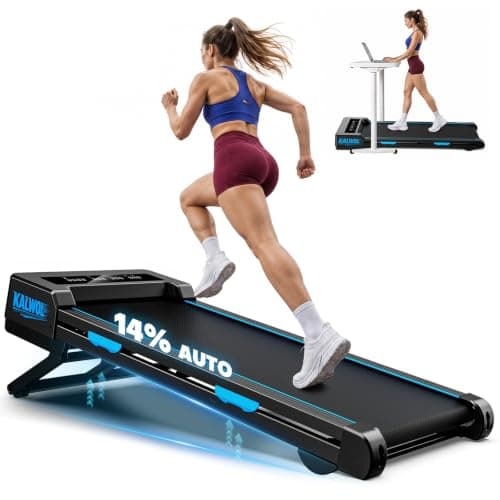
Well specified on everything except the one number people buy it for. The title says 400 lb and the specification bullet says 350 lb, and nothing in the listing reconciles the two. Everything else here — belt size, speed range, footprint, weight — is published clearly, which makes the capacity contradiction harder to excuse rather than easier.

Why we would skip it

Not on capacity grounds — on bookkeeping grounds. If the number is why you are buying, buy from a listing that states it once: this one says 400 lb in the title and 350 lb in the specifications, and a walking pad is the wrong place to find out which figure the frame was built to. Everything else about it is better documented than most of this aisle, so if you are comfortably under either number and want the published speed range and belt size, it is a reasonable buy. It is not the heavy-duty one it advertises.

What it gets right

  • 0.6 to 6.2 mph published, the only machine on this page stating both ends of its speed range
  • 40 in × 16 in belt published, with 7 layers and 10 shock-absorption points stated
  • 14 percent auto incline, changed from the remote rather than at the deck
  • LED display plus remote, and 12 programs with 3 countdown modes published
  • 50.7 lb published weight with wheels, so one person can move it

What to know first

  • The capacity is published as two different numbers: 400 lb in the title, 350 lb in the specification bullet
  • No handrail or handlebar of any kind. There is nothing to hold
  • Step-up height not published
  • The under-40 dB figure is a seller claim with no test method published
  • No published minimum user weight, and no box weight

Fit-to-You: the nine measurements

KALWOL does not publish 2 of 10 of these. Where that is the case, this panel says so rather than guessing. How we compile these

Step-up heightHow high you have to lift your foot to get onto the deck, every single time.
Not published by the manufacturer
HandrailsThe difference between a treadmill a nervous walker will use and one they won't.
None. There is nothing to hold

Source: Amazon product listing data (Creators API) · read 2026-10-10

Weight capacitySearched directly, and two of the senior-focused competitors omit it entirely.
Published twice and differently: 400 lb in the listing title, 350 lb in the specification bullet. The listing does not reconcile them

Source: Amazon product listing data (Creators API) · read 2026-10-10

Minimum speedThe slowest the belt will go. A machine that starts at 1 mph is unusable if your walking pace is slower than that.
0.6 mph to 6.2 mph on a stated 3.5 HP brushless motor

Source: Amazon product listing data (Creators API) · read 2026-10-10

Belt sizeA short belt means a shortened stride and a real risk of stepping off the back.
40 in long × 16 in wide, published as a 7-layer belt with 10 shock-absorption points

Source: Amazon product listing data (Creators API) · read 2026-10-10

Display character heightCharacter height and contrast. Presbyopia is close to universal past 60.
Not published by the manufacturer
Controls and reachCan it be operated one-handed, by feel, while seated? This is where low-strength and low-vision buyers get stranded.
LED display showing speed, time, distance, calories and incline, with a remote control; 14 percent auto incline; 12 programs and 3 countdown modes

Source: Amazon product listing data (Creators API) · read 2026-10-10

Assembly and box weightBox weight and how many people it needs. A 130 lb box is a real barrier, not a footnote.
50.7 lb machine weight published; box weight and assembly steps not published

Source: Amazon product listing data (Creators API) · read 2026-10-10

Noise (dB)Apartments, shared walls, and a sleeping partner in the next room.
Stated as under 40 dB by the seller, with no test method published

Source: Amazon product listing data (Creators API) · read 2026-10-10

FootprintWhether it actually fits the room you have in mind, with clearance to get on and off.
49 in long × 20 in wide × 5.35 in high, with rolling wheels

Source: Amazon product listing data (Creators API) · read 2026-10-10

We have not used this machine. Everything above comes from the manufacturer’s published documentation and the dated retailer listing, with the source given for each figure. Where they don’t publish a number, we say so. We can’t tell you how it feels to ride, how quiet it really is, or how it holds up after two years — and anyone who tells you otherwise without owning one is guessing.
4.350 lb with something to hold

WELLFIT Walking Pad with Incline and Handlebar(T3810)

WELLFIT Walking Pad with Incline and Handlebar
$149.98 · Check price on Amazon

$218.9932% off

Price as of October 22, 2026. #ad How we’re funded

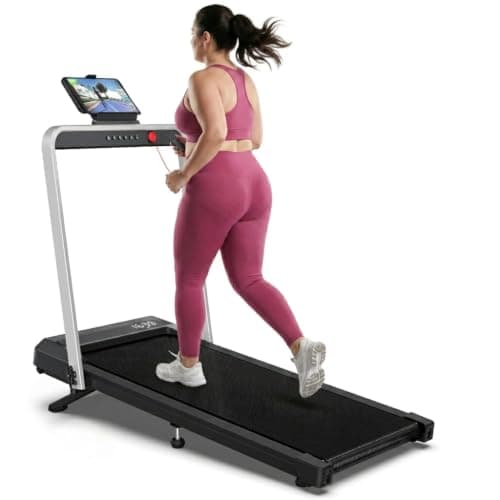
A published 350 lb capacity and a handlebar on the same machine, which is a combination almost nobody in this aisle sells. For the reader this site is written for, that pairing is the whole decision — a high capacity with nothing to hold is half an answer. The honest caveats are that the step-up is not published, and the two heights the listing does publish, 4.35 in assembled and 4.45 in folded, do not agree with each other.

What it gets right

  • 350 lb published capacity WITH a stability handlebar — the only machine here offering both
  • 16 in × 36 in belt published, and a 10 percent manual incline
  • Lightest machine on this page at 41.47 lb published, with transport wheels and upright storage
  • Stated to arrive fully assembled: unfold, plug in, walk
  • 3.0 HP motor published, and app control through WELLFIT, Kinomap and Apple Health

What to know first

  • Step-up height is not published, which is the number that decides whether getting on feels like a step or a climb
  • The listing publishes 4.35 in overall height and 4.45 in folded thickness; one of those is wrong and the seller does not say which
  • No speed range published, so the slowest belt speed is unknown
  • The 45 dB figure is a seller claim with no test method published
  • A single handlebar is not a pair of full-length rails — it steadies you, it does not surround you

Fit-to-You: the nine measurements

WELLFIT does not publish 3 of 10 of these. Where that is the case, this panel says so rather than guessing. How we compile these

Step-up heightHow high you have to lift your foot to get onto the deck, every single time.
Not published by the manufacturer
HandrailsThe difference between a treadmill a nervous walker will use and one they won't.
One stability handlebar, published as a 2-in-1 design giving support while walking. Length in inches not published, and there are no side rails

Source: Amazon product listing data (Creators API) · read 2026-10-10

Weight capacitySearched directly, and two of the senior-focused competitors omit it entirely.
350 lb

Source: Amazon product listing data (Creators API) · read 2026-10-10

Minimum speedThe slowest the belt will go. A machine that starts at 1 mph is unusable if your walking pace is slower than that.
Not published by the manufacturer
Belt sizeA short belt means a shortened stride and a real risk of stepping off the back.
36 in long × 16 in wide, published as a multi-layer non-slip belt

Source: Amazon product listing data (Creators API) · read 2026-10-10

Display character heightCharacter height and contrast. Presbyopia is close to universal past 60.
Not published by the manufacturer
Controls and reachCan it be operated one-handed, by feel, while seated? This is where low-strength and low-vision buyers get stranded.
10 percent manual incline set at the deck; app and voice control through the WELLFIT app, Kinomap and Apple Health; remote speed control stated

Source: Amazon product listing data (Creators API) · read 2026-10-10

Assembly and box weightBox weight and how many people it needs. A 130 lb box is a real barrier, not a footnote.
41.47 lb machine weight published and stated to arrive fully assembled; box weight not published

Source: Amazon product listing data (Creators API) · read 2026-10-10

Noise (dB)Apartments, shared walls, and a sleeping partner in the next room.
Stated as 45 dB by the seller, with no test method published

Source: Amazon product listing data (Creators API) · read 2026-10-10

FootprintWhether it actually fits the room you have in mind, with clearance to get on and off.
46.06 in long × 23.03 in wide × 4.35 in high; folds to a stated 4.45 in thick for upright storage, with built-in wheels

Source: Amazon product listing data (Creators API) · read 2026-10-10

We have not used this machine. Everything above comes from the manufacturer’s published documentation and the dated retailer listing, with the source given for each figure. Where they don’t publish a number, we say so. We can’t tell you how it feels to ride, how quiet it really is, or how it holds up after two years — and anyone who tells you otherwise without owning one is guessing.

5.Rails on both sides

HitGo Walking Pad with Handrails(H2)

HitGo Walking Pad with Handrails
$299.90 · Check price on Amazon

Price as of October 22, 2026. #ad How we’re funded

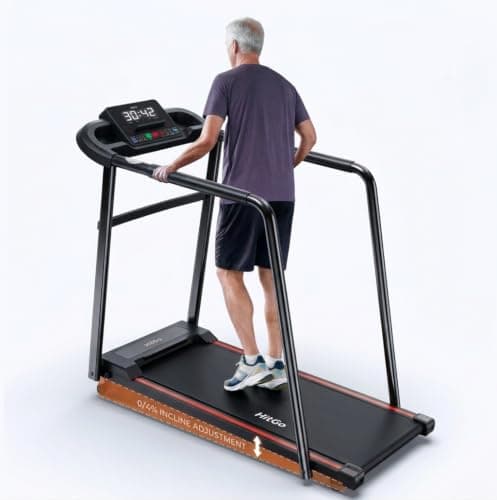
The only walking machine here that publishes both belt dimensions — 43.3 by 15.5 inches — and its own weight, 59.5 lb. A published belt length matters because a short belt shortens your stride and puts the back edge closer than you think.

What it gets right

  • Belt published as 43.3 in × 15.5 in — the only walking machine here giving both numbers
  • Full-length carbon steel rails on both sides
  • Console described as eye-level and high-contrast, so no bending to read it
  • 59.5 lb published weight and built-in wheels, so one person can realistically move it

What to know first

  • Step-up height still isn't published, and the 250 lb capacity is among the lowest of any walking machine here
  • Stated 90% pre-assembled still means tightening 12 bolts yourself
  • 'Whisper-quiet' with no decibel figure
  • The 4% incline is manual, so it is set before you start, not during

Fit-to-You: the nine measurements

HitGo does not publish 2 of 10 of these. Where that is the case, this panel says so rather than guessing. How we compile these

Step-up heightHow high you have to lift your foot to get onto the deck, every single time.
Not published by the manufacturer
HandrailsThe difference between a treadmill a nervous walker will use and one they won't.
Full-length carbon steel rails on both sides, stated as heavy-duty carbon steel giving 360-degree support. Length in inches not published

Source: Amazon product listing data (Creators API) · read 2026-08-31

Weight capacitySearched directly, and two of the senior-focused competitors omit it entirely.
250 lb

Source: Amazon product listing data (Creators API) · read 2026-08-31

Minimum speedThe slowest the belt will go. A machine that starts at 1 mph is unusable if your walking pace is slower than that.
0.6 mph to 6.2 mph, on a stated 2.5 hp motor

Source: Amazon product listing data (Creators API) · read 2026-08-31

Belt sizeA short belt means a shortened stride and a real risk of stepping off the back.
43.3 in long × 15.5 in wide; stated to suit users up to 6 ft 2 in

Source: Amazon product listing data (Creators API) · read 2026-08-31

Display character heightCharacter height and contrast. Presbyopia is close to universal past 60.
Console described as extra-large, eye-level and high-contrast; character height not published

Source: Amazon product listing data (Creators API) · read 2026-08-31

Controls and reachCan it be operated one-handed, by feel, while seated? This is where low-strength and low-vision buyers get stranded.
Eye-level console with a pulse readout; 4% manual incline; Bluetooth to Kinomap

Source: Amazon product listing data (Creators API) · read 2026-08-31

Assembly and box weightBox weight and how many people it needs. A 130 lb box is a real barrier, not a footnote.
Stated 90% pre-assembled, 12 bolts to tighten; 59.5 lb machine weight

Source: Amazon product listing data (Creators API) · read 2026-08-31

Noise (dB)Apartments, shared walls, and a sleeping partner in the next room.
Not published by the manufacturer
FootprintWhether it actually fits the room you have in mind, with clearance to get on and off.
The listing's dimension fields give 40.6 in × 19 in × 4.1 in, which cannot describe the assembled machine — the belt alone is published at 43.3 in long. Reported as published; no assembled footprint is stated that we can cite

Source: Amazon product listing data (Creators API) · read 2026-08-31

We have not used this machine. Everything above comes from the manufacturer’s published documentation and the dated retailer listing, with the source given for each figure. Where they don’t publish a number, we say so. We can’t tell you how it feels to ride, how quiet it really is, or how it holds up after two years — and anyone who tells you otherwise without owning one is guessing.
6.We would skip this one

Sunny Health & Fitness Wi-Fi Treadpad Walking Treadmill(SF-T724064)

Sunny Health & Fitness Wi-Fi Treadpad Walking Treadmill
$299.99 · Check price on Amazon

Price as of October 22, 2026. #ad How we’re funded

A flat pad with no rails: 4.3 inches tall overall, and a 41.1 by 16.1 inch deck. A near-flat step-up, though the Sunny Pacer publishes 4.1 in and the extended-handrail treadmill 4 in, and both give you something to hold. Excellent if you are steady on your feet, wrong if you are not.

Why we would skip it

Skip this one if you are buying for balance. It is a good flat pad — 4.3 inches tall, no assembly, a 41.1 by 16.1 inch deck — but it has no handrail of any kind, and every senior-focused piece of advice on this site says the same thing: if balance is the reason you are shopping, buy the machine with something to hold. Buy this only if you are steady on your feet and want the flattest pad that needs no assembly.

What it gets right

  • 4.3 in overall height, so the step-up is barely a step
  • Publishes the deck as 41.1 in × 16.1 in, wider than the trekking-pole model
  • No assembly at all, and a remote so no bending to the console
  • 0.5–3.7 mph published, a true walking range

What to know first

  • No handrail, no poles, nothing to hold. For a balance-impaired walker that is disqualifying
  • 245 lb capacity
  • 1 hp motor, the least powerful walking machine here
  • Step-up height has to be derived from the overall height rather than being published as such

Fit-to-You: the nine measurements

Sunny Health & Fitness does not publish 2 of 10 of these. Where that is the case, this panel says so rather than guessing. How we compile these

Step-up heightHow high you have to lift your foot to get onto the deck, every single time.
About 4.3 inSunny publishes an overall product height of 4.3 in. On a flat pad with no console mast, the overall height and the deck height are the same measurement, so the step-up is 4.3 in. Sunny does not label it as a step-up height.

DerivedSource: Amazon product listing data (Creators API) · read 2026-07-24

HandrailsThe difference between a treadmill a nervous walker will use and one they won't.
None. There is nothing to hold

Source: Amazon product listing data (Creators API) · read 2026-07-24

Weight capacitySearched directly, and two of the senior-focused competitors omit it entirely.
245 lb

Source: Amazon product listing data (Creators API) · read 2026-07-24

Minimum speedThe slowest the belt will go. A machine that starts at 1 mph is unusable if your walking pace is slower than that.
0.5 mph to 3.7 mph, 1 hp motor

Source: Amazon product listing data (Creators API) · read 2026-07-24

Belt sizeA short belt means a shortened stride and a real risk of stepping off the back.
41.1 in long × 16.1 in wide

Source: Amazon product listing data (Creators API) · read 2026-07-24

Display character heightCharacter height and contrast. Presbyopia is close to universal past 60.
Not published by the manufacturer
Controls and reachCan it be operated one-handed, by feel, while seated? This is where low-strength and low-vision buyers get stranded.
Remote control for speed; safety key; LED display; Wi-Fi to a smart TV

Source: Amazon product listing data (Creators API) · read 2026-07-24

Assembly and box weightBox weight and how many people it needs. A 130 lb box is a real barrier, not a footnote.
No assembly required; box weight not published

Source: Amazon product listing data (Creators API) · read 2026-07-24

Noise (dB)Apartments, shared walls, and a sleeping partner in the next room.
Not published by the manufacturer
FootprintWhether it actually fits the room you have in mind, with clearance to get on and off.
49.2 in long × 22 in wide × 4.3 in high

Source: Amazon product listing data (Creators API) · read 2026-07-24

We have not used this machine. Everything above comes from the manufacturer’s published documentation and the dated retailer listing, with the source given for each figure. Where they don’t publish a number, we say so. We can’t tell you how it feels to ride, how quiet it really is, or how it holds up after two years — and anyone who tells you otherwise without owning one is guessing.
What we found looking for these numbers

We went looking for 60 measurements across the 6machines on this page — the nine that decide whether an older adult can get on, reach the controls, read the screen and hear themselves think. 13 of those 60 are not published by anybody. Not one manufacturer here publishes the full set.

Step-over height is the worst of them. It is the single measurement that decides whether you can get onto a machine at all, and across everything we checked, not one manufacturer states it. That is not an oversight in a category explicitly marketed to seniors, and the count in each panel above is there so you can see who is doing it.

Where a figure exists, we cite it and date it. Where it doesn’t, the panel says Not published by the manufacturer rather than an estimate dressed up as a fact. You can measure step-over height yourself in about a minute — and if a machine is already in your house, that is the fastest way to settle it.

The three figures that decide an hour-a-day machine

If you read nothing else, read this. Weight loss does not need a fast belt — it needs a belt that is still working in March.

1. The continuous motor rating, not the peak.A motor’s continuous rating is the power it can sustain indefinitely; its peak is what it can produce for a few seconds. The gap between them is large, and the whole category advertises the peak. MERACH is the only maker here publishing both: 1.25 CHP continuous and 3.5 HP peak. Everybody else gives you one number without saying which kind it is — the Kalwol’s 3.5 HP, the WELLFIT’s 3.0 HP, the HitGo’s 2.5 hp, the Sunny Pacer’s 2.0 hp peak and the Sunny Wi-Fi pad’s 1 hp. Those are not comparable figures, and you should treat an unlabeled big number with suspicion rather than enthusiasm.

2. Published incline, because it is the only honest way up.This is the specification that matters most and gets discussed least. To burn more in the same half hour you either walk faster or walk uphill, and for most readers of this site walking faster is not on the table — a brisk indoor walk is already the top of the useful range, and chasing speed on a belt is how people get hurt. Incline raises the work at the same comfortable pace. Four of these six publish an incline: Kalwol at 14 percent auto, MERACH with 12 auto levels, WELLFIT at 10 percent manual, and HitGo at 4 percent manual. Auto versus manual matters more than it sounds, because a manual incline is set before you start and an auto one can be raised mid-walk from the remote — which is the difference between an interval and a decision you made twenty minutes ago.

3. Both ends of the speed range, especially the bottom. A pad that will not go below 1 mph is no use for a cautious first week or for a cool-down, and a pad that tops out at 3.7 mph caps your brisk walk fairly low. Two machines here publish both ends: the Kalwol at 0.6 to 6.2 mph and the HitGo H2 at 0.6 to 6.2 mph. The Sunny Pacer publishes 0.5 to 6 mph with the handlebar extended and 0.5 to 3.7 mph folded down. The MERACH and the WELLFIT publish no speed range at all, which on an otherwise well-documented machine is a conspicuous gap.

And the figure that is not on the list: calories. Every console here will show you one, and not one of these machines publishes watts, which is the only measurement that would make a calorie estimate meaningful. Treat the number as a motivational readout rather than data. The CDC’s own way of judging intensity is the talk test — at moderate intensity you can talk but not sing — and that works on any machine, including the ones that flatter you.

Capacity is a weight-loss specification, not a footnote

On most pages on this site, published weight capacity is a safety check. On this page it is part of the ranking, for a reason worth stating plainly: a lot of people shopping for a walking pad to lose weight are shopping from above the middle of these machines’ range, and the range is narrower than the marketing suggests.

Published figures across the six: the MERACH at 400 lb peak and 330 lb sustained, the WELLFIT at 350 lb, the Kalwol at 400 lb in its title and 350 lb in its specification bullet, the Sunny Pacer at 265 lb maximum with an unusual 99 lb minimum, the HitGo H2 at 250 lb and the Sunny Wi-Fi pad at 245 lb. That is a hundred-pound spread, and the two machines at the bottom of it are the two we would not put an hour-a-day habit on.

The MERACH is the only maker here who splits peak from sustained, and the distinction is exactly the one that matters for this use. A frame rated to 400 lb for a moment and 330 lb for a session is being honest about the difference between standing on it and walking on it for an hour. Nobody else in our registry makes that distinction at all, which does not mean their frames are worse — it means you cannot tell.

The Kalwol’s contradiction has to be said out loud. Its listing title says 400 lb and its specification bullet says 350 lb, with nothing reconciling them. Everything else about the machine is better documented than most of this aisle. But if capacity is the reason you are buying, buy from a listing that states it once, and a long daily walk is the wrong place to discover which number the frame was built to. We say the same thing on our high-capacity shortlist, where that single bookkeeping failure is what keeps it off the top spot.

If you are shopping at or above 300 lb, read that page before this one — it ranks every walking machine here on which capacity figure its maker will actually commit to, and it is a narrower field than you would hope. Our guide to exercise equipment for overweight seniors covers the same constraint across the other three categories.

The six, ranked for an hour a day

The MERACH UltraWalk W60 is the pick. It is the only machine on this page that publishes a continuous motor rating, the only one that splits peak from sustained capacity, and it pairs that with the widest deck in our registry at 16.5 inches and a 41.3 inch length. The 12-level auto incline is driven from a remote with a magnetic dock on the deck, so raising the work mid-session does not mean bending down. Honest cons: there is no handlebar, upright or rail of any kind, so if your balance is any part of the reason you are shopping this is the wrong machine; it publishes no speed range whatsoever; at 6.5 inches it is the tallest profile here and does not publish the step-up; at 67.7 lb it is the heaviest to move; and its 54 dB figure is a seller average with no test method.

The Sunny Pacer Treadpad is the one to buy if you want incline and something to hold. Six auto-incline levels, a published 0.5 to 6 mph with the handlebar extended, the longest belt in our registry at 45.7 by 16 inches, and — almost uniquely — a published deck-to-floor height of 4.1 inches flat. The handlebar folds, so the same machine is a railed walker for a deliberate session and an under-desk pad capped at 3.7 mph for the rest of the day, which for accumulating 300 minutes a week is a genuinely useful trick. Cons: the 2.0 hp figure is a peak, not a continuous rating; the 265 lb capacity is mid-field and well under the MERACH’s; Sunny describes a handlebar rather than rails down both sides; the incline levels are not published as percentages; and it is the one pad here you have to assemble.

The KALWOL has the steepest published incline at 14 percent, auto rather than manual, and it is one of only two machines here publishing both ends of its speed range at 0.6 to 6.2 mph. The belt is a published 40 by 16 inches with seven layers and ten shock-absorption points stated, and at 50.7 lb with wheels one person can move it. Cons: the 400-versus-350 lb capacity contradiction above; a 3.5 HP rating with no indication whether it is continuous or peak; nothing to hold onto; no published step-up height; and an under-40 dB claim with no test method.

The WELLFIT T3810 pairs a published 350 lb capacity with a handlebar, which is a combination almost nobody in this aisle sells, and for a heavier walker who wants support that pairing outranks a lot of spec-sheet noise. A 10 percent incline, a 3.0 HP rating, and the lightest machine here at 41.47 lb, stated to arrive fully assembled. Cons that matter for this specific job: its 36 by 16 inch belt is the shortest published figure we have found, which is a real constraint over an hour; the incline is manual, so it is set before you start; no speed range is published; the step-up is not published; and the listing gives 4.35 inches assembled and 4.45 inches folded, which cannot both be right.

The HitGo H2 is the one for a cautious walker who wants rails.Full length carbon steel rails down both sides, a published 43.3 by 15.5 inch belt, 0.6 to 6.2 mph published, an eye-level console with a pulse readout, and the only stated rider height in the category at 6 foot 2. For somebody whose weight-loss plan is genuinely limited by confidence rather than by the motor, this is the machine — and our shortlist of machines with handrails explains why we keep saying that. Cons for an hour a day: a 250 lb capacity, the lowest but one on this page; a 4 percent incline that is manual; a 2.5 hp rating of unstated type; and no published step-up.

The Sunny Wi-Fi Treadpad is our skip on this page, and only here. It is a perfectly good flat pad — a derived 4.3 inch overall height, a 41.1 by 16.1 inch deck, no assembly at all, and a remote — and it is a reasonable buy for somebody steady on their feet who wants the flattest pad that works out of the box. But for this job it is wrong three times over: a 1 hp motor, the least powerful machine in our registry; a 245 lb capacity, the lowest here; and no incline at all, which removes the only lever you have for making a comfortable pace count for more. Different constraint, different answer.

And the honest bigger question: should it be a pad at all? If you have the floor space and the budget, a full-size treadmill gives you a longer deck, proper rails and a higher-rated motor for exactly this use. The Sunny SF-T722062 publishes a 4 inch floor-to-deck step-up, the lowest figure on this site, and tops out at 8.5 mph; the Redliro CS1271-D runs 0.5 to 5 mph with the speed buttons on the rails themselves and publishes a 300 lb capacity. Both are on our treadmills-for-seniors shortlist. A pad wins on storage and on price. A treadmill wins on everything this page is about except storage and price.

How to actually accumulate 300 minutes a week

Buying the machine is the easy part. Five hours a week is the part people lose, so three things worth saying about the habit rather than the hardware.

Split it, do not stack it. The CDC is explicit that the weekly minutes can be broken into smaller sessions, and three twenty-minute walks are far easier to defend against a day than one sixty-minute walk. This is the practical argument for a pad over a treadmill, and for the Sunny Pacer in particular: a machine that lives under a desk gets used in the gaps, and the gaps are where the minutes are.

Raise the incline before you raise the speed. Walking faster indoors has a ceiling and a risk; walking uphill at the same pace has neither in the same way. If your machine has an auto incline, treat it as the dial you turn as you get fitter and leave the speed where it is comfortable. Our guide to what incline walking does goes through this properly, and what speed to actually set covers the other half.

Expect the machine to be the smaller half of the result.NIDDK puts eating and physical activity in the same guidance for a reason, and no walking pad outruns a diet. What the pad is genuinely good at is making the activity half unmissable — weatherproof, free, and twelve feet from the kettle — which is why the machine you will use beats the machine with the better spec sheet. If you are starting from very little walking, our couch-to-walking plan is a gentler on-ramp than jumping to an hour, and this is worth raising with whoever manages your health before you start.

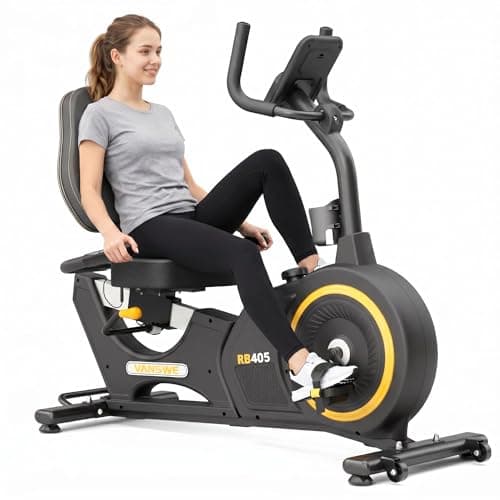
One last option people overlook. If a joint is going to object to an hour of weight-bearing walking long before the motor does, the honest answer may be to do some of those minutes seated. Our shortlist of recumbent bikes for weight loss ranks that side of the decision on what sustains a long session in a seat, and the full comparison between the two machines is the page to read if you are still choosing a category rather than a model.

General information, not medical advice. Tread & Tone is written by an enthusiast, not a clinician. Nobody here is a doctor, a physical therapist or a trainer, and nothing on this site has been medically reviewed. Talk to your doctor or physical therapist before starting something new, particularly after surgery, a fall, or a change in medication.

Questions people ask

Can you actually lose weight with a walking pad?

Yes, with the honest caveat that volume is what does it and diet is the larger half. NIDDK's guidance is to aim for at least 300 minutes a week of moderate-intensity activity to prevent weight regain, and it names brisk walking as an example — that is about an hour a day, five days a week, which a walking pad makes far easier to hit than the weather does. Where a pad earns its keep is reliability: it is always available, it costs nothing per session, and the minutes accumulate in the gaps in your day.

What motor rating do I need for an hour of walking a day?

You need a continuous rating, and the problem is that almost nobody publishes one. A continuous rating is the power a motor can hold indefinitely; a peak rating is what it reaches for a few seconds, and peak figures in this category run two to three times the continuous ones. The MERACH UltraWalk W60 is the only machine we track that publishes both, at 1.25 CHP continuous and 3.5 HP peak. Treat an unlabeled large number as a peak figure until the maker says otherwise.

Is incline or speed better for losing weight on a walking pad?

Incline, for most people reading this site. Both raise the work, but speed has a practical ceiling on an indoor belt and raises your risk of a stumble, while incline raises the effort at a pace you already find comfortable. Four of the six machines here publish an incline — Kalwol at 14 percent auto, MERACH with 12 auto levels, WELLFIT at 10 percent manual and HitGo at 4 percent manual. An auto incline you can change mid-walk from a remote is worth more than a steeper manual one you have to set before you start.

Which walking pad has the highest weight capacity?

On published figures the MERACH UltraWalk W60, and it is also the only one that tells you the difference between peak and sustained: 400 lb peak, 330 lb sustained. The WELLFIT T3810 publishes 350 lb and pairs it with a handlebar, which is a combination almost nothing else in this aisle offers. The Kalwol advertises 400 lb in its title but states 350 lb in its specifications and does not reconcile the two, so we would not buy it on capacity grounds.

How many calories does a walking pad burn?

We will not give you a number, and we would be suspicious of anyone who does without knowing your weight, your pace and your incline. Every console here estimates calories from a generic formula, and not one of these machines publishes watts, which is the only measurement that would make a real estimate possible. Use the CDC's talk test instead: at moderate intensity you can hold a conversation but not sing, and that judgment works on any machine regardless of what the display claims.

Is a walking pad or a treadmill better for weight loss?

A full-size treadmill is the better machine for this specific job and a pad is the one more people will actually use. The treadmill gives you a longer deck, real handrails and a higher-rated motor for long daily sessions — the Sunny SF-T722062 publishes a 4 in floor-to-deck step-up and an 8.5 mph top speed, and the Redliro runs 0.5 to 5 mph with the controls on the rails. The pad wins on price, on storage and on being underfoot in the gaps in your day, which is where 300 minutes a week is really assembled.

Do I need handrails if I am using a walking pad for weight loss?

Not for the weight loss, but possibly for the hour. Our top pick has nothing to hold at all, which is fine if you are steady on your feet and disqualifying if you are not — and an hour on a belt is long enough that fatigue late in a session is a fair thing to plan for. If balance is any part of your situation, buy the HitGo H2 for its full-length rails or the Sunny Pacer for its folding handlebar and accept the lower capacity, rather than buying the better motor and hoping.

How long will a cheap walking pad last if I use it every day?

Nobody in this category publishes a duty-cycle figure or an hours rating, so the honest answer is that you cannot tell from the listing — which is exactly why this page ranks on continuous motor rating and published capacity instead. The two proxies worth using are a maker willing to state a continuous rating rather than a peak, and a published warranty: Sunny publishes 3 years on the structural frame of the Pacer and 180 days on other parts, which is the clearest commitment in this group.

Sources

Product measurements are cited individually inside each Fit-to-You panel, against the manufacturer page or dated retailer listing they were read from.

Read next

How to Choose a Walking Pad

A walking pad is not a small treadmill. Four numbers decide it — belt length, what there is to hold, the slowest speed and the weight you have to move — and most listings publish two of them.

Read the guide